
Reviewed · CLIFFS OF MOHER TOURS
Private Ennis Essential History Tour with Dr Jane O’Brien
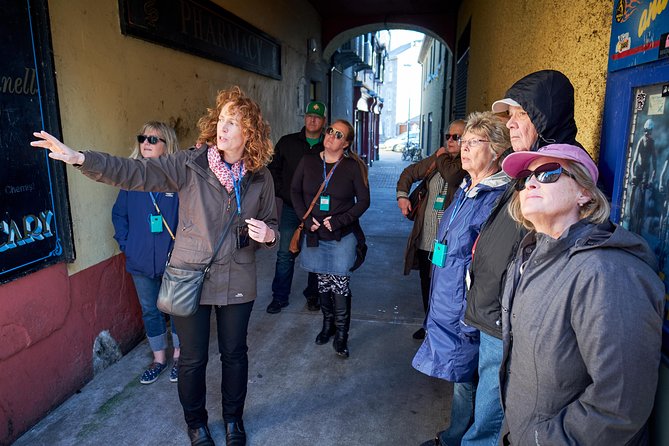
Ennis reveals its past in small places: a half-door on a timber-framed house, a narrow bow-way, an old market square, and a riverside friary. Dr Jane O’Brien links these details to Catholic Emancipation, the Great Famine, local punishments, and the daily life of a medieval market town. The real strength is the storytelling, which turns an ordinary walk into a series of human dramas.
I like the private format, since your group of up to six can keep the pace comfortable and ask questions without a crowd around you. I also like the broad sweep of the route, from the 13th-century origins of Ennis to the 20th-century memory of the 1916 uprising. The one drawback is the brisk schedule: eleven stops in about 70 minutes means you’ll get a lively introduction rather than a slow, detailed visit inside every site.
Key points to know before booking
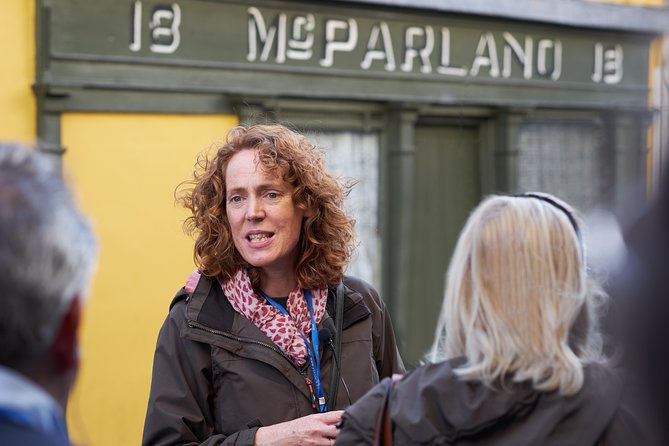
- Dr Jane O’Brien leads the walk: Her approach uses historical sources and stories about real people to explain how Ennis developed.
- Eleven central Ennis stops fit into 70 minutes: You cover a lot of ground, so comfortable shoes are useful.
- The route connects big events with small details: Expect Catholic Emancipation, the Great Famine, market traditions, punishment records, and local religious history.
- It is private for your group: The price is $270.32 for up to six people, not per person.
- Listening help is available: Jane can use an amplification device if hearing clearly in outdoor streets is difficult.
- The tour finishes near the cathedral: You can visit the Cathedral of Saints Peter and Paul afterward or return toward the start along O’Connell Street.
Why Ennis works so well as a walking-history lesson
Ennis is easy to overlook if you are racing between County Clare’s better-known sights. That would be a mistake. The town’s story is compact, layered, and visible in its streets.
The settlement began as a medieval market town in the 13th century. Its growth was tied to the O’Brien kings, the Franciscan friars, trade, religious change, and the River Fergus. Later events left their mark too, including the struggle for Catholic rights, the Great Famine, the 1916 uprising, and the harsh legal system recorded in town manuscripts.
This tour is useful because it does not treat those events as separate textbook chapters. Jane connects them to the exact corners where people lived, worshipped, traded, suffered, and gathered. You might pass a lane without giving it a second glance. Here, it becomes evidence of how crowded and unequal the town once was.
The walk is also a practical way to get oriented. You begin near the Clare Museum and finish by the Cathedral of Saints Peter and Paul, passing much of central Ennis along the way. If you have only a short visit, the route gives you a clear sense of what to revisit later.
More History Tours in County Clare:
- Private Ennis Dark History Tour with Dr Jane O’Brien (1-6 people)
★ 5.0 · 13 reviews - Aran Knitting, History and Heritage in the Burren
★ 5.0 · 11 reviews - Dublin Historical Centre Food Tour with 8 Food Tastings & Drinks
★ 5.0 · 1,718 reviews
Starting beside the Clare Museum
The meeting point is the Ennis Tourist Information Centre on Arthur’s Row, off O’Connell Street. The first stop is beside the Clare Museum, on the former site of the convent building used by the Sisters of Mercy.
This opening sets up the town’s early story. You learn how Ennis grew from a medieval settlement and why its position mattered. The stop itself is short, about five minutes, so do not expect an extended museum visit as part of the tour. The value is the introduction, which gives you a framework for the streets ahead.
That distinction matters if you are choosing between a walking tour and a museum visit. This experience is primarily outdoors and interpretive. It points out the historical clues around town rather than relying on long indoor displays.
Daniel O’Connell and the meaning of Catholic Emancipation
At the Daniel O’Connell Monument, Jane explains one of the most important political milestones connected with Ennis: Catholic Emancipation.
The monument is in the centre of town, and this location helps connect national politics with local public life. The story is not presented as an abstract change in law. It is tied to a place where events unfolded and where public support mattered.
You spend roughly five minutes here, so the stop offers a focused explanation rather than a full political lecture. I like this kind of pause because it gives you a key piece of Irish history early in the walk. It also prepares you to notice how religion and public power shape several later stops.
Abbey Street and Ennis’s narrow bow-ways
The tour then slips into one of Ennis’s atmospheric bow-ways on Abbey Street. These small lanes connected the main streets with poorer tenement areas.
This is one of the more revealing parts of the walk. Grand buildings tend to dominate sightseeing, but a narrow lane can tell you more about ordinary housing and social divisions. Jane uses the space to explain how different parts of the town were connected, and how people living in less comfortable conditions fit into the urban story.
The stop lasts only about five minutes. You will not be exploring every lane in Ennis, but you will understand why these passages matter. Look closely at the scale and layout. The point is not just that the lane is atmospheric. It shows how tightly packed the older town could be.
A few more County Clare days to weigh up
- Dublin to Cliffs of Moher, including Wild Atlantic Way and Galway
★ 5.0 · 23,331 reviews - From Dublin: Cliffs of Moher, Burren & Galway City Day Tour
★ 4.8 · 18,888 reviews - Dublin to Cliffs of Moher, Burren, Wild Atlantic Way, Galway Tour
★ 5.0 · 12,924 reviews - Dublin: Cliffs of Moher, Atlantic Edge & Galway City
★ 4.7 · 4,293 reviews
The friars, the Fergus, and the 1916 memorials
At Ennis Friary, dating from about the 1280s, the focus shifts to the Franciscan friars and their role in Ennis.
This is one of the tour’s most layered stops. You get religious history, the growth of the town, a view toward the River Fergus, and memorials connected with the 1916 uprising. The river view adds a welcome change after the narrow lane, while the memorials bring the story into Ireland’s modern political era.
The Old Ennis Abbey area is visually appealing, but the walk is not simply a photo stop. Jane explains how the friars helped shape local life and why religious institutions mattered so much in a town where political and religious authority kept changing.
You have about five minutes here. If you want to explore the friary in great detail, allow separate time beyond the tour. The guided visit gives you context and orientation rather than a long architectural inspection.
Francis Street and the town’s O’Brien connection
Francis Street is described as the oldest street in Ennis. It leads toward the former palace associated with the O’Brien kings, the family linked with the town’s foundation.
This stop helps explain why the name O’Brien appears so often in County Clare. It also puts Ennis into a wider story of local rulers, religious institutions, and town development. The route then includes a friary built originally in the 1850s, where you can see stained glass and experience a quieter atmosphere.
The contrast works well. One part of the stop points back to medieval power, while the later friary reflects a different period of Catholic life. In around five minutes, you receive a compact lesson in how the same street can carry several layers of time.
Arthur’s Row and difficult stories from the convent
Back near the old convent building on Arthur’s Row, the tone becomes more serious. Jane discusses archived accounts involving children from the orphanage and industrial school once located on the site.
This is important material, and it gives the tour moral weight. Irish history is not only monuments, churches, and political victories. It also includes institutions that affected children’s lives in painful ways. The stop shows why local history needs more than dates and attractive buildings.
Because the subject is difficult, you may appreciate Jane’s source-based approach. The supplied information does not promise a long archival presentation, but it does indicate that the stories come from documented experiences. Expect a short, sober introduction rather than a complete history of the institution.
McParland House and the oldest working house in town
On Parnell Street, the tour pauses at McParland House, dated to about 1620. It is described as the only known surviving timber-framed house in Ireland and the oldest house in Ennis to remain in continuous use without major structural alterations.
The old shopfront and half-door make this stop especially easy to picture. You do not need much imagination to see how it once belonged to a working market town. Details like this are among the most satisfying parts of the tour because they make history physical and specific.
The building is not presented as an isolated showpiece. Its continued use matters. You are looking at a structure that has remained part of town life instead of being preserved only as a museum object.
The stop takes about five minutes, so you should not expect a full interior tour. Still, it is one of the clearest examples of how Ennis’s past remains visible in the ordinary street.
Chapel Lane and the hard years of the Great Famine
Beside the Chapel Lane market building, Jane explains that the structure was once a church built in 1735 during the penal times.
The lane also opens the discussion of overcrowding during the Great Famine. This is where the tour moves from political and religious change to the physical conditions that shaped survival. Crowded lanes and market areas were not just picturesque corners. They were places where poverty, hunger, work, and illness were closely connected.
You may find this stop more affecting because the setting remains part of the town’s everyday fabric. The five-minute visit cannot cover every aspect of the famine in County Clare, but it gives you a local frame for a national disaster.
For me, this is one of the tour’s most useful habits: it keeps returning to Ennis itself. Instead of treating the famine as a distant event, it asks you to consider what it meant for a particular town and its streets.
Market Place, trading, matchmaking, and faction fights
At Market Place, the focus turns to Ennis as County Clare’s main market town.
Markets once handled livestock and produce, but they were also social occasions. People met friends, arranged matches, exchanged news, and sometimes took part in faction fighting. The market was commercial, social, and occasionally violent all at once.
Jane also explains the meaning of the Market Day sculpture now located on the site. This makes the stop easy to remember because the sculpture gives you something concrete to examine while hearing about the older customs.
The subject is lively, but do not mistake lively for light. Markets were central to survival and status. They brought people together, yet they also exposed disputes and local rivalries. This is a good example of the tour’s balance between everyday life and larger events.
Barrack Street and the punishments of 1660
Barrack Street was once the town’s Gallows Green. Here Jane uses the Ennis corporation manuscript from 1660 to discuss crimes and punishments.
This may be the most startling stop for anyone accustomed to polished heritage tours. The punishments recorded in old municipal documents can seem severe by modern standards. A short discussion here reminds you that historic towns were governed by rules backed by public shame, physical penalties, and sometimes death.
The subject is handled as part of the town’s documented past, not as a theatrical horror story. That is a strength. You get a glimpse of how local authorities understood order and wrongdoing, and how different those assumptions can be from your own.
Again, the five-minute timing keeps things moving. If you enjoy legal and social history, you will probably wish for more time. The upside is that the stop adds variety to a route already covering religion, famine, politics, and architecture.
Finishing at the Cathedral of Saints Peter and Paul
The final stop is the Cathedral of Saints Peter and Paul, the main Catholic church of the region. Construction took place between 1830 and 1870.
The cathedral is opposite the Old Ground Hotel, a site associated with the former town jail. The area also incorporates a haunted towerhouse dating from the 1500s, adding one more unexpected layer to the final stop.
The tour usually ends here, giving you a choice. You can visit the cathedral on your own or return toward the starting point along O’Connell Street, the main pedestrian shopping street. This is a sensible ending because you are not stranded at a distant attraction. You finish in a central part of Ennis with an easy route back.
The cathedral stop is also a useful final reminder that Ennis’s story is not confined to the medieval period. Its religious buildings, jail history, older towerhouse, and modern town life all occupy the same small area.
Is $270.32 good value for up to six people?
The listed price is $270.32 per group, with up to six people included. For one person, that would be expensive. For six people sharing the cost, it works out to about $45 per person. For a couple, it is about $135 each, so the value depends heavily on group size.
The private setup is the main reason to consider the price. You are not paying for a large group excursion with a fixed pace. Your group receives Jane’s attention, and you can ask questions that fit your interests. That matters if someone in your party has a family connection to Ennis or wants to focus on Irish religious, political, or social history.
One visitor with the surname Ennis found the local connection especially meaningful. You do not need that family link to enjoy the walk, but it shows how personal the town’s story can become when your own background connects with the place.
At about 70 minutes, the tour is also easy to fit into a day in County Clare. I would see it as an orientation and storytelling experience, not a substitute for spending a full day exploring Ennis independently.
Who will enjoy this Ennis walk most?
I would recommend it to you if you like:
- Local history tied to exact streets and buildings
- Small-group or private guiding
- Religious and political history
- Stories about ordinary working life
- Walking tours that keep moving
- A clear introduction before independent sightseeing
It is particularly useful for a first visit to Ennis. You can take the tour early, then return to the friary, cathedral, museum, or market areas that caught your attention.
Families and mixed-age groups may also appreciate the short format. Most people can participate, and an amplification device is available if you need help hearing outdoors. Service animals are allowed, and the meeting point is near public transportation.
The walk does involve several stops across central Ennis. You should be comfortable walking for roughly an hour and ten minutes, though the route is broken into short sections. Wear shoes suited to town streets rather than treating this as a seated lecture.
Practical details before you reserve
The tour is offered in English and uses a mobile ticket. Confirmation is provided at booking. It is a private activity, so only your group participates.
Gratuities are not required, though they are appreciated. If you need to cancel, you can receive a full refund by cancelling at least 24 hours before the local start time. Changes or cancellations made less than 24 hours ahead are not accepted for a refund.
A separate Gourmet History Tour includes snacks and local food tastings. Those food elements should not be assumed here. The Essential History Tour is the shorter historical walking experience described above.
Should you book Dr Jane O’Brien’s Ennis tour?
Book it if you want Ennis to make sense quickly, especially if you prefer human stories and local records to a list of dates. Dr Jane O’Brien’s route covers an impressive range in 70 minutes, from medieval foundations and Franciscan influence to famine conditions, old punishments, and the political story of Catholic Emancipation.
I would hesitate only if you want long visits inside each building or the lowest possible per-person price for a small party. With five or six people, the private rate is much easier to justify. For a couple, it is a more deliberate purchase.
For most visitors with limited time in Ennis, this is a strong introduction. It gets you walking, gives you a working map of the town, and leaves you with several places worth revisiting at your own pace.
FAQ
Where does the Ennis history tour begin?
The tour begins at the Ennis Tourist Information Centre on Arthur’s Row, O’Connell Street, Clonroad Beg, Ennis, County Clare, V95 RX78, Ireland.
Where does the tour end?
The activity usually ends at the Cathedral of Saints Peter and Paul. You can visit the cathedral or return to the starting area along O’Connell Street.
How long does the tour last?
The tour lasts approximately 1 hour and 10 minutes.
How many people can join the private tour?
The price covers one private group of up to six people.
What language is the tour offered in?
The tour is offered in English.
Can the guide help if I have difficulty hearing?
Yes. Dr Jane O’Brien can use an amplification device for easier listening.
Is the tour suitable for most people?
Most people can participate. The experience takes place as a walking tour through central Ennis.
Are service animals allowed?
Yes, service animals are allowed.
What is the cancellation policy?
You can cancel at least 24 hours before the experience start time for a full refund. Cancellations or changes made less than 24 hours before the start time are not accepted for a refund.
Just added around County Clare
- Cliffs of Moher, Aran Island & Burren tour from Galway. Guided.★ 4.5 · 65 reviews
- Aran Knitting, History and Heritage in the Burren★ 5.0 · 11 reviews
- Aran Island, Cliffs of Moher & Cruise tour from Galway. Guided.★ 5.0 · 137 reviews
- Cliffs of Moher & Bunratty Castle Day Tour★ 5.0 · 9 reviews
- Guided Tour of Aillwee Cave and Visit to the Birds of Prey Centre★ 4.0 · 14 reviews
- Cliffs of Moher and The Burren day trip★ 5.0 · 12 reviews
- Private Ennis Dark History Tour with Dr Jane O’Brien (1-6 people)★ 5.0 · 13 reviews
- Private Cliffs of Moher Tour Small Group from Ennis, Ireland★ 5.0 · 6 reviews
Cliffs of Moher Tours, compared.
Dublin to Cliffs of Moher, including Wild Atlantic Way and Galway
Our verdict on it →
Dublin to Cliffs of Moher, Burren, Wild Atlantic Way, Galway Tour
Our verdict on it →
Cliffs of Moher, Atlantic Edge & Galway City
Our verdict on it →
Galway to Cliffs of Moher, Aillwee Cave & Dunguaire Castle Tour
Our verdict on it →
Cliffs of Moher, Doolin, Burren, and Galway Day Trip
Our verdict on it →
Full-Day Cliffs of Moher & Burren Guided Tour
Our verdict on it →
Cliffs of Moher, Burren and Galway Day Tour from Dublin
Our verdict on it →
Browse the lists this tour appears in