
Reviewed · CLIFFS OF MOHER TOURS
Craggaunowen Admission Ticket
The most unusual part of Craggaunowen is its artificial island dwelling, a crannog reached by a concealed water path. Add a Celtic ring fort, an ancient roadway, a food-storage souterrain, and a leather boat built for a real Atlantic crossing, and you get far more than a standard museum visit.
I like the freedom to walk at your own pace, and I like the human touch from the re-enactors, including one who played the ilhan pipes. The main consideration is that much of the visit takes place outdoors, so wet weather can make the paths and lake walks less pleasant.
Key points at a glance
- Explore a real crannog setting: See how an artificial island could offer shelter and defense in the Bronze Age.
- Watch old skills brought to life: Re-enactors explain cooking, grinding corn, pottery, woodworking, and Celtic daily routines.
- See Tim Severin’s Brendan Boat: Learn about the leather-hulled vessel used to recreate St. Brendan’s reported Atlantic voyage.
- Allow about two hours: The site works well as a stop between Shannon and Dublin, with time for the main exhibits and walks.
- Look for the animals: Wild boar and Soay sheep connect the displays with animal breeds associated with Ireland’s early past.
- Bring your own food budget: Admission is about $15.38 per person, while food and drinks at the farmhouse tea-room cost extra.
Why Craggaunowen feels different from a museum
Craggaunowen is an open-air journey through Irish life before modern roads, electric light, and permanent stone towns. You are not simply reading dates from glass cases. You walk between reconstructed dwellings, cooking areas, defensive structures, a castle, and a lake, with the setting doing much of the teaching.
That physical layout matters. A ring fort makes more sense when you can see where people lived and worked. A souterrain is easier to understand when you can imagine it as both a cool food store and a possible escape route. The crannog becomes more than an archaeological term when you cross toward an island home protected by water.
The visit is self-guided, so you control the pace. You can spend extra time at the castle, stop to watch a demonstration, or move briskly through a display that interests you less. This suits independent visitors who prefer not to follow a fixed group schedule.
The site is also easy to fit into a wider County Clare drive. It is near Shannon, and one visitor used it as a worthwhile stop while driving from Shannon toward Dublin. Plan on roughly two hours for a comfortable visit, though the amount of time you spend walking and looking closely is up to you.
A few more County Clare days to weigh up
- Dublin to Cliffs of Moher, including Wild Atlantic Way and Galway
★ 5.0 · 23,331 reviews - From Dublin: Cliffs of Moher, Burren & Galway City Day Tour
★ 4.8 · 18,888 reviews - Dublin to Cliffs of Moher, Burren, Wild Atlantic Way, Galway Tour
★ 5.0 · 12,924 reviews
The crannog and the Bronze Age settlement
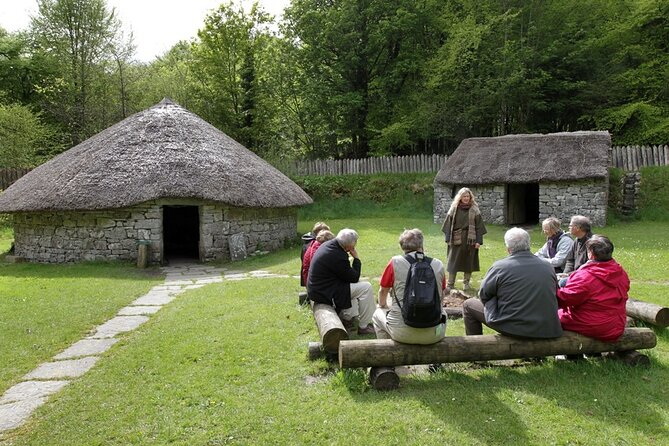
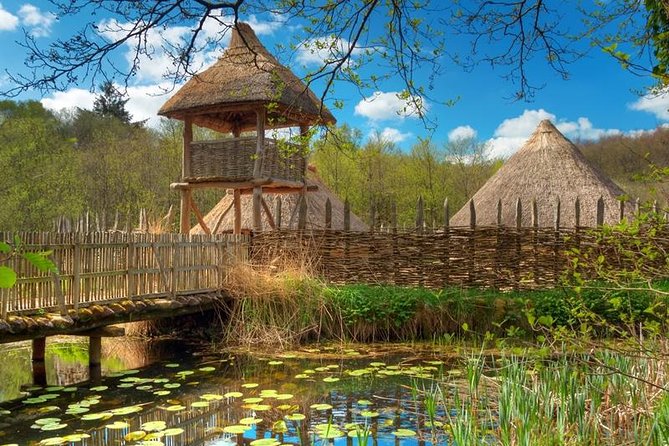
Start with the crannog, one of the most memorable parts of the site. A crannog is an artificial island dwelling, built in water and reached by a hidden pathway. Its location was not chosen for a postcard view. Water offered protection, and the concealed approach made access harder for an enemy.
The structure gives you a practical sense of how early communities adapted to their surroundings. Instead of imagining Bronze Age life as primitive and helpless, you see planning, defense, food production, and building skills working together.
You can also think about the limits of the reconstruction. This is an interpretation of early life, not an untouched Bronze Age settlement. Its value comes from helping you picture how the evidence might have worked in daily use. Walk slowly and notice the relationship between the dwelling, the water, and the surrounding ground.
The open-air setting helps, but it also means you should expect some walking outside. Comfortable shoes and a weatherproof layer will make the visit easier, especially if you want to include the lake walks.
The ring fort and everyday Celtic work
The ring fort shifts the focus from a single island home to a wider settlement. Here you see how people cooked, stored food, prepared grain, and made useful objects by hand.
Open fires and cooking pits show two basic methods of preparing meals. The displays also explain an ingenious method used to feed large numbers of hunters during forest expeditions. Fresh meat, a large pit, and a length of rope were part of a sophisticated cooking process. It is the sort of detail that makes the past feel practical rather than remote.
At the querns, you can see how corn was ground by hand for bread or porridge. This is a small task with a big lesson: food took time, labor, and teamwork long before a kitchen appliance reduced the effort to a button press.
The ring fort also covers pottery, wooden bowls, goblets, and platters. These objects were not luxury decorations. They were part of the ordinary work of eating, storing, and serving food. I find this section especially useful if you are visiting with children, since the questions are easy to grasp: How did people cook? How did they make a bowl? How did they turn grain into a meal?
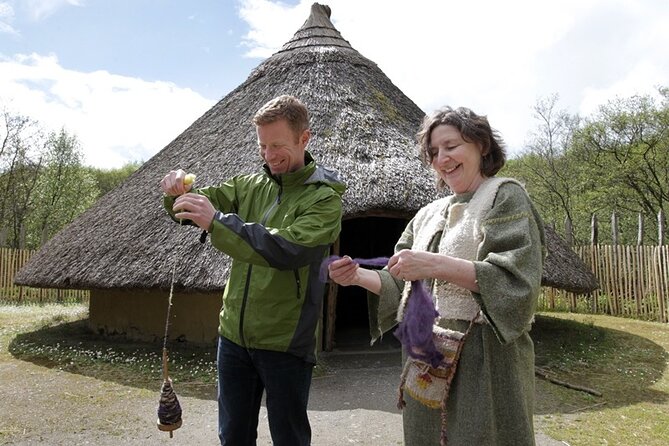
The re-enactors add life to the displays. They explain what is happening and answer questions in a friendly way. One performer even played the ilhan pipes for a visitor, an unexpected musical moment that helps the settlement feel active rather than staged and silent.
The souterrain and Ireland’s old roadway
Craggaunowen includes a roadway, or togher, dating to 148 BC. That date gives the path real weight. Roads are easy to overlook, but they reveal how people moved through wet or difficult ground and how communities connected with one another.
You can also explore the souterrain. It was designed to store food, but underground spaces could serve another purpose when a settlement came under attack. The idea of a cool storage area that might also become an escape route gives this part of the visit a touch of suspense.
The souterrain is also one of the more playful features of the site. Its confined passages naturally invite a little hide and seek, though young children must stay with an adult. The experience is less about a long guided explanation and more about seeing how a simple underground structure could solve several problems at once.
These elements help explain why Craggaunowen works best as a place you walk through rather than a place you merely inspect. The roadway, fort, underground passage, and water defenses all connect to basic needs: movement, food, shelter, and safety.
More Attraction Tickets in County Clare:
- Skip the Line: Bunratty Castle and Folk Park Admission Ticket
★ 4.5 · 200 reviews - Ballyvaughan: Aillwee Burren Experience Entry Ticket
★ 4.9 · 11 reviews - Dublin: Guinness Storehouse Entry Ticket
★ 4.6 · 16,863 reviews - St Patrick’s Cathedral: Self-Guided Cathedral Admission
★ 4.5 · 2,126 reviews
The Brendan Boat and an Atlantic story
The Brendan Boat adds a later religious and maritime chapter. It was built by Tim Severin, who sailed a leather-hulled boat across the mid-Atlantic to recreate the reported voyage of St. Brendan and early Christian monks.
The boat is a striking object because its construction looks so different from the wooden ships most people picture. Its presence also introduces an old question: who reached America first? The story is tied to the belief that St. Brendan and other monks may have crossed the Atlantic centuries before Columbus.
You do not need to settle that historical debate to appreciate the boat. The important point is the experiment. Tim Severin tested whether a vessel made in the style described in early accounts could handle a demanding ocean voyage. At Craggaunowen, the boat turns a legend into something you can examine at close range.
This is a strong stop for anyone interested in sailing, exploration, early Christianity, or the practical limits of traditional boatbuilding. It also breaks up the focus on settlement life, showing that early Irish history includes seafaring as well as farming, hunting, and defense.
Craggaunowen Castle above the lake
The restored 16th-century Craggaunowen Castle was built in 1550 and sits on a crag above the lake. After the low structures of the ring fort and crannog, the castle feels like a clear change in scale and period.
The position is part of the appeal. From the castle, you get views across the countryside and toward the water. It is a good place to pause, take in the setting, and remember that this attraction covers more than one era of Irish life.
The castle is restored, so it should not be treated as an untouched medieval interior. Its role is to show how a later fortified residence differs from earlier homes and defensive sites. You can compare the materials, height, and outlook with the more modest settlement buildings nearby.
That contrast gives the visit a useful timeline. You move from early Bronze Age survival skills to Celtic domestic life, early Christian seafaring, and a fortified 16th-century residence, all within one rural site.
Animals, lake walks, and the farmhouse tea-room
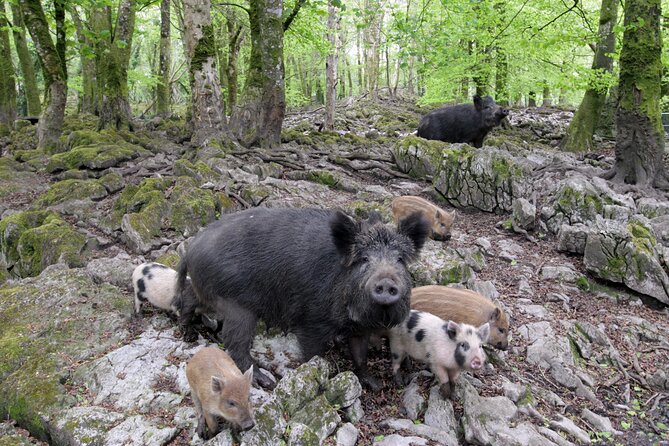
Craggaunowen is not only about buildings. You may see wild boar and Soay sheep, animals linked with Ireland’s prehistoric era. The sheep are particularly easy to enjoy, and the setting may also include donkeys and ponies in the yellow iris fields near the entrance.
The animals soften what could otherwise be a very information-heavy visit. You can stop watching a demonstration, take a short break, and look at creatures that connect with the story of early food and farming.
Lake walks add fresh air and a quieter stretch to the visit. They are worth including if the weather is agreeable and you have time beyond the main structures. The site’s rural setting is part of its character, but it also means you should not expect an indoor attraction where every exhibit is protected from rain.
The farmhouse tea-room offers homemade food, but food and drinks are not part of the admission price. I would treat it as a useful break rather than assume it is included in your budget. If you are planning a tight schedule, allow time for the café only if you want to stop.
Price, time, and practical value
Admission is listed at $15.38 per person, with taxes, fees, and handling charges included. For a visit of about one to two hours, that is a reasonable price if you are interested in Irish archaeology, traditional skills, castles, or open-air historic sites.
The value comes from variety. You are paying for access to the crannog, ring fort, castle, Brendan Boat, roadway, souterrain, animal areas, and walks rather than for one single exhibit. The self-guided format also lets you avoid paying for a longer organized tour when you only want a focused stop.
At the same time, the visit may feel short for someone expecting a full-day attraction. You can cover the main areas in around two hours, especially if you walk steadily. The price makes the most sense as part of a County Clare itinerary or a road trip between Shannon and Dublin, not necessarily as the only activity of your day.
Opening hours are listed as 10 a.m. to 5 p.m., Monday through Sunday, for the stated operating period. Check the date details when booking, since the supplied schedule uses a date range that may need confirmation.
Your mobile ticket is accepted, and confirmation is provided at booking. Children must be accompanied by an adult. Service animals are allowed, the site is near public transportation, and most people can take part. The booking information lists a maximum of one traveler, which appears to describe the booking setup rather than the physical capacity of the open-air site, so confirm if you are arranging a larger party.
Free cancellation is available until 24 hours before the start time. Inside that window, the amount paid is not refunded, and changes are not accepted.
Who will enjoy Craggaunowen most
I would choose Craggaunowen if you like history that you can see at ground level. It suits independent visitors, families who enjoy hands-on questions, road trippers, and anyone who wants more context for Ireland’s early settlements.
It is also a good choice if you have already seen grand castles and want something more connected to ordinary work: cooking meat in a pit, grinding grain, making pottery, storing food, and finding shelter. The castle adds a familiar architectural highlight, but the earlier dwellings are the heart of the experience.
You may want to skip it if you have very little time near Shannon and prefer a tightly scheduled indoor museum. The site involves outdoor walking, and the full value depends on your willingness to read, look closely, and move between different areas.
The re-enactors make a real difference, but this is not a nonstop performance. Their presence may vary by time and day. Think of them as helpful interpreters who bring the settlement to life when you meet them, not as a scheduled show with a fixed cast.
Should you book Craggaunowen?
Book it if you want a relaxed, two-hour look at Ireland’s early homes, food, defenses, crafts, and boats, with a medieval castle and lake setting added to the mix. The crannog, souterrain, and Brendan Boat give the visit memorable features, while the re-enactors and animals keep it from feeling like a walk through empty structures.
I would especially recommend it as a stop between Shannon and Dublin, or as a County Clare outing for people who enjoy history at their own pace. Bring sensible shoes, allow extra time if you want the lake walk or tea-room, and keep your expectations focused on an outdoor historic site rather than a large museum. At $15.38, it offers solid value for a compact and varied visit.
FAQ
Where is Craggaunowen located?
Craggaunowen is at Craggaunowen Castle and Crannóg, Craggaunowen, Kilmurry, County Clare, V95 AD7E, Ireland.
How long does a visit take?
The visit takes about one to two hours, with two hours listed as the approximate duration.
What are the opening hours?
The listed opening hours are 10 a.m. to 5 p.m., Monday through Sunday, during the stated operating period.
Is the experience self-guided?
Yes. You can explore the site at your own pace and visit the displays and exhibits independently.
What is included in the admission price?
Admission to Craggaunowen and access to the displays and exhibits are included. Taxes, fees, and handling charges are also included.
Are food and drinks included?
No. Food and drinks are not included, though the site has a farmhouse tea-room serving homemade fare.
Can children visit Craggaunowen?
Yes, but children must be accompanied by an adult.
Can I cancel for a full refund?
Yes. You can cancel at least 24 hours before the experience start time for a full refund. Cancellations or changes made less than 24 hours beforehand are not accepted for a refund.
Just added around County Clare
- Shannon Airport to Killarney , Private Chauffeur Service★ 5.0 · 5 reviews
- Shannon Airport to Cork, Private Chauffeur Service★ 5.0 · 9 reviews
- Shannon Airport to Galway Transfer★ 5.0 · 6 reviews
- Shannon Airport to Shandon Hotel Co. Donegal Private Car Service.★ 5.0 · 3 reviews
- Celtic Dance Party★ 5.0 · 15 reviews
- Self Guided Electric Bike Tour of Historical Sites in the Burren Co Clare★ 5.0 · 18 reviews
- Burren Guided Electric Bike tour with Poulnabrone Portal Tomb★ 5.0 · 12 reviews
- Limerick City: Private transfer to & from Shannon Airport★ 5.0 · 7 reviews
Cliffs of Moher Tours, compared.
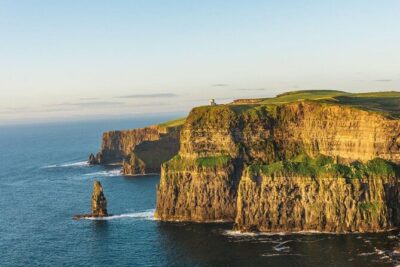
Dublin to Cliffs of Moher, including Wild Atlantic Way and Galway
Our verdict on it →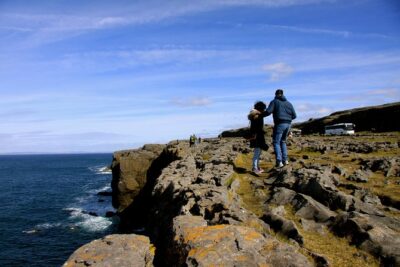
Dublin to Cliffs of Moher, Burren, Wild Atlantic Way, Galway Tour
Our verdict on it →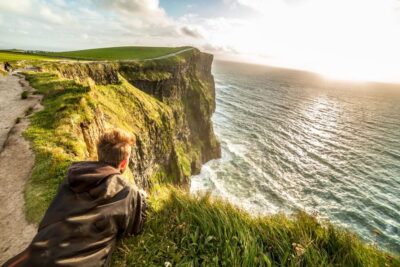
Cliffs of Moher, Atlantic Edge & Galway City
Our verdict on it →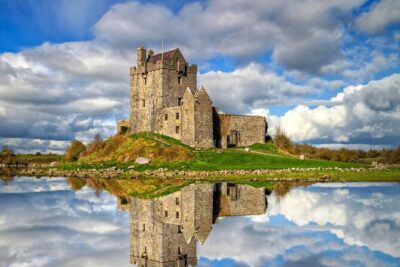
Galway to Cliffs of Moher, Aillwee Cave & Dunguaire Castle Tour
Our verdict on it →
Cliffs of Moher, Doolin, Burren, and Galway Day Trip
Our verdict on it →
Full-Day Cliffs of Moher & Burren Guided Tour
Our verdict on it →
Cliffs of Moher, Burren and Galway Day Tour from Dublin
Our verdict on it →
Browse the lists this tour appears in