
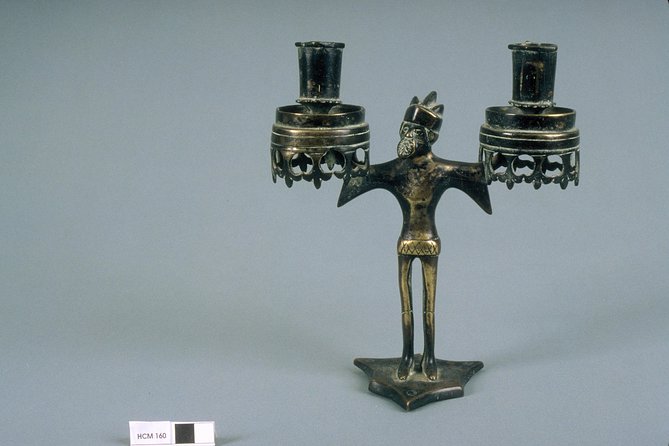
Reviewed · MUSEUMS
Skip the Line: Hunt Museum Ticket
The Hunt Museum packs an astonishing range of objects into Limerick’s old Custom House. You can move from an Irish Bronze Age shield to Egyptian and Roman pieces, medieval religious art, Irish ceramics, and paintings by Pablo Picasso and Pierre Auguste Renoir without leaving the building. I like that the collection feels personal rather than arranged as a single grand story. It reflects John and Gertrude Hunt’s curiosity, with objects gathered across centuries and cultures.
I also like the practical side: prepaid admission keeps your visit simple, and the museum makes a fine plan for a wet afternoon in County Limerick. The main caution is that the skip-the-line benefit may not matter much on a quiet day, and the displays can appeal more to adults than to teenagers or young children. Temporary exhibitions also cost extra, and they may not be running during your visit.
Key points to know before you go
- A true cabinet of curiosities: See everything from Neolithic material and Greek objects to medieval sculpture, Irish silver, and modern art.
- The historic setting matters: The collection is displayed inside the Custom House, one of Limerick’s notable buildings.
- Allow one to two hours: That is enough time for a useful visit without rushing through the main rooms.
- A strong rainy-day choice: The entire experience takes place indoors and works well as a break from wet County Limerick weather.
- Small group format: The activity allows a maximum of nine people, which can make an expert introduction easier to follow.
- Check temporary exhibitions: Shows such as Lavery & Osborne: Observing Life require paid admission beyond the standard museum visit.
Entering Limerick’s Custom House
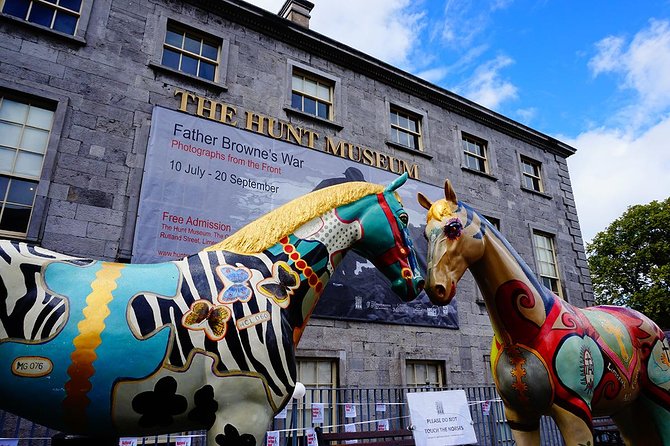
The Hunt Museum is housed in the Custom House, an important part of the experience rather than a simple container for the exhibits. You enter an old civic building and then encounter a collection that ranges from prehistoric Ireland to twentieth-century Europe.
That contrast gives the museum its character. One case may focus on Irish archaeology, while another presents fine art or decorative objects from much farther away. I like this sense of discovery because you are not following a single narrow subject. The museum asks you to notice how different people, periods, and materials fit together.
Your prepaid ticket covers admission to the permanent collection. The experience is offered in English, and an expert introduction to the Hunt Museum collections is included. The group is capped at nine people, so you should not expect a large coach tour moving through the rooms.
The stated visit time is roughly one to two hours. I would plan for the full two hours if you enjoy looking closely at labels and smaller objects. If you are combining the museum with other sights in central Limerick, one hour can give you a useful overview.
More Museums in Ireland:
- Irish Rock ‘N’ Roll Museum Experience Dublin
★ 5.0 · 6,112 reviews - The Little Museum of Dublin Famous Guided Tour
★ 5.0 · 2,948 reviews - Dublin EPIC Museum Admission Ticket
★ 4.5 · 1,729 reviews
From Neolithic Ireland to the Iron Age

The oldest material gives the museum a firm Irish base. The collection includes prehistoric archaeological objects from the Mesolithic period through the Iron Age, with a particularly striking Bronze Age shield and cauldron.
These pieces help turn broad dates into something easier to picture. Instead of reading only about prehistoric Ireland, you can look at objects made and used by people who lived thousands of years ago. I find this section especially useful if you have been visiting castles, churches, or archaeological sites elsewhere in Ireland and want more context for the country’s early past.
The museum also includes material from the early Christian period. Heavy monastic bells and the ninth-century Antrim Cross are among the objects to look for. The cross is one of the better-known pieces in the collection, while the bells offer a more physical sense of early religious life.
Do not race through these cases. The smaller objects can be easy to miss beside the famous pieces, yet they often show the everyday side of the collection. If you have children with you, you may need to point out the strongest visual items yourself, since the museum’s broad range may not hold every young visitor’s attention.
Greek, Roman, Egyptian, and Olmec objects
The Hunt collection reaches well beyond Ireland. You can find antiquities linked with Greece, Rome, Egypt, and the Olmec civilisation.
This international material is one of the museum’s pleasant surprises. You might arrive expecting mostly Irish art and archaeology, then discover that a large part of the collection reflects John and Gertrude Hunt’s interest in Mediterranean and wider world cultures.
I would give this section time even if your main goal is Irish history. The objects add useful perspective to the local material, and they explain why the Hunt Museum feels different from a narrowly focused regional museum.
The displays are not presented as a single chronological march from old to new. That is worth knowing before you arrive. You will get more from the museum if you treat it as a collection of linked discoveries rather than expecting one perfectly straight route through history.
Medieval Europe and the strength of the Hunt collection
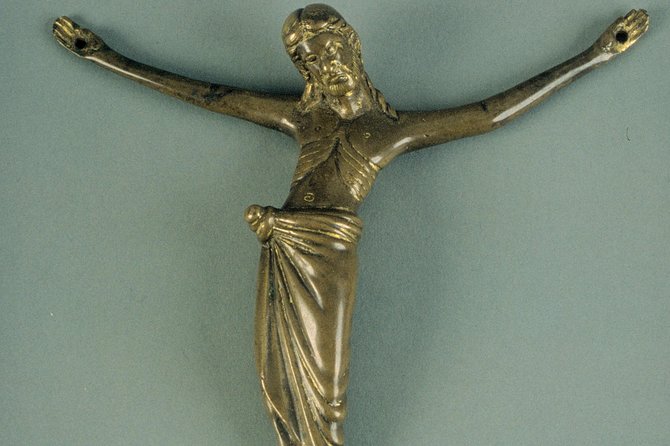
The medieval holdings are one of the collection’s main strengths. They include stone and wooden statues, painted panels, jewellery, enamels, ivories, ceramics, crystal, and crucifixes.
The range of materials matters. Medieval art is not limited here to paintings or church sculpture. You can compare the look and feel of carved wood, polished metal, decorated enamel, and small luxury objects. I like this approach because it shows how art and craftsmanship worked across daily and religious life.
The religious pieces can be solemn, but the variety keeps the rooms from feeling repetitive. Look for details in the carved figures, the painted surfaces, and the smaller devotional objects. The museum rewards patient looking more than a quick checklist of famous names.
This is also the point where an expert introduction can add real value. A short explanation of what you are seeing can help you connect an unfamiliar medieval object with its material, function, or period. The small group limit makes it easier to hear and follow such an introduction than it would be in a crowded group.
More skip-the-line entries in Ireland:
- Dublin: Skip-the-Line Guinness and Jameson Whiskey Tour
★ 4.7 · 771 reviews - Skip the Line: Hook Lighthouse Entrance Ticket and Guided Tour
★ 5.0 · 470 reviews - Skip the Line: The National Wax Museum Admission Ticket
★ 4.0 · 216 reviews - Skip the Line: Irish Night Show Including 4-Course Dinner Ticket
★ 4.5 · 216 reviews
Decorative arts from the eighteenth and nineteenth centuries
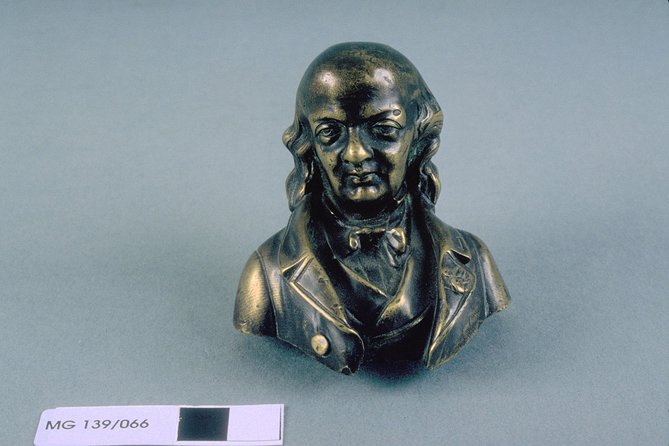
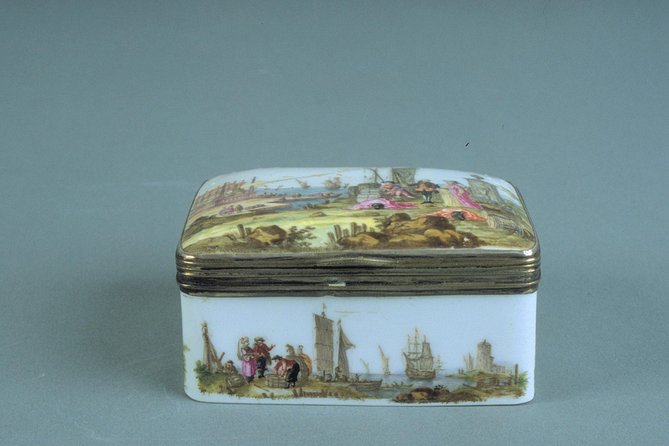
The collection continues into eighteenth- and nineteenth-century decorative art, with examples of silver, glass, and ceramics.
This section gives you a change of pace after the archaeological and medieval material. The objects are not only attractive; they show how design, manufacture, and taste changed over time. I would pay attention to the difference between objects made for worship, practical use, display, and personal adornment.
The Hunt Museum is particularly useful for people who enjoy objects that sit between art and daily life. A piece of silver or glass may not carry the instant recognition of a famous painting, but it can reveal just as much about status and fashion.
If decorative arts are not normally your priority, give this area at least a few minutes. It helps explain the broad interests of the Hunts and prevents the visit from becoming a simple ancient-history stop.
Picasso, Renoir, Jack B. Yeats, and other artists

The museum’s fine-art collection includes works by Pablo Picasso, Pierre Auguste Renoir, Roderic O’Conor, Jack B. Yeats, Robert Fagan, and Henry Moore.
The presence of these names gives the museum extra appeal for people who want both objects and paintings in the same visit. You are not committing to a large modern art museum. Instead, you get selected works within a wider collection of antiquities and decorative art.
Jack B. Yeats and Roderic O’Conor are especially relevant if you want to connect the museum to Irish art. Picasso, Renoir, and Henry Moore add an international frame. I would not visit expecting a huge gallery devoted to any one artist. The pleasure comes from seeing these works alongside the much older pieces.
The exact display can change. One visit may include a temporary art exhibition, while another may not. That matters if you are booking mainly for a special show. Standard admission covers the museum collection, but temporary exhibitions are paid separately.
Irish contemporary ceramics and changing exhibitions
The Hunt Museum also has a notable collection of Irish contemporary ceramics, including work by Frances Lambe, Henry Pim, and Christy Keeney.
This is an appealing stop for anyone interested in how Irish art continues beyond painting and archaeology. Ceramics bring attention to shape, surface, texture, and the maker’s hand. They also provide a modern counterpoint to the older objects in the building.
Temporary exhibitions add another reason to check what is showing before you book. Lavery & Osborne: Observing Life, for example, focuses on two Irish nineteenth-century artists influenced by plein-air and naturalist ideas. The exhibition includes portraits of important figures, including Hazel Lavery and Queen Victoria, along with genre scenes.
That kind of show can change the balance of your visit. If a temporary exhibition is open, you may want more than two hours. If it is not, the permanent collection still gives you plenty to see, but your visit will feel more focused on the Hunt family collection and its broad range of objects.
What the Hunt family adds to the visit
The collection makes more sense when you know something about John and Gertrude Hunt. They built a successful business supplying museums and collectors, but they also kept objects that caught their own attention.
That personal taste is visible in the variety. The museum is not simply a national collection arranged to cover every period evenly. It feels like the record of two people who were curious about art, history, craft, and unusual objects.
The Hunts donated their collection to the people of Ireland. I like that the museum lets you see both the public value and the private personality behind the objects. Some museums feel formal and distant. Here, the mix of pieces suggests how collecting can begin with curiosity and grow into something much larger.
A volunteer guide may sometimes be leading visitors through the displays. If that happens during your visit, it is worth joining for a while. A guide can point out connections and small details that are easy to miss when you walk through alone. The available information does not guarantee a volunteer tour at a specific time, so treat it as a possible bonus, not part of the fixed booking.
Is the $15 price good value?
At $15 per person, this is a reasonable paid museum stop if you plan to spend at least an hour with the collection. The value comes from the range: Irish archaeology, international antiquities, medieval art, decorative arts, modern artists, and ceramics all appear under one roof.
The ticket becomes more useful when you value a simple, prepaid visit. You do not need to arrange transport as part of the experience, and getting to the museum is your responsibility. The museum is near public transportation, which helps if you are exploring Limerick without a car.
The skip-the-line promise should be viewed in proportion. One French-language comment questioned whether there are often long lines, and that is a fair point. The practical benefit may be modest on a quiet day. Still, prepaid admission saves you one step, and it can be worthwhile during busier periods or when you are fitting the museum into a tight schedule.
Group discounts are available. If you are visiting with several people, check the final price before booking, since that may improve the value.
Who will enjoy this museum most?
I would recommend the Hunt Museum to adults who like history, art, archaeology, and unusual objects, especially people who enjoy moving between subjects rather than focusing on one period.
It also suits a rainy afternoon. The museum gives you a solid indoor activity without requiring a full day, and the one to two-hour length fits well between other Limerick plans.
Families can use it successfully, but I would set expectations. The collection is family-friendly in the sense that most people can participate and service animals are allowed, yet the broad displays may not hold the attention of every child or teenager. Pick a few targets before entering: the Bronze Age shield and cauldron, the Antrim Cross, the monastic bells, or the Picasso and Renoir works.
Art-focused visitors should check the temporary exhibition schedule. History-focused visitors can enjoy the permanent collection even if no special exhibition is running.
Practical details for planning your visit
The museum is open Tuesday through Saturday from 10:00 a.m. to 5:00 p.m. The stated opening hours apply for both 2025 and 2026. It is not open every day, so check your Limerick schedule before relying on it as a Sunday or Monday plan.
Your confirmation arrives when you book, and mobile tickets are supported. The activity is offered in English. Transportation to and from the attraction is not included, so plan your route separately.
Most people can participate, and service animals are allowed. The maximum group size is nine. Free cancellation is available if you cancel at least 24 hours before the start time. Changes or cancellations made inside that 24-hour window are not accepted for a refund, with cut-off times based on local time.
Should you book the Hunt Museum ticket?
Book it if you want a compact, indoor Limerick experience with more range than its modest size suggests. The best reason to go is the unusual combination of Irish archaeology, ancient Mediterranean objects, medieval European art, decorative pieces, ceramics, and modern names such as Picasso and Renoir.
I would be less eager to book solely for the skip-the-line promise, since long queues may not be common. I would also check the temporary exhibition schedule if a special show is your main interest, because those exhibitions cost extra and may not be available.
For most people, the $15 ticket is worthwhile when you have one to two hours, enjoy museums with a personal feel, and want a reliable rainy-day plan. Bring a little patience for the varied displays, choose a few highlights, and let the collection’s unexpected turns do the rest.
FAQ
Where is the Hunt Museum?
The Hunt Museum is in Limerick, Ireland, inside the Custom House.
How much does admission cost?
The listed price is $15 per person.
How long should I allow for the visit?
Allow approximately one to two hours.
What days is the museum open?
The museum is open Tuesday through Saturday.
What are the opening hours?
Opening hours are 10:00 a.m. to 5:00 p.m.
Is the ticket available on a mobile phone?
Yes. Mobile tickets are supported.
Is transportation included?
No. Transportation to and from the attraction is not included.
Is the experience offered in English?
Yes. The experience is offered in English.
Is the museum suitable for families?
Yes. It is described as family-friendly, and most people can participate. Some displays may appeal more to adults than to young children or teenagers.
Can I cancel for a full refund?
Yes. You can cancel for a full refund up to 24 hours before the experience start time. Cancellations or changes made less than 24 hours in advance are not accepted for a refund.
Just added around Ireland
- Cliffs of Moher, Aran Island & Burren tour from Galway. Guided.★ 4.5 · 65 reviews
- Aran Knitting, History and Heritage in the Burren★ 5.0 · 11 reviews
- Chauffeur Tours from Galway★ 5.0 · 16 reviews
- Abalone farm tour and tasting with coastal seaweed walk. Guided. 2 hours★ 5.0 · 4 reviews
- Aran Islands Bike Tour with Tea and Scones from Galway★ 5.0 · 101 reviews
- Aran Island, Cliffs of Moher & Cruise tour from Galway. Guided.★ 5.0 · 137 reviews
- Cliffs of Moher & Bunratty Castle Day Tour★ 5.0 · 9 reviews
- Guided Tour of Aillwee Cave and Visit to the Birds of Prey Centre★ 4.0 · 14 reviews
Museums, compared.

Irish Rock ‘N’ Roll Museum Experience Dublin
Our verdict on it →
The Little Museum of Dublin Famous Guided Tour
Our verdict on it →

Giant’s Causeway with the Titanic Exhibition and the best of Northern Ireland
Our verdict on it →
Irish Whiskey Museum Tour and Whiskey Tasting
Our verdict on it →

Irish Whiskey Museum: Whiskey Blending Experience
Our verdict on it →
Irish Whiskey Museum Blending Tour with Tastings
Our verdict on it →Browse the lists this tour appears in