
Reviewed · HISTORICAL TOURS
The Queenstown Story @ Cobh Heritage Centre , Great Stories of Emigration.
Cobh’s Queenstown Story turns a beautiful old railway station into a personal account of Irish emigration. You follow people leaving Ireland for the Colonies, America, the West Indies, and later destinations, then connect those journeys to the Great Famine, Titanic, and Lusitania. It is history told through human choices, not just dates on a wall.
I like the independent format, since you can move at your own pace and return later the same day. I also like the mix of listening, watching, reading, and hands-on features such as Morse code, plus the handy location beside the cruise pier and Cobh railway station.
The main consideration is that this is not a traditional guided tour. The central experience is self-directed, and the displays require time and attention. A skip-the-line ticket may save time on a busy day, but it will not change the route or provide a personal guide through every exhibit.
Key points to know before you go
- Follow one emigrant’s story: The interactive format can give the broad subject a personal focus.
- Start in a Victorian railway station: The building itself connects Cobh’s railway past with the port’s overseas departures.
- Look beyond Titanic: Emigration and the Great Famine take center stage, with Titanic and Lusitania as important parts of the story.
- Plan for 60 to 100 minutes: The stated visit takes about an hour, but you can spend closer to 90 minutes or more if you read and listen carefully.
- Use the location to your advantage: The centre is only a short walk from the train station and close to the cruise ship pier.
- Save time for the café: Scones, cream, jam, coffee, and tea give you an easy pause before or after the exhibition.
Cobh’s railway station is part of the story
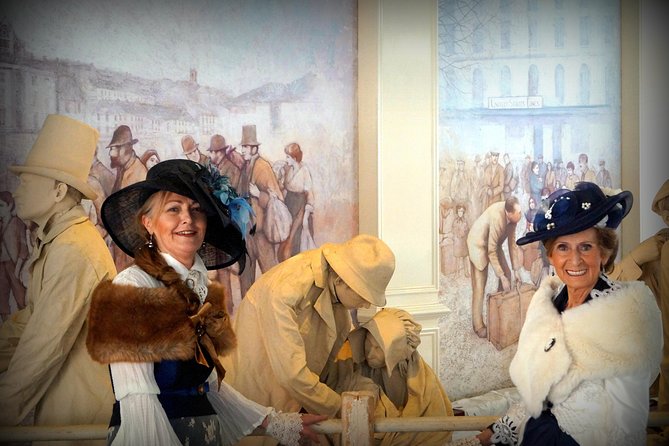
The Queenstown Story begins inside a restored Victorian railway station at Deepwater Quay. That setting matters. You are not entering a modern gallery built without a connection to the past. You are standing in a building linked to the movement of people toward Cobh’s port, where many Irish emigrants began the sea journey to a new life.
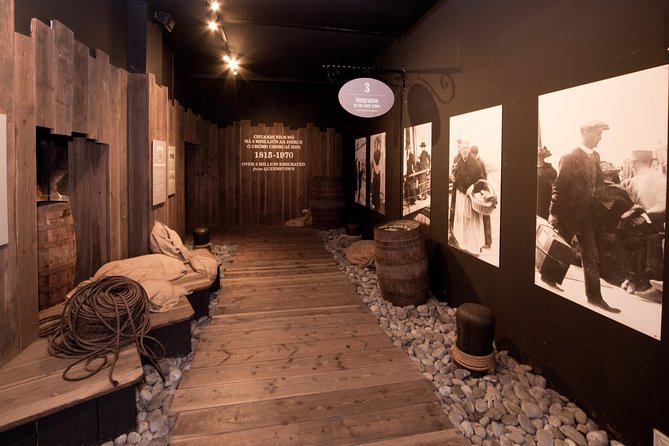
The exhibition starts in the 1600s, when people left Ireland for the American Colonies and the West Indies. From there, it follows changing patterns of departure and settlement across the centuries. The scale is striking: the centre presents the stories of more than three million Irish emigrants.
I like that the timeline is not limited to one famous ship or one period of Irish history. Titanic is part of the experience, but it does not swallow the subject. You also learn about the Great Famine, the reasons people left Ireland, and Cobh’s place in the country’s maritime and military story.
The building has high ceilings and a strong Victorian character. That gives the first few minutes of your visit a sense of place before you even reach the main displays.
More History Tours in Cork
- Dublin to Cork, Blarney Castle & Cóbh Heritage Centre by train
★ 4.5 · 510 reviews - Cork: Guided Historical Walking Tour
★ 4.7 · 310 reviews - Historic Cork Delicious Donut Adventure by Underground Donut Tour
★ 5.0 · 232 reviews
An independent route through Irish emigration
This is a self-guided museum experience, so you set the speed. The stated visit takes about one hour, but you can easily allow 90 minutes if you stop for the audio, video, and written material.
The displays move through time and destinations. You begin with early departures, then follow later waves of emigration and the changing reasons behind them. Some people left because of economic hardship. Others were pushed out by famine, limited opportunity, or political and social pressures. The exhibition helps you see that Irish emigration was not one single event, but a long series of departures shaped by different conditions.
One especially effective feature gives you the name of an emigrant to follow through the displays. Instead of treating the subject as a set of population figures, the format asks you to imagine the journey through one person’s experience. It is a clever way to keep your attention as you move between dates, destinations, and larger events.
You will find a mix of things to read, listen to, and watch. That variety helps, especially if you are visiting with family members who do not all enjoy the same kind of museum. There are also interactive elements, including the chance to learn how to type Morse code.
The tradeoff is that an independent visit depends on your own attention. You will not have a guide explaining the order or answering questions at each stop. If you like to move quickly, you can do so. If you want context and detail, plan on staying longer than the minimum hour.
The Great Famine and the human cost of leaving
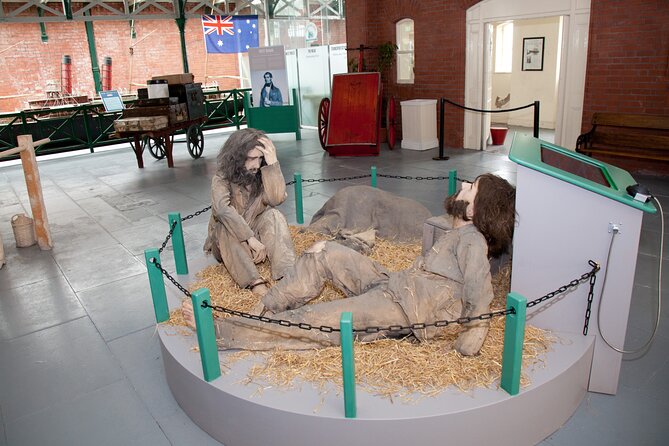
The Great Famine is one of the most important parts of the visit. The exhibition places Irish emigration within the wider conditions that forced so many people from their homes. This gives the port town a more serious meaning than a simple departure point.
You may find the section emotionally heavy. The story is not only about ships and new beginnings. It is also about families separated, people leaving because they had few choices, and emigrants who never returned to Ireland.
That personal cost is one reason the centre can be especially meaningful if you have Irish family connections. The experience gives a physical setting to a family story that may otherwise exist only in a name, a date, or an old document. One visitor connected the centre with a great-grandmother who left Ireland in the 1890s. Another used the genealogy service to explore a grandfather who departed from Cobh.
You do not need Irish ancestry to appreciate this section. The centre also explains the wider forces behind migration, making it useful for anyone interested in social history, family movement, or the experience of leaving home.
Titanic and Lusitania without losing the wider picture
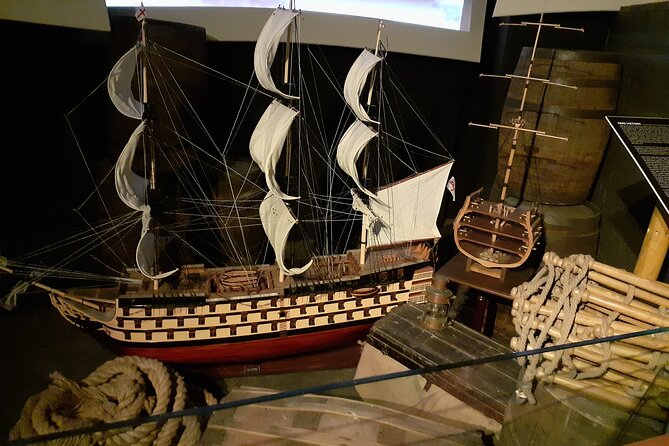
Cobh is closely linked with Titanic, and the Queenstown Story includes that connection. You also learn about Lusitania and the port’s place in maritime history.
These subjects attract many people to Cobh, but the centre’s wider approach is a strength. Titanic is not treated as the whole story. Instead, it appears within the larger history of a port that handled emigrants, ships, military activity, and changing connections between Ireland and the wider world.
That balance is useful if you have already visited a Titanic attraction elsewhere. You can still learn something here, but you will also see why Cobh mattered before and after Titanic. If your main goal is an in-depth Titanic museum, this may not be enough by itself. If you want Titanic placed alongside Irish emigration and port history, it is a better fit.
The displays also make the connection between local geography and world events. From Cobh, the stories of departure move quickly beyond the harbour, linking the town to communities and families across the Atlantic.
Same part of the country, a completely different day out:
- Dublin to Rock of Cashel, Cork City & Blarney Castle Guided Tour
★ 4.5 · 2,536 reviews - Blarney, Rock of Cashel & Cahir Castles Day Tour From Dublin
★ 4.5 · 1,944 reviews - From Dublin: Blarney, Rock of Cashel and Cahir Castles Tour
★ 4.7 · 772 reviews - Cork Midleton DistilleryJameson Experience & Whiskey Tasting
★ 5.0 · 681 reviews
The genealogy service adds a personal layer
A genealogy consultant is available inside the centre, and access to Ancestry.com is noted as part of the facility. This can add real value if you arrive with names, dates, or family stories you want to investigate.
I would treat this as a useful possibility rather than the guaranteed centrepiece of your visit. Availability may vary, and the genealogy desk has not always been staffed during opening hours. If family research is your main reason for going, it is sensible to check ahead about the consultant and any appointment arrangements.
Even without a genealogy session, the exhibition gives you helpful context. You can see the kinds of journeys Irish ancestors made, the periods when departures increased, and the role Cobh played in those movements.
Bring whatever family details you already have if you want to make the visit more personal. A surname alone may not be enough for a full search, but a name paired with a county, approximate date, or destination gives you a better starting point.
Why the location works so well for a day in Cobh
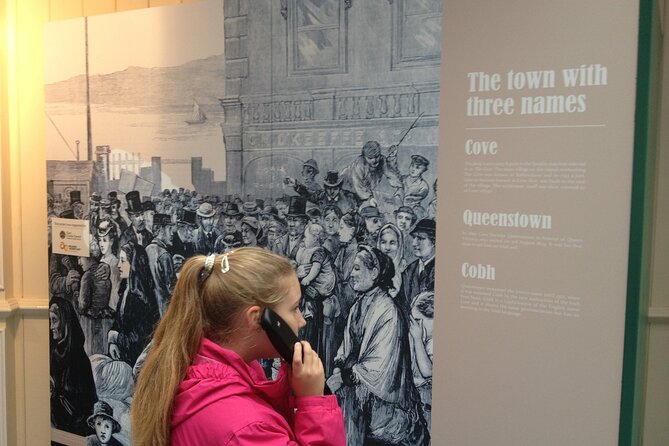
The centre is at Deepwater Quay, close to where cruise ships dock. It is also about a four-minute walk from Cobh’s train station, according to the practical directions provided by visitors who arrived from Cork City.
That makes the Queenstown Story easy to fit into a short visit. The train journey from Cork is about 25 minutes, and the centre is near the waterfront once you arrive. If you are on a cruise stop, the location can save valuable time because you do not need a long taxi ride or a complicated transfer.
The activity ends where it begins, so you can continue around Cobh afterward. The Titanic attraction is described as roughly another four-minute walk beyond the Heritage Centre. That creates an easy waterfront pairing, though you should allow enough time for both rather than rushing through the first.
The location also suits an unhurried visit. You can have a coffee or scone before entering, spend an hour or more with the displays, then walk through town afterward. If someone in your party finishes early, the café provides a comfortable place to wait.
Café, gift shop, and the practical rhythm of the visit
Food and drinks are not included in the admission price, but the centre has a café. Scones with cream and jam, coffee, and tea are specifically available, giving you a simple break before or after the exhibition.
There is also a gift shop. That is useful if you want a book, souvenir, or small reminder connected with Cobh and Irish emigration. The café and shop also make the centre more than a quick ticketed exhibit, particularly if you have extra time before a train or after leaving a cruise ship.
Bathrooms are available, and the facilities have been described as clean. Service animals are allowed, and the centre is near public transportation. Most people can take part, though the experience requires standing, reading, and moving through the exhibition at your own pace.
The maximum group size is listed as 40 people. Since the main route is independent, that number does not mean you will be part of a tightly managed group. It mainly gives you an idea of the possible scale on a busy visit.
Price, timing, and skip-the-line value
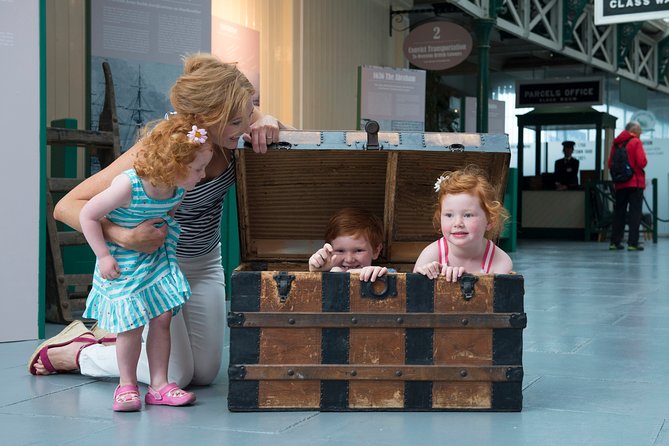
Admission is listed at $18.15 per person. I consider that fair if you use the centre as a substantial one-hour museum visit, especially since the subject covers several centuries and includes interactive material, audiovisual displays, and the Cobh connection to Titanic and Lusitania.
The value improves if you have 90 minutes available. You can read more carefully, follow the individual emigrant story, try the Morse code feature, and take in the wider context instead of simply scanning the panels.
A skip-the-line ticket can be useful during busy periods, especially when cruise ships are in port. It guarantees entry without waiting in a long queue. But do not assume it will always save time. On at least one visit there was no line, and pre-booked ticket holders appeared to use the same general route as people buying admission on site.
The centre is popular enough that the experience is often booked well ahead, with an average booking time of about 40 days. That suggests planning ahead for a cruise date or a busy summer itinerary is sensible. Still, the real benefit of booking in advance is certainty, not necessarily a faster museum route every day.
Opening hours supplied for September 1 through December 30, 2026, are 9:30 a.m. to 4 p.m., Monday through Sunday. Check the date and local opening hours when planning, since a short port stop leaves little room for a mistaken timetable.
Who will get the most from the Queenstown Story
I would recommend this experience if you want to understand why Cobh mattered, not simply photograph the waterfront. It works particularly well for:
- People with Irish ancestry or family stories tied to emigration
- Cruise passengers who need a nearby activity
- Visitors arriving by train from Cork
- Anyone interested in the Great Famine and migration
- Families who prefer interactive displays to a lecture
- History fans who want Titanic placed in a wider setting
It is also a good choice if you prefer to control your own pace. You can move quickly through familiar material, stop for the sections that interest you, and return to displays later the same day.
I would be more cautious if you need a fully guided experience. The core tour is self-directed, and the supplied information is mixed on the role of a driver or guide. The booking details include a driver/guide, but the museum route itself is described as independent. If personal explanation is essential, confirm what guidance is provided on your date.
Should you book the Queenstown Story?
Book it if you want a well-located, serious look at Irish emigration with strong links to Cobh’s maritime past. The restored station, the individual emigrant format, the Great Famine material, and the access to genealogy resources give it more depth than a short Titanic stop alone.
It is especially easy to recommend for a cruise day or a trip from Cork, since the centre is close to both the pier and the train station. Allow 60 minutes at a minimum, or 90 to 100 minutes if you want time for the interactive displays and a relaxed café stop.
Skip it only if you are looking for a live guide throughout or if your schedule allows no time beyond a quick photo stop. For everyone else, the $18.15 admission offers a useful, personal way to understand why so many Irish people left through Cobh and how their journeys shaped families far beyond Ireland.
FAQ
How long does the Queenstown Story visit take?
The stated duration is about one to two hours, with the main exhibition taking around one hour. You can stay longer if you read the displays carefully, use the interactive features, or return to parts of the exhibition on the same day.
Is the Queenstown Story a guided tour?
The main experience is an independent, self-guided tour. Booking information includes a driver/guide, but the museum route itself is designed for you to explore at your own pace.
What subjects does the exhibition cover?
The exhibition covers Irish emigration from the 1600s onward, the Great Famine, Cobh’s maritime and military role, and the town’s connections with Titanic and Lusitania. It follows the destinations where more than three million Irish emigrants settled.
How much does admission cost?
The listed price is $18.15 per person. Food and drinks are not included, although the centre has a café serving items such as scones, cream, jam, coffee, and tea.
Is the centre close to public transportation?
Yes. The Heritage Centre is about a four-minute walk from Cobh railway station and is close to the cruise ship pier at Deepwater Quay. It is also near the waterfront and the Titanic attraction.
Can I cancel my booking?
You can cancel for a full refund if you do so at least 24 hours before the experience start time. Cancellations or changes made less than 24 hours before the start time are not accepted for a refund.
Just added around Cork
- Rock Of Cashel And Blarney Castle Private Chauffeur Full Day Sightseeing Tour★ 4.5 · 3 reviews
- Dublin Airport to Cork City,Private Chauffeur Service★ 5.0 · 10 reviews
- Cork City, Cahir Castle and Rock of Cashel Tour with Spanish Speaking Guide★ 4.5 · 46 reviews
- 3-Day Blarney Castle, Kilkenny & Irish Whiskey Tour Inc Admission★ 4.0 · 8 reviews
- 2-Day Cork and Blarney Castle Rail Tour from Dublin★ 5.0 · 4 reviews
- Toe Head Clifftop Hike in West Cork★ 5.0 · 48 reviews
- Fota House, Arboretum & Gardens Admission Ticket★ 5.0 · 67 reviews
- Wild Coast Bike and EBike Tour in Kinsale Cork Ireland★ 5.0 · 12 reviews
Historical Tours, compared.

Dublin Historical Centre Food Tour with 8 Food Tastings & Drinks
Our verdict on it →

Dublin to Cork, Blarney Castle & Cóbh Heritage Centre by train
Our verdict on it →
Jeanie Johnston Tall Ship Irish Famine History Tour
Our verdict on it →

Deliciously Dublin: The Artisan Donut Walking & History Tour
Our verdict on it →
Browse the lists this tour appears in