
Reviewed · MEDIEVAL AND VIKING TOURS
Kilkenny from Medieval to Modern City. Private Walking Tour
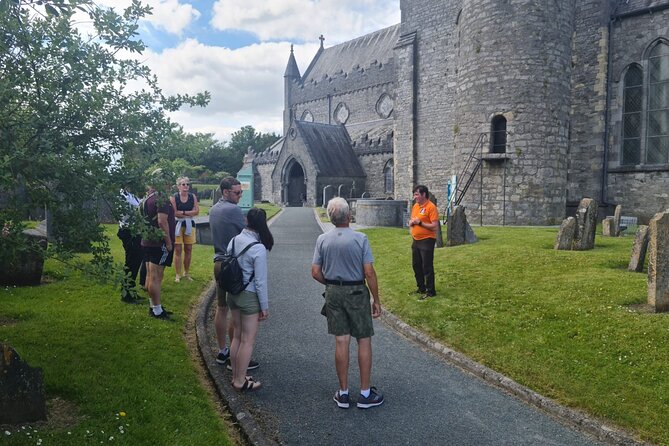
Kilkenny’s past is packed into a compact city center, and this private walk gives you a useful way to read it. You move from an 800-year-old church and a former priory to Tudor houses, old city defenses, the Butter Slip, and Kilkenny Castle. Local guide John adds the stories that turn stone buildings into memorable places.
I like the personal pace, especially for families or groups with mixed walking speeds. I also like the practical route: you can use the walk to get your bearings, then return later to the sites that catch your interest. The main consideration is the short two-hour format. It introduces many places, but it cannot give every one a long interior visit.
Key points to know before booking
- Private for your group: Up to 15 people can join, so you can ask questions and adjust the pace without keeping up with strangers.
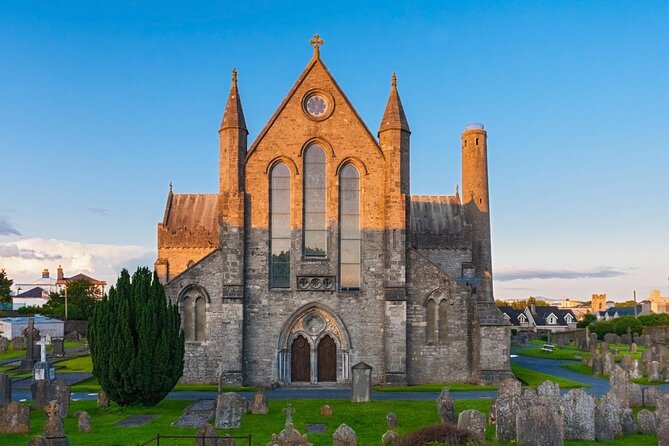
- Black Abbey interior: On days other than Sunday, you can enter this historic church for a look at its stained glass windows.
- A route built around stories: The walk connects churches, gates, houses, streets, social institutions, and Kilkenny Castle.
- Good for a first visit: You’ll see the city’s main historic areas and learn which places deserve a longer return visit.
- Flexible for changing conditions: John has adapted routes for rain, physical limitations, and added stops such as the climb to St Canice’s Round Tower.
- Straightforward value: At $119.83 per group for about two hours, the price makes the most sense for a couple, family, or small group sharing the fee.
Why this walk works well in Kilkenny
Kilkenny is small enough to explore on foot, but its story is not simple. Medieval religious foundations, wealthy merchant houses, city walls, civic buildings, craft traditions, and the Butler family’s castle all sit close together. Without some context, you can walk past an old doorway or narrow lane and miss why it matters.
I like this tour because it links those pieces instead of treating each sight as a separate photo stop. You begin near Rose Inn Street, then work through the old center before finishing at Kilkenny Castle. That direction gives the walk a clear sense of progress, from early religious and civic Kilkenny toward the city’s best-known landmark.
The private format matters here. John can slow down for someone who needs more time, pause for questions, or spend longer on a subject that interests your group. One group added time to climb St Canice’s Round Tower, while another found the route manageable despite different walking speeds. That does not mean every part will suit every mobility level, but it does show that the pace is not rigid.
More Medieval Tours in Kilkenny
- The Medieval Mile Museum Guided Tour
★ 5.0 · 155 reviews - Walk the Medieval Mile with Pat
★ 5.0 · 132 reviews - Medieval Mile Museum Self Guided Audio Tour
★ 5.0 · 91 reviews
Starting at Kilkenny Crystal Shop
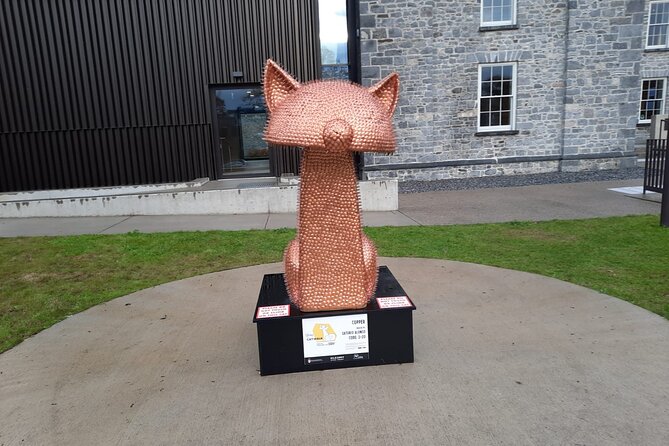
The meeting point is Kilkenny Crystal Shop at 19 Rose Inn Street. The shop also gives the opening stop a local connection, since crystal is probably the city’s most famous modern product. From there, the walk moves into Kilkenny’s older layers.
The start is easy to understand for a first visit because you do not need to find a remote attraction or arrange transport to a separate neighborhood. You meet in the city center, and the activity ends back at the same point. Since the tour lasts about two hours, it can fit neatly into a morning or afternoon of sightseeing.
The walk is offered in English, and your booking is private for up to 15 people. For a larger family or a group of friends, $119.83 divided among the group can be good value. For one or two people, the cost is higher per person than joining a shared walk, but you are paying for privacy and flexibility.
The Black Abbey and an 800-year-old church
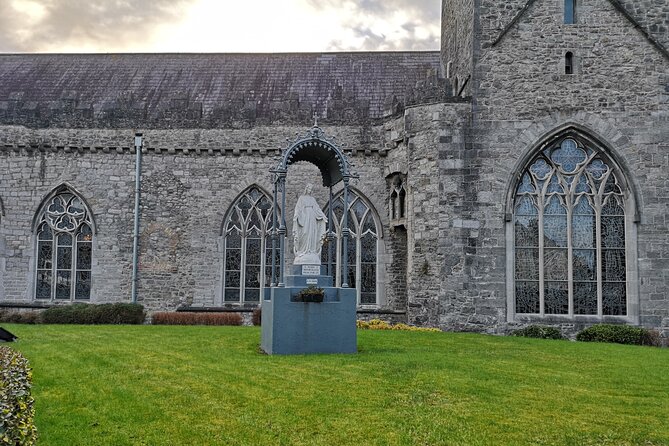
One of the most worthwhile early stops is the Black Abbey. From outside, John explains the fascinating story of this 800-year-old church. On days other than Sunday, you can go inside and spend about five minutes looking at the stained glass windows.
That interior visit is brief, but it adds something important. A church can look impressive from the street, yet the windows and interior details help you understand why the building remains such a strong part of Kilkenny’s identity. The Sunday exception is worth noting. If seeing the inside matters to you, check the day of your booking before you reserve.
The Black Abbey also sets the tone for the tour. This is not only a walk past famous facades. You get explanations about how religious sites shaped the city and how their uses changed over time. The stop is short, so you should think of it as an introduction rather than a full church tour.
From priory to Butler Gallery
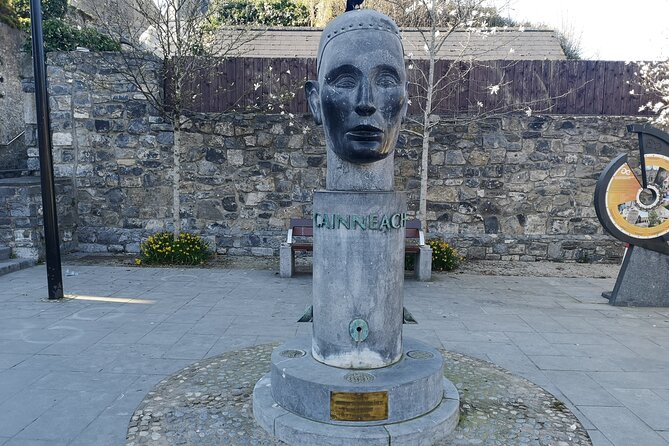
The route then brings you to the former priory site that became the Butler Gallery. John explains what happened to the priory and how the site changed into a gallery. That shift is one of the more useful themes in the walk: old Kilkenny buildings have not simply been preserved as frozen monuments.
You get a chance to think about how a religious foundation, later changes in ownership and use, and a modern arts space can occupy the same place. The tour does not present Kilkenny as a city made only for looking backward. Its older buildings still serve current cultural purposes.
The visit focuses on the history of the site rather than promising a long gallery viewing. If you want to spend real time with the art afterward, put the Butler Gallery on your return list. The walk helps you understand why the building matters, then lets you decide how much more time to give it.
Same part of the country, a completely different day out:
- Smithwick’s Experience Kilkenny Entrance Ticket
★ 5.0 · 601 reviews - Shenanigans Walks – Guided Walking Tour in Kilkenny
★ 5.0 · 485 reviews - Kilkenny Boat Trip
★ 5.0 · 323 reviews - Kilkenny Walking Tour with Local Certified Guide
★ 5.0 · 274 reviews
Buildings that changed jobs over the years
Another stop highlights a site that has served many functions. The exact value of this pause is the story of reuse. John helps you see that a building’s importance may come not from one famous event, but from the series of roles it played over time.
This is the sort of detail I appreciate on a city walk. You get more than a list of dates. You begin to notice how old spaces were adapted for religious, civic, artistic, or social needs. That makes the streets easier to read later, when you explore without a guide.
The tour gives you a broad introduction rather than a specialist lecture. If you want every change of use explained in detail, two hours will feel short. For a first orientation, though, the quick connections are useful.
The last surviving original gate
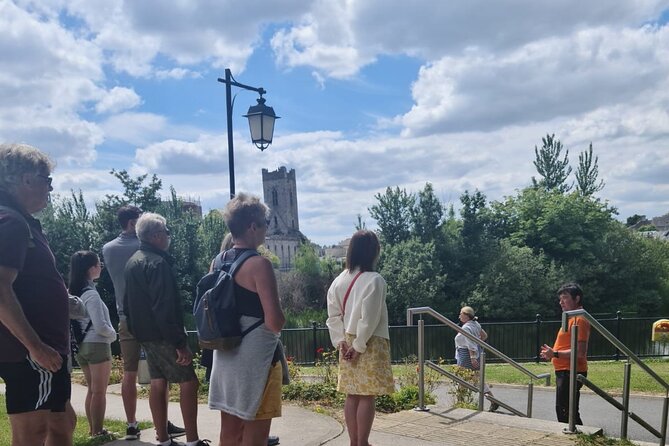
Kilkenny once had more entry points through its defenses. The walk takes you to the last remaining gate from the city’s original gates, giving you a clear link to Kilkenny’s medieval footprint.
A surviving gate is easy to overlook if you are focused only on the castle or churches. John explains what the gate meant in the life of the city, helping you picture Kilkenny as a defended urban center rather than a collection of attractive old streets.
This stop also helps with orientation. You can begin to understand where the old city began and ended, and why some streets feel narrower or more enclosed than modern roads. It is a small piece of architecture with a large role in the city’s story.
Crystal, Tudor facades, and Kilkenny’s difficult characters
The walk returns to the city’s modern identity when it points out Kilkenny’s best-known product, crystal. That detail is useful because it connects the historic center to the craft reputation many people associate with the city today.
You also see one of Ireland’s most historic houses, still showing its original Tudor-period facade. The building gives you a strong visual reminder that Kilkenny was once home to people with money, influence, and access to skilled builders. The facade is the key detail here, so do not expect the tour to turn into an extended house visit.
The stories become more colorful at the home linked with Kilkenny’s most notorious inhabitant. The clue points to Dame Alice Kyteler, whose story is tied to accusations of witchcraft and one of the city’s best-known historical episodes. John’s style, based on the experience provided here, relies heavily on storytelling, so this is likely to be one of the stops that gives the walk its personality.
These buildings and characters work well together. You see the prosperous side of old Kilkenny, then meet a figure whose story reveals fear, power, money, and scandal. The city’s past feels less tidy, and that is a good thing.
The Butter Slip and Kilkenny’s dead center
The Butter Slip is one of the most memorable names on the route. Its narrow passage links the city’s streets and gives you a glimpse of how people moved through old Kilkenny. The question behind the name, is it really as slippery as butter, adds a touch of humor without losing the historical point.
You then reach what is described as the dead center of Kilkenny. This stop helps place the other sights on a mental map. After hearing about gates, religious foundations, houses, and lanes, you get a clearer sense of how the city’s old core fits together.
I like these smaller stops because they break up the major attractions. They are also the places where a guide can make the city feel more personal. You may remember a narrow lane or an unusual street name longer than another formal building.
The alms house and the social side of the city
The route includes a stop that raises a practical question: what was the benefit of building a house for poor people? This brings social history into a walk otherwise filled with churches, wealthy homes, and powerful families.
The point is not simply to admire old architecture. You learn how charitable buildings fitted into the city and how people with fewer resources were treated or supported. That gives you a broader picture of Kilkenny’s past, beyond its grandest monuments.
This is also where a short tour has limits. The stop introduces the issue, but you will not receive a full study of poverty, charity, or urban life in two hours. Still, it is a valuable reminder that historic cities were lived-in communities, not just settings for rulers and religious institutions.
Finishing at Kilkenny Castle
The tour ends at Kilkenny Castle, the city’s most famous building. This is a sensible finish. By the time you arrive, you have heard about the church, priory, gates, Tudor houses, streets, social buildings, and the people who shaped the city. The castle becomes the final piece in that story.
The end point also gives you a useful choice. You can visit the castle later, take photographs, or continue exploring nearby at your own pace. Since the walking tour itself ends back at the meeting point, confirm the exact route with your guide if you plan to go directly into the castle afterward.
Do not expect this two-hour experience to replace a full castle visit. Its purpose is to explain Kilkenny as a whole and show you where to return. That is a good use of a first morning or afternoon, particularly if you do not yet know how to divide your time in the city.
Pace, weather, and mobility
You should have a moderate level of physical fitness, since this is a walking tour through the city. The route has been planned with wheelchair users in mind, and John has been patient with groups containing people who walk at different speeds. Still, you should discuss your group’s needs when booking rather than assume every section will be effortless.
Rain is a real consideration. The experience requires good weather, and poor conditions can lead to a different date or a full refund. On a wet day, John has adapted the route by finding warm, dry places and allowing time for an added indoor or sheltered stop.
That flexibility is one of the strongest reasons to choose a private tour. A fixed group may need to keep moving, while your guide can adjust the plan for your pace and interests. The route is still approximately two hours, so major changes may not be possible, but small adjustments can make a big difference.
Who gets the best value from the $119.83 price
The price is $119.83 per group, with up to 15 people included. For a family, wedding party, or group of friends, the arithmetic works well. You get a private guide without paying a separate charge for each person.
For a solo visitor or couple, the cost is harder to justify if you only want a quick list of sights. I would choose it if personal questions, local stories, a flexible pace, or help with planning the rest of my Kilkenny visit mattered to me.
The tour is booked an average of 66 days ahead, so planning early is sensible, particularly if you need a certain date. You receive confirmation at booking, and cancellation is free up to 24 hours before the start time. Last-minute changes or cancellations are not accepted within that 24-hour window.
Should you book this Kilkenny walking tour?
I would book this tour for a first visit, especially with a family or small group that wants a private pace. John’s warm, patient approach suits groups with mixed mobility, and his local stories appear to be the main strength of the experience.
Choose it if you want a clear introduction to Kilkenny’s churches, streets, houses, social buildings, and castle before exploring deeper on your own. Skip it if you prefer to spend two hours inside one attraction or if you want a detailed specialist tour of the castle alone.
The best plan is to take the walk early in your stay, note the places that deserve more time, and return afterward to the Black Abbey, Butler Gallery, St Canice’s Round Tower, or Kilkenny Castle as your schedule allows.
FAQ
How long does the Kilkenny private walking tour last?
The tour lasts approximately two hours.
Where does the tour begin?
It begins outside Kilkenny Crystal Shop at 19 Rose Inn Street, Gardens, Kilkenny, R95 VXD0, Ireland.
Where does the tour finish?
The activity ends back at the meeting point.
Can I enter the Black Abbey during the tour?
You can enter the Black Abbey and see its stained glass windows except on Sundays. The listed visit inside takes about five minutes, and admission is free.
How many people can join the private tour?
The price covers one private group of up to 15 people.
What happens if the weather is poor?
The experience requires good weather. If it is canceled because of poor weather, you can choose a different date or receive a full refund.
More Walking Tours in Kilkenny
- Kilkenny: Historical and Hysterical Guided City Walking Tour
★ 5.0 · 126 reviews - Kilkenny: Historical Highlights Walking Tour
★ 4.9 · 90 reviews - Dublin Highlights and Hidden Gems Guided Walking Tour
★ 5.0 · 6,020 reviews - Dublin: Highlights and Hidden Gems Walking Tour
★ 4.9 · 2,140 reviews
Just added around Kilkenny
- Dublin To Kilkenny Castle Waterford Crystal Private Car – Day Tour★ 5.0 · 8 reviews
- Waterford Crystal and Kilkenny Full-Day Rail Tour from Dublin★ 5.0 · 3 reviews
- Private Day Tour of the Medieval City of Kilkenny★ 5.0 · 9 reviews
- Luxury Tour Of Waterford Crystal & Kilkenny City Tour★ 5.0 · 23 reviews
- Waterford Crystal and Kilkenny City with Private Chauffeur Tour★ 5.0 · 18 reviews
- Kilkenny: St Canice’s Cathedral and Round Tower Climb★ 4.6 · 17 reviews
- Kilkenny: Historical Highlights Walking Tour★ 4.9 · 90 reviews
- Kilkenny: Smithwick’s Beer Experience★ 4.7 · 108 reviews
Medieval and Viking Tours, compared.
Walking Tour of Dublin’s Viking/Medieval Quarter with a Viking
Our verdict on it →
Waterford Treasures: Medieval Museum Admission Ticket
Our verdict on it →
Book of Kells. Medieval Dublin Castle. 5* History & Heritage Tour
Our verdict on it →
Browse the lists this tour appears in