
Reviewed · MEDIEVAL AND VIKING TOURS
Osprey Viking Cruises
Waterford’s story reads best from the Suir River. On this small-group cruise, Captain Andy McDermott and guides such as Jonathan and Johnny connect Viking foundations, Norman conquest, castle feuds, wartime events, and local characters to the riverbanks in front of you. It is a relaxed way to see the city from a different angle.
I like the personal scale of the outing and the friendly extras: tea, coffee, biscuits, sweets, blankets, and even the occasional Irish whiskey. I also like how close the meeting point is to central Waterford, making it easy to pair with the Viking Triangle. The main consideration is timing: many outings last about an hour, even though longer trips of up to three hours can be arranged.
Key points to know before you go
- Waterford’s Suir River is the star: You see the city, islands, gardens, and castles from the water rather than from a coach or crowded walking tour.
- Local storytelling matters: Jonathan and Johnny are praised for linking Viking, Norman, Cromwellian, castle, and wartime stories to what you pass.
- This is a small private outing: Only your group takes part, though the boat can feel cramped when full.
- Plan for about one hour unless you arrange more: The advertised duration is one to three hours, but the standard cruise may be shorter.
- Little Island adds an unusual chapter: Its story reaches from early monastic life to Vikings, Normans, and the Earls of Kildare.
- Dress for the river: Tea and blankets help, but a cold day on the Suir still calls for warm clothing.
Why a short cruise gives Waterford a new shape
Waterford is easy to explore on foot, especially around the Viking Triangle. Reginald’s Tower, museums, churches, and old streets give you plenty to see. The Osprey Viking Cruises outing adds something walking cannot: a clear sense of how the River Suir shaped the city’s defenses, trade, estates, and power struggles.
The cruise begins at Clyde Wharf Car Park on The Quay, at postcode R680. That location is practical. You are close to the center, so you can fit the boat trip before or after a visit to Reginald’s Tower and the rest of central Waterford.
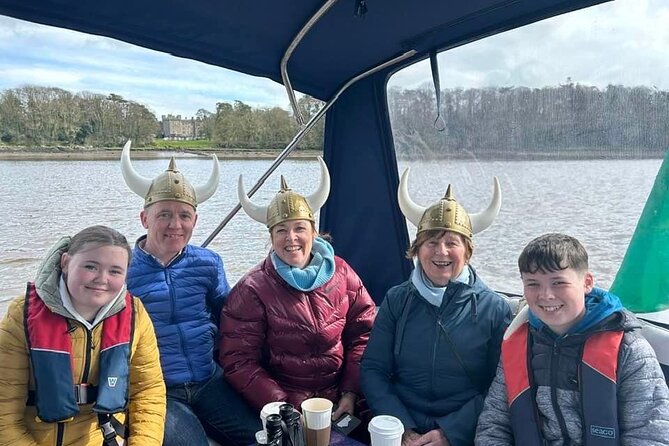
The boat is small, and this is a private activity for your own group. That usually means a more relaxed tone than a large sightseeing vessel. You can ask a question, hear the guide clearly, and get a running commentary tailored to your interests. One account describes a boat holding around seven or eight people, but the exact arrangement can vary.
The style is informal. You may find tea, coffee, water, biscuits, sweets, and other small treats waiting aboard. On a Christmas outing, the welcome included tea, Christmas cake, treats for children, blankets, and a little Irish whiskey. Those touches are not the main reason to book, but they make a cold-weather cruise more comfortable.
More Medieval Tours in Waterford:
- Waterford Treasures: Medieval Museum Admission Ticket
★ 4.5 · 132 reviews - Waterford Treasures: Walking Tour of the Viking Triangle
★ 4.7 · 43 reviews - Waterford Treasures: Medieval Museum Entry Ticket
★ 4.5 · 20 reviews
Reginald’s Tower and Waterford’s Viking beginning
Reginald’s Tower is one of the first major historical sights tied to the cruise. Built by the Vikings more than a thousand years ago, it is Ireland’s oldest civic building. Its position at the point of Waterford’s Viking Triangle makes it a useful starting point for understanding the city.
The tower has seen a remarkable list of characters and conflicts. Strongbow, Perkin Warbeck, King James II, and Oliver Cromwell all feature in Waterford’s wider story. The tower is not simply an old stone building to photograph. It helps explain why this river port mattered to Viking settlers, Norman forces, royal claimants, and military leaders.
From the boat, you get context rather than a full indoor visit. If you want to explore Reginald’s Tower in detail, allow separate time before or after the cruise. The river outing works best as a companion to the city’s museums and historic buildings, not as a replacement for them.
The guides’ strength is the way they connect a visible place to a larger story. Jonathan, in particular, is praised for tying the views to real events, including subjects beyond the medieval period. Another guide, Johnny, has covered Vikings, U-boats, World War I, World War II, Waterford Castle, and the Fitzgerald family during the cruise.
That range gives the trip a useful shape. You are not hearing one long lecture about Vikings. Instead, the river becomes a timeline, with each stretch opening another part of Waterford’s past.
Little Island, monks, Vikings, and the Kildares
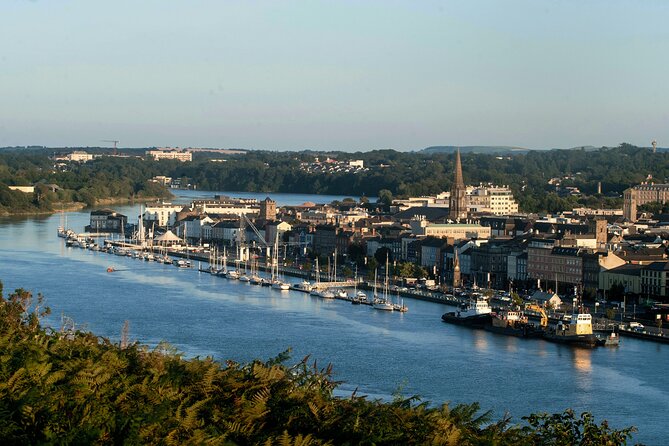
Little Island brings an unusual mix of religious, Viking, Norman, and aristocratic history. A monastic settlement existed there from the sixth to the eighth century. A carving of a monk’s head from that period still adorns the castle entrance.
The Vikings arrived in the ninth century and built two fortifications on the island, which they called Island Vryk, or Dane’s Island. That name hints at the island’s changing identity. It was first a religious site, then a Viking defensive position, and later part of the Norman power struggle.
During the Norman invasion of 1170, Maurice Fitzgerald, a cousin of Strongbow, was held prisoner on Little Island by the Ossermen. After the conquest, he was rewarded with extensive lands. The island then became home to the Earls of Kildare for eight centuries.
For you, the value is not just the number of dates. Little Island shows how one piece of ground could pass through several systems of power. Monks, Vikings, Normans, and noble families each left a mark. Seeing the castle and island from the river gives the story a physical setting that is hard to grasp from a city street.
The limitation is visibility. A small boat can offer fine views, but seating and weather affect what you can see. One person found the boat cramped and the sights hard to view. If you care most about close architectural detail, ask about the seating and route when booking.
Mount Congreve Gardens from the Suir
Mount Congreve Gardens is one of the most attractive parts of the route. The estate sits above the River Suir and covers about seventy acres of woodland, a four-acre walled garden, and sixteen kilometers of walkways.
The house was built in 1760 by John Roberts, a local architect who also designed Waterford’s two cathedrals. Six generations of the Congreve family lived at Mount Congreve. Ambrose Congreve inherited the estate in 1963 and turned it into a world-class garden, bringing plants from across the globe through his private dock on the Suir.
The plant collection is vast. It includes about 3,000 different trees and shrubs, 2,000 rhododendrons, 600 camellias, 300 acer cultivars, 600 conifers, 250 climbers, and 1,500 herbaceous plants. From the water, you will not inspect every plant, of course. The boat gives you a broad view of the estate’s setting and its connection to the river.
If gardens are a major interest, you should treat this as a preview rather than a complete visit. Mount Congreve’s paths and walled garden deserve separate walking time. The cruise lets you see the estate in relation to the Suir, which is particularly helpful for understanding why the private dock and river access mattered.
A few more Waterford days to weigh up
- House of Waterford Crystal Guided Factory Tour
★ 4.5 · 2,303 reviews - Skip the Line: Hook Lighthouse Entrance Ticket and Guided Tour
★ 5.0 · 470 reviews - Waterford: House of Waterford Factory Tour
★ 4.8 · 256 reviews - Waterford Treasures: Epic Walking Tour
★ 4.5 · 152 reviews
Grannagh Castle and the witch’s storm
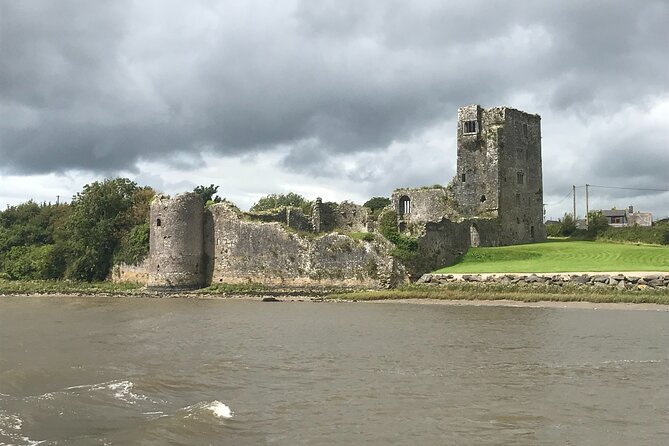
Grannagh Castle provides one of the most dramatic river views. The large square enclosure has cylindrical towers and sits on the foreshore of the Suir. James Butler, the third Earl of Ormonde, built it in the fourteenth century.
The castle also brings a touch of folklore. Legend says the wife of the eighth Earl was a witch. Looking downriver from the castle, she saw her greatest rival, another witch, approaching. Margaret called up a storm to stop her. The rival answered with a spell that caused horns to grow from Margaret’s head, leaving her unable to pull away from the window.
Strange noises are said to come from the ruins during stormy weather. You can take that as folklore, local color, or a good reason not to linger there during a squall. The more solid historical detail is that the Butlers lost the castle to Cromwell in 1649.
This is exactly the sort of story that works well from a boat. You see the castle’s position on the river while hearing about its military role, its owners, and its legends. The view is more evocative than a dry list of dates, though you should remember that the castle is a passing sight rather than a full archaeological visit.
The guides make or break the hour
The strongest part of this experience is the guiding. Captain Andy is repeatedly described as warm and hospitable, while Jonathan and Johnny bring substantial historical background to the commentary. Other crew members, including Steve and Mike, have also been praised for a friendly, capable approach.
Expect a conversational tour rather than a formal lecture. The guide may cover Waterford’s Viking beginnings, Little Island, the Fitzgeralds, Waterford Castle, Cromwell, World War I, World War II, and U-boats. The stories are delivered with humor, and the amount of information appears manageable rather than overwhelming.
You do need good English to follow the explanations. An English-language cruise is included in the experience, and the historical commentary is central to the outing. If you prefer a silent scenic cruise, this may feel too talkative. If you like place-based stories, the format should suit you well.
The personal nature can also help when plans go wrong. On one occasion, a delayed group missed its departure time, but Andy still took them out after the original cruise returned. That kind of flexibility cannot be guaranteed, so you should still arrive on time, but it reflects the small operator style.
Duration: the detail you should clarify
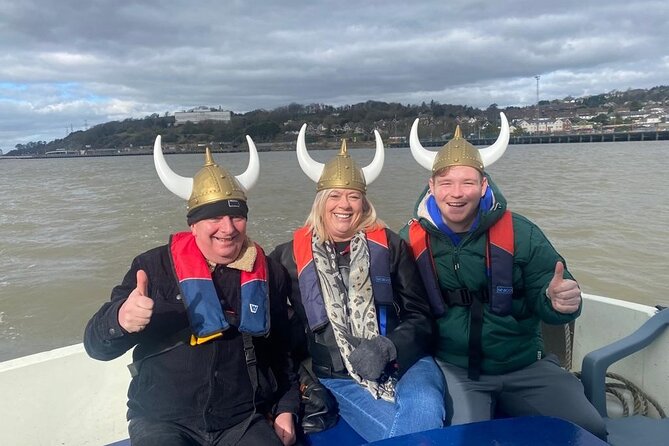
The biggest practical issue is the stated one-to-three-hour range. A standard outing may last about an hour. Longer river journeys of up to three hours are available by arrangement, but they are not necessarily part of every departure.
This matters because your expectations change with the timing. An hour works well as a scenic introduction to Waterford. You can add it to a day of sightseeing without giving up half the afternoon. A longer private journey would make more sense for a family group or visitors who want a slower river outing.
I would contact the operator before booking if you specifically want three hours, more time near the lower river, or a particular route. Do not assume the longest duration is automatic.
The cruise is also weather-dependent. The boat may be canceled in poor weather, with a different date or full refund offered. That is sensible for a small open-water experience, but you should keep some flexibility in your Waterford plans.
Is $62.75 a fair price?
At $62.75 per person, the value depends on what you want from the hour. You are paying for a private-group boat experience, a local guide, river views, and a personal welcome rather than simply transport from one place to another.
For a couple or small family, the price may feel reasonable because the boat is not a large shared excursion. Tea, coffee, snacks, blankets, and personal attention add comfort, though the history and river views are the real product.
The value is weaker if you expect a three-hour cruise automatically or want a full visit to each castle and garden. The listed sights are viewed from the river, and a standard trip may be only an hour. For that reason, confirm the duration and route before you pay.
A 98 percent recommendation rate and a 4.9 rating from 56 reviews suggest strong satisfaction, but the lower rating about cramped seating and short duration points to the main risk. This is a small boat with a flexible timetable, not a large sightseeing vessel with guaranteed spacious seating.
Who should book this Waterford cruise?
I would recommend it most strongly to:
- Families who want history in short, lively stories
- Couples looking for a quiet river outing
- Cruise passengers with limited time in Waterford
- Visitors interested in Viking, Norman, Tudor-era, and Cromwellian history
- Garden lovers who plan to visit Mount Congreve separately
- Small groups who value a private boat and direct contact with the guide
It may be less suitable if you need a fully accessible indoor-style attraction, dislike small boats, or want guaranteed shelter and wide-open viewing areas. Service animals are allowed, and most people can participate, but the boat’s compact size is worth keeping in mind.
Dress warmly, even if the weather looks mild at the quay. Bring a camera, and leave room in your schedule for the possibility that the cruise will be scenic and short rather than a full afternoon outing.
Should you book Osprey Viking Cruises?
Book it if you want Waterford explained from the Suir, with local stories attached to castles, islands, gardens, and old defenses. The private format, friendly crew, tea and snacks, and strong historical commentary give the cruise a personal feel that a standard group excursion may lack.
I would book with one clear question first: how long will your departure last, and what route will it take? If the answer suits your plans, $62.75 is a fair price for a gentle, story-filled introduction to Waterford. If you need a longer journey, arrange it in advance. Bring warm layers, expect a small boat, and let the river supply the setting.
FAQ
Where does the cruise start?
The meeting point is Clyde Wharf Car Park, R680 The Quay, Waterford, Ireland.
Where does the activity finish?
The cruise ends back at the meeting point.
How long does the cruise last?
The experience is listed as lasting approximately one to three hours. A standard outing may last about one hour, while journeys of up to three hours can be arranged by agreement.
Is this a private tour?
Yes. Only your group participates in the activity.
What language is the tour offered in?
The cruise is offered in English, and you need a good understanding of English to follow the historical commentary.
What sights are included along the route?
The route features views connected with Reginald’s Tower, Little Island, Mount Congreve Gardens, and Grannagh Castle.
Is the cruise suitable for most people?
Most people can participate, and service animals are allowed. The boat is small, so seating and viewing space may feel limited when it is full.
Can I cancel for a full refund?
You can cancel at least 24 hours before the start time for a full refund. Cancellations or changes made less than 24 hours before the start time are not accepted for a refund. If poor weather or an insufficient number of participants causes cancellation, you will be offered another date or a full refund.
Just added around Waterford
- Wexford: Hook Peninsula Sea Cave Kayaking Experience★ 4.9 · 27 reviews
- Courtown Woodland Guided Tour★ 5.0 · 23 reviews
- Waterford Treasures: Bishop’s Palace★ 4.5 · 53 reviews
- Waterford Treasures: Epic Walking Tour★ 4.5 · 152 reviews
- Irish Wake Museum Tour Rituals of Death and Celebration of Life★ 5.0 · 115 reviews
- Waterford Treasures: Medieval Museum Entry Ticket★ 4.5 · 20 reviews
- Waterford Treasures: Walking Tour of the Viking Triangle★ 4.7 · 43 reviews
- Waterford Treasures: Medieval Museum Admission Ticket★ 4.5 · 132 reviews
Medieval and Viking Tours, compared.
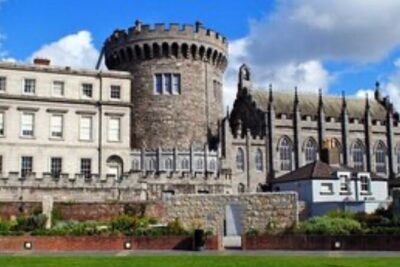
Walking Tour of Dublin’s Viking/Medieval Quarter with a Viking
Our verdict on it →


Waterford Treasures: Medieval Museum Admission Ticket
Our verdict on it →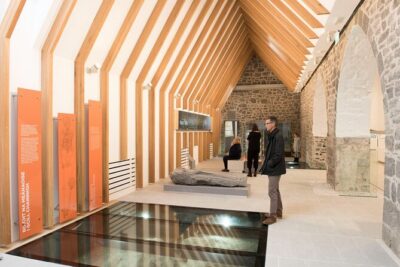

Book of Kells. Medieval Dublin Castle. 5* History & Heritage Tour
Our verdict on it →
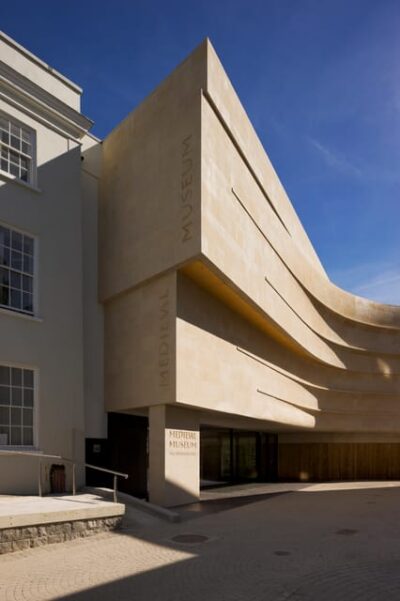
Waterford Treasures: Walking Tour of the Viking Triangle
Our verdict on it →Browse the lists this tour appears in