

Reviewed · WATERFORD TOURS
Waterford: House of Waterford Factory Tour
The most memorable part of this tour is watching a glowing lump of molten crystal become a polished work of art through a chain of careful handwork. You move close to the craftsmen as they blow, cut, sculpt, and engrave, so this feels like a working workshop rather than a display behind glass. I especially like the wooden molds and hand tools in the mold room, and the chance to ask questions while the craftsmen work.
I also like that the one-hour route gives you the full story without taking half a day. The history room adds useful context, and the final showroom makes the price of Waterford crystal easier to understand. The main consideration is simple: you are walking through the factory, not taking part in a hands-on craft class, and the experience depends partly on which stages are active during your visit.
Key points to know before you go

- Watch the whole making process: The route covers blowing, cutting, sculpting, and engraving, not just one stage.
- Start with Waterford’s past: Antique pieces and detailed displays explain how the company developed.
- See close-up craftsmanship: The tour brings you near the workers and allows questions about their techniques.
- Plan about one hour: The schedule is compact enough to fit into a day exploring Waterford City.
- End in the crystal showroom: The retail shop contains the largest display of Waterford crystal in the world.
- Good access and flexible booking: The tour is wheelchair accessible, with free cancellation up to 24 hours before the visit.
Why the factory floor is the main event
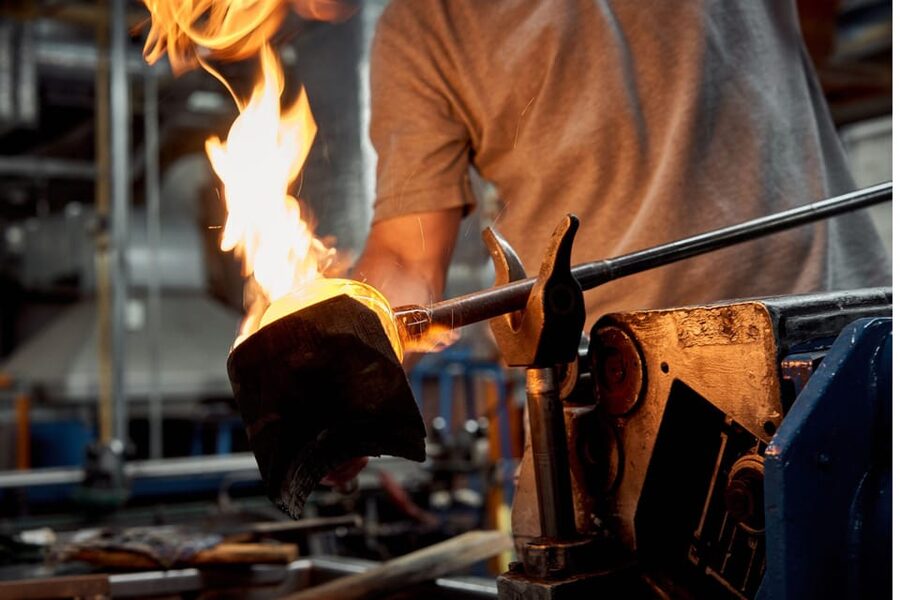
Waterford crystal can look almost effortless when it sits in a display case. A glass, bowl, or ornament catches the light, the cuts line up neatly, and the finished piece feels cool and precise. This tour shows you the opposite side of that illusion: heat, timing, muscle, training, and many small decisions made by hand.
The factory visit is arranged as a progression through the work. You do not simply see finished objects and hear a short talk about them. You follow the stages that turn raw material into a finished piece, which makes the craftsmanship easier to appreciate.
That matters when you are deciding if a $20 admission fee is worthwhile. The value is not only in seeing expensive crystal. It is in understanding why each object takes so much labor, and why even a fairly simple-looking piece can require several specialists.
The tour is guided in English. The guide explains what you are seeing and keeps the route moving, while the craftsmen provide the most direct connection to the work itself. James has been praised for his enthusiasm and ability to keep the technical details interesting, and Sean has also been singled out for making the process memorable. Guide assignments can vary, but the tour is designed to leave room for questions.
A few more Waterford days to weigh up
- House of Waterford Crystal Guided Factory Tour
★ 4.5 · 2,303 reviews - Skip the Line: Hook Lighthouse Entrance Ticket and Guided Tour
★ 5.0 · 470 reviews - Waterford Treasures: Epic Walking Tour
★ 4.5 · 152 reviews
The history room puts the brand in context
Your visit begins in the history room, where you learn about Waterford from its earliest days and follow the firm’s development. The displays include antique pieces, giving you a chance to see how the company’s designs and reputation grew over time.
This opening section is useful because it prevents the factory floor from feeling like a string of unrelated workstations. You first see what Waterford has made, then learn how those objects are produced.
Do not rush through this room. The antique pieces help you notice the qualities that appear again later: symmetry, clarity, repeated cuts, and carefully controlled decoration. If you already know Waterford from a family collection or a department-store display, this is the part that gives the name some background.
The history section is also a good start for visitors who are less interested in shopping. You are not asked to begin with the retail area or make any purchase. The emphasis is on the company’s past and the objects themselves.
Wooden molds and molten crystal in the first working rooms
The mold room is one of the more interesting stops because it shows how traditional tools still shape the work. Master blowers use wooden molds and hand tools to form the molten crystal.
The use of wood may surprise you. The finished pieces look formal and exact, but the early shaping stage relies on tools that feel direct and practical. You can see how the craftsman must control the material before it cools, using timing and practiced movement rather than simply pressing a button.
From there, you enter the blowing room. Here, glowing balls of molten crystal are transformed into recognizable shapes. This is the most dramatic stage to watch because the material is visibly hot and changing in front of you.
Pay attention to the pace. The work may look quick, but that speed is part of the skill. Molten crystal cannot be handled casually, and the shape has to be controlled while the material is still workable. You may also have the chance to ask questions directly, which makes this more useful than watching silently from a distant platform.
The exact activity on the floor can vary. The supplied information notes that one visitor saw craftsmen working on specially commissioned pieces, while another found a gingerbread house in progress fascinating. That kind of work gives you a reminder that the factory is not only producing standard tableware. It can also handle unusual and decorative projects.
Cutting turns a plain shape into Waterford crystal

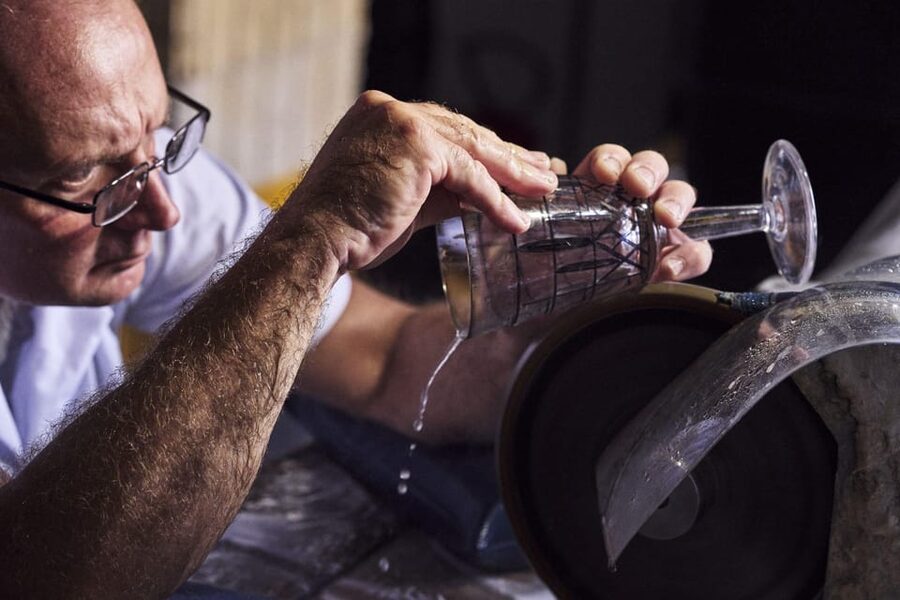
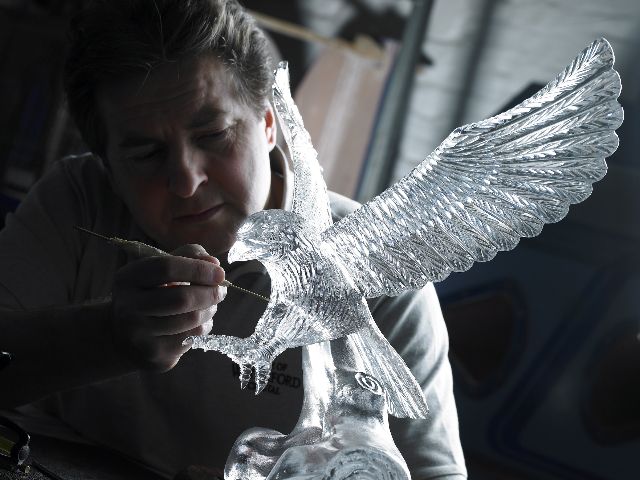
After blowing, the piece moves to the cutting department. Master craftsmen use industrial diamond-tipped wheels to cut the crystal, creating the familiar patterns that catch and scatter light.
This is where the difference between ordinary glassware and highly finished crystal becomes easier to understand. The cuts must be placed with care, and the diamond wheel allows the craftsman to make clean, high-quality lines in the surface.
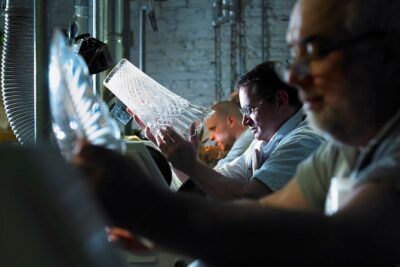
The cutting room is a good place to slow down and watch the hands. You can see the worker guide the piece against the wheel, building a pattern through repeated movements. The finished result may look perfectly regular, but the process remains manual and demanding.
For me, this is one of the strongest reasons to take the tour. A showroom can display a brilliant bowl or glass, but it cannot show you the concentration required to create each cut. Seeing the process also gives you a more realistic sense of why Waterford pieces cost more than mass-produced glassware.
The factory is close enough for questions, according to the activity details. That is important here because the cuts can be difficult to interpret at first. A guide or craftsman can point out what is being shaped and explain how the wheel is used.
Same part of the country, a completely different day out:
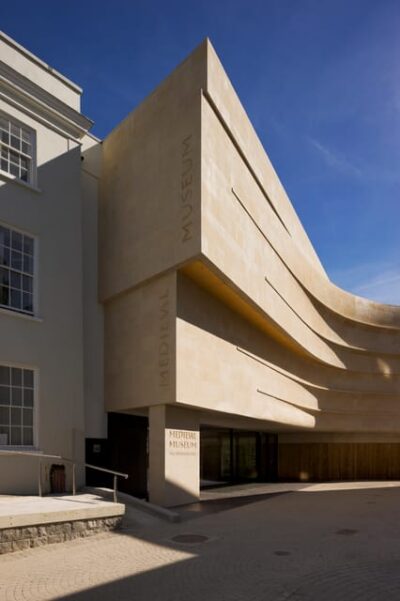
- Waterford Treasures: Medieval Museum Admission Ticket
★ 4.5 · 132 reviews - Irish Wake Museum Tour Rituals of Death and Celebration of Life
★ 5.0 · 115 reviews - Osprey Viking Cruises
★ 5.0 · 56 reviews - Waterford Treasures: Bishop’s Palace
★ 4.5 · 53 reviews
Sculpting and engraving demand the finest control

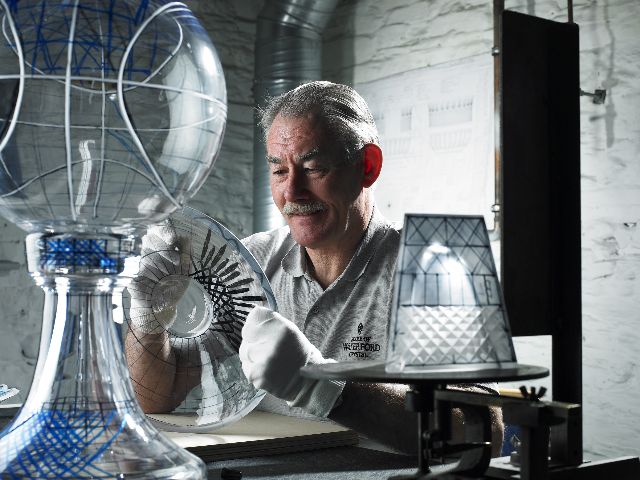
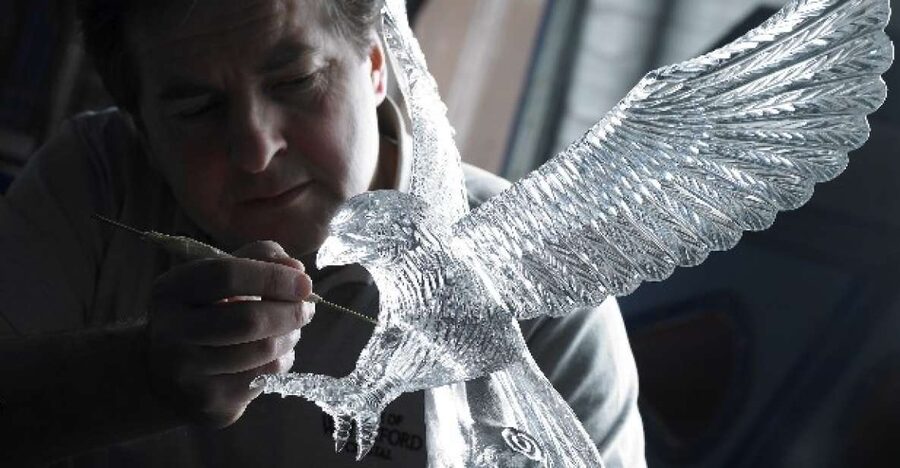
The final stages are sculpting and engraving. These tasks require especially fine control, since the work now moves from forming the broad shape to adding detail and finish.
Sculpting can refine the object’s form, while engraving adds decoration or personal detail. At this point, even a small error can affect the final appearance. You are watching the part of the process where patience matters most.
The route helps you connect the stages. First, a craftsman shapes the hot material. Next, another worker cuts the surface. Then sculpting and engraving give the piece its final character. Instead of treating the crystal as a single finished product, you see how many hands may contribute to one object.
That is also why the tour can change your view of the price tag. It does not make every item affordable, but it gives you a fairer basis for judging the cost. The work combines specialized training with repeated precision, and the finished object reflects more than the value of the raw material.
The showroom is more than a shopping stop
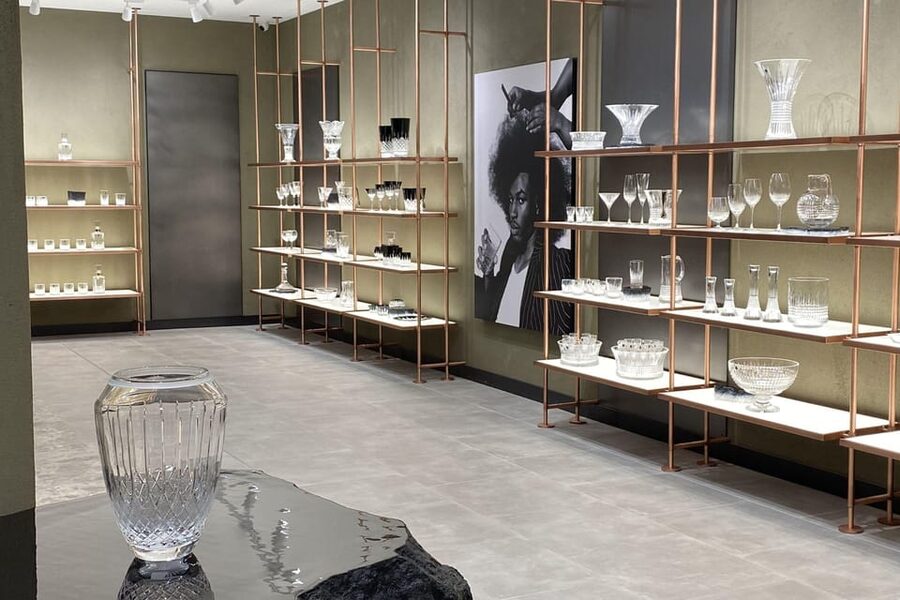
The tour ends at the House of Waterford retail shop, described as the largest display of Waterford crystal in the world. The showroom gives you a chance to see the finished work under one roof, after watching the stages that created it.
You do not need to buy anything to get value from this part of the visit. Use it as a final visual lesson. Look at the objects and try to identify the cutting, engraving, and shaping techniques you saw in the factory.
The selection is also useful if you are considering a purchase. You can compare styles and see the difference between a simple piece and a more heavily worked design. Prices are not provided here, so I would not assume that the $20 tour admission includes a discount or a souvenir. The tour fee covers admission and the guided factory visit, while purchases are separate.
A café is also available, with coffee and a selection of treats. It can be a handy pause after the tour, especially if you are spending time in Waterford City, but meals and drinks are not included in the admission.
Is $20 good value for an hour?
At $20 per person, this is not the cheapest short attraction you will find in Ireland. Still, the fee is reasonable if you care about traditional craft, design, manufacturing, or Irish-made luxury goods.
You receive more than a showroom visit. The admission includes the history displays, a guided walk through the factory, access to the working areas, explanations of the production stages, and time to see the retail collection. The guide and the opportunity to ask questions add value that you would not get from looking around independently.
The one-hour length works in its favor. You can fit the tour into a day in Waterford without giving up an entire afternoon. Several people found an hour to be the right amount of time: long enough to cover every stage, but short enough to stay focused.
The value is less clear for someone who has no interest in how objects are made and only wants to shop. In that case, the showroom may be enough, though the factory route is what explains the labor behind the products.
Who should book this Waterford experience?
I would recommend the tour to anyone curious about skilled manual work. It suits adults, families, design students, collectors, and visitors who want an activity that connects a finished product with the people who make it.
It is also a strong choice for a rainy day in Waterford. Much of the visit takes place indoors, and the route gives you something specific to watch rather than a general talk about local history.
Families can use the tour to show children how an object is made, though very young children may have limited patience for the quieter cutting and engraving stages. The glowing material in the blowing room is likely to be the most immediately engaging part.
The tour is wheelchair accessible. One visitor specifically noted that staff accommodated a wheelchair user, which is helpful practical information, though it is still sensible to confirm any personal access needs when booking.
This is not the best pick if you want to make your own piece of crystal. The tour is observational, with opportunities to ask questions, not a workshop where you shape or engrave an object yourself.
Booking, timing, and useful planning details
The meeting point is on The Mall in Waterford City, and the activity ends back at the same meeting point. The duration is one hour, but you should allow extra time if you want to browse the showroom or stop at the café.
Starting times vary, so check availability when selecting your date. It is worth checking carefully before paying. One person reported finding different availability on separate websites and accidentally paying twice. Use one booking route, confirm the date and time, and keep the confirmation handy.
The tour is offered in English with a live guide. Interpretive equipment is not included, so do not expect an audio device or other rented equipment as part of the admission.
You can cancel up to 24 hours before the tour for a full refund. A reserve-now, pay-later option is also available, which helps if you are still arranging a multi-stop Ireland itinerary.
The final call
Book the House of Waterford Factory Tour if you want to see real craftsmanship at close range and understand what goes into the crystal you see in the showroom. The strongest parts are the blowing, cutting, sculpting, and engraving rooms, where the work is still done by trained hands.
Skip it only if you are looking for a hands-on class or a long cultural tour. For everyone else, the $20 fee buys a focused hour, a clear look at Waterford’s methods, and a better appreciation of why these pieces cost what they do.
FAQ
How long does the House of Waterford Factory Tour last?
The tour lasts one hour. Starting times vary, so check availability for your chosen date.
How much does the tour cost?
Admission costs $20 per person.
Where does the tour begin?
The meeting point is on The Mall in Waterford City.
Where does the tour end?
The activity ends back at the meeting point.
What language is the tour offered in?
The live guided tour is offered in English.
What will I see during the factory visit?
You will visit the history room, mold room, blowing room, cutting department, sculpting area, engraving area, and retail shop.
Can I ask the craftsmen questions?
Yes. The tour includes the ability to ask questions about the craftsmen’s work.
Is the tour wheelchair accessible?
Yes. The activity is listed as wheelchair accessible.
What is included in the admission?
The fee includes factory tour admission, a guided tour, information about Waterford crystal’s history, access to the working areas, and a visit to the House of Waterford retail store. Meals, drinks, souvenirs, and interpretive equipment are not included.
Just added around Waterford
- Irish Wake Museum Tour Rituals of Death and Celebration of Life★ 5.0 · 115 reviews
- Osprey Viking Cruises★ 5.0 · 56 reviews
- Waterford Treasures: Medieval Museum Entry Ticket★ 4.5 · 20 reviews
- Waterford Treasures: Walking Tour of the Viking Triangle★ 4.7 · 43 reviews
- Wexford: Hook Peninsula Sea Cave Kayaking Experience★ 4.9 · 27 reviews
- Courtown Woodland Guided Tour★ 5.0 · 23 reviews
- Waterford Treasures: Bishop’s Palace★ 4.5 · 53 reviews
- Waterford Treasures: Epic Walking Tour★ 4.5 · 152 reviews
Waterford Tours, compared.
House of Waterford Crystal Guided Factory Tour
Our verdict on it →
Skip the Line: Hook Lighthouse Entrance Ticket and Guided Tour
Our verdict on it →
Waterford Treasures: Medieval Museum Admission Ticket
Our verdict on it →
Irish Wake Museum Tour Rituals of Death and Celebration of Life
Our verdict on it →

Waterford Treasures: Walking Tour of the Viking Triangle
Our verdict on it →Browse the lists this tour appears in