

Reviewed · MUSEUMS
Irish Wake Museum Tour Rituals of Death and Celebration of Life
The Irish Wake Museum takes you into a 15th-century almshouse where death, mourning, and everyday life have been connected for six centuries. This is not a quick display of old objects. A guide explains why an Irish wake developed its unusual customs, how folklore shaped mourning, and what those practices tell you about Waterford.
I like the intimate setting and the way the tour links funeral traditions to the wider story of the city. I also like that the guide does the explaining, so you are not left trying to decode unfamiliar customs from labels alone. Tobie has been praised for mixing humor with clear history, while Deirdre is noted for her precise, engaging delivery.
The main consideration is the subject matter. You will hear about death, injury, and illness, and see realistic depictions of recently deceased people. The museum advises that it is not suitable for children under eight, and sensitive visitors should think carefully before booking.
Key points to know before you go
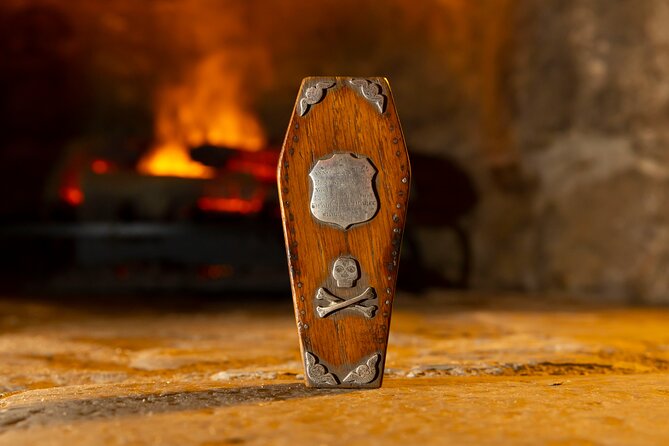
- A 15th-century almshouse provides the setting: You explore a building tied to Waterford life and death across six centuries.
- Irish wake customs take center stage: The guide explains the folklore, rituals, and practical reasons behind a traditional wake.
- The tour lasts about 45 minutes: It is short enough to fit into a day of sightseeing, but focused enough to feel substantial.
- Guides make the difference: Tobie is known for good humor and broad Waterford history, while Deirdre has a polished, informative style.
- The subject is frank and sometimes unsettling: Expect realistic funeral displays and direct discussion of death, illness, and injury.
- The price is about $17.54 per person: For a guided visit in a historic building, that is fair value if you want cultural context rather than a large museum collection.
Entering Waterford’s old almshouse
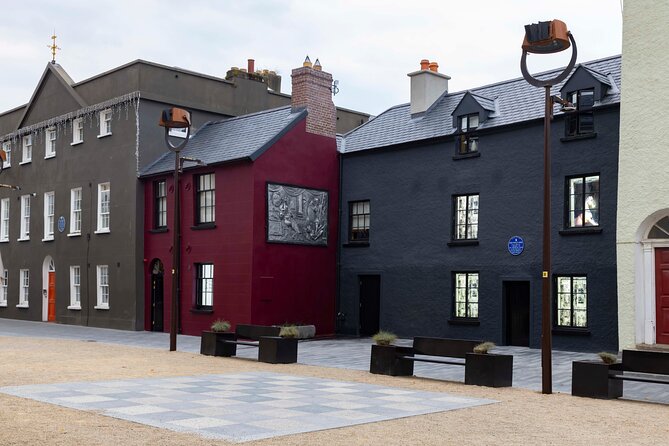
The first thing that gives this experience its character is the building itself. The Irish Wake Museum is housed in what was once a 15th-century almshouse in Cathedral Square. You are not entering a modern gallery arranged around a single exhibit. You are stepping into an old place associated with care, hardship, life, and death.
That setting matters. Funeral customs can seem strange when viewed only as a list of rules. Inside an old almshouse, the subject feels tied to real communities and ordinary households. The building helps you think about how people lived with death before modern hospitals, funeral homes, and rapid communication changed the way families mourn.
The museum presents Waterford’s past across six centuries, with the wake as its main doorway into that story. You learn about more than a ceremony held beside a coffin. The tour asks why people gathered, how folklore shaped behavior, and why particular actions became part of the farewell.
This is a good first stop if you are exploring Waterford’s historic center. The meeting point is Waterford Treasures: Irish Wake Museum, Cathedral Square, and the tour returns there when it ends. The museum is near public transportation, so you do not need a complicated plan to reach it.
More Museums in Waterford:
- Waterford Treasures: Medieval Museum Admission Ticket
★ 4.5 · 132 reviews - Waterford Treasures: Medieval Museum Entry Ticket
★ 4.5 · 20 reviews - Irish Rock ‘N’ Roll Museum Experience Dublin
★ 5.0 · 6,112 reviews
What the Irish wake meant to a community
A traditional Irish wake was both a farewell and a communal event. The museum uses this custom to explain how people faced death together. The guide places funeral practices within the beliefs, fears, habits, and social ties that shaped life in Ireland.
You can expect discussion of Irish folklore linked to death and mourning. That part of the visit is especially useful because folklore often explains the emotional logic behind a ritual. Instead of seeing a custom as a curious old habit, you begin to understand how it might have offered comfort, protection, order, or a way for neighbors to share grief.
The tour also looks at the origins of a wake’s customs. The exact meaning of a gesture or practice can shift over time, but the museum’s purpose is to show how those traditions developed. The guide connects the objects and displays to the wider history of Waterford, giving the visit more scope than a narrow look at funeral equipment.
Tobie’s approach appears especially well suited to this subject. His style combines information with humor, which can keep a difficult topic from becoming flat or overly solemn. Deirdre’s delivery has also been praised for being polished and clear. If you see either guide, expect the strength of the visit to come from storytelling as much as from the objects in the room.
Rare objects and realistic funeral displays
The museum includes rare artifacts connected with Ireland’s funeral customs. These objects give the guide something concrete to explain, and they help you picture how a wake worked in practice.
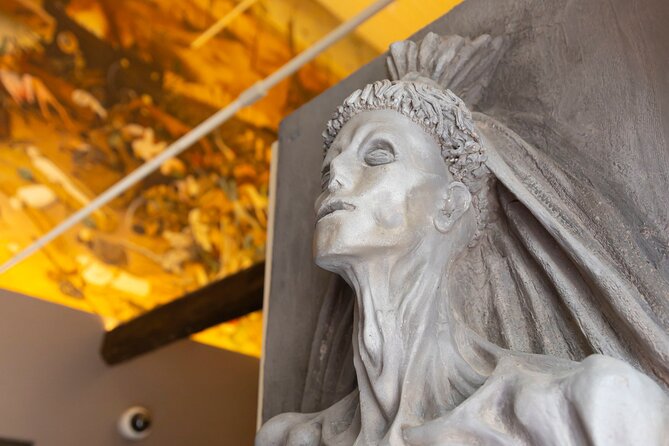
The displays are not presented as light entertainment. You will encounter realistic depictions of recently deceased people, along with references to illness and injury. That directness is important to the museum’s purpose, but it also sets this experience apart from a standard history museum.
If you are comfortable with the subject, the realism can make the customs easier to understand. You see that a wake was not an abstract tradition. It was a physical, emotional, and social event involving the body, the family, and the wider community.
If you are sensitive to images of death, read the warning carefully before paying. The museum itself advises caution, and the experience is not recommended for children under eight. Families with older children should still decide based on the child’s maturity and comfort with the topic. The 45-minute length is manageable, but the content remains serious throughout.
Why the guide matters more than the room
This is a fully guided experience, and that is a real advantage. A small collection of funeral objects can be difficult to interpret on your own. The guide explains what you are seeing, places it in local context, and answers the natural questions that arise as the tour moves along.
The guide also controls the tone. Death can be discussed in a way that feels cold and academic, or in a way that is too theatrical. The strongest reports about Tobie point to a useful balance: good humor without losing the historical point. Deirdre is described as very well informed, with a delivery that keeps the information easy to follow.
That personal element means the visit may feel different depending on who leads it. Still, the museum’s format gives the guide room to shape the experience around the group. The visit is not a long, crowded walk through several galleries. It is a focused conversation about one subject.
The group size deserves a small note. The experience is described as an intimate tour limited to four people, while the additional booking information gives a maximum of 12. Those figures do not match. If a very small group is important to you, confirm the expected size before booking. Either way, the formal limit is modest compared with a large coach tour.
A few more Waterford days to weigh up
- House of Waterford Crystal Guided Factory Tour
★ 4.5 · 2,303 reviews - Skip the Line: Hook Lighthouse Entrance Ticket and Guided Tour
★ 5.0 · 470 reviews - Waterford: House of Waterford Factory Tour
★ 4.8 · 256 reviews - Waterford Treasures: Epic Walking Tour
★ 4.5 · 152 reviews
A 45-minute stop that fits Waterford well
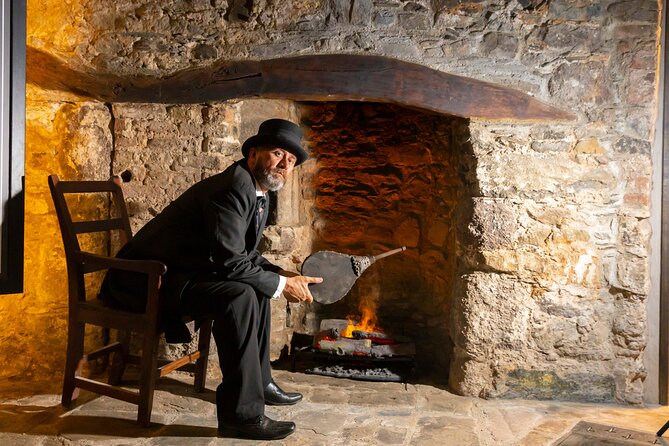
Forty-five minutes is a sensible length for this museum. You have enough time to understand the main customs and examine the displays without turning the visit into a full afternoon commitment.
I would place it alongside other Waterford sightseeing rather than treat it as a day-long attraction. The tour begins and ends at Cathedral Square, making it easy to continue exploring afterward. Since the visit is guided from start to finish, you do not need to budget extra time for figuring out the displays.
The short format also helps the experience keep its focus. You will not get a broad survey of every aspect of Irish history. You will get a concentrated look at death rituals and the beliefs surrounding them, with Waterford providing the local setting.
That focus is a strength for some visitors and a limitation for others. If you want art, architecture, or a large collection of objects, this is not the right museum by itself. If you want to understand one important part of Irish culture through a local site, 45 minutes gives you a useful introduction.
Is $17.54 a fair price?
At about $17.54 per person, the visit offers reasonable value for a professional guided tour in a historic building. You are paying for the guide’s interpretation, not simply entry to a room of artifacts.
The price makes most sense if you care about context. A self-guided visit might show you objects, but it would not necessarily explain how folklore, mourning, family life, and Waterford’s past fit together. Here, the guide supplies that connective thread.
It is also a practical purchase for a short city break. You receive a guided experience lasting about 45 minutes, and the museum’s central location lets you combine it with other Waterford stops. The 4.9 rating from 115 published ratings and the 97 percent recommendation rate suggest that the format has worked well for many people, though the topic will not suit everyone.
I would not choose it solely because it is inexpensive. Choose it because the subject interests you. The value drops sharply if you dislike discussions of death or expect a broad museum with many unrelated exhibits.
Who will enjoy this museum most?
I would recommend the Irish Wake Museum to several types of visitor:
- You enjoy local customs and folklore, especially when they are explained through a real historic place.
- You want a better understanding of Irish mourning practices than a general city tour is likely to provide.
- You appreciate guided storytelling and prefer asking questions to reading display panels alone.
- You are interested in Waterford’s past and want a focused stop in the city center.
- You have about an hour to spare and want something distinct from standard castle, church, or art attractions.
It may not suit you if realistic depictions of the dead are upsetting, or if you are looking for a family attraction aimed at young children. The museum advises against bringing children under eight, and older children may still need a careful explanation before the visit.
The experience also suits repeat visitors to Ireland. You may already know the broad story of Irish history, but the customs surrounding death can reveal a more personal side of community life. This is the sort of stop that adds texture to a trip rather than ticking off another major monument.
Booking, timing, and cancellation details
The experience is offered in English and includes a mobile ticket, a guided tour, and a professional guide. Confirmation is provided when you book, and the meeting point is Waterford Treasures: Irish Wake Museum at Cathedral Square.
The tour is often booked about 12 days ahead, so I would not leave it until the last moment if your Waterford schedule is fixed. The advertised small-group format is part of its appeal, and advance planning gives you a better chance of finding a time that fits.
Free cancellation is available if you cancel at least 24 hours before the local start time. Cancellations or changes made within 24 hours are not accepted for a refund. That rule is worth noting if your Ireland itinerary depends on changeable transport or weather.
Should you book the Irish Wake Museum?
Book this tour if you want an unusual, well-explained look at Irish culture and do not mind confronting the subject of death. The old almshouse, rare funeral objects, local Waterford context, and capable guides make the 45-minute visit more substantial than its size suggests.
I would skip it if you want a cheerful family attraction or feel uneasy around realistic death displays. For everyone else, the price is fair, the short duration is convenient, and the guided format gives you a clear understanding of why the Irish wake became such an important part of community life.
FAQ
Where is the Irish Wake Museum?
The museum is at Waterford Treasures: Irish Wake Museum, Cathedral Square, Waterford, Ireland.
How long does the tour last?
The guided experience lasts approximately 45 minutes.
What does the tour include?
The price includes the guided tour and a professional guide.
Is the tour offered in English?
Yes. The experience is offered in English.
Is the tour guided?
Yes. This is a fully guided visit led by a professional guide.
What is the price?
The listed price is $17.54 per person.
How large is the group?
The experience is described as an intimate tour limited to four people. Additional booking information gives a maximum of 12 travelers, so you may wish to confirm the expected group size before booking.
Is the museum suitable for children?
The museum advises that the tour is not suitable for children under eight. The content includes death, injury, illness, and realistic depictions of recently deceased people.
Does the tour return to the starting point?
Yes. The activity ends back at the meeting point in Cathedral Square.
Can I cancel for a full refund?
Yes, if you cancel at least 24 hours before the experience’s start time. Cancellations or changes made less than 24 hours before the start time are not accepted for a refund.
Just added around Waterford
- Waterford Treasures: Medieval Museum Entry Ticket★ 4.5 · 20 reviews
- Waterford Treasures: Walking Tour of the Viking Triangle★ 4.7 · 43 reviews
- Wexford: Hook Peninsula Sea Cave Kayaking Experience★ 4.9 · 27 reviews
- Courtown Woodland Guided Tour★ 5.0 · 23 reviews
- Waterford Treasures: Bishop’s Palace★ 4.5 · 53 reviews
- Waterford Treasures: Epic Walking Tour★ 4.5 · 152 reviews
- Osprey Viking Cruises★ 5.0 · 56 reviews
- Waterford Treasures: Medieval Museum Admission Ticket★ 4.5 · 132 reviews
Museums, compared.

Irish Rock ‘N’ Roll Museum Experience Dublin
Our verdict on it →
The Little Museum of Dublin Famous Guided Tour
Our verdict on it →

Giant’s Causeway with the Titanic Exhibition and the best of Northern Ireland
Our verdict on it →
Irish Whiskey Museum Tour and Whiskey Tasting
Our verdict on it →

Irish Whiskey Museum: Whiskey Blending Experience
Our verdict on it →
Irish Whiskey Museum Blending Tour with Tastings
Our verdict on it →Browse the lists this tour appears in