

Reviewed · WATERFORD TOURS
Waterford Treasures: Bishop’s Palace
Waterford’s Bishop’s Palace gives you a close look at Georgian life, not just another room full of old furniture. The highlight is the 1789 Penrose Decanter, the oldest surviving piece of Waterford glass, along with Napoleon Bonaparte’s Mourning Cross, the only survivor of twelve made after his death. I like the choice between a self-guided visit and a reenactor-led tour, and I like that the one-hour visit fits neatly into a day exploring the Viking Triangle.
The main catch is that the guided experience is subject to availability. If no housekeeper-led tour is running when you arrive, you may get the building and its displays without someone there to explain the stories. For some people, that is fine. For others, the self-guided format can feel a little thin, especially if they want the personal touch.
- The 1789 Penrose Decanter is the oldest surviving piece of Waterford glass.
- Napoleon’s Mourning Cross is the only surviving cross from the original twelve.
- Hourly reenactor-led tours are offered when availability allows.
- Self-guided touring lets you set your own pace through the Georgian rooms.
- A one-hour visit works well between other Waterford sights.
- A 94 percent recommendation rate and 4.7 rating point to a well-liked attraction, though the small review count means you should keep expectations sensible.
Why the Bishop’s Palace is worth your hour
The Bishop’s Palace is one of Waterford’s Five Museums in the Viking Triangle, but it feels different from a standard museum. You are not simply looking at objects behind glass. The setting is a Georgian residence, with ornate gilt furniture and architectural details that show how an eighteenth-century household presented itself.
That setting matters. A decanter on a museum shelf is interesting. The same decanter displayed inside a grand Georgian home gives you a better sense of how fine glass, furniture, and decoration worked together as part of daily life and social display.
You can expect to spend about an hour here. That makes the palace a good fit if you are building a day around Waterford’s historic center and want a compact indoor stop. It is also useful on a wet day, when an elegant house and its collections offer more shelter and substance than a quick walk through the streets.
The admission price is about $16.29 per person. I see that as reasonable if you care about decorative arts, historic houses, or Waterford’s connection with glassmaking. It is less compelling if you only want a quick photograph of an impressive building, since the value comes from seeing the rooms and understanding the objects in them.
Entering an eighteenth-century Georgian residence
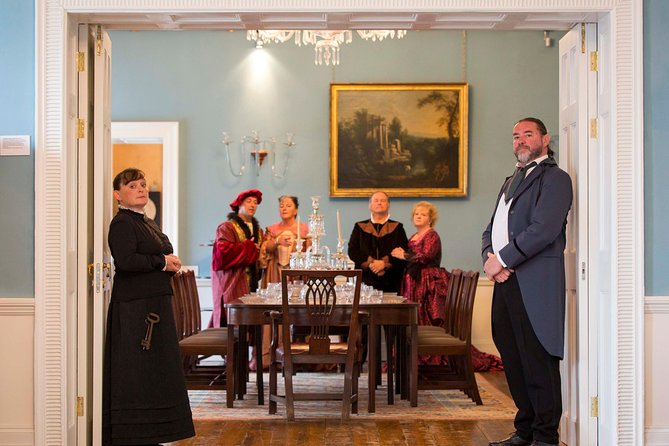
The palace’s main appeal is its combination of architecture and objects. The ornate gilt furniture gives the rooms a formal, luxurious look, while the building itself provides the setting for the story of Georgian life.
You will likely notice how carefully the interiors are presented. This is not a bare shell with a few labels. The furniture and architectural features are there to help you picture the house as a working residence, with its public polish and private stories.
The experience also has a theatrical option. On the reenactor-led tour, a housekeeper guides you while the bishop is away. That framing lets the visit move beyond dates and names. You may hear about the secrets of the house, including love stories hidden beneath its tidy Georgian appearance.
The reenactor format is especially useful for families and for anyone who finds labels tiring. A character-led explanation can make a room easier to remember. It also gives the visit a bit of humor and human drama without turning the palace into a stage show.
There is one practical limitation: the guided tour runs hourly only when available. The exact housekeeper’s name is not provided, and you should not assume that a guide will be waiting at every start time. If the guided option is important to you, check availability before relying on it.
A few more Waterford days to weigh up
- House of Waterford Crystal Guided Factory Tour
★ 4.5 · 2,303 reviews - Skip the Line: Hook Lighthouse Entrance Ticket and Guided Tour
★ 5.0 · 470 reviews - Waterford: House of Waterford Factory Tour
★ 4.8 · 256 reviews
The Penrose Decanter and Waterford glass
The 1789 Penrose Decanter is the object I would make a point of seeing first. It is described as the oldest surviving piece of Waterford glass in the world, which gives it importance beyond its appearance.
A decanter can be easy to overlook among large furniture and decorated rooms. Take a moment with this one. Its value lies in the link between an individual object and Waterford’s long association with fine glass. You are seeing a surviving piece from 1789 rather than a modern recreation or a generic example of Georgian tableware.
The decanter also gives the palace visit a clear local focus. You are not looking at a collection assembled from unrelated places. This object connects the grand house to the city’s craft tradition, making it one of the strongest reasons to choose this museum while you are in Waterford.
The supplied information does not give a detailed description of the decanter’s shape, decoration, or display case. I would not visit expecting a full technical lesson in glassmaking. Instead, think of it as a key object in a broader house visit, one that rewards close attention because of its date and survival.
Napoleon’s Mourning Cross
The second headline object is Napoleon Bonaparte’s Mourning Cross. It is described as the only one remaining from the original twelve made after his death.
That fact gives the display a different flavor from the Penrose Decanter. The decanter tells a local story about Waterford glass. The cross brings in a wider European connection and a personal response to Napoleon’s death. Together, the two objects prevent the palace from feeling like a single-subject museum.
I like this contrast. One item is tied to craftsmanship and the city. The other carries a connection to a famous historical figure. You get a reason to look closely at both rather than simply moving from room to room.
The information provided does not explain the cross’s maker, exact materials, or how it reached Waterford. You should treat it as a striking historic object, not as a complete Napoleon exhibition. The palace works best when you appreciate these pieces as part of the house’s wider collection.
Choosing the reenactor-led tour
If an hourly guided visit is available, I would choose it over a purely self-guided visit, especially on a first visit. The housekeeper’s role gives the rooms a voice and helps connect furniture, architecture, and personal stories.
The tour is designed to reveal secrets beneath the polished surface of Georgian life. That detail is important. You are not being offered only a formal account of bishops, dates, and furnishings. You may also hear about love stories and household drama, which can make the palace feel more like a lived-in home.
The guide is described as a professional guide and housekeeper reenactor, but no individual guide names are supplied. The tour is also subject to availability, so the safest plan is to remain flexible. If you have only a narrow gap between other activities, the self-guided option may be more practical.
A group can contain up to 30 people per booking. That is not a tiny private tour, so do not expect a fully personal experience for every visitor. Still, the palace’s one-hour format should keep the visit manageable, and the reenactor format offers more character than a standard audio-free museum walk.
Same part of the country, a completely different day out:
- Waterford Treasures: Epic Walking Tour
★ 4.5 · 152 reviews - Waterford Treasures: Medieval Museum Admission Ticket
★ 4.5 · 132 reviews - Irish Wake Museum Tour Rituals of Death and Celebration of Life
★ 5.0 · 115 reviews - Osprey Viking Cruises
★ 5.0 · 56 reviews
Taking the self-guided route
The self-guided option gives you control. You can pause at the Penrose Decanter, spend extra time with Napoleon’s cross, and look closely at the gilt furnishings without worrying about keeping pace with a group.
This is a good choice for independent visitors, photographers who want time to observe details, and families whose attention moves at different speeds. It also suits anyone fitting the palace between other Waterford sights.
The tradeoff is interpretation. One piece of feedback specifically praised the museum and its 3D show but wished someone had been present to explain the history. That is useful advice. The building and objects can carry much of the visit, but the experience may be less satisfying if you rely on a guide to bring every room to life.
If you choose self-guided touring, arrive with two or three questions in mind. Look for the connection between the house’s furnishings and Georgian status. Pay special attention to how the Waterford glass fits into the story. Then compare that local object with the more unusual Napoleon display.
The 3D show and museum extras
A 3D show is part of the broader museum experience and has been singled out as an interesting feature. The supplied information does not explain its length, schedule, or exact subject, so I would treat it as an added feature rather than the main reason to book.
If it is running during your visit, it may add a more modern layer to the palace’s traditional rooms. This can help break up the slower pace of looking at furniture and objects, particularly for children.
The gift shop is another small plus. It gives you a place to browse after the visit, and it may be useful if you want a Waterford-themed souvenir. No specific products or prices are provided, so I would not build the value of the ticket around shopping.
What the $16.29 ticket buys you
At about $16.29, the ticket is priced like a focused museum visit rather than a full-day attraction. For one hour in a carefully presented Georgian residence, that can be fair value, particularly if the guided tour is operating.
The price feels strongest when you care about at least one of these:
- Georgian interiors and historic homes
- Waterford glass
- Napoleon-related objects
- Short, structured museum visits
- A reenactor-led explanation of household life
The value is weaker if you are looking for a large museum with many galleries or a long guided tour. The palace is compact by design. Its strength is concentration, not scale.
Prebooking can be sensible because it confirms your place and lets you plan around the palace’s available start times. The experience is booked, on average, 22 days ahead, which suggests that advance planning is common. You do not necessarily need to arrange it that far ahead, but I would not leave it until the last minute during a busy visit to Waterford.
Timing, access, and planning your visit
The stated duration is about one hour. That is short enough to fit into a packed day, but you should allow extra time if you want to browse the gift shop or catch the 3D show.
Multiple start times make the palace easier to fit around other plans. The reenactor-led tour is offered every hour when available, while self-guided touring gives you more flexibility. Check the available option when booking if the guided format matters to you.
The ticket is mobile, so you can keep confirmation on your phone. Confirmation is provided at the time of booking. The palace is near public transportation, which helps if you are moving around Waterford without a car.
Most people can take part, and service animals are allowed. Children must be accompanied by an adult. Bookings are limited to a maximum of 30 people, so larger groups should keep that limit in mind.
Cancellation is free if you cancel at least 24 hours before the start time. If you cancel later, the payment is not refunded, and changes made within that same 24-hour window are not accepted. The cut-off follows local Waterford time.
Who will enjoy the Bishop’s Palace most
I would recommend this experience to you if you like historic houses more than large, general museums. The palace gives you a clear subject, a manageable time commitment, and several objects with strong stories attached to them.
It is also a good choice for families, especially if the reenactor-led tour or 3D show is available. The stories of the house and its love affairs can make the formal rooms easier for children to grasp, though children must remain with an adult.
Art and design fans will get the most from the gilt furniture, Georgian interiors, and Waterford glass. Napoleon enthusiasts will have a separate reason to visit, even though the palace is not presented as a dedicated Napoleon museum.
I would be more cautious if you want a guide guaranteed at a particular time. The guided option depends on availability, and the self-guided visit may not give you enough background if you prefer a fully explained tour.
Should you book the Bishop’s Palace?
Book it if you want a polished, one-hour look at Georgian Waterford with two memorable objects at its center: the 1789 Penrose Decanter and Napoleon Bonaparte’s Mourning Cross. I especially like it as part of a wider day in the Viking Triangle, where its short length leaves room for other sights.
Choose the reenactor-led visit if it is available and you enjoy stories, household drama, and a little performance. Choose self-guided touring if you value freedom and want to examine the rooms at your own pace.
At $16.29, this is a sensible ticket for a focused historic-house visit, but not a full-day museum experience. Prebook if your schedule is tight, and keep your expectations clear: the palace’s best moments come from its setting, its unusual objects, and the chance to see Georgian life presented as a real home rather than a list of dates.
FAQ
How long does the Bishop’s Palace experience last?
The visit lasts approximately one hour.
How much does admission cost?
The listed price is $16.29 per person.
Can I choose between a guided and self-guided visit?
Yes. You can take a self-guided tour or join a reenactor-led guided tour when available.
How often does the guided tour run?
The reenactor-led tour is offered every hour, subject to availability.
What are the main objects to see?
Key objects include the 1789 Penrose Decanter, the oldest surviving piece of Waterford glass, and Napoleon Bonaparte’s Mourning Cross, the only survivor of the original twelve.
Is the ticket available on a mobile phone?
Yes. The experience includes a mobile ticket, and booking confirmation is provided at the time of booking.
Can I cancel for a full refund?
Yes, if you cancel at least 24 hours before the experience start time. Cancellations or changes made less than 24 hours beforehand are not refunded or accepted.
Just added around Waterford
- Waterford Treasures: Medieval Museum Entry Ticket★ 4.5 · 20 reviews
- Waterford Treasures: Walking Tour of the Viking Triangle★ 4.7 · 43 reviews
- Wexford: Hook Peninsula Sea Cave Kayaking Experience★ 4.9 · 27 reviews
- Courtown Woodland Guided Tour★ 5.0 · 23 reviews
- Waterford Treasures: Epic Walking Tour★ 4.5 · 152 reviews
- Irish Wake Museum Tour Rituals of Death and Celebration of Life★ 5.0 · 115 reviews
- Osprey Viking Cruises★ 5.0 · 56 reviews
- Waterford Treasures: Medieval Museum Admission Ticket★ 4.5 · 132 reviews
Waterford Tours, compared.

House of Waterford Crystal Guided Factory Tour
Our verdict on it →
Skip the Line: Hook Lighthouse Entrance Ticket and Guided Tour
Our verdict on it →


Waterford Treasures: Medieval Museum Admission Ticket
Our verdict on it →
Irish Wake Museum Tour Rituals of Death and Celebration of Life
Our verdict on it →

Waterford Treasures: Walking Tour of the Viking Triangle
Our verdict on it →Browse the lists this tour appears in