
Reviewed · MEDIEVAL AND VIKING TOURS
Galway: Medieval Galway Tour
Galway’s medieval story is not locked away in a museum. It appears in a bank, a shopping center, a pub, a jewelry shop, and narrow lanes still used today. This walking tour connects those everyday places with the people who shaped the city, including the powerful Lynch and Kirwan families and the other Tribes of Galway. I like the hidden city walls in Eyre Square Shopping Centre, and I like the way guide Marteen Lane brings the darker stories to life, including the father who hanged his own son.
I also like the efficient 1.5-hour route. You see a lot without giving up half a day, and the walk finishes at the Spanish Arch. The main consideration is that St. Nicholas’ Collegiate Church costs extra, €5 for adults or €4 at the concession rate, and Galway’s weather can turn wet quickly, so good shoes and a rain jacket matter.
Key points to know before you book
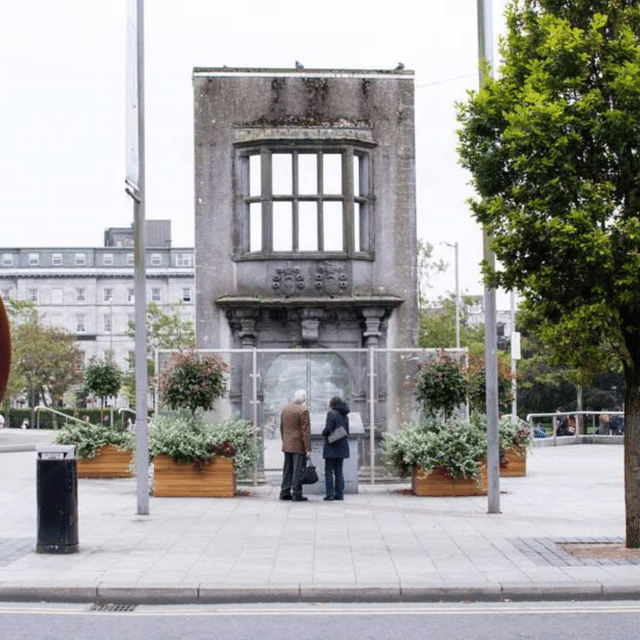
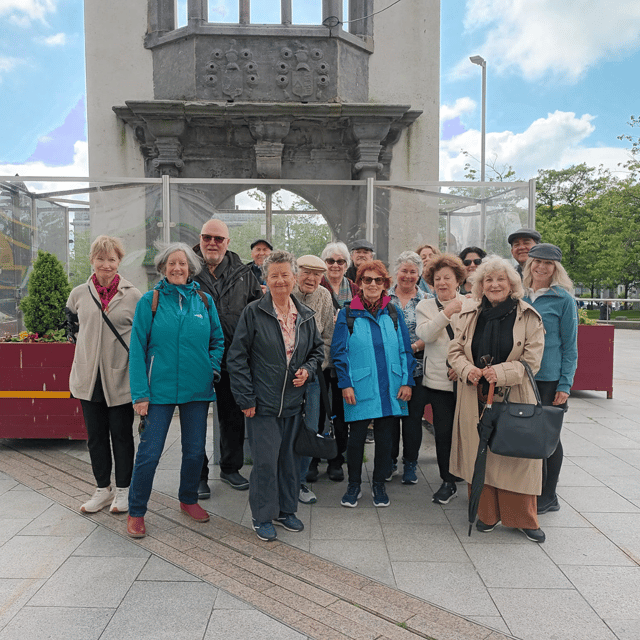
- The Browne Doorway is the meeting point: Find the free-standing stone doorway under perspex glass on the north side of Eyre Square, and arrive 15 minutes early.
- The city walls are hiding in plain sight: You’ll see medieval remains inside Eyre Square Shopping Centre, a useful reminder that modern Galway grew around its older defenses.
- Lynch’s Castle is now a bank: The former home of one of the Tribes of Galway is Ireland’s oldest commercial building.
- The route is packed with stories: Expect tales about Walter Lynch’s hanging, Cromwell’s soldiers in St. Nicholas’ Church, and the execution of King Charles I.
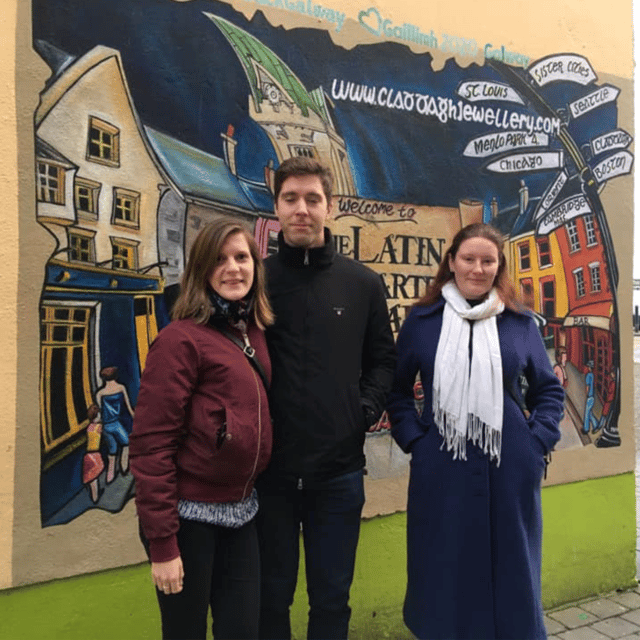
- The Claddagh ring has a local home: Thomas Dillon’s Jewellers on Quay Street has made the famous ring since 1750.
- The walk ends at the Spanish Arch: You’ll finish beside the River Corrib, with stories about the Claddagh and a tsunami that destroyed two arches.
Why medieval Galway works best on foot
Galway’s medieval center is compact, but its past is easy to miss. A doorway may mark a former family home. A modern bank may occupy a fortified townhouse. A shopping center may contain part of the old city wall.
That is the strength of this tour. You are not simply looking at old stone. You are learning how Galway’s medieval life remains mixed into the current city. The guide gives each stop a human angle, so the walk feels less like a list of dates and more like a chain of local stories.
The experience lasts about 90 minutes and uses an English-speaking regional guide. Marteen Lane is a Fáilte Ireland Regional Guide with more than 11 years of guiding experience and a BA (Hons) in Heritage Studies. That background matters here because the route moves between architecture, family history, church history, folklore, and trade.
The tour is also wheelchair accessible. You should still check the exact route and conditions when booking if you need specific access arrangements, but the activity is presented as accessible.
More Medieval Tours in Galway:
- Walking Tour of Dublin’s Viking/Medieval Quarter with a Viking
★ 5.0 · 171 reviews - The Medieval Mile Museum Guided Tour
★ 5.0 · 155 reviews - Waterford Treasures: Medieval Museum Admission Ticket
★ 4.5 · 132 reviews
Starting at the Browne Doorway in Eyre Square
Your meeting point is the Browne Doorway, a free-standing stone doorway surrounded by perspex glass on the north side of Eyre Square. It is not a large visitor center, so arrive 15 minutes before the scheduled start. That gives you time to find the doorway and join the group without holding up the walk.
Eyre Square is a useful place to begin because it puts modern Galway beside its medieval past. The square is a central city space, yet nearby remains point to the older walled town. This contrast sets up the whole tour: Galway’s past has not vanished, but it often requires someone to point it out.
The walk runs in all weather. Bring comfortable shoes, water, and clothing suited to the forecast. An umbrella is also listed as useful, though a proper waterproof layer may be easier to manage while walking. Severe weather warnings can lead to cancellation, with an alternative date or full refund offered for safety.
Finding the medieval walls inside a shopping center
One of the tour’s best early stops is the remains of Galway’s city walls inside the Eyre Square Shopping Centre. This is a good example of how the city’s medieval fabric survives in places you might otherwise ignore.
The walls were not just decoration. They helped define the town and offered protection to the people living and trading inside it. Your guide explains why the walls mattered to Galway’s residents, giving you a sense of the city as a defended settlement rather than simply a pretty old quarter.
I like this stop because it rewards attention. You do not need to enter a distant ruin or spend time in a formal museum. The remains are part of the modern city, and the tour helps you see them properly. If you walk through the shopping center alone, you could easily pass them without understanding their purpose.
Lynch’s Castle and the power of Galway’s Tribes
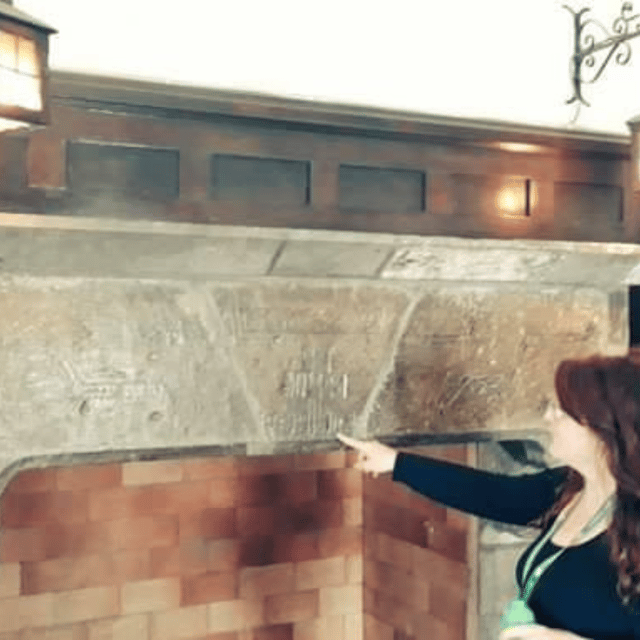
From Eyre Square, the route heads to Lynch’s Castle. Today, the building is occupied by AIB bank, but it was once linked to the Lynch family, one of the 14 Tribes of Galway.
The Tribes were powerful merchant families who shaped the city’s political and commercial life. At Lynch’s Castle, the story becomes architectural. The building gives you a direct sense of how wealth and influence could be expressed in the medieval town.
It is also described as the oldest commercial building in Ireland. Since it now serves a modern purpose, do not expect a preserved castle interior with a standard museum display. The value is in seeing the building in its current setting and hearing how its former owners fit into Galway’s social order.
This is one of the tour’s more useful lessons: medieval buildings do not always look like ruins. Some have survived by changing use.
A few more Galway days to weigh up
- Caherconnell Fort & Sheepdog Demonstrations
★ 5.0 · 645 reviews - Galway: Trad on the Prom Ticket with Irish Music and Dancing
★ 4.9 · 482 reviews - The Welcome to Galway Walking Tour
★ 5.0 · 427 reviews - Trad on the Prom – Ireland’s #1 Music, Song & Dance Experience
★ 5.0 · 346 reviews
The Lynch memorial and Galway’s darkest legend
Near Lynch’s Castle, you stop at Lynch’s Memorial Window. Here, Marteen tells the story of James Lynch Fitzstephen and his son Walter.
According to the legend, James Lynch hanged his own son in 1493 after Walter was found responsible for killing a Spanish visitor. The story is grim, but it says something about the authority held by leading families and the harsh ideas of justice connected with the period.
This tale is likely to be one of the most memorable parts of the walk. It is also a reason to choose a guided tour rather than simply following a map. The physical site is modest, but the story gives it weight.
The guide’s storytelling style matters here. The tour’s appeal depends not only on reaching each location, but on how the legends are explained. Marteen has been praised for the extra care given to the stories, and that focus suits this stop particularly well.
St. Nicholas’ Church, from worship to military use
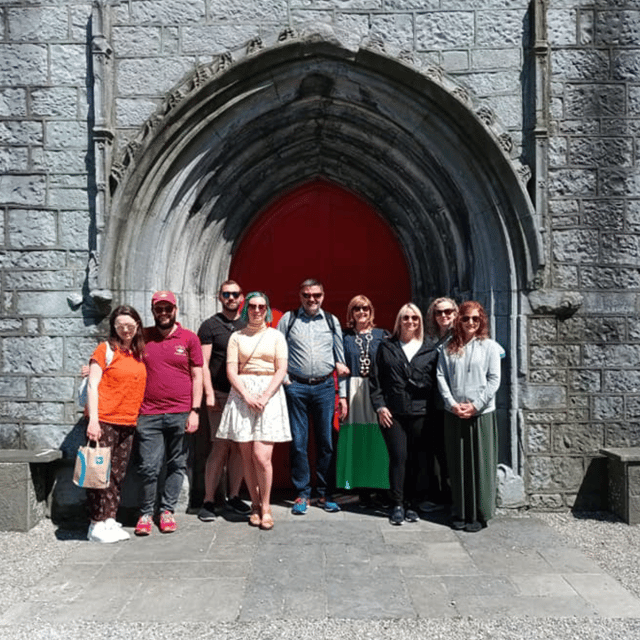
St. Nicholas’ Collegiate Church has been at the heart of Galway for more than 700 years. It is one of the route’s most important buildings, both for its age and for the range of stories connected with it.
The tour includes stories about Jane Eyre and James Kearney, as well as the period when Cromwell’s soldiers used the church as a stable. That shift in use shows how a religious building can reflect the city’s political upheavals. The church was not always treated as a sacred place, especially during periods of conflict and military occupation.
Entrance is not included in the tour. Adults pay €5, and the concession price is €4. If you want to go inside, carry a payment card or cash and allow for the extra cost. If you prefer to keep the tour within the advertised price, you can still learn about the church from the exterior and the guide’s explanation.
A pub linked to the execution of a king
The walk continues to the building now known as the King’s Head Pub. Its current role is lively and ordinary, but the site is tied to the beheading of King Charles I of England.
That connection gives the route another change of scale. The tour moves from a local family story to an event with wider political consequences, then places it in a building you can recognize as part of modern Galway.
I appreciate stops like this because they make history easier to retain. You do not have to remember a long political lecture. You remember a pub, then connect it with a major event in seventeenth-century England.
The Claddagh ring at Thomas Dillon’s Jewellers
On Quay Street, the tour visits Thomas Dillon’s Jewellers, the original makers of the famous Claddagh ring since 1750. The ring is known for its hands, heart, and crown, but this stop gives you a Galway connection beyond the familiar design.
You learn about the story surrounding the ring and the shop’s place in its production. That makes the symbol feel less like a generic Irish souvenir and more like an object tied to Galway’s own identity.
The stop also works well for anyone interested in local craft and commerce. You are not being taken to a distant display. You see the shop on one of Galway’s central streets and hear how a well-known piece of Irish jewelry connects with the Claddagh community across the river.
The tour does not include a purchase, of course, but the location may help you decide if you want to look at the rings more closely after the walk.
Going below street level at the Hall of the Red Earl
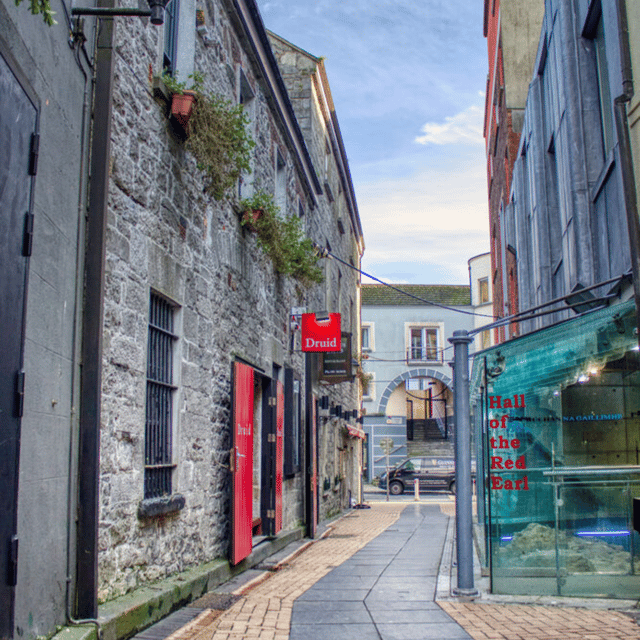
The Hall of the Red Earl is an archaeological site run by Galway Civic Trust. Here, you can walk down into the site and see remains of walls, columns, and buttresses at closer range.
This is one of the most rewarding stops for anyone who wants physical evidence of medieval Galway. The site is not just a wall fragment viewed from a distance. You get a better sense of how buildings were put together and how much of the old city remains below present-day streets.
The Hall of the Red Earl also helps connect the city’s political and commercial life with its built environment. After hearing about powerful families and defended walls, you see the structural remains that supported that life.
The stop is compact, but it adds variety to the route. You move from active streets and working buildings into an archaeological space, then return to the city lanes.
Kirwan’s Lane and the last medieval lanes
The route continues to Kirwan’s Lane, one of only five lanes still in existence. It is named after the Kirwan family, another of the 14 Tribes of Galway.
The lane gives you a closer look at the scale of old Galway. Large buildings can tell you about wealth, but a narrow lane helps you picture daily movement through the town. You see remnants of medieval Galway in the surviving buildings and hear how the Kirwan family fitted into the city’s story.
This part of the walk is especially useful if you want more than major landmarks. The lane is a reminder that historic Galway is also found in small passages and building lines, not only in churches and arches.
Because the tour lasts just 1.5 hours, you should not expect a long architectural study of every building. The guide gives you selected details that help the lane make sense without turning the walk into a slow inspection of every stone.
Blake’s Castle and the city’s criminal past
At the end of Quay Street, you reach Blake’s Castle. It belonged to the Blake family, another of the Tribes, and the guide explains what life was like for criminals held in the jail.
The castle later fell into ruin and was restored around the 1980s. That history gives the building several chapters: family power, imprisonment, decay, and repair.
I like this stop because it avoids treating medieval Galway as only noble or romantic. The city also had crime, punishment, and hard lives. Hearing about the jail adds a practical social side to the family stories and grand architecture.
The building’s restoration also raises a useful point for you as a sightseer. What you see today is not untouched medieval Galway. It is an old structure brought back into use and view, with layers of change still part of its story.
Finishing at the Spanish Arch and the Claddagh
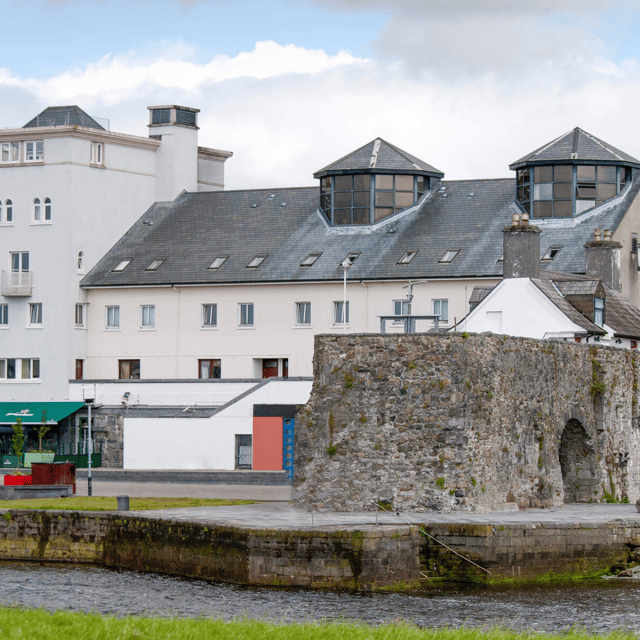
The walk finishes at the Spanish Arch, one of Galway’s best-known landmarks. It is a fitting end because the arch links the walled city with the river and the area associated with the Claddagh.
You learn about the Claddagh across the river, tying this final stop back to the ring seen at Thomas Dillon’s Jewellers. The route therefore ends with a connection between place, community, and craft rather than simply stopping at a photogenic monument.
The guide also explains the tsunami that destroyed two of the arches. That detail adds an unexpected natural event to a tour otherwise focused on family power, churches, trade, and conflict.
Because the activity ends at the Spanish Arch, you can continue exploring Galway afterward without needing transport back to another part of town. The walk begins and ends within the city center, making it easy to fit around other plans.
What the $23 price includes
At $23 per person, the main value is the guide’s interpretation. Galway’s medieval remains are scattered, adapted, or easy to overlook. A good guide turns those fragments into a connected story.
The price includes a Fáilte Ireland Regional Guide, English-language guiding, and the full 1.5-hour walking route. It does not include entrance to St. Nicholas’ Church, so add €5 for an adult ticket or €4 at the concession rate if you want to go inside.
I consider the cost fair for visitors who want context and local stories rather than a quick list of landmarks. It is less useful for someone who prefers to wander alone, take photographs, and read signs at their own pace. The tour moves through several locations in a short time, so the guide is the central reason to book.
The small review sample gives the experience a 4.7 rating from three reviews, with praise focused on the amount of information and Marteen’s care in telling the legends. That matches the tour’s strongest feature: storytelling that gives otherwise ordinary street corners a reason to stop.
Who should book this Galway walking tour?
I would recommend it to first-time visitors who want a quick orientation to Galway’s medieval center. It also suits anyone interested in family history, local legends, churches, archaeology, or the way old buildings survive inside a modern city.
It is a good choice if you have only a short window in Galway. Ninety minutes is enough to cover the main stops without taking over your day.
You should think twice if you dislike guided walks, want extensive interior access, or need a leisurely pace for photography. The tour covers many stops, and St. Nicholas’ Church costs extra. It runs in all weather, so comfort depends partly on your shoes and clothing.
Should you book the Medieval Galway Tour?
Book this tour if you want Galway’s past explained through places you can still see: a wall inside a shopping center, a castle now used as a bank, a lane named for a powerful family, and an arch shaped by both trade and disaster.
The best reason to go is Marteen Lane’s story-led approach, especially if you enjoy legends with a darker edge. The main drawbacks are the short time at each stop, the extra church admission, and the need to dress for Galway’s changeable weather.
For $23, this is a practical introduction to medieval Galway, with enough specific history to make the rest of your city walk more rewarding.
FAQ
How long does the Medieval Galway Tour last?
The tour lasts 1.5 hours. Check availability for the starting times offered on your chosen date.
Where does the tour begin?
Meet at the Browne Doorway in Eyre Square. It is a free-standing stone doorway surrounded by perspex glass on the north side of the square. Arrive 15 minutes before the start.
Where does the tour finish?
The tour finishes at the Spanish Arch. The activity information also states that it ends back at the meeting point.
Is entrance to St. Nicholas’ Church included?
No. Entrance costs €5 for adults and €4 at the concession rate.
What language is the tour conducted in?
The live guided tour is conducted in English.
What happens if the weather is severe?
The tour runs in all weather, so dress appropriately. If there is a severe weather warning, the tour may be cancelled for safety, with an alternative date or a full refund provided.
Just added around Galway
- Chauffeur Tours from Galway★ 5.0 · 16 reviews
- Abalone farm tour and tasting with coastal seaweed walk. Guided. 2 hours★ 5.0 · 4 reviews
- Dublin Airport to Galway ,Private Chauffeur Service★ 5.0 · 16 reviews
- Sheepdog herding demo on working sheep farm. Galway. Guided.★ 4.8 · 25 reviews
- Galway: Guided eBike City Sightseeing Tour★ 4.9 · 49 reviews
- Galway City Walk: Rougues, Rebels and Rakes★ 5.0 · 7 reviews
- Galway: The Irish Dance Experience★ 4.6 · 7 reviews
- Galway: HerGalway Walking Tour★ 5.0 · 3 reviews
Medieval and Viking Tours, compared.
Walking Tour of Dublin’s Viking/Medieval Quarter with a Viking
Our verdict on it →

Waterford Treasures: Medieval Museum Admission Ticket
Our verdict on it →
Book of Kells. Medieval Dublin Castle. 5* History & Heritage Tour
Our verdict on it →
Browse the lists this tour appears in