
Reviewed · NEWGRANGE AND BOYNE VALLEY TOURS
Dublin: Boyne Valley with Newgrange and Bru Na Boinne Entry
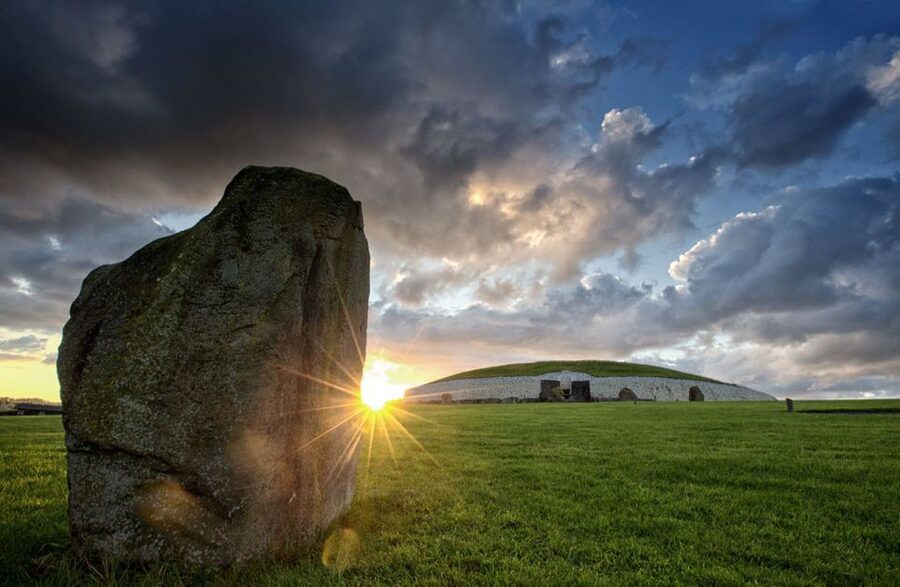
Newgrange is the star here: a 5,000-year-old passage tomb built before Stonehenge and the Egyptian pyramids. I like that this trip pairs the ancient monument with the Battle of the Boyne Visitor Centre, since Ireland’s story moves from Neolithic ritual to religious and political conflict in one well-planned day.
I also like the small-coach format and the guides, especially Matt, Kevin, and Richard, who make good use of the drive with stories and clear explanations. The main drawback is lunch: food is not included, and the options at the visitor center may feel limited, so bring a snack if you are particular about what you eat.
Key points to know before booking
- Newgrange and Knowth anchor the day: You get entry to the Bru na Boinne complex, including the Newgrange visit and, when open, Knowth.
- The ancient sites are the main event: The tombs are more than scenic ruins, with astronomical, religious, and ceremonial meaning.
- The history keeps changing direction: The Battle of the Boyne stop explains a major 1690 conflict tied to Ireland, Britain, and Europe.
- Monasterboice adds early Christian Ireland: Its round tower and 10th-century high crosses make a strong final stop.
- The day runs about eight hours: You leave from the Molly Malone statue and return there, usually around 5:00 PM.
- Winter changes the Bru na Boinne visit: Knowth is not accessible from November 1 through March 1, so that portion is shorter.
Why Newgrange is worth leaving Dublin for
The Boyne Valley gives you a different Ireland from the one found in Dublin’s pubs and Georgian streets. Here, low hills and open fields frame monuments built more than 5,000 years ago. The age is hard to grasp until you remember that Newgrange predates Stonehenge and the pyramids.
Newgrange was not simply a burial place. Its passage and chamber were designed with the sun in mind, and the site had religious and ceremonial meaning for the people who built it. Your visit gives you a way to see the structure up close and understand why this part of County Meath matters so much to Irish archaeology.
The tour includes transport from central Dublin, an English-speaking guide, and admission to Newgrange and Bru na Boinne. At $96 per person, the price is fair if you want a full day outside the city without arranging a car, finding parking, or sorting out separate admission.
The value comes from the connections. You are not just looking at an old mound, then heading home. The guide explains the Neolithic settlers, Celtic beliefs, later Christian sites, and the political struggles that shaped Ireland. The drive between stops becomes part of the lesson rather than dead time.
More Newgrange and Boyne Valley trips:
- Celtic Boyne Valley & Ancient Sites Day Tour From Dublin
★ 4.5 · 865 reviews - From Dublin: Celtic Boyne Valley and Ancient Sites Tour
★ 4.5 · 618 reviews - Dublin to Newgrange, Monasterboice Small Group Guided Tours
★ 4.5 · 500 reviews
Meeting at the Molly Malone statue
The day begins at the Molly Malone statue on Suffolk Street. You are asked to arrive 10 minutes before departure and look for a small white minibus with a HilltopTreks sign.
That detail matters. Central Dublin has several tour pickup points, and the statue is a busy place. Give yourself enough time to identify the vehicle rather than relying on a last-second dash through the city center.
The trip uses a bus or coach for roughly an hour before the first major visit. The exact departure time varies, so check availability when booking. The return is to the same meeting point, generally around 5:00 PM, though actual timing can shift with traffic and stop times.
The smaller vehicle makes the journey feel more personal than a large sightseeing bus. It also means the guide can speak directly to the group. Matt, Kevin, Richard, and other Hilltoptreks guides have been praised for clear storytelling, safe driving, good timing, and a relaxed manner. A guide who can explain a complicated past without turning the ride into a lecture makes a real difference here.
Newgrange and Bru na Boinne: the heart of the day
You spend about three hours at Newgrange and Bru na Boinne, including a guided visit, sightseeing, and time for photos. This is the part to protect your energy for. The site is ancient, unusual, and far more meaningful once you understand how carefully it was planned.
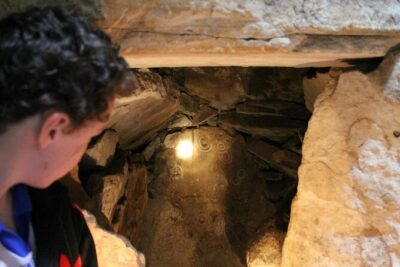
Newgrange is a passage tomb with a long stone-lined passage leading into an inner chamber. Its builders worked without modern machinery, yet created a structure connected to the movement of the sun. The site’s astronomical alignment is one reason it has such a strong place in Ireland’s past.
The wider Bru na Boinne area includes Knowth as well as Newgrange. Knowth is known for its ancient monuments and carvings, and the included visit gives the day more than one look at Neolithic Ireland. From November 1 through March 1, Knowth is not accessible, so the Bru na Boinne portion is shorter during the winter season.
That seasonal change is important if you are comparing dates. Newgrange remains the key attraction, but the warmer-season itinerary gives you more time and a fuller visit within the monument complex.
The tour includes entry and skip-the-queue access at Newgrange and Bru na Boinne. This is a useful inclusion because admission and site access are already handled for you. You can focus on the visit instead of working out separate tickets.
Expect walking at the archaeological sites, so wear comfortable shoes. The open Boyne Valley can also be wet and windy, making an umbrella a sensible item to pack. Irish weather may change quickly, and the outing is not one to plan around polished city clothes.
The visitor facilities also provide the likely food stop, but lunch and drinks are not included. Food choices may be limited, and one account described the meals as disappointing. I would bring something small with you, especially if you do not want to depend on heated café food between visits.
The Battle of the Boyne in about 90 minutes
After Bru na Boinne, the minibus continues for about 15 minutes to the Battle of the Boyne Visitor Centre. The visit lasts roughly an hour to an hour and a half, depending on the day’s schedule.
This stop shifts the focus from prehistory to the conflict of 1690. The Battle of the Boyne was fought between the Catholic King James II and the Protestant William of Orange, King of Holland, in a struggle for the English throne. Its outcome affected Ireland, Britain, and wider European politics.
The site also helps explain later divisions in Northern Ireland. The battle is still marked on July 12 by the Loyalist community, so understanding it gives you useful context for a part of Irish public life that can otherwise seem confusing.
The visitor center is worthwhile because it places the battle in a larger political setting. The conflict was not only a local fight. It was tied to religion, royal power, land, and the future position of Irish Catholics and Protestants.
You should not expect this stop to have the same visual impact as Newgrange. It is more about explanation than ancient stonework. If you prefer archaeological sites to political history, this may feel slower. If you want to understand why Ireland’s past remains closely tied to identity and belief, the stop earns its place.
Guides use the travel time well by preparing you for the story before arrival. Matt in particular has been praised for setting the scene between stops, while Kevin is known for mixing useful information with humor. That approach helps prevent the Battle of the Boyne from becoming a list of dates and names.
A few more Dublin days to weigh up
- Dublin: Guinness Storehouse Entry Ticket
★ 4.6 · 16,863 reviews - Irish Rock ‘N’ Roll Museum Experience Dublin
★ 5.0 · 6,112 reviews - Dublin Highlights and Hidden Gems Guided Walking Tour
★ 5.0 · 6,020 reviews - Dublin: Jameson Whiskey Distillery Tour with Tastings
★ 4.7 · 4,859 reviews
Monasterboice and the finest high cross in Ireland
The final major stop is Monasterboice, about 20 minutes from the Battle of the Boyne Visitor Centre. You have roughly 45 minutes for photos, a guided visit, and a look around the monastic site.
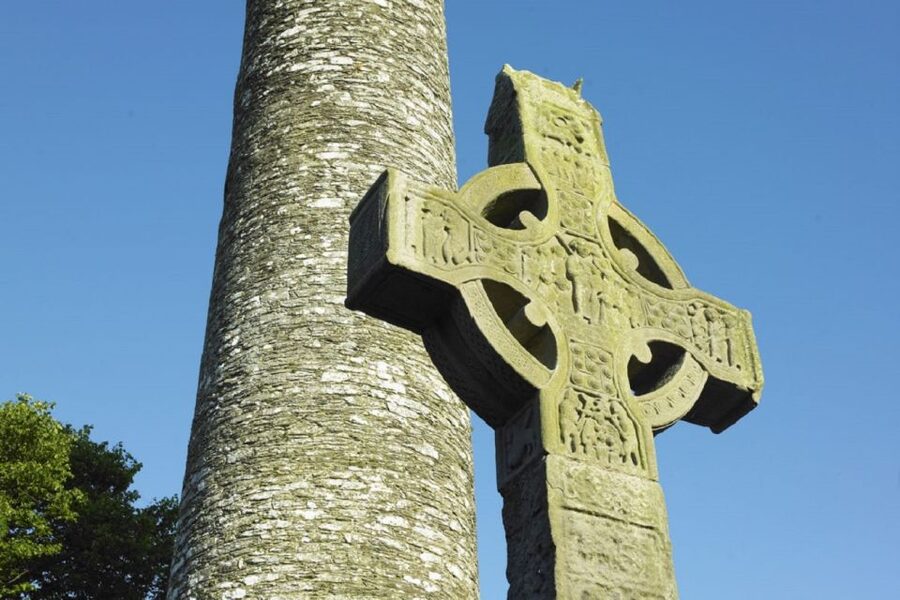
Monasterboice was founded by St Buithe in the 5th century. The site later included two churches built in the 14th century, a round tower from around the 10th century, and three carved high crosses.
The round tower rises about 28 meters and remains in very good condition. It was likely built shortly after 968 and suffered fire damage in 1098. These towers are among Ireland’s most recognizable early Christian structures, and seeing one beside the churches and crosses makes the site easier to understand than seeing a single ruin in isolation.
The highlight is Muiredach’s High Cross. At about 5.5 meters tall, it carries scenes from the Old and New Testaments. It is named for Muiredach mac Domhnaill, an abbot who died in 923, and is widely regarded as Ireland’s finest high cross.
Take time to examine the carved panels rather than treating the stop as a quick photo break. The figures and scenes were created for a society in which stone carving helped explain biblical stories. Even with limited time, the cross gives you a close look at the skill and purpose behind early Irish Christian art.
The stop is shorter than Newgrange, and you may wish for more time. That is the tradeoff of fitting three major sites into one day. Still, Monasterboice is a strong finish because it links the early Christian period to the much older monuments you saw earlier.
The guide can make or break this history lesson
This tour asks one guide to cover several thousand years, from Neolithic ritual to the Battle of the Boyne and the early medieval church. That is a lot of ground. The quality of the day depends heavily on how clearly the guide connects those periods.
Matt has been singled out for detailed explanations, patience, and an ability to use quiet moments well. Kevin is praised for managing time, driving safely, and telling entertaining stories. Richard is described as kind, clear, and especially strong at explaining Irish history and local details.
You should expect commentary during the drives as well as at the sites. That is valuable because the coach rides make up a meaningful part of the eight-hour outing. A good guide turns those stretches into preparation for what you are about to see.
The tour does not appear to force you through each stop at a frantic pace. Several guides are described as keeping the group comfortable while staying on schedule. Even so, this is a structured day. You will not have unlimited time at Newgrange, the visitor center, or Monasterboice.
That balance suits you if you want context but dislike a rigid, crowded-feeling tour. It may not suit you if you prefer to spend half a day studying one monument alone.
What the $96 price really covers
At $96, you are paying for a full day of transport, a live English-speaking guide, and admission to Newgrange and Bru na Boinne. The included entry is important because these are the most valuable parts of the day, and separate arrangements would take time.
The price does not cover lunch or drinks. Budget for food, and consider bringing a snack. This is not a food tour, and the practical food stop is part of the sightseeing day rather than a featured experience.
The small-coach format also adds value. You avoid renting a car and driving unfamiliar roads, while still reaching sites that are difficult to combine efficiently by public transport. You can look out at the Boyne Valley instead of watching the road.
Free cancellation up to 24 hours before departure and the option to reserve now and pay later make the booking less rigid. Those policies are useful if your Dublin schedule may change, but the main reason to book is the efficient combination of sites.
Who should book this Boyne Valley day trip?
I would choose this outing if you have one spare day in Dublin and want ancient monuments without giving up the chance to understand later Irish history. It suits first-time visitors, couples, solo visitors, and anyone who prefers a guide to explain what they are seeing.
It is particularly good for you if Newgrange is high on your list but you also want more than a single archaeological stop. The combination of Newgrange, Knowth when seasonally available, the Battle of the Boyne, and Monasterboice gives the day a clear historical arc.
Families and older visitors should note that the day involves walking and outdoor exposure. Comfortable shoes and an umbrella are practical choices. The route is manageable, but it is still a full day away from Dublin.
You may want a different plan if you dislike scheduled stops, need a long lunch, or want to explore each monument at your own pace. The Battle of the Boyne center may also appeal less if you only want ancient Ireland. For most people, though, its political context adds useful depth.
Final verdict: a strong choice for history-minded visitors
Book this tour if you want a well-filled day that joins Ireland’s oldest monuments to its later political and religious story. Newgrange is the reason to go, and the included Bru na Boinne entry gives you a strong archaeological experience.
Monasterboice supplies the best close-up look at carved medieval stonework, while the Battle of the Boyne Visitor Centre explains why Ireland’s past cannot be separated from questions of religion, power, and identity. Add guides such as Matt, Kevin, or Richard, and the long drives become part of the experience rather than wasted hours.
Bring food, dress for rain, and understand that winter has a shorter Knowth visit. With those limits in mind, $96 is good value for a full day from Dublin, especially if you want the history explained rather than simply pointed out.
FAQ
Where does the tour begin?
Meet at the Molly Malone statue on Suffolk Street 10 minutes before departure. Look for a small white minibus marked with the HilltopTreks sign.
Where does the tour end?
The tour returns to the Molly Malone statue in central Dublin.
How long does the tour last?
The experience lasts about eight hours and usually returns to Dublin around 5:00 PM. Check availability for the exact starting time.
Is admission to Newgrange included?
Yes. Transport, guides, and entrance fees with skip-the-queue access to Newgrange and Bru na Boinne are included.
Can I visit Knowth all year?
Knowth is not accessible from November 1 through March 1, so the Bru na Boinne portion is shorter during that period.
Is food included?
No. Food and drinks are not included. You may find food at the visitor center, but bringing a snack is sensible.
What should I bring?
Bring comfortable shoes and an umbrella. The tour includes outdoor visits in the Boyne Valley and at Monasterboice.
Just added around Dublin
- Turtle Bunbury’s Dublin: A Self-Guided Audio Tour from a Celebrated Author★ 5.0 · 3 reviews
- Trek the Tombs and Trails in the Dublin Mountains★ 5.0 · 14 reviews
- Private Tour of Dublin Museums (Walking Tour)★ 5.0 · 13 reviews
- Taste traditional Irish food in the heart of Dublin★ 5.0 · 24 reviews
- Dublin 6 Whiskey Tasting & 3 Food Pairing Walking Tour with Local★ 5.0 · 42 reviews
- Small Group Bucket List Sights Walking Tour with a Local Guide★ 5.0 · 54 reviews
- From Dublin: Private Tour to Hill of Tara, Trim Castle and more★ 5.0 · 11 reviews
- Merry Ploughboys Irish Night Dublin Admission Ticket★ 4.5 · 59 reviews
Newgrange and Boyne Valley Tours, compared.
Celtic Boyne Valley & Ancient Sites Day Tour From Dublin
Our verdict on it →
Dublin to Newgrange, Monasterboice Small Group Guided Tours
Our verdict on it →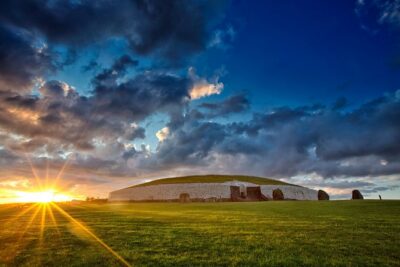
6 hour Half-Day Award Winning Private Tour of the Boyne Valley
Our verdict on it →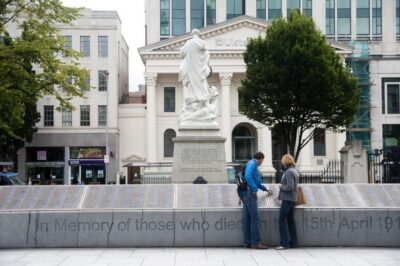
Full-Day Irelands Ancient Boyne Valley Private Guided Tour
Our verdict on it →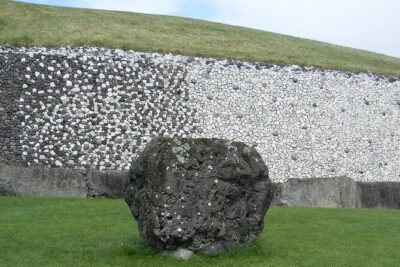
Private Tour from Dublin: Hill of Tara Trim Castle, Celtic sites
Our verdict on it →
Private Tour to Hill of Tara, Trim Castle and more
Our verdict on it →Browse the lists this tour appears in