
Reviewed · DUBLIN TOURS
Women Of Ireland: Trailblazers & Pioneers
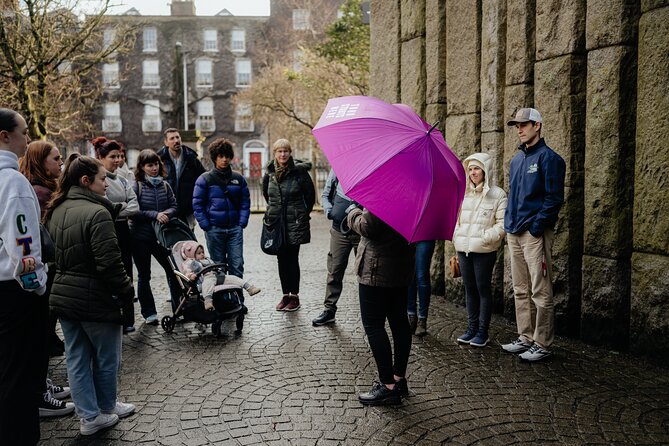
Dublin’s famous names are often male, but this 90-minute walking tour shifts the focus to women who fought, wrote, organized, resisted, and changed Ireland. You move from St Stephen’s Green to Dublin Castle, with stories about rebels, suffragettes, religious reformers, and a modern investigative journalist along the way.
I like the clear route and the small group, capped at 14 people. I also like the mix of well-known figures such as Countess Markievicz and less familiar women such as Margaret Anne Cusack and Anne Devlin. The main consideration is that the tour stays outdoors and does not enter the Royal College of Surgeons or Dublin Castle, so this is a storytelling walk rather than a ticketed sightseeing tour.
Key points to know before you book
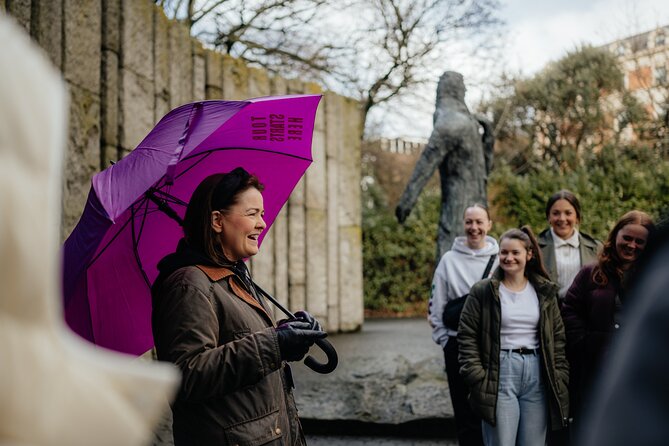
- Follow a six-stop route through central Dublin: The walk begins at Wolfe Tone’s sculpture in St Stephen’s Green and finishes in the gardens of Dublin Castle.
- Hear the women behind Ireland’s political story: Countess Markievicz, Hannah Sheehy-Skeffington, and Anne Devlin each represent a different kind of resistance.
- Discover stories beyond the usual Dublin highlights: Margaret Anne Cusack, known as the Nun of Kenmare, gets a full stop on Mercer Street Upper.
- Expect lively guiding: Tara is praised for adapting to different levels of background knowledge, while Ciarán is known for energetic storytelling and plenty of small anecdotes.
- Pay $17.35 for a short, focused introduction: The price is modest for a guided central Dublin walk, especially if you want context rather than museum admission.
- Plan for an outdoor experience: You enter Dubh Linn Gardens, but the Royal College of Surgeons and Dublin Castle are viewed from outside.
Why this women’s history walk matters in Dublin
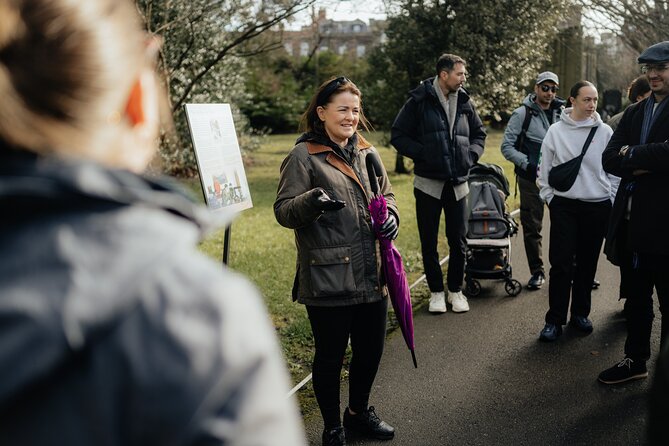
A first look at Dublin can leave you with a familiar list of men: Oscar Wilde, James Joyce, W. B. Yeats, Bono. This walk offers a useful correction without turning the city into a lecture hall. It asks you to notice the women whose work was political, creative, dangerous, or simply left out of the usual version of Irish history.
I like that the route uses real city places rather than a classroom setting. St Stephen’s Green, Mercer Street Upper, Ship Street Great, Dubh Linn Gardens, and Dublin Castle are not just backdrops. Each location gives the guide a point from which to explain a person, a movement, or a turning point.
The experience also has a good sense of range. You hear about the fight for Irish independence, the rising, women’s political rights, religious life, crime reporting, and modern Ireland. That variety keeps the walk from feeling like six versions of the same story.
At $17.35 per person, the tour is priced as an affordable introduction to Dublin. You are paying for a guide and a carefully chosen route, not entry to attractions or transportation. For a short first-day activity, the value is strong, especially if you want to get your bearings while learning something you are unlikely to pick up from a standard city walk.
A few more Dublin days to weigh up
- Dublin: Guinness Storehouse Entry Ticket
★ 4.6 · 16,863 reviews - Irish Rock ‘N’ Roll Museum Experience Dublin
★ 5.0 · 6,112 reviews - Dublin Highlights and Hidden Gems Guided Walking Tour
★ 5.0 · 6,020 reviews
Starting with Countess Markievicz at St Stephen’s Green
Meet at the Wolfe Tone sculpture in St Stephen’s Green at 11 a.m. The opening stop takes place near the bust of Countess Markievicz, a natural place to begin a tour about women who challenged the political order.
The guide introduces Markievicz and her part in Ireland’s fight for independence. This gives you an immediate connection between a Dublin landmark and the national story. Instead of beginning with a general timeline, the tour begins with one woman whose life helps explain the courage, conflict, and political upheaval of the period.
St Stephen’s Green is also a practical meeting point. It is central, near public transportation, and easy to pair with other Dublin sightseeing. You spend about 15 minutes here, so expect a focused introduction rather than a long stop in the park.
If you already know the basics of Irish independence, the guide can add personal detail and local context. If the subject is new to you, this first stop gives you a useful frame for the rest of the walk.
The Royal College of Surgeons and women holding their ground
The next stop is the Royal College of Surgeons. The guide discusses the women who held the building during the rising, including Margaret Skinneder.
This is one of the more unusual parts of the route because it connects a formal medical institution with a moment of political action. It also broadens the picture of women’s involvement. Their role was not limited to speeches, marches, or domestic support. They could be active participants in moments of danger and conflict.
You do not enter the Royal College of Surgeons, and admission is not included. That matters if you are hoping to tour the building itself. The value here comes from the guide’s explanation of what happened at the site, not from an interior visit.
Allow another 15 minutes. Since the route is short and the group is limited, the guide can keep the story moving without losing the thread. Ciarán’s energetic delivery, praised for its anecdotes and light touch, sounds especially suited to stops like this, where a place may need a strong spoken explanation to become meaningful.
Margaret Anne Cusack on Mercer Street Upper
Mercer Street Upper brings the tour to Margaret Anne Cusack, also known as the Nun of Kenmare. Her story gives the walk a different tone from the political and military material at the earlier stops.
The choice is a smart one. A tour about Irish women should not only cover independence leaders and suffragettes. Cusack’s life opens a window onto religious work, social action, and the complicated choices available to women in nineteenth-century Ireland.
You spend around 15 minutes here, with no admission charge. The stop is outdoors, so you should be ready to listen on the street rather than expect an indoor presentation.
This is also where the tour’s subject becomes less predictable. If you want only the most famous names, you may find the material unfamiliar. That is also the point. The walk works best when you are open to women who have not received the same attention as Dublin’s celebrated male writers and politicians.
Same part of the country, a completely different day out:
- Dublin: Jameson Whiskey Distillery Tour with Tastings
★ 4.7 · 4,859 reviews - Dublin Jameson Distillery Bow St. Tour and Tasting 45 mins
★ 5.0 · 4,690 reviews - Guinness Storehouse Experience
★ 4.5 · 4,629 reviews - Dublin Book of Kells, Castle and Molly Malone Statue Guided Tour
★ 4.5 · 3,825 reviews
Suffragettes and Hannah Sheehy-Skeffington on Ship Street Great
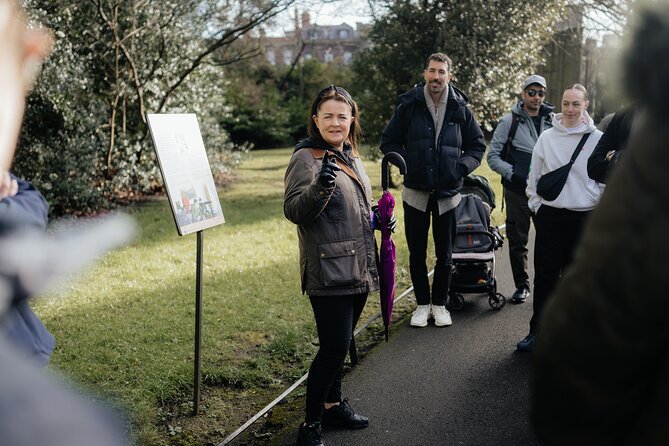
At Ship Street Great, the guide turns to the suffragette movement and Hannah Sheehy-Skeffington. This stop brings the question of women’s political rights into sharper focus.
Sheehy-Skeffington’s story helps show that the fight for independence and the fight for women’s equality were related but not identical. A woman could oppose British rule and still face limits within Irish political life. That tension makes this a valuable stop for anyone who wants more than a simple heroes-and-villains version of the past.
The subject can be serious, but the tour’s tone is not described as heavy throughout. Ciarán is praised for keeping his storytelling engaging and light-hearted, while Tara is noted for adjusting the level of information to suit the group. That flexibility matters on a walking tour, where some people arrive with years of Irish history behind them and others arrive with only a rough idea of the subject.
Again, plan for about 15 minutes outdoors. The route is compact, but you should wear comfortable shoes and dress for Dublin weather. No private transportation is provided, and the walk is the activity, not simply a transfer between attractions.
Veronica Guerin in Dubh Linn Gardens
The tour enters Dubh Linn Gardens for its fifth stop and explores the life of Veronica Guerin. This is the most modern story on the route and one of the sharpest changes in subject.
Guerin is associated with investigative journalism and the dangers faced by someone pursuing difficult stories. Her inclusion shows that female trailblazing in Ireland did not end with the independence movement or the suffrage campaign. The walk reaches into modern Ireland and asks you to consider courage in a very different setting.
Dubh Linn Gardens also provides a change of pace. After several street-side stops, you have a defined garden setting for the story. The stop lasts about 15 minutes and is free to enter.
I would pay attention here to how the guide connects the individual story with modern Ireland. The tour is strongest when each woman is part of a larger idea, rather than simply a name followed by a few facts. Guerin’s story gives the guide a chance to discuss journalism, risk, public life, and the changing role of women in Ireland.
Anne Devlin and the walk to Dublin Castle
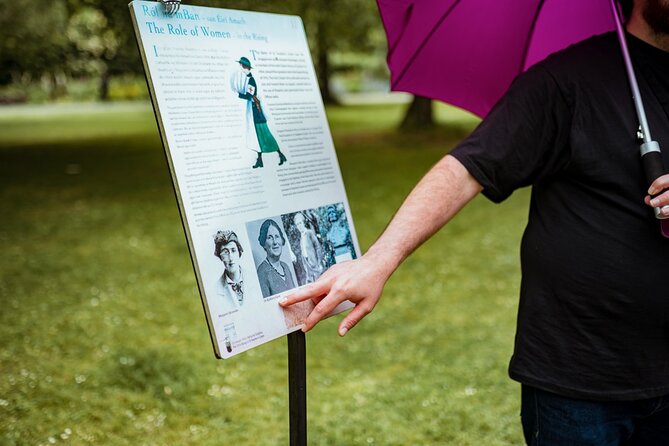
The final stop is at Dublin Castle, with the tour finishing in the castle gardens. The guide discusses Anne Devlin and then links her story to modern Ireland.
Devlin is a fitting final figure for a route centered on courage and resistance. Ending with her lets the tour return to the political struggles introduced at St Stephen’s Green, while the mention of modern Ireland keeps the story from feeling sealed in the past.
You do not enter Dublin Castle itself. The endpoint is the gardens, so the tour does not replace a paid castle visit. That is worth planning around if you want to see the State Apartments or other interior spaces separately.
The finish is convenient for continuing your day. You are left in one of Dublin’s central sightseeing areas, close to other sights and public transportation. The total walking time is about an hour and a half, with roughly 15 minutes devoted to each of six stops.
What the guides add to the experience
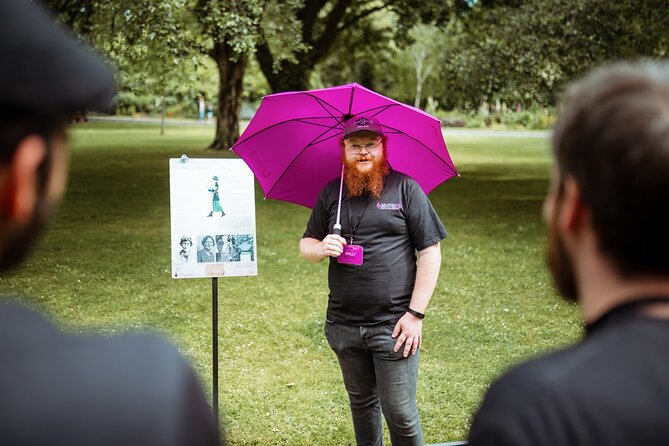
The guide is the key factor in a walking tour built around stories. The available guide names include Tara and Ciarán.
Tara is praised for handling different levels of prior knowledge. That is useful because the subject can attract both dedicated history fans and people who simply want a fresh way to see Dublin. A guide who can adjust the detail helps prevent the walk from becoming either too basic or too academic.
Ciarán is praised for enthusiasm, storytelling skill, and small anecdotes that keep the route light. That style fits this experience well. You are not sitting in a lecture room, and a good story can make an ordinary street corner worth remembering.
The strongest praise centers on the guides’ ability to make the history clear, enjoyable, and well paced. You should expect a conversational walking tour rather than a formal historical seminar. The exact guide is not guaranteed, so the tone may vary, but the experience is designed around live explanation rather than an audio recording.
Group size, timing, and practical value
The group limit is 14 people. That is small enough for a more personal walk, though the experience is still shared rather than private. A smaller group can make it easier to hear the guide, stay together on city streets, and ask questions when the group pauses.
The tour starts at 11 a.m. and lasts about 90 minutes. That timing works well as a morning activity before lunch or as a way to begin a full day of central Dublin sightseeing. The end at Dublin Castle also gives you a clear next stop instead of leaving you in an unclear part of the city.
The mobile ticket keeps the meeting process simple. You receive confirmation at booking, and the starting point is the Wolfe Tone sculpture in St Stephen’s Green. It is smart to arrive a little early so you are not trying to find the group at the last minute.
Service animals are allowed, and most people can participate. The walk is near public transportation. Lunch and private transportation are not included, but neither is usually necessary for a 90-minute route through central Dublin.
Free cancellation is available if you cancel at least 24 hours before the start time. Changes made inside that window are not accepted, and the experience requires a minimum number of participants. If the operator cancels because that minimum is not met, you are offered another date or experience, or a full refund.
Who should book this Dublin walking tour?
I would recommend it to you if you want a compact introduction to Dublin with a clear theme. It suits solo visitors, couples, and small groups who prefer local history told on the streets rather than a long indoor attraction.
It is particularly useful if you have already seen the standard list of Dublin highlights or want to add a women’s history angle to your visit. The route includes major political figures, but it also introduces people you may not recognize, which gives the walk a sense of discovery without relying on elaborate set pieces.
You may want to skip it if you need a fully accessible indoor activity, want to enter Dublin Castle, or prefer a broad city overview covering architecture, pubs, and famous writers. This tour has a specific purpose and stays focused on women’s roles in Irish history.
Should you book Women Of Ireland: Trailblazers & Pioneers?
Book it if you want a reasonably priced, small-group walk that adds depth to familiar Dublin streets. The strongest reasons are the focused theme, the six-stop route, the mix of famous and lesser-known women, and guides such as Tara and Ciarán who bring energy and anecdotes to the storytelling.
At $17.35, the cost is easy to justify for a 90-minute introduction, particularly early in your stay. Just remember that the price covers the guided walk, not entry to the Royal College of Surgeons or Dublin Castle. If that tradeoff suits you, this is a practical way to see Dublin through a wider and more honest version of its past.
FAQ
Where does the Women Of Ireland tour begin?
The tour begins at the Wolfe Tone sculpture in St Stephen’s Green, Dublin. The start time is 11 a.m.
Where does the tour finish?
The walk finishes in the gardens of Dublin Castle on Dame Street, Dublin 2.
How long is the tour?
The experience lasts approximately 1 hour and 30 minutes.
How many people can join the tour?
The maximum group size is 14 people.
Does the tour enter the Royal College of Surgeons or Dublin Castle?
No. The guide discusses both locations from outside. The tour does enter Dubh Linn Gardens.
Is cancellation free?
Yes. You can cancel for a full refund up to 24 hours before the experience start time. Cancellations or changes made less than 24 hours before the start time are not accepted.
Just added around Dublin
- Whiskey Tasting Tour of Dublin★ 5.0 · 117 reviews
- Premium Irish Whiskey Tasting Hosted by Local Dublin Expert★ 5.0 · 77 reviews
- Historical Walking Tour of Dublin★ 5.0 · 50 reviews
- Semi-Private (8people max) 2.5 Hr Dublin Walking Tour★ 5.0 · 69 reviews
- Dublin (Dun Laoghaire) Top-Rated Coastal Walking Tour★ 5.0 · 80 reviews
- Private Ultimate Day in Dublin (Walking Tour)★ 5.0 · 30 reviews
- DayTripper Dublin: A Guided City Walking Tour★ 5.0 · 90 reviews
- Guinness Storehouse, Irish Whiskey Experience and Brazen Head★ 4.5 · 42 reviews
Dublin Tours, compared.


Irish Rock ‘N’ Roll Museum Experience Dublin
Our verdict on it →
Dublin Highlights and Hidden Gems Guided Walking Tour
Our verdict on it →
Jameson Whiskey Distillery Tour with Tastings
Our verdict on it →
Dublin Jameson Distillery Bow St. Tour and Tasting 45 mins
Our verdict on it →

Dublin Book of Kells, Castle and Molly Malone Statue Guided Tour
Our verdict on it →