
Reviewed · HISTORICAL TOURS
Dublin: Jeanie Johnston Tall Ship Irish Famine History Tour
The most affecting part of the Jeanie Johnston tour comes below deck, where you see how up to 250 passengers lived during the long crossing. They had little space, limited food, and only half an hour of fresh air each day. It is a powerful way to understand the Irish famine beyond dates and textbook summaries.
I like two things here: the real passenger stories make the past personal, and the 50-minute format gives you plenty of history without taking over your day. Guides such as Steve, Claire, Owen, Eoin, and Katrina have been praised for mixing clear facts, warmth, humor, and sensitivity. The main drawback is the ship’s stairs and confined spaces, which make this a poor choice for wheelchair users or anyone with limited mobility.
Key points to know before boarding
- Up to 250 people lived below deck: The cramped quarters help you picture the hard conditions of famine-era voyages.
- The tour covers both decks: You begin outdoors with the masts, shipbuilding, and Docklands views, then go below to the passenger quarters.
- Personal stories drive the visit: You hear how passengers paid for their crossing, what they ate, and what happened when they reached America.
- The Jeanie Johnston had an unusual career: The ship first carried timber before being used to transport emigrants.
- The guides make a major difference: Steve, Claire, Owen, Eoin, Catriona, Katrina, and others have been singled out for strong storytelling and family-friendly delivery.
- It costs $16 per person: For a short, guided Dublin attraction with a clear historical focus, that is a fair price, especially if you value interpretation over a quick photo stop.
Why the Jeanie Johnston tells Ireland’s famine story so well
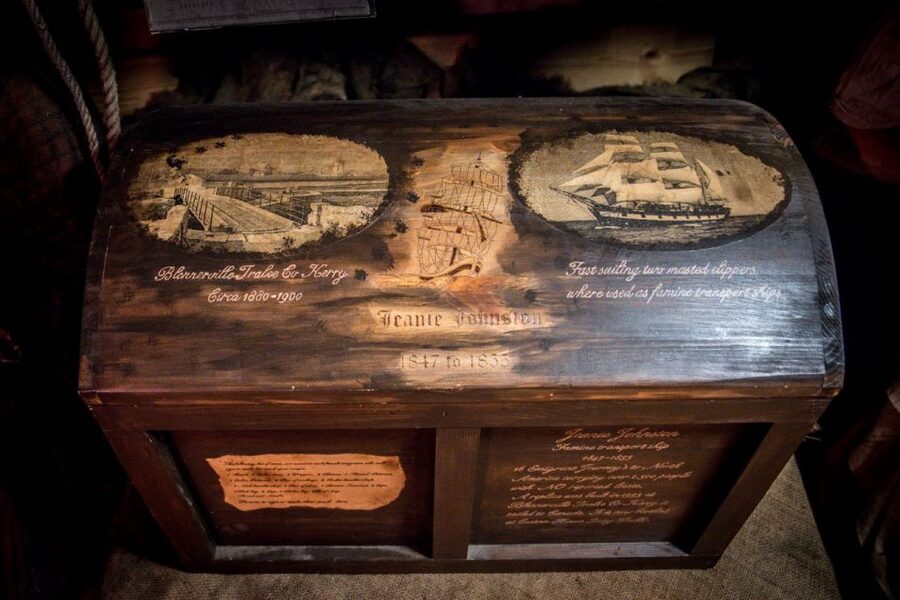
The Irish famine was not simply a food shortage. It forced roughly one million people to leave Ireland, often under desperate conditions. The Jeanie Johnston carried about 2,500 of those emigrants across 16 voyages to America.
That number gives the ship its emotional weight. You are not only looking at a tall ship in Dublin’s North Dock. You are standing inside a replica of a vessel connected to families who sold what they could, borrowed money, or relied on others to pay for passage. The crossing was a gamble, but remaining in Ireland could be even more dangerous.
The tour does not present the famine as a distant event with no human face. It focuses on individual passengers and crew. You hear about their backgrounds, how they found the money for the trip, what they ate, and how they spent their time at sea.
That approach works especially well for families and younger visitors. One guide, Catriona, was praised for answering a 10-year-old’s questions and helping him feel comfortable around the ship’s mannequins. Another guide, Katrina, drew two children into the story by asking questions and involving them in the explanation. If you are visiting with children, this matters more than a long list of dates.
More History Tours in Dublin
- Dublin Historical Centre Food Tour with 8 Food Tastings & Drinks
★ 5.0 · 1,718 reviews - 2-Hour Historical Walking Tour from Dublin
★ 5.0 · 875 reviews - Historical 2-Hour Guided Walking Tour of Dublin
★ 4.7 · 865 reviews
Starting on the upper deck in Dublin’s North Dock
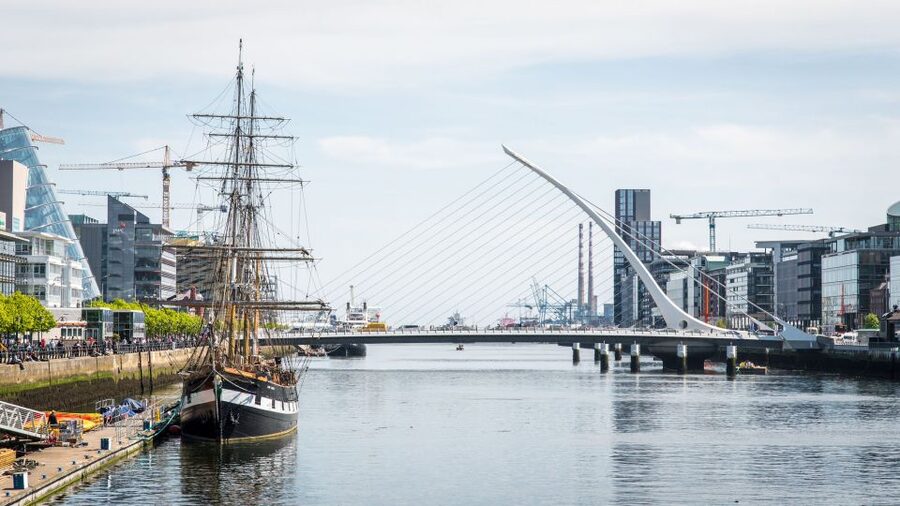
The tour begins at the Jeanie Johnston Tallship at City Moorings, Custom House Quay, Dublin 1. You return to the same place at the end, so the visit is easy to fit between other Docklands sights.
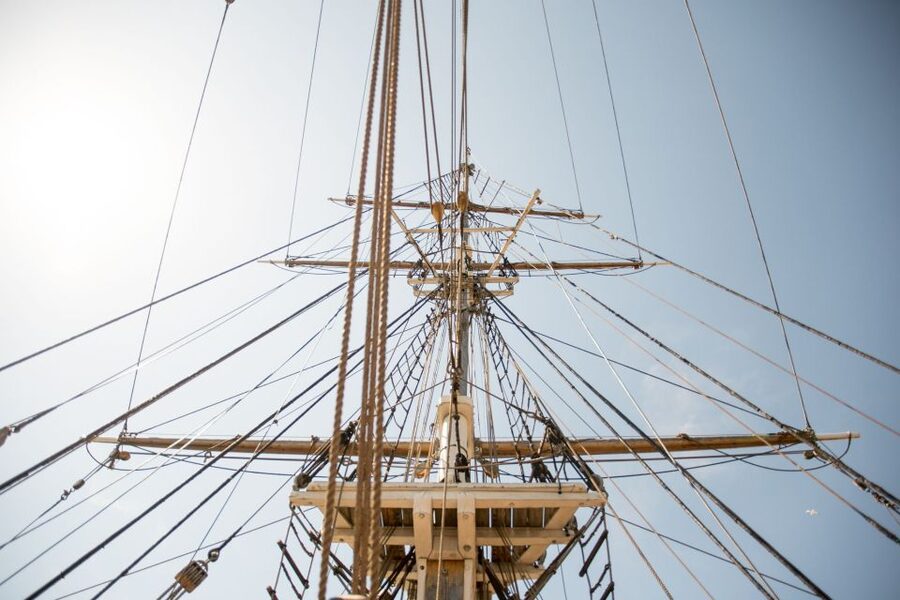
Above deck, the ship first works as an object of interest. You can look up at the masts, examine the timber construction, and hear how the original ship was built and later recreated. The guide also explains its earlier work carrying timber before it took on passengers.
This part gives you a useful introduction before the more serious material below. You get a sense of the ship’s size, but also its limits. From the dock, it may look broad and sturdy. Once you learn how many people were carried below, that first impression changes.
The upper deck also gives you a different view of Dublin. You can take in the dockside sights and sounds, feel the wind, and hear gulls overhead. This is a good place for photographs, and the ship is one of the area’s most photographed attractions for a reason. Still, the pictures are only one small part of the experience. The history is what gives the ship its force.
Your guide may pause to explain the 19th-century shipping trade and the role of tall ships before moving to the passenger story. The balance of practical ship detail and human history keeps the visit from becoming either a dry maritime lecture or a purely emotional presentation.
Below deck, the voyage becomes personal
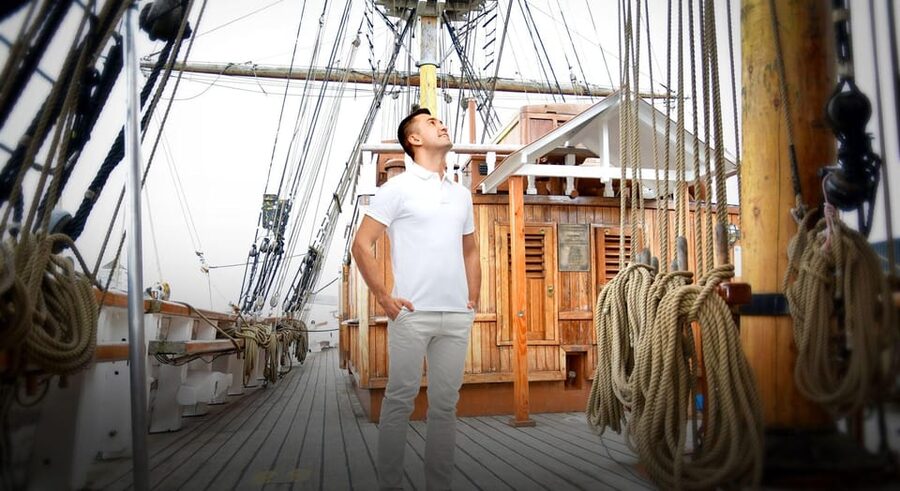
The stairs below deck mark a clear change in mood. You leave the open air and enter the tight living quarters where passengers spent most of their time.
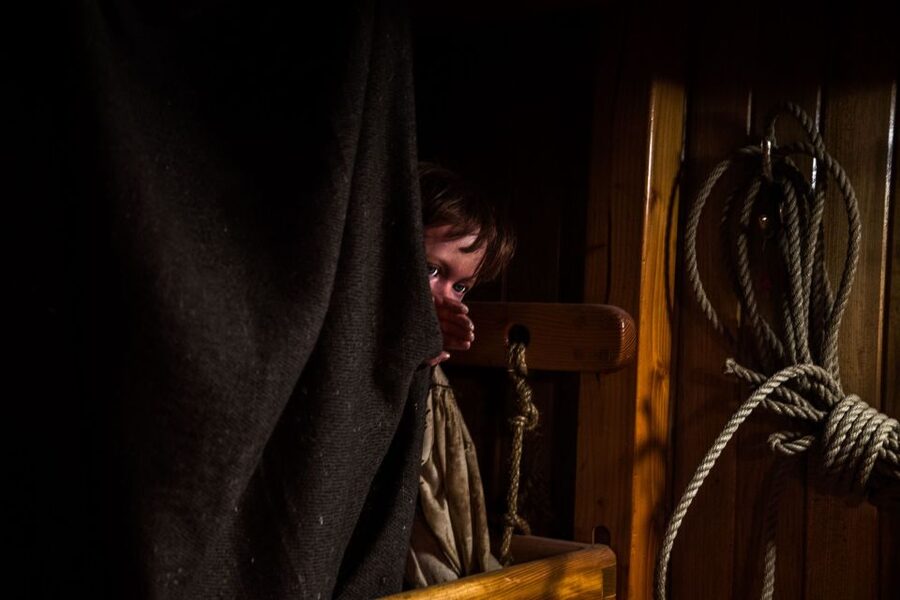
The conditions were grim. Up to 250 people shared the space, and passengers were allowed outside for only about half an hour of fresh air each day. The tour asks you to imagine sleeping, eating, waiting, and trying to stay healthy in those surroundings during a long Atlantic crossing.
The ship’s interior cannot recreate every hardship, but it helps you understand the lack of privacy and personal space. You see where passengers lived rather than simply hearing that conditions were crowded. That physical setting is the best reason to choose this attraction over a standard museum display.
The guide introduces passengers and crew through their individual stories. You find out how people paid for their crossing and what food they had during the journey. You also hear about disease, starvation, and the danger of disaster at sea.
There is an important balance here. The tour does not treat the voyage as a dramatic adventure. The crossing involved real danger, and families could lose everything by attempting it. At the same time, the guide explains how passengers passed the time, which adds ordinary human detail to a bleak story.
One especially striking fact is that nobody died on the Jeanie Johnston’s 16 voyages to America. That does not make the conditions comfortable or safe. It shows how remarkable that record was when disease and starvation were major risks on famine ships.
The guides shape the experience
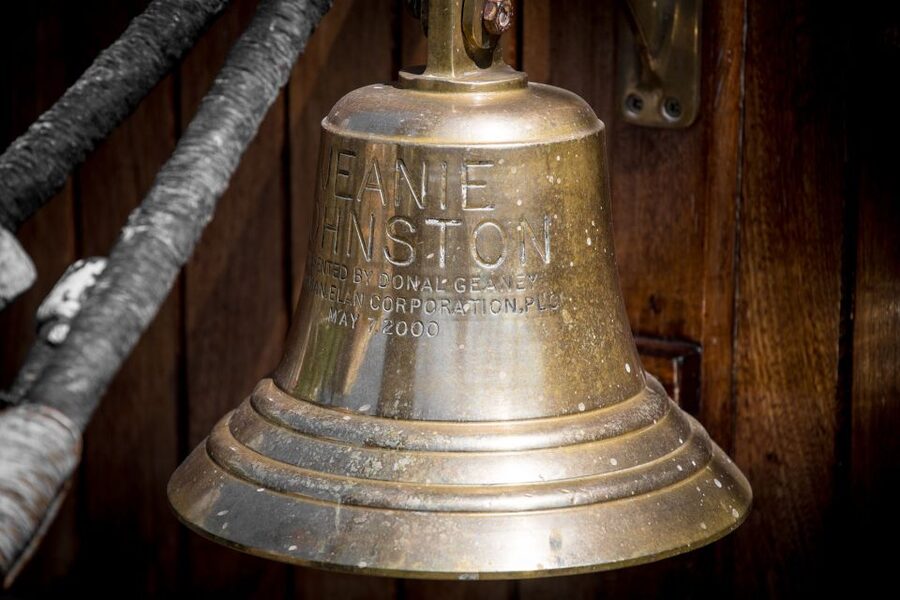
This is a guided tour, not a self-paced walk through the ship. Your guide speaks in English and leads the group through the upper and lower decks.
The strongest part of the experience is often the delivery. Steve has been praised for explaining the famine clearly while keeping children aged 7 to 15 involved. He also handles questions well, which is useful if your family wants more than a memorized speech.
Claire has been described as funny, informed, and engaging, while Owen has been praised for answering detailed questions. Eoin brought a mix of seriousness, humor, and wisdom to the subject. Gearoid was noted for using both humor and a serious tone, a helpful approach for material that can become heavy.
Those names are not a promise that you will receive a particular guide. They do show the range of styles used on the tour. Some guides draw people into the story with questions. Others focus on clear explanation and passenger details. The common thread is a personal, spoken presentation rather than an audio recording or a wall of labels.
I also like the way the guides appear to adjust for different ages. A 16-year-old was kept interested, while younger children were encouraged to take part. That makes the tour a good pick for a mixed-age family, although the subject matter includes poverty, illness, starvation, and death. Parents should decide how much historical detail suits their children.
Same part of the country, a completely different day out:
- Dublin: Guinness Storehouse Entry Ticket
★ 4.6 · 16,863 reviews - Irish Rock ‘N’ Roll Museum Experience Dublin
★ 5.0 · 6,112 reviews - Dublin Highlights and Hidden Gems Guided Walking Tour
★ 5.0 · 6,020 reviews - Dublin: Jameson Whiskey Distillery Tour with Tastings
★ 4.7 · 4,859 reviews
Why the 50-minute length works
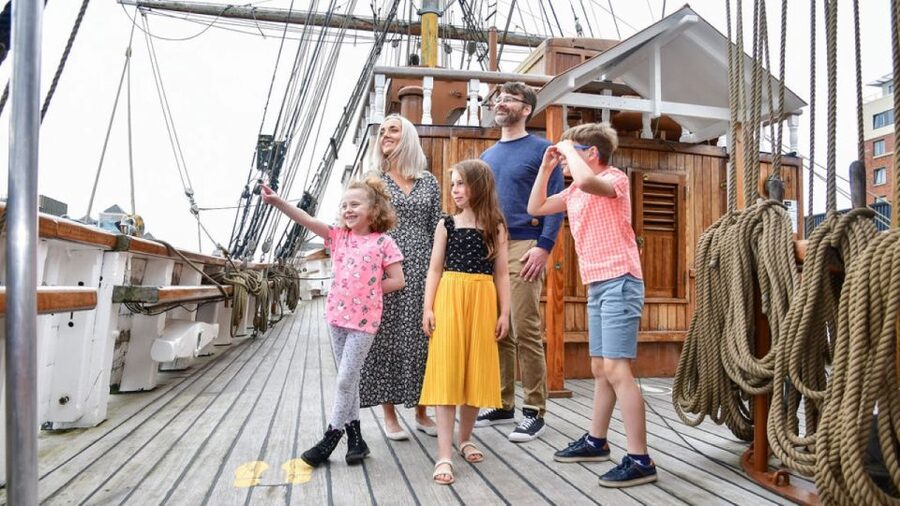
Fifty minutes is enough time to cover the ship properly without making the visit feel like a full morning commitment. You see the upper deck, learn about the vessel’s construction and earlier use, then spend time below with the passenger stories.
The short length is also useful if you are building a day around central Dublin and the Docklands. You can fit the tour between other activities instead of setting aside half a day.
There is a trade-off. A 50-minute guided visit cannot answer every question about the famine, Irish emigration, or 19th-century shipping. If you already have a strong interest in the subject, you may want to read more before or after your visit. The tour works best as a focused introduction anchored in one ship and the people connected to it.
I would not choose this experience for a quick look at a tall ship alone. If you only want photographs, the visit may feel too serious. The real value comes from staying with the story and allowing the ship’s cramped interior to change how you picture the crossing.
Is $16 good value?
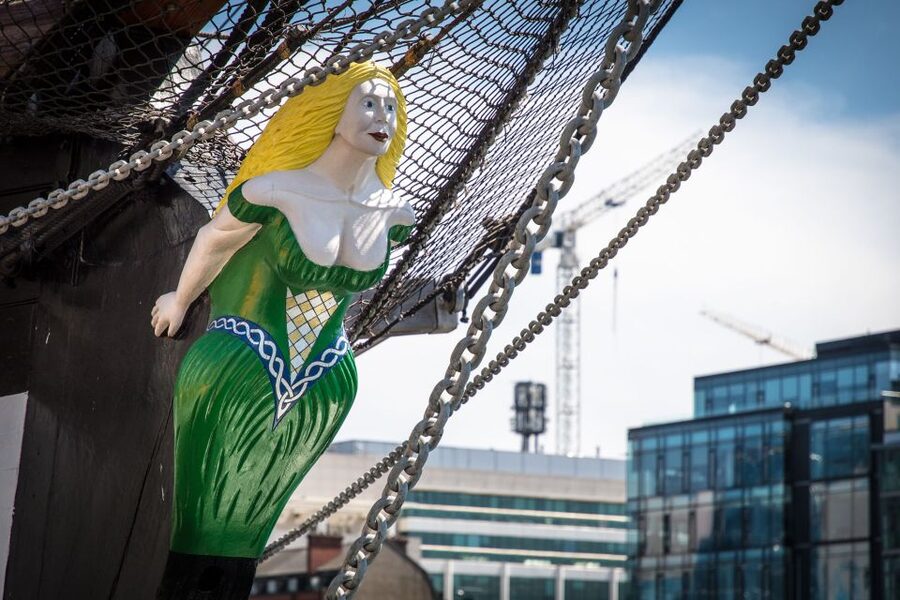
At $16 per person, this is a reasonably priced Dublin attraction. You receive entry and a live guided tour, and the experience combines a historic ship, city views, maritime information, and famine history.
The price makes more sense when you compare it with what you are getting. This is not simply access to a docked vessel. A guide explains why the ship was built, how it changed from timber transport to passenger transport, and what life was like below deck. You also hear personal details that would be difficult to understand from a brief sign.
The value is strongest if you prefer guided interpretation. You are paying for the storytelling as much as the ship itself. The repeated praise for guides such as Steve, Claire, and Eoin suggests that the quality of the explanation can make a major difference.
The value is less clear if you cannot manage stairs or confined areas. The tour is not recommended for people with limited mobility and is not suitable for wheelchair users. In that case, the price does not matter much because the central part of the visit may be inaccessible.
Free cancellation up to 24 hours before the tour and the option to reserve now and pay later add flexibility. Starting times vary, so you need to check availability when booking.
What to bring and how to prepare
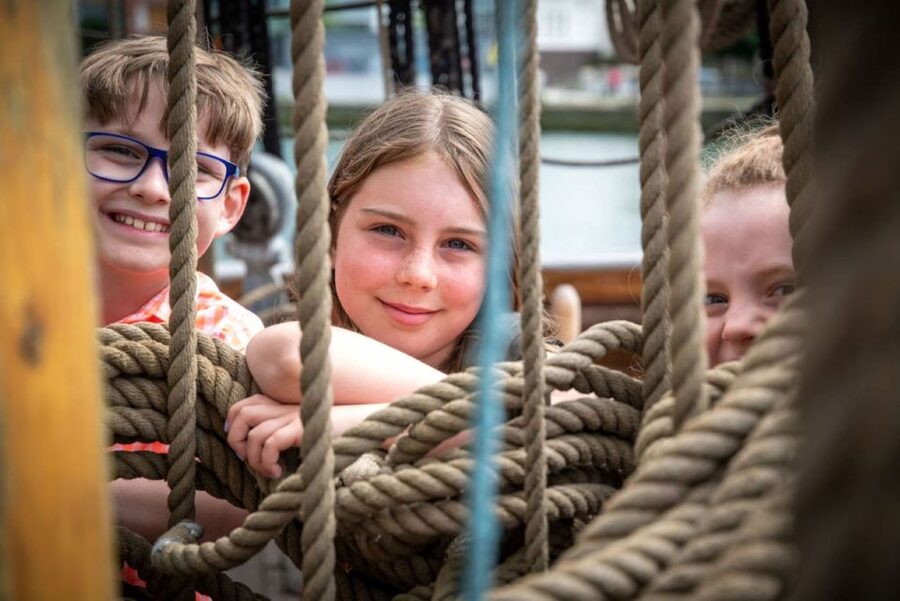
Wear comfortable shoes. You will move around the ship and use stairs, so footwear matters more here than it might at a standard indoor museum.
The upper deck is exposed to the weather. The experience specifically invites you to notice the wind and salty air, so a light extra layer can be sensible, although no detailed clothing requirements are provided.
Prepare for a serious subject. The guide discusses disease, starvation, cramped conditions, and the uncertain fate awaiting emigrants after arrival. The presentation can include humor, but it does not turn the famine into light entertainment.
If you are visiting with children, explain beforehand that this is a history tour about families leaving Ireland during a crisis. Children can stay engaged, especially when the guide asks questions, but the material is not designed as a playful attraction.
For the best experience, give yourself enough time to arrive at City Moorings on Custom House Quay. The activity begins and ends at the ship, and no hotel pickup or drop-off is included.
Who should book the Jeanie Johnston?
I would recommend this tour if you want to understand Irish emigration through a physical place. The ship makes the story easier to picture, while the guide supplies the wider context.
It suits:
- First-time Dublin visitors who want a meaningful Docklands stop
- People interested in Irish family history and emigration
- Families with children old enough to follow a serious historical story
- Anyone who likes short, guided attractions with strong storytelling
- Visitors who want a break from conventional museums
- Photographers looking for a distinctive Dublin subject, with more substance than a simple photo stop
I would be more cautious if you have limited mobility, use a wheelchair, or dislike narrow spaces. The lower deck is central to the visit, not an optional extra.
You may also want a different attraction if you are looking for a broad survey of Irish history. The Jeanie Johnston focuses on famine-era emigration, the ship, its passengers, and the ocean crossing. That narrow focus is a strength for most people, but it will not cover every part of Ireland’s past.
Should you book this Dublin tall ship tour?
Book it if you want a compact experience that connects Dublin’s waterfront with one of the hardest chapters in Irish history. The ship’s upper deck gives you the setting, but the lower deck and passenger stories provide the lasting impression.
I especially like the combination of a $16 price, a manageable 50-minute schedule, and guides who can make the subject work for both adults and children. Steve, Claire, Owen, Eoin, and Katrina have each been praised for clear explanations, humor, patience, and strong storytelling.
Skip it if stairs and cramped quarters will make the visit difficult, or if you only want a quick photograph of a tall ship. For everyone else, the Jeanie Johnston offers a direct, human way to understand why so many Irish people left home, what they risked at sea, and how a single ship can give shape to a national story.
FAQ
How long does the Jeanie Johnston tour last?
The guided tour lasts 50 minutes. Check availability for the current starting times.
Where does the tour begin and end?
The tour starts at the Jeanie Johnston Tallship, City Moorings, Custom House Quay, Dublin 1. It ends back at the same meeting point.
What language is the tour in?
The live guided tour is conducted in English.
What does the ticket include?
The ticket includes entrance and access to the guided tour of the Jeanie Johnston tall ship. Hotel pickup and drop-off are not included.
Is the tour suitable for wheelchair users?
No. The tour is not suitable for wheelchair users or people with limited mobility. Comfortable shoes are recommended.
Can I cancel for a full refund?
Yes. You can cancel up to 24 hours in advance for a full refund. You can also reserve now and pay later.
Just added around Dublin
- Women Of Ireland: Trailblazers & Pioneers★ 5.0 · 4 reviews
- Whiskey Tasting Tour of Dublin★ 5.0 · 117 reviews
- Premium Irish Whiskey Tasting Hosted by Local Dublin Expert★ 5.0 · 77 reviews
- Historical Walking Tour of Dublin★ 5.0 · 50 reviews
- Dublin (Dun Laoghaire) Top-Rated Coastal Walking Tour★ 5.0 · 80 reviews
- Semi-Private (8people max) 2.5 Hr Dublin Walking Tour★ 5.0 · 69 reviews
- Private Ultimate Day in Dublin (Walking Tour)★ 5.0 · 30 reviews
- DayTripper Dublin: A Guided City Walking Tour★ 5.0 · 90 reviews
Historical Tours, compared.

Dublin Historical Centre Food Tour with 8 Food Tastings & Drinks
Our verdict on it →

Dublin to Cork, Blarney Castle & Cóbh Heritage Centre by train
Our verdict on it →
Deliciously Dublin: The Artisan Donut Walking & History Tour
Our verdict on it →

Historic Cork Delicious Donut Adventure by Underground Donut Tour
Our verdict on it →Browse the lists this tour appears in