
Reviewed · MUSEUMS
Irish Famine Museum / Exhibition Dublin
The most affecting part of this Dublin exhibition is its plain account of how a food crisis became a human disaster. You walk through photographs, newspapers, objects, and short explanations about the Irish Potato Famine, also called the Great Hunger. The material points firmly at the political decisions and slow relief response that made suffering worse.
I like the self-guided format, since you can stop over a photograph or move quickly through familiar material. I also like the 15-minute documentary, which gives the room a change of pace after the reading. The main drawback is that this is a temporary pop-up exhibition in a shopping centre, not a large, purpose-built museum, and the room may feel warm during the film.
Key points to know before you go
- A one-hour history stop above St. Stephen’s Green Shopping Centre: The exhibition is easy to fit into a day of sightseeing in central Dublin.
- A reading-based experience: Expect wall text, photographs, newspapers, and artefacts rather than a fully interactive museum.
- A 15-minute documentary is included: It breaks up the self-guided visit and adds a focused visual account.
- Rare views over St. Stephen’s Green: Look for the aerial outlook, an unusual bonus in the middle of the city.
- Translation help is available: Guides are provided in French, German, Italian, and Spanish.
- A temporary exhibition with a serious purpose: It is scheduled to operate from April 1 through September 30, 2026.
What the Irish Famine exhibition tries to explain
The Irish Famine exhibition presents the Great Hunger as more than a failed crop. Its central concern is the way political choices, landlord policies, and delayed government action shaped the scale of the disaster. The material is direct and accessible, so you do not need a strong background in Irish history to follow it.
That simplicity is useful. I have found that exhibitions about the famine can become hard to absorb when they pile on dates, names, and political arguments. Here, the facts are arranged for a short visit. You get a clear account of the crisis, its effects on ordinary people, and the large movement of Irish people away from the island.
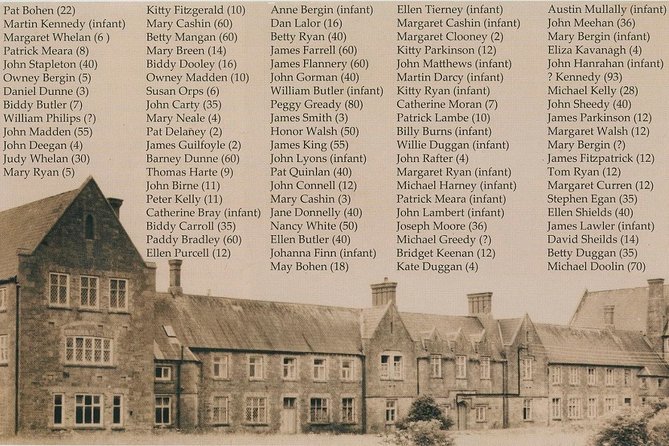
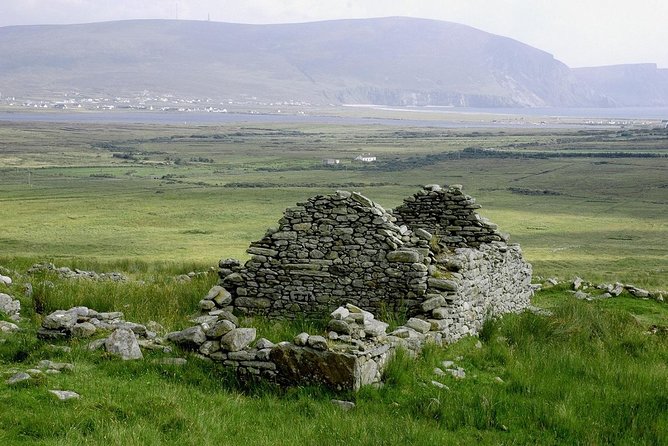
The exhibition also links the famine to emigration. One display figure describes millions of people being driven from Ireland, helping explain why the event still matters to Irish families and to the Irish diaspora. The emphasis is not only on hunger. It is also on displacement, anger, government failure, and the long memory left behind.
This is serious material. Families with Irish ancestry may find the subject especially personal, but you do not need Irish connections to gain something from the visit. The story raises questions about how governments respond to food shortages, disease, poverty, and public emergencies. One part of the exhibition can also prompt thoughts about more recent crises, including the pandemic and concerns about wheat supplies.
More Museums in Dublin
- Irish Rock ‘N’ Roll Museum Experience Dublin
★ 5.0 · 6,112 reviews - The Little Museum of Dublin Famous Guided Tour
★ 5.0 · 2,948 reviews - Dublin EPIC Museum Admission Ticket
★ 4.5 · 1,729 reviews
Entering at St. Stephen’s Green Shopping Centre

The meeting point is St. Stephen’s Green Shopping Centre, at St. Stephen’s Green, Dublin, D02 HX65. You enter a busy central shopping area, then make your way to the exhibition space. That setting takes some of the solemnity away from the first impression, but it also makes the museum very easy to add to a day in Dublin.
This is not a grand stone institution with a dramatic entrance. It is a temporary exhibition upstairs in a mall. That matters because your expectations should be practical. You are coming for a focused hour of historical material, not an all-day museum visit with several galleries, a café, or a large collection.
The centre is near public transportation, and the activity begins and ends at the same place. That makes the visit simple to combine with St. Stephen’s Green, nearby shopping, or other central Dublin sights. A prebooked mobile ticket is useful if you want to avoid an entrance queue, though the short visit means you should still pay attention to the stated opening hours.
The scheduled hours are noon to 6 p.m., Monday through Sunday, from April 1 through September 30, 2026. An early afternoon visit may work well if you are already in the area, but leave enough time before closing to read the displays and watch the film.
A self-guided hour with photographs and artefacts
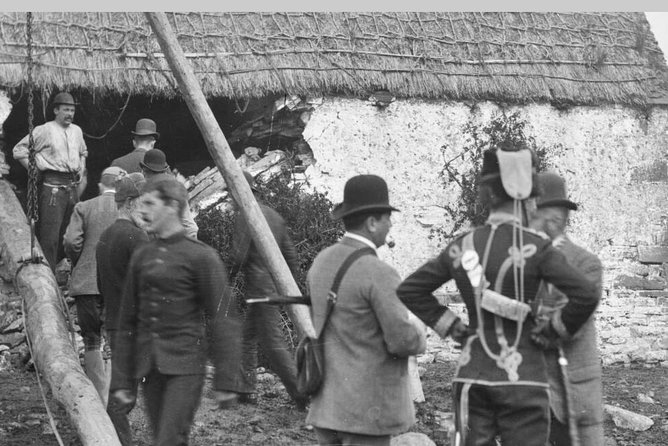
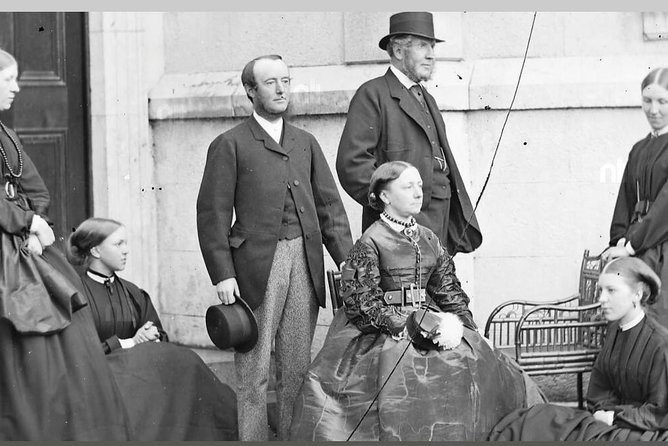
Once inside, you set your own pace. The exhibition is built mainly around written information, 19th-century photographs, newspapers, and selected objects. An original soup pot is one of the more memorable artefacts, since it gives the story a physical link to the systems used to feed people during the crisis.
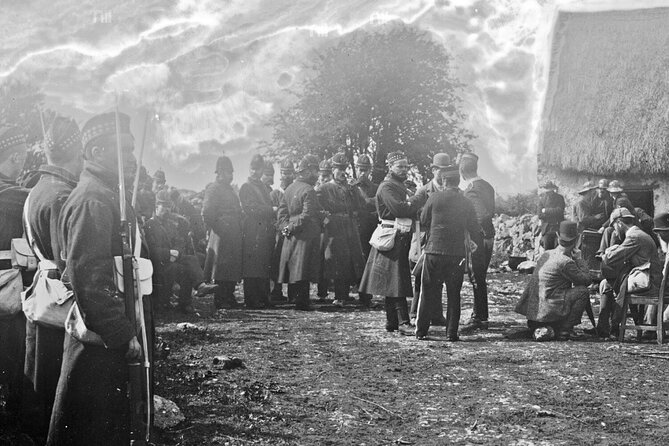
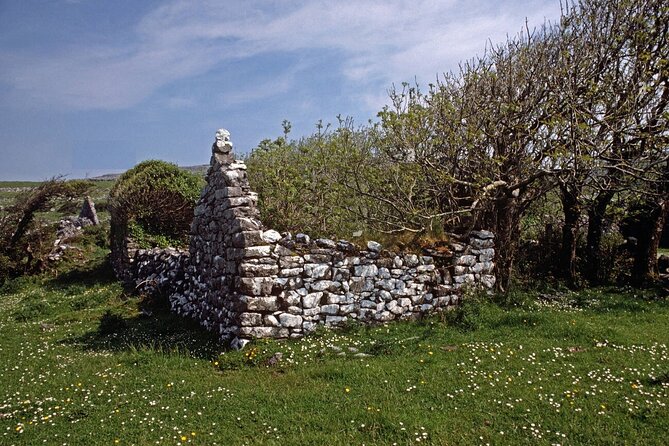
The photographs are important. A famine exhibition can feel remote when it relies only on text, but period images give faces and places to the account. The newspapers help show how the crisis was reported and understood at the time. Together, these items make the material more concrete than a timeline alone.
You will need to read. One honest criticism of this format is that it can feel like walking around a room of posters. If you prefer hands-on displays, audio stations, or a guide speaking throughout, you may find the experience limited. The exhibition does not appear designed to entertain children with interactive features.
On the other hand, the self-guided approach works well for adults who want control. You can spend extra time on the political decisions, pause over family-related material, or move ahead if a panel repeats information you already know. That freedom is especially helpful when people in your group have different levels of interest.
A translation guide is available in French, German, Italian, and Spanish. The exhibition itself is offered in English. If English is not your first language, the guide should make the visit easier, although you should still expect a display that depends heavily on reading.
The documentary gives the room a change of pace
The included documentary lasts about 15 minutes. That is long enough to add atmosphere and structure without taking over the entire visit. I would plan to watch it even if you already know the main story, since moving images can make the exhibition feel less like a series of information panels.
The film is shown in a separate area, and the room may not be climate controlled. One account described it as too warm while watching the documentary. This is a small issue, but it is worth knowing during warmer weather, especially if you are visiting after walking around Dublin.
Because the whole activity lasts about an hour, the film takes up a meaningful part of the visit. You might spend around 40 minutes with the displays and 15 minutes with the documentary, though your exact timing will depend on how carefully you read. If you want to examine every panel, allow a little longer than the advertised hour.
The documentary also helps families or groups stay together. Someone who tires of reading can sit for a while, while others take in the remaining panels. Still, the film is short. Do not book this expecting a long cinematic presentation or a guided lecture.
Same part of the country, a completely different day out:
- Dublin: Guinness Storehouse Entry Ticket
★ 4.6 · 16,863 reviews - Dublin Highlights and Hidden Gems Guided Walking Tour
★ 5.0 · 6,020 reviews - Dublin: Jameson Whiskey Distillery Tour with Tastings
★ 4.7 · 4,859 reviews - Dublin Jameson Distillery Bow St. Tour and Tasting 45 mins
★ 5.0 · 4,690 reviews
The unexpected St. Stephen’s Green views
The exhibition includes rare aerial views of St. Stephen’s Green park. These are easy to overlook if you focus only on the famine material, so make a point of looking for them. They offer a different reason to visit and help connect the exhibition to its exact place in Dublin.
The views do not replace a walk through the park, but they provide a useful perspective. After spending time with historical photographs and objects, looking out over the modern city creates a quiet contrast between past and present. It is one of the more distinctive details of this temporary display.
This feature may also appeal to people in your group who are less interested in history. The famine remains the main subject, but the outlook gives the visit a visual reward beyond the written story.
How the $18.15 price works out
Admission costs $18.15 per person. For a one-hour, self-guided exhibition, that is not a bargain in the same way as a large free museum. You are paying for a compact, temporary presentation, the film, the objects, and the convenience of a central location.
The value improves if you want a focused introduction to the famine and can fit it easily into your Dublin plans. The central address means you do not need to make a separate trip across the city, and the visit does not consume half a day. It can work well before lunch, after a walk around St. Stephen’s Green, or between other central sights.
The value is weaker if you already know the subject in detail or expect a large museum collection. The exhibition is relatively small, and much of the experience involves reading. A book about the exhibition may also be purchased, but it is not included in the ticket price.
I would think of the admission as paying for context and convenience, not sheer quantity. If you want an hour that helps explain the famine’s human and political effects, the price is reasonable enough. If you want extensive artefacts, multiple galleries, or a long guided experience, keep your expectations in check.
Who will get the most from this visit
This exhibition suits you if you want a clear introduction to the Great Hunger without committing to a full day of museum time. It is also a useful stop for anyone tracing Irish family history or trying to understand the causes behind Irish emigration.
It works best for:
- Adults and older children who are comfortable reading wall text
- People interested in Irish political and social history
- Visitors with Irish family connections
- Anyone looking for a short central Dublin activity
- Visitors who value a self-guided pace
- People who want a serious historical stop alongside parks and shopping
Children must be accompanied by an adult. Most people can participate, and service animals are allowed. Still, the emotional material and reading-heavy format may not suit very young children. If your family needs frequent activity and hands-on displays, this is probably not the best choice.
The subject can be upsetting. The exhibition deals with hunger, displacement, government failure, and the treatment of Irish people during a prolonged disaster. I would prepare children and younger teenagers for that tone rather than presenting it as a light sightseeing stop.
Practical timing and booking advice
The activity is generally booked well ahead, with an average booking time of about 35 days in advance. That suggests you should reserve early if your Dublin dates are fixed, especially during the limited April to September 2026 run.
Your mobile ticket is confirmed at booking, and advance admission is intended to help you avoid entrance lines. The maximum group size is 90 people, although a self-guided exhibition with that capacity could feel busy at popular times. Booking a timed visit, where available, should help you plan, but the supplied information does not state that entry times are staggered.
Allow one hour at minimum. If you read quickly and skip some panels, you could finish sooner. If you want to watch the full film and take in the photographs, newspapers, artefacts, and views without rushing, plan a little breathing room.
Free cancellation is available up to 24 hours before the starting time for a full refund. Changes or cancellations made within 24 hours are not accepted for a refund. The cut-off follows local Dublin time.
Should you book the Irish Famine Museum?
Book it if you want a compact, serious introduction to the Irish Potato Famine, especially if Irish emigration or family history matters to you. The original soup pot, 19th-century photographs, newspapers, short documentary, and aerial views give the hour more variety than a simple wall display.
Skip it if you want a large, interactive museum or a guided tour with a named historian leading the way. The temporary shopping-centre setting, reading-heavy format, and possible warmth in the film room are real limitations.
My advice is to treat it as a focused history lesson in the middle of central Dublin. At $18.15, it is best for readers who want context, reflection, and a clear explanation of why the famine remains such a powerful part of Ireland’s story. Pair it with a walk around St. Stephen’s Green, and the location makes the short visit easier to justify.
FAQ
Where is the Irish Famine Museum in Dublin?
It is located at St. Stephen’s Green Shopping Centre, St. Stephen’s Green, Dublin, D02 HX65, Ireland.
How long does the visit take?
The visit lasts approximately one hour. This includes the self-guided exhibition and its 15-minute documentary.
What are the opening hours?
From April 1 through September 30, 2026, it is open Monday through Sunday from 12 p.m. to 6 p.m.
Is the exhibition guided?
No. It is a self-guided visit, so you explore the displays at your own pace.
Are translation materials available?
Yes. A translation guide is available in French, German, Italian, and Spanish. The experience itself is offered in English.
Can I cancel my booking?
Yes. You can cancel up to 24 hours before the experience starts for a full refund. Cancellations or changes made less than 24 hours before the start time are not refunded.
Just added around Dublin
- Women Of Ireland: Trailblazers & Pioneers★ 5.0 · 4 reviews
- Whiskey Tasting Tour of Dublin★ 5.0 · 117 reviews
- Premium Irish Whiskey Tasting Hosted by Local Dublin Expert★ 5.0 · 77 reviews
- Historical Walking Tour of Dublin★ 5.0 · 50 reviews
- Semi-Private (8people max) 2.5 Hr Dublin Walking Tour★ 5.0 · 69 reviews
- Dublin (Dun Laoghaire) Top-Rated Coastal Walking Tour★ 5.0 · 80 reviews
- Private Ultimate Day in Dublin (Walking Tour)★ 5.0 · 30 reviews
- DayTripper Dublin: A Guided City Walking Tour★ 5.0 · 90 reviews
Museums, compared.
Irish Rock ‘N’ Roll Museum Experience Dublin
Our verdict on it →
The Little Museum of Dublin Famous Guided Tour
Our verdict on it →

Giant’s Causeway with the Titanic Exhibition and the best of Northern Ireland
Our verdict on it →
Irish Whiskey Museum Tour and Whiskey Tasting
Our verdict on it →

Irish Whiskey Museum: Whiskey Blending Experience
Our verdict on it →
Irish Whiskey Museum Blending Tour with Tastings
Our verdict on it →Browse the lists this tour appears in