
Reviewed · HISTORICAL TOURS
The History of Dublin With Locals: 1916 Easter Rising PRIVATE Tour
The most compelling part of this private Dublin walking tour is the chance to connect the 1916 Easter Rising to real streets, buildings, statues, and corners of the city. The General Post Office, once the rebels’ headquarters, gives the story a clear starting point, while the route toward Collins Barracks brings in the wider city around it.
I like the freedom to ask questions without a large group waiting, and I like that guides such as Eamon, Keelan, Marius, and Ruairi have tailored the pace and subject matter to their groups. The main caution is the walking: one group covered about 4.5 miles, and the route may feel long if you expect several indoor attractions rather than an outdoor history walk.
Key points to know before booking

- The GPO anchors the story: Learn why Dublin’s main post office became the rebels’ headquarters in 1916.
- A truly private format: Only your group and the local guide take part, so questions and pacing are yours to control.
- The route covers serious ground: The walk begins at Custom House Quay and ends at Collins Barracks.
- The Garden of Remembrance adds a quieter pause: This memorial space links the 1916 story to the wider cause of Irish freedom.
- Guide quality matters: Eamon, Keelan, Marius, and Ruairi receive especially warm praise for clear storytelling and personal attention.
- The route can change: Some possible stops depend on the guide, and Kilmainham Gaol or a cemetery visit is not guaranteed.
Why Dublin’s 1916 story works best on foot
The Easter Rising can seem like a list of names and dates when you meet it only in a book. On foot, the story gains shape. You can see the public buildings used by the rebels, the streets where events unfolded, and the distance between key parts of central Dublin.
This tour focuses on the 1916 Rising, but it also gives you a wider look at the city. Several guides have pointed out small details on buildings, back streets, plaques, statues, and places that do not appear on a standard sightseeing route. That extra context is a real strength if you want to understand what you are seeing later as you explore Dublin on your own.
The private setup changes the tone. You are not listening for a chance to squeeze in a question before the group moves on. You can ask about Irish politics, family connections, local buildings, military decisions, or the meaning of a memorial, then steer the conversation in a direction that suits your group.
The experience lasts about three and a half hours. That is enough time for a serious introduction to the Rising, but not enough time to cover every major museum or historic site in Dublin. Think of it as a guided city walk with a strong 1916 focus, not as a series of long indoor visits.
More History Tours in Dublin
- Dublin Historical Centre Food Tour with 8 Food Tastings & Drinks
★ 5.0 · 1,718 reviews - 2-Hour Historical Walking Tour from Dublin
★ 5.0 · 875 reviews - Historical 2-Hour Guided Walking Tour of Dublin
★ 4.7 · 865 reviews
Starting at Custom House Quay

The meeting point is Custom House Quay on Dublin’s north side. This is a practical starting place for a city walk, but you should check the exact meeting instructions carefully before setting out. The tour does not include hotel pickup or drop-off, so you need to reach the start under your own power.
From here, the guide can set the Rising within Dublin’s wider civic and political setting before taking you toward the better-known 1916 locations. The city’s major buildings and streets help show that the rebellion was not an isolated event hidden away from ordinary life. It took place in the center of Dublin, in places used daily by workers, shoppers, officials, and residents.
The route is best suited to someone comfortable being outside for several hours. A group reported walking roughly 4.5 miles, and another specifically noted that the amount of walking should be made clearer in advance. You may be able to slow the pace, as Keelan did for a guest with walking difficulties, but this is still a walking tour rather than a short stroll between nearby landmarks.
Wear comfortable shoes. Dublin weather can shift quickly, and one especially wet outing still worked well because the guide used pictures and took time with the explanations. A rain jacket is a sensible addition.
The GPO, headquarters of the Rising
The General Post Office is the tour’s essential stop. It is one of Dublin’s best-known public buildings and served as headquarters for the leaders of the Easter Rising. The rebels proclaimed an Irish Republic from here in 1916, making the building central to the political meaning of the revolt.
The GPO is also important as a piece of Dublin architecture. It was the last major Georgian public building erected in the capital. That detail helps you see the building as more than a backdrop to the rebellion. It was part of the established city that the rebels were challenging.
The planned visit here lasts about 20 minutes, with no admission charge listed. That short stop is enough for an explanation of the building’s role and the events connected to it, but do not expect a long indoor museum visit as part of this portion of the walk.
This is where a private guide can make the history more useful. You can ask how the GPO functioned as a headquarters, what made it strategically important, and how the events of the Rising affected the surrounding city. Guides praised for their storytelling, including Eamon and Keelan, have used images and close observation of the buildings to help make the account easier to follow.
The Garden of Remembrance and the meaning of memory
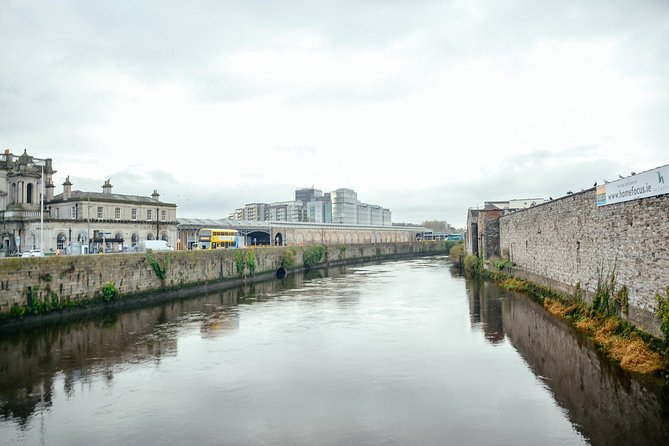
The Garden of Remembrance sits in Parnell Square, at the northern end of O’Connell Street. It is dedicated to those who gave their lives in the cause of Irish freedom, so it gives the tour a different mood after the activity and conflict associated with the GPO.
The planned stop lasts about 25 minutes and is free to enter. The garden is in the northern section of the former Rotunda Gardens, within a Georgian square. Its setting adds another layer to the tour: you are not only hearing about what happened in 1916, but also seeing how later generations chose to remember the struggle.
This is a good place to pause and ask about the difference between commemoration and history. The Rising has political, military, cultural, and personal sides, and a memorial garden naturally emphasizes sacrifice and memory. A strong guide can help you keep those ideas in balance rather than treating the event as a simple heroic tale.
The route may include other locations depending on your guide and the plan chosen for the day. Those possible stops are not specified in advance, so you should ask what your guide expects to cover. That flexibility is useful for a group with a particular interest, but it also means the exact experience can vary.
Same part of the country, a completely different day out:
- Dublin: Guinness Storehouse Entry Ticket
★ 4.6 · 16,863 reviews - Irish Rock ‘N’ Roll Museum Experience Dublin
★ 5.0 · 6,112 reviews - Dublin Highlights and Hidden Gems Guided Walking Tour
★ 5.0 · 6,020 reviews - Dublin: Jameson Whiskey Distillery Tour with Tastings
★ 4.7 · 4,859 reviews
What happens between the named stops
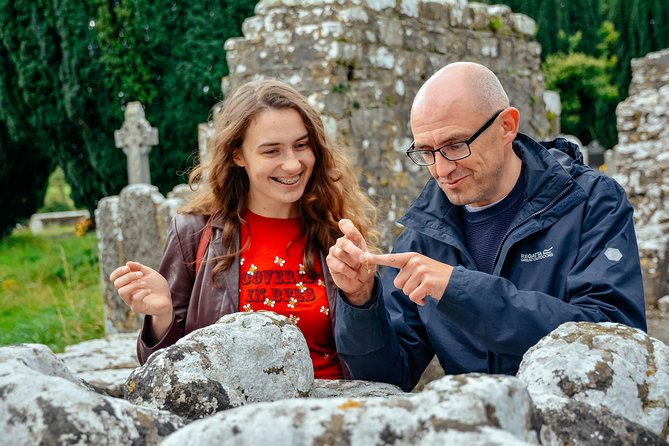
The heart of this tour may be the walking between the formal stops. Several guides have used side streets, plaques, statues, and less obvious buildings to show where the 1916 story touched everyday Dublin. This is one of the clearest differences between a private local walk and a standard hop-on sightseeing route.
Ruairi, for example, has been praised for pointing out small city details and adjusting the tour to personal interests. Eamon has used photographs to help explain the story, while Derek has added wider background about central Dublin so that the city makes more sense even to someone with little prior knowledge of Irish history.
The benefit is depth without a fixed lecture. If everyone in your group has read about the Rising, you can ask for political or military detail. If the subject is new, you can ask the guide to slow down and explain the basic sequence of events.
The risk is that an outdoor route can become a long series of plaques and statues if the guide does not bring the story to life. One poorly matched guide received criticism for being dull despite having academic knowledge. That is a fair warning: the guide’s ability to tell a story matters as much as the facts.
Collins Barracks and the end of the walk
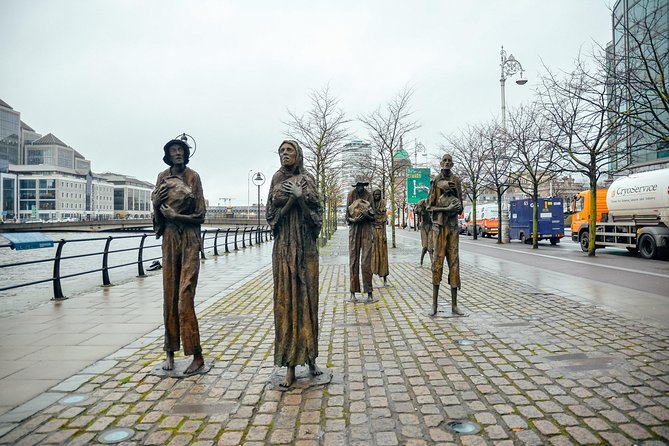
The tour ends at Collins Barracks on Benburb Street in Stoneybatter. This gives the walk a clear finish on the west side of the city rather than returning you to the starting point.
The end point matters for planning. You will need to arrange your next activity from Collins Barracks, and the tour does not provide hotel transport. The listed information confirms that the route ends there, but it does not promise admission to a museum or any particular indoor collection at the barracks.
One criticism focused on not visiting Kilmainham Gaol or a cemetery that the group expected to see. That experience shows why you should clarify the route before the day begins. The advertised core stops are the GPO and Garden of Remembrance, while additional sites depend on the host and chosen route.
If Kilmainham Gaol is your main goal, do not assume this walk includes entry. Attractions not included in the experience require separate planning and admission where applicable.
Private pacing is the main advantage
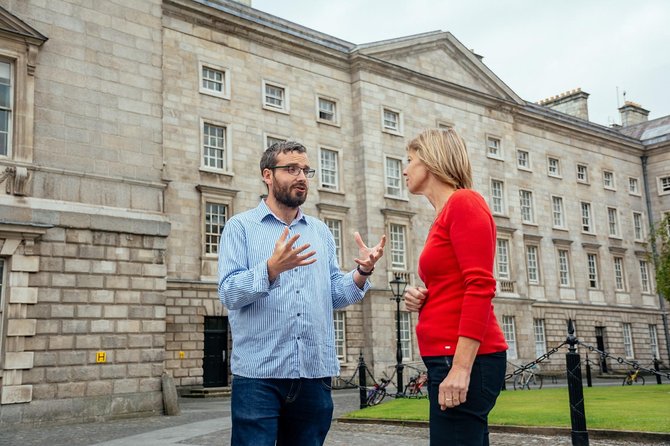
The price is about $135.16 per person. That is not the cheapest way to see central Dublin, especially if you are traveling alone. For a small group, though, the private format can offer good value because the price buys personal attention rather than a seat in a large scheduled group.
You can ask for a slower pace, spend more time on a subject that interests you, or request broader Dublin context alongside the Rising. A private guide also makes it easier to ask practical questions about public transport, as one guide helped a group understand how the Luas worked for the rest of their visit.
The experience has a 4.8 rating from 73 published ratings, with 93 percent recommending it. Those figures point to a generally strong experience, but the less favorable accounts are useful. Guide substitutions, unclear expectations about the route, a missed meeting arrangement, and an overly long walk can affect the day.
Book this when the group wants conversation and flexibility. Choose a different format if you prefer a fixed museum schedule, guaranteed entry to Kilmainham Gaol, or a shorter route with less walking.
Which guide style may suit you
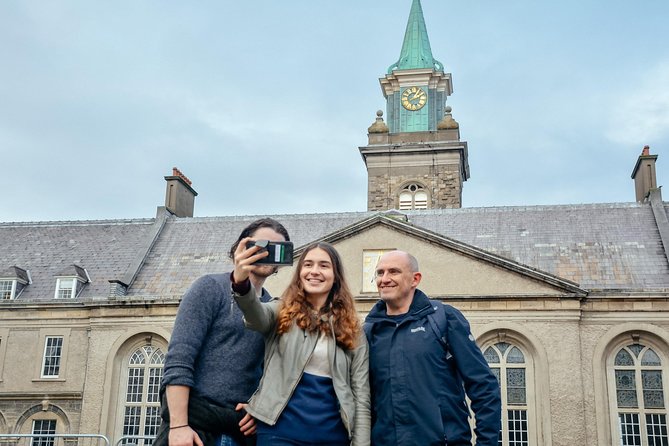
Your guide is a major part of the experience, and the names most often praised include Eamon, Keelan, Marius, and Ruairi.
Eamon is repeatedly described as passionate, patient, well prepared, and able to answer unusual questions. He has used photographs and added local details beyond the main subject. Families with children found that his storytelling kept younger members interested.
Keelan has been praised for his strong command of Dublin and 1916 history, along with his ability to keep a group engaged. He also adjusted the pace for someone who could not walk quickly, which is important on a route of this length.
Marius has received praise for adapting the tour to personal interests and being accommodating. Ruairi is noted for clear communication, extra city details, and a willingness to shape the route around what the group wanted to see.
You may not receive one of these specific guides, so treat those names as examples of the best the experience can offer, not a guarantee. If guide choice is important to you, ask about it before booking.
Practical details that affect your day
The tour is offered in English and includes a mobile ticket. Confirmation is provided when you book, and the activity is private, meaning only your group takes part.
The tour is near public transportation, but there is no hotel pickup or drop-off. Plan to reach Custom House Quay on time and arrange your onward journey from Collins Barracks.
A moderate level of physical fitness is recommended. The route may be manageable for many people, but it can involve several hours on foot and possibly around 4.5 miles. Tell the guide at the start if anyone needs a slower pace or more frequent pauses.
The tour is listed as carbon neutral, with the activity’s carbon emissions offset. That will not change the walking route, but it may matter if you prefer to choose lower-impact sightseeing options.
You can cancel for a full refund if you do so at least 24 hours before the start time. Changes or cancellations inside that window are not accepted for a refund.
Who should book this Dublin walk
I would recommend this tour to first-time Dublin visitors who want the city explained through a major turning point in Irish history. It also suits people who already know the broad outline of 1916 but want to see the places connected to it and ask more detailed questions.
Families can do well here if the guide is a good storyteller and the pace is adjusted. The private format is also useful for mixed groups, since one person can ask about political history while another focuses on architecture, transport, or local life.
You should think twice if you dislike long walks, want guaranteed indoor admissions, or need a tightly fixed route. The GPO and Garden of Remembrance are the firmest named stops, while other locations may change.
Should you book The History of Dublin With Locals?
Book it if you want a personal, discussion-based walk that connects the Easter Rising to Dublin’s streets. The strongest guides add far more than dates, using pictures, local details, and patient answers to make the story easier to grasp.
Before paying, confirm the expected route, walking distance, and guide availability. If those details fit your plans, the private format offers a useful mix of history and city orientation. If you mainly want Kilmainham Gaol, a cemetery, or museum entry, arrange those separately rather than treating this tour as a guaranteed substitute.
FAQ
Where does the tour start?
It starts at Custom House Quay, North Wall, Dublin, Ireland.
Where does the tour end?
It ends at Collins Barracks on Benburb Street in Stoneybatter, Dublin, D07 XKV4.
How long does the tour last?
The tour lasts approximately three hours and 30 minutes.
Is this a private tour?
Yes. Only your group and the local guide participate.
What language is offered?
The tour is offered in English.
Is the General Post Office included?
Yes. The tour includes a stop at the General Post Office, where you learn about its role as headquarters during the Easter Rising. The planned stop lasts about 20 minutes.
Is the Garden of Remembrance included?
Yes. The Garden of Remembrance is a planned stop lasting about 25 minutes.
Are attraction entrance fees included?
No. Entrance to attractions is not included. The listed GPO and Garden of Remembrance stops have no admission ticket charge in the tour details.
Is hotel pickup included?
No. Hotel pickup and drop-off are not included. You need to reach the meeting point and make your own plans after the tour.
How much walking is involved?
A moderate level of physical fitness is recommended. The exact distance can vary, but one group reported walking about 4.5 miles, so comfortable shoes are important.
Can I cancel for a full refund?
Yes, if you cancel at least 24 hours before the experience start time. Cancellations or changes made less than 24 hours before the start time are not accepted for a refund.
Just added around Dublin
- Women Of Ireland: Trailblazers & Pioneers★ 5.0 · 4 reviews
- Whiskey Tasting Tour of Dublin★ 5.0 · 117 reviews
- Premium Irish Whiskey Tasting Hosted by Local Dublin Expert★ 5.0 · 77 reviews
- Historical Walking Tour of Dublin★ 5.0 · 50 reviews
- Semi-Private (8people max) 2.5 Hr Dublin Walking Tour★ 5.0 · 69 reviews
- Dublin (Dun Laoghaire) Top-Rated Coastal Walking Tour★ 5.0 · 80 reviews
- Private Ultimate Day in Dublin (Walking Tour)★ 5.0 · 30 reviews
- DayTripper Dublin: A Guided City Walking Tour★ 5.0 · 90 reviews
Historical Tours, compared.

Dublin Historical Centre Food Tour with 8 Food Tastings & Drinks
Our verdict on it →
Dublin to Cork, Blarney Castle & Cóbh Heritage Centre by train
Our verdict on it →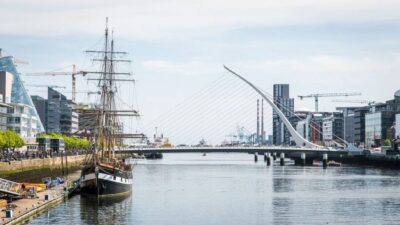
Jeanie Johnston Tall Ship Irish Famine History Tour
Our verdict on it →

Deliciously Dublin: The Artisan Donut Walking & History Tour
Our verdict on it →
Browse the lists this tour appears in