
Reviewed · GHOST TOURS
Dublin Ghost Hunt Exploration Game and Tour
Dublin’s past turns into a puzzle on this private walking game, which leads you from the National Museum of Ireland to the River Liffey by way of churches, theaters, statues, and City Hall. You solve clues on your phone while learning about bog bodies, Irish republicanism, local legends, and Viking Dublin.
I like the freedom to start at any hour and stop whenever you wish. I also like the low price, about $6.01 per person, and the way the route gives you a reason to look closely at places you might otherwise pass. The main caution is the app: some players have had trouble with internet connections, saved progress, or answers that needed exact spelling and capitalization.
Key points to know before you play
- A six-stop route through central Dublin: Begin at the Archaeology branch of the National Museum and finish near the Liffey at Usher’s Quay.
- A private game for your own group: You do not join a public walking tour or keep pace with a guide.
- Audio stories and location-based clues: The app combines sightseeing with questions tied to each stop.
- Flexible timing: Start whenever you like, pause for food or a pub, and return to the game later.
- Best played with care after dark: Evening atmosphere can be fun, but locked gates and quiet streets may make clues harder to find.
- Very inexpensive entertainment: Children play free, and larger groups can make multiple bookings, though each player does not necessarily need a separate phone.
A ghostly route that doubles as a Dublin orientation walk

This is not a conventional haunted tour with a guide leading you through Dublin’s legends. It is a phone-based exploration game. You walk between set points, listen to short audio stories, inspect your surroundings, and enter answers into the app.
That format changes the pace. You are not simply standing in front of a monument while someone talks. You are looking for a detail, reading a sign, checking a statue, or searching the area for the clue that moves the story forward. If you enjoy puzzles, this adds a welcome bit of purpose to a standard city walk.
The route covers a useful slice of central Dublin. It starts on Kildare Street, passes through the city center, and ends at 20 Bridge Street Lower near Usher’s Quay. The advertised playing time is about 90 minutes, though you can take longer. One group stretched its outing to roughly three hours by stopping at pubs and taking its time.
Because only your group participates, you set the rhythm. That works well for families, couples, and friends who dislike being herded from stop to stop. It also means you must keep yourselves moving, read the instructions carefully, and solve technical problems without a guide beside you.
More Self-Guided Tours in Dublin
- St Patrick’s Cathedral: Self-Guided Cathedral Admission
★ 4.5 · 2,126 reviews - Christ Church Cathedral Entrance Ticket & Self-Guided Tour
★ 4.6 · 773 reviews - Private Dublin Treasure Hunt Self Guided Tour
★ 4.5 · 14 reviews
The National Museum starts the story with bog bodies and Viking gold
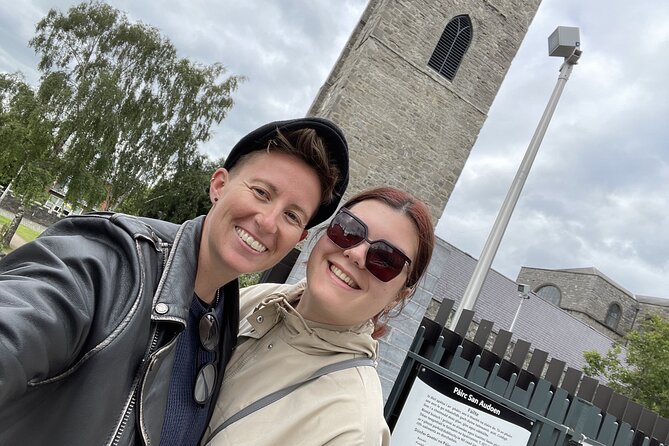
Your first stop is the National Museum of Ireland, Archaeology branch, at 35A Kildare Street. Even if you do not enter the museum, the setting gives the game a strong beginning. The collection covers Ireland from the Stone Age through the Late Middle Ages, with gold objects, Viking material, and the unsettling remains known as the Bog Men.
The opening puzzle draws on that darker side of Irish archaeology. You are warned to stay away from the swamplands and search your surroundings for the answer. The ghost-story mood begins here, but the historical setting gives it more substance than a string of invented scares.
I like this first stop because it places Irish folklore beside real evidence from the past. You get a sense of how old the stories beneath Dublin can be before the route moves into political history and city streets.
A practical point matters here: the game depends on finding visible clues. If you play after closing time, access to some areas may be restricted. The museum itself may not be open, and nearby gates or signs can be harder to inspect. Start earlier if you want the best chance of seeing every detail.
Wolfe Tone’s statue adds a serious political mystery
The route next takes you to the statue of Theobald Wolfe Tone. This is more than a photo stop. Tone helped form the Society of United Irishmen in 1791, a movement that sought to end British rule in Ireland and move toward independence.
The game asks you to investigate the circumstances of his death. Tone was captured by British forces and died under mysterious conditions, giving the app a natural mystery to build around. The subject is more serious than the playful ghost-hunt framing, and that contrast works in Dublin, where political memory is part of the city’s everyday character.
This section gives the route useful historical range. You move from ancient remains and supernatural warnings to a real figure tied to Ireland’s struggle for independence. The statue also shows how the game can make an ordinary urban object worth a closer look.
Do not expect a full political history lesson. The audio material is designed to keep the game moving, not to provide a long lecture. If you want a detailed account of Tone’s life, you will need another source or a dedicated museum visit. Here, the history is a compact backdrop for the next clue.
St. Ann’s Church brings famous names and a darker tale
At St. Ann’s Church, the tone shifts again. This central Dublin church has links to famous Irish figures, including Oscar Wilde and Bram Stoker, the author of Dracula. That connection suits a ghost-themed walk without requiring the experience to rely only on fiction.
The puzzle asks you to uncover a darker story connected with the church. You will need to pay attention to the building and its surroundings rather than simply follow the blue dot on your phone. The stop rewards curiosity, especially if you enjoy the small details that make churches feel tied to a city’s social life.
This is one of the route’s more atmospheric points, but it also illustrates the limits of a self-guided game. The app can point you to a place and frame its story, but it cannot answer follow-up questions or explain what you are seeing in the way a live guide can.
Plan to be patient with the clue entry. A recurring problem has been the app rejecting answers that are essentially correct because of capitalization, spacing, or a very specific format. Copying a word exactly from a sign may still fail if the app expects a slightly different entry.
More ghost walks after dark in Dublin:
- Dark Dublin: Torture, Murder & Mystery
★ 5.0 · 2,231 reviews - Dublin Ghost Bus Tour with Professional Actors
★ 4.5 · 949 reviews - Haunted Dublin Walking Tour
★ 5.0 · 550 reviews - From Dublin: Gravedigger Ghost Bus Tour
★ 4.4 · 546 reviews
Olympia Theatre turns the hunt toward music and performance
The Olympia Theatre gives the walk a lighter break from statues, churches, and grim stories. The venue prompts images of David Bowie performing or Charlie Chaplin appearing on stage. The app uses the theater’s atmosphere to create a clue about performance and memory.
You are asked to look around for the missing answer and continue to the next checkpoint. This is not a backstage tour, and the experience does not promise entry into the theater. Think of it as an exterior stop woven into the route.
I like this change of mood. A good city walk needs variety, and Dublin’s theaters provide it. After political history and church lore, a venue associated with music and comedy keeps the game from becoming too heavy.
Again, your timing affects what you can see. If doors, gates, or nearby areas are closed, the clue may be difficult to locate. Playing in daylight or early evening gives you more options than arriving late at night and finding the relevant detail behind a barrier.
City Hall reveals Dublin’s Viking connection
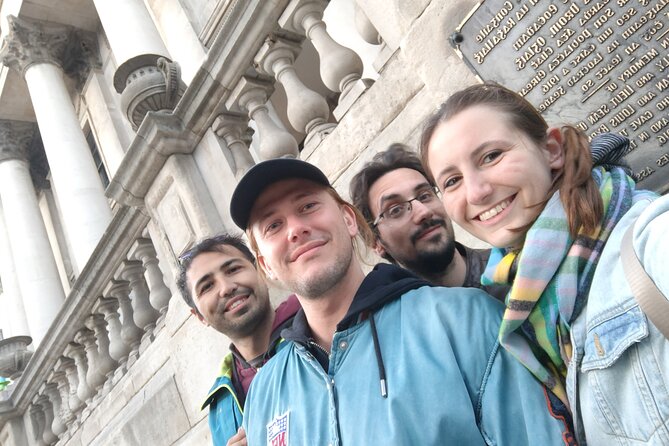
The next checkpoint is City Hall on Parliament Street, a fine example of Dublin’s Georgian architecture. The building also houses an interactive multimedia exhibition about the city, covering its story from Viking arrival to modern times.
The game asks you to find a message left by the Vikings. That clue fits the route’s larger theme, since Dublin’s Viking past is not confined to a single museum display. The city’s origins, street pattern, and archaeological discoveries all connect to the Norse settlement.
This stop gives you a strong architectural pause. Look up at the Georgian details, then consider how many different versions of Dublin have occupied this same center. The game keeps the visit active by asking you to search rather than simply admire the façade.
If the exhibition is important to you, check the opening conditions separately before relying on it as part of the game. The experience is available around the clock after booking, but that does not mean every building or clue area is open at every hour. The route can be played from midnight through late evening according to the stated operating window, but practical access still varies.
The Liffey finish gives the route a clear sense of place
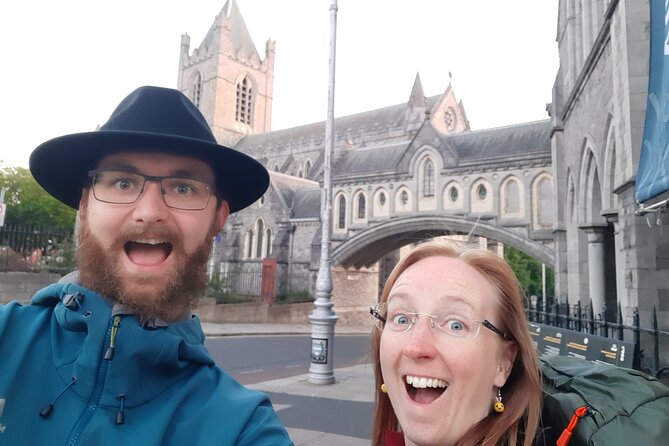
The final destination is near the River Liffey at 20 Bridge Street Lower, Usher’s Quay. The river cuts through Dublin and separates the north and south sides of the city, so this is a fitting place to end a route that has crossed several parts of the center.
The last puzzle may be beside you rather than in the water. That detail encourages you to keep looking until the game is complete. Once you finish, you are well placed to continue along the river or make your own way back through the city.
The Liffey stop is less about a single attraction than about orientation. You finish with a better sense of Dublin’s layout and its connection between neighborhoods, bridges, and major sights. If you play near sunset or after dark, the river can add atmosphere, but plan your return route before you start.
A sensible safety habit is to use main roads on the way back to your accommodation, especially if you finish late. The game itself may be private, but you are still walking through a working city at night.
How the app works, and where it can test your patience

You receive confirmation when booking and follow directions inside the Questo mobile app. Audio stories guide the narrative, while location-based prompts tell you where to look and what to solve.
The flexible structure is one of the strongest parts. You can start at any hour, take a break, and resume later without rescheduling. This lets you fit the walk around museum visits, lunch, shopping, or a pub stop. It also makes the activity useful on a first night in Dublin, when you want an easy introduction without committing to a fixed departure time.
The weak point is reliability. The instructions say the game can work without Wi-Fi after downloading, but some players have needed a strong internet connection at the starting point. Downloading in advance is sensible, but do not assume every part of the process will work offline.
Save your progress carefully. A phone or app restart has caused progress to disappear, forcing a player to return to an earlier location because the next stage was location-based. If your group uses more than one phone, decide in advance which device will lead the game. Paying for four people when only two phones are being used may not offer much extra value.
The answer system also deserves attention. Type carefully, try the expected spelling, and use hints when needed. The game is meant to be challenging, but an answer that fails because of one capital letter or an extra space can turn a fun puzzle into a technical chore.
Price, group size, and who gets the best value
At about $6.01 per person, this is inexpensive by Dublin sightseeing standards. You are paying for a private game, audio content, and a self-guided route rather than a live guide or admission to attractions.
That low price makes the experience most appealing for friends and families who want a short activity between larger plans. Children play free, which improves the value for family groups. Group discounts are available, and groups larger than 15 can make multiple bookings.
The cost deserves one practical qualification. Every person does not necessarily need a separate phone to play. A small group can often work from one device, so check the booking setup before paying for each participant. On the other hand, a second phone may be useful if one device loses connection or the group splits while looking for a clue.
You should also treat the 90-minute estimate as a guide, not a deadline. Add time for photos, food, pubs, wrong turns, and hints. The route is short enough for a spare afternoon but flexible enough to become an evening outing.
Best time to play this Dublin ghost hunt
For the most reliable clue solving, I would begin during daylight or early evening. Some places may have locked gates later in the day, and the route becomes harder when signs and details are not easy to see.
Night has a different appeal. Street lighting, the old buildings, the church setting, and the theater give the ghost-story theme more mood. If you choose nighttime, stay alert, keep your group together, and plan the route back before finishing.
The experience is offered in English. It is suitable for most participants, service animals are allowed, and the starting point is near public transportation. No physical tour guide accompanies you, so you need a charged phone, the app, and enough confidence to manage directions and clues as a group.
Should you book the Dublin Ghost Hunt Exploration Game?
Book it if you want a cheap, private way to see central Dublin while solving puzzles. It suits first-time visitors who want a basic city orientation, families looking for an activity children can join, and friends who enjoy a little competition with their sightseeing.
Skip it if you want a polished live performance, detailed expert commentary, or a fully dependable app. The route’s strongest features are its flexibility, price, audio storytelling, and varied stops. Its main weakness is the exact answer system and the possibility of connection or progress problems.
My practical choice would be to play in daylight or early evening, use one main phone with a backup if possible, and leave extra time for hints and pauses. At this price, the experience offers good value, as long as you approach it as a casual city puzzle rather than a formal guided tour.
FAQ
How long does the Dublin Ghost Hunt Exploration Game take?
The advertised duration is approximately 1 hour and 30 minutes. You can take longer if you stop for food, drinks, photos, or extra sightseeing.
Where does the game begin?
It begins at the National Museum of Ireland, Archaeology branch, at 35A Kildare Street, Dublin 2.
Where does the route finish?
The final destination is 20 Bridge Street Lower, Usher’s Quay, Dublin, near the River Liffey.
Is this a private tour?
Yes. Only your group participates, and you do not join a public walking group.
Is there a physical guide?
No physical tour guide is included. The experience uses the Questo mobile app, location-based clues, and audio stories.
Can I start the experience at any time?
Yes. You can start at any hour after booking, pause whenever you like, and resume later without rescheduling.
Is the activity suitable for children?
Children can take part for free. Most participants can join, and service animals are allowed.
What is the cancellation policy?
You can cancel for a full refund if you do so at least 24 hours before the experience start time. Cancellations or changes made less than 24 hours before the start are not accepted for a refund.
Just added around Dublin
- Women Of Ireland: Trailblazers & Pioneers★ 5.0 · 4 reviews
- Whiskey Tasting Tour of Dublin★ 5.0 · 117 reviews
- Premium Irish Whiskey Tasting Hosted by Local Dublin Expert★ 5.0 · 77 reviews
- Historical Walking Tour of Dublin★ 5.0 · 50 reviews
- Dublin (Dun Laoghaire) Top-Rated Coastal Walking Tour★ 5.0 · 80 reviews
- Semi-Private (8people max) 2.5 Hr Dublin Walking Tour★ 5.0 · 69 reviews
- Private Ultimate Day in Dublin (Walking Tour)★ 5.0 · 30 reviews
- DayTripper Dublin: A Guided City Walking Tour★ 5.0 · 90 reviews
Ghost Tours, compared.

Dublin Ghost Bus Tour with Professional Actors
Our verdict on it →


Hidden Dublin: Haunted History Walking Tour v2.0 2026
Our verdict on it →
Browse the lists this tour appears in