
Reviewed · WALKING TOURS
Dublin: Literary Walking Tour – Wilde, Yeats & Joyce
Dublin’s literary past feels most vivid when you see the places tied to the writers, not just their names on a book list. This two-hour walk links Stephen’s Green, the National Library, Sweny’s Pharmacy, and Merrion Square, with Oscar Wilde, W.B. Yeats, and James Joyce at the center.
I like the small group, limited to eight people, and the mix of outdoor sights with two distinctive indoor stops. I also like that Dr Philip Taylor brings academic training, a PhD in history and an Irish Arts Council Literature Award, while keeping the walk relaxed and open to questions.
The main consideration is timing. The Yeats visit is self-guided, and the National Library may not always be open as expected, so check the start time and opening arrangements before booking. The tour is also designed for adults, not children under 18.
Key points at a glance
- Stephen’s Green in 40 minutes: Hear about Joyce’s Dublin childhood and student days while walking through one of central Dublin’s finest parks.
- Yeats at the National Library: Get an introduction from Philip Taylor, then explore the exhibition at your own pace.
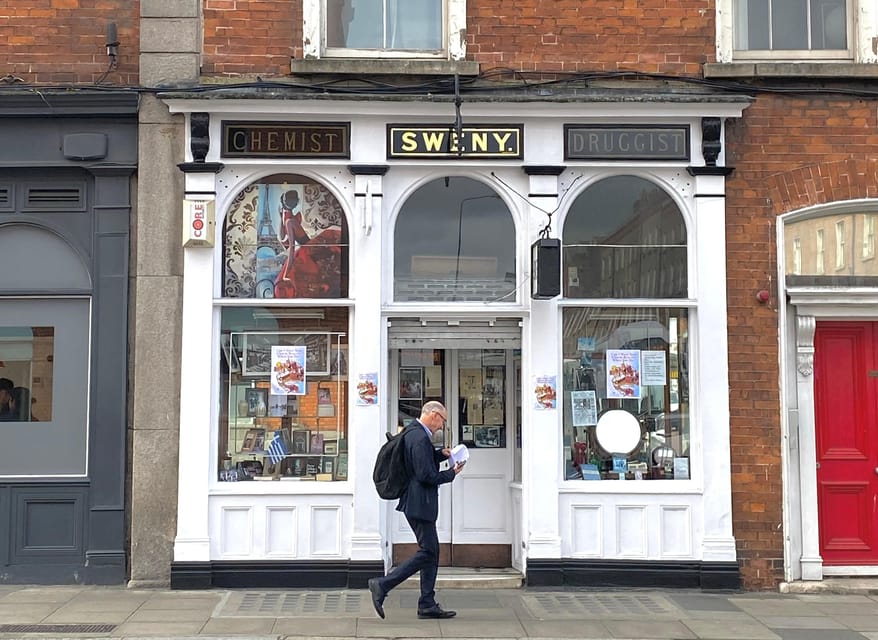
- Swency’s Pharmacy and James Joyce: Enter a preserved 19th-century shop that appears in Ulysses and now works as a small Joyce attraction.
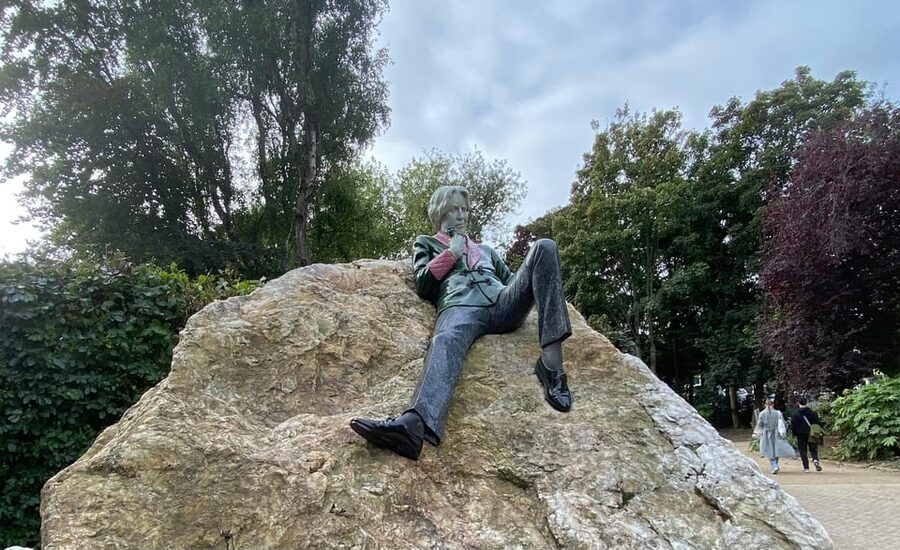
- Oscar Wilde in Merrion Square: See the striking memorial sculpture and hear about Wilde’s work, personal life, and fall from grace.
- A genuinely small group: With no more than eight participants, questions are easier and the walk can feel personal.
- Good value at $25: For two hours, several major literary sites, and an expert guide, the price is fair for adults who want context rather than a quick photo walk.
Why Dublin’s literary story works best on foot
Dublin is a UNESCO City of Literature, and this walk gives you a compact way to understand why. Its four Nobel Prize winners, Yeats, Samuel Beckett, George Bernard Shaw, and Seamus Heaney, are part of the wider story, but the route focuses mainly on Wilde, Yeats, and Joyce.
That focus works well. These writers have very different voices and lives. Wilde offers wit, theatrical flair, and a painful public downfall. Yeats brings poetry, Irish identity, politics, and a long literary career. Joyce turns ordinary Dublin streets and shops into the raw material for great fiction.
You are not simply moving between plaques. The guide connects buildings, parks, education, literature, and personal biography. That matters because many literary tours can become a parade of famous names. Here, the places give the stories a physical shape.
The pace should suit anyone who likes to stop, listen, and ask questions. You walk for about two hours, with guided sections and a self-guided exhibition visit. Wear comfortable shoes, and bring clothing for Dublin weather. The route is outdoors for much of the time, and Irish sunshine is never something to schedule too confidently.
More literary walks in Ireland:
- Dublin Literary Pub Crawl
★ 4.5 · 1,607 reviews - Dublin Off-The-Beaten-Path Private Literary Walking Tour
★ 5.0 · 7 reviews - Dublin Literary Tour with a Local Expert: Custom & Private
★ 4.0 · 4 reviews
Meeting Wolfe Tone near the Shelbourne Hotel
The walk begins at the Wolfe Tone statue opposite the Shelbourne Hotel on Saint Stephen’s Green. Look for the guide holding a Dublin Literary Walking Tour sign.
This is a useful starting point in central Dublin. You are already in the historic core, close to the park, major cultural institutions, and the Georgian streets around Merrion Square. The tour ends back at the same meeting point, which makes the outing easy to fit into a day of sightseeing.
The group is limited to eight participants. That is one of the best features of the experience. A small group lets you hear the guide without straining, and Philip Taylor can respond to questions instead of delivering a fixed speech to a crowd.
Taylor’s background is worth noting. He holds a PhD from Ulster University and has received an Irish Arts Council Literature Award. The academic credentials matter less than how he uses them. The strongest part of this experience is the chance to ask about the writers and get more than a memorized paragraph in return.
One person who booked the tour found his approach relaxed and considerate of different needs. That suggests a calm tone rather than a rushed lecture, which is especially useful if you are new to Irish literature.
Stephen’s Green and the young James Joyce
The first major section lasts about 40 minutes in St. Stephen’s Green. The park gives the tour room to breathe. Instead of starting in a crowded indoor gallery, you begin with a walk among literary points and city views.
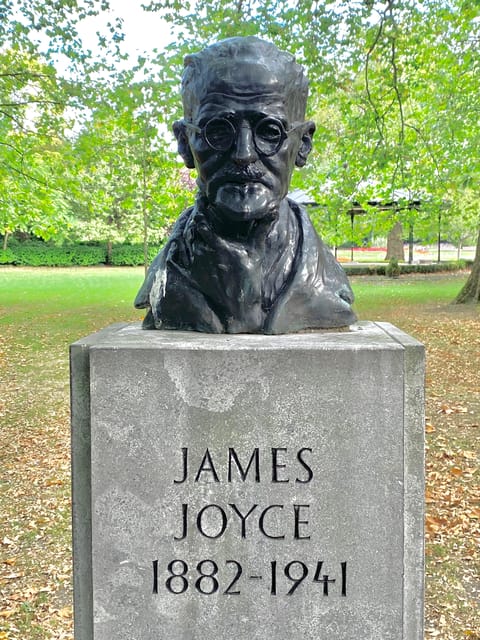
The guide also looks across to Newman House, formerly University College Dublin, to discuss Joyce’s childhood and student days in Dublin. This is a valuable detail because Joyce is often presented only as the difficult author of Ulysses and Finnegans Wake. His early Dublin years help explain why the city became such a lasting source for his writing.
You will hear about the connection between a real city and a fictional one. Joyce’s work can seem demanding on the page, but places make the discussion more approachable. A look across the street can give you a clearer sense of the institutions and surroundings that shaped him.
Stephen’s Green is also a good setting for comparisons among the writers. Wilde, Yeats, and Joyce were not interchangeable Dublin icons. Their periods, styles, and public lives differed sharply. A guide who knows the literary context can show those differences without turning the walk into a university seminar.
Allow yourself to listen carefully here. The tour uses the park as more than a pleasant shortcut. The outdoor setting keeps the first part informal, but you should still expect regular walking and standing. If rain arrives, weather-appropriate clothing will make a big difference.
Yeats at the National Library of Ireland
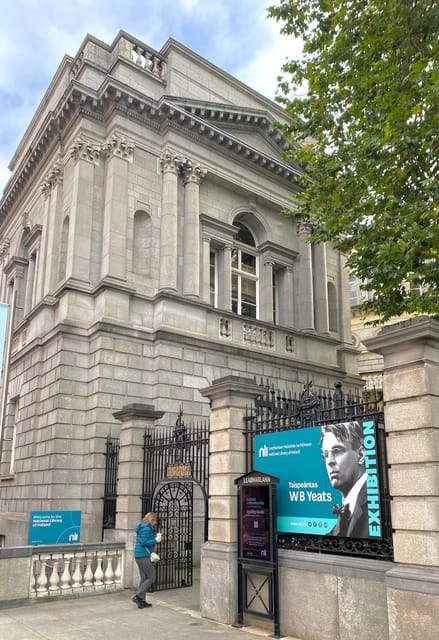
From the park, the route continues to the National Library of Ireland. This stop lasts about 30 minutes and centers on W.B. Yeats.
Outside the library, Philip Taylor introduces Yeats’s life and work. You then make a self-guided visit to the Yeats exhibition. That division is important. The guide gives you the framework, but the exhibition portion lets you set your own pace rather than follow a continuous spoken tour.
Yeats is a good choice for this stop because his work reaches beyond poetry. His life touched Irish cultural and political questions, and his career lasted through major changes in Ireland. The library setting gives the discussion an appropriate sense of place without relying only on a monument or outdoor plaque.
The self-guided format also has a drawback. It means you should not expect the guide to accompany you through every display. If you want detailed help with each item, this may feel less directed than a fully guided museum tour.
Opening arrangements deserve attention. One person on the tour found the National Library closed and planned to return another time. The experience description includes the Yeats exhibition, but access can depend on the day and current opening conditions. Check before you go, especially if the library is the part you most want to see.
Even if the exhibition visit changes, the Yeats discussion remains a strong part of the route. Still, do not treat the indoor portion as guaranteed without checking availability.
More Walking Tours in Ireland:
- Dublin Highlights and Hidden Gems Guided Walking Tour
★ 5.0 · 6,020 reviews - Dublin: Highlights and Hidden Gems Walking Tour
★ 4.9 · 2,140 reviews - 1916 Rebellion Walking Tour
★ 5.0 · 1,605 reviews - 90 Minute Dublin Walking tour and Sightseeing tips
★ 5.0 · 916 reviews
Sweny’s Pharmacy and Joyce’s Dublin
Swency’s Pharmacy is perhaps the most unusual stop. It is a preserved 19th-century shop that now serves as a small Joyce visitor attraction.
The guide first explains the connection outside, then you go inside for about 20 minutes. The shop features in Ulysses, so this is where Joyce’s habit of turning ordinary Dublin details into literature becomes especially clear.
I like this stop because it is not a grand monument. You see a modest commercial space with a literary role. That kind of place can tell you more about a writer’s method than a formal statue. Joyce did not build his fiction from abstract ideas alone. He drew from shops, streets, routines, names, and conversations.
For readers who have not read Ulysses, the stop should still work. You do not need a strong background in Joyce to appreciate the setting or the explanation. The tour is designed as an introduction, and the guide can add context and anecdotes without assuming specialist knowledge.
The visit is brief, about 20 minutes, so expect an overview rather than a full Joyce seminar. That is probably the right balance for a walking tour. Joyce’s work can take over an entire day, and this route wisely gives him one memorable place before moving on.
Oscar Wilde in Merrion Square
The final main stop is the Oscar Wilde memorial in Merrion Square. This section lasts about 20 minutes and includes a photo stop and guided discussion.
The sculpture is a natural place to talk about Wilde’s sharp humor, literary work, public reputation, and tragic fall from grace. His story is especially suited to a walking tour because the contrast between his wit and his suffering is so striking. You get a writer remembered for comedy and style, but also a man whose life was badly damaged by the social and legal pressures of his time.
Merrion Square adds another layer. The area is associated with elegant Georgian Dublin, and Wilde’s memorial gives the square a human and literary focus. The stop is not just about taking a photograph. It gives the guide a place to explain how Wilde’s public image changed and why his story still carries weight.
This is where the route ends, back at the Oscar Wilde Monument and the original meeting area. Ending here makes practical sense. You are close to central Dublin, with the rest of the city within reach on foot.
The memorial is a photo stop, so do not expect an interior visit or a long museum presentation. Its value comes from the guide’s interpretation and the setting around it.
How the $25 price holds up
At $25 per person, this is a reasonably priced two-hour experience. You are paying for a live guide, a small group, several literary locations, the Yeats exhibition visit when available, Sweny’s Pharmacy, and the Wilde memorial.
The value is strongest if you want interpretation. You can walk through Stephen’s Green and Merrion Square on your own for free, but you would miss the connections among the writers, the history behind the locations, and the chance to ask questions. The small group makes the fee feel more worthwhile than a large, scripted city walk.
The price is less compelling if you already know Dublin’s literary history well or mainly want a quiet park stroll. The tour moves through familiar central areas rather than taking you far outside the city center. Its purpose is explanation, not hidden streets or extensive museum time.
The academic background of the guide adds value, but you should not assume the tour will be formal or heavily technical. The tone appears friendly and patient. One person found the guide especially considerate and affirming toward neurodiverse needs, which is useful information if you prefer a more relaxed pace and clear interaction.
Free cancellation up to 24 hours before the start and the option to reserve now and pay later make planning easier. Those terms are helpful in Dublin, where rain or a change in your schedule can affect a walking day.
Who should book this literary walk
I would choose this tour if you enjoy books, biography, cultural history, or thoughtful city walks. It is also a good introduction if you know the names of Wilde, Yeats, and Joyce but have not yet connected their lives to Dublin.
It suits adults who like conversation more than spectacle. The group is limited to eight, the guide speaks English, and the walk combines outdoor commentary with short indoor visits. That format gives you a good balance of movement and focused stops.
You should think twice if you need a child-friendly activity, since it is not suitable for children under 18. You may also want another option if you need a fully indoor tour, a longer museum visit, or a route with little standing and walking.
Bring comfortable shoes and weather-appropriate clothes. Smoking is not allowed. Check the available starting times and confirm the National Library arrangements before you commit, especially if the Yeats exhibition is your main reason for booking.
Should you book the Dublin Literary Walking Tour?
Book it if you want a compact, personal introduction to Dublin’s literary identity. The strongest reasons are the eight-person limit, Philip Taylor’s background, the unusual stop at Sweny’s Pharmacy, and the way the route brings three very different writers into one walk.
The National Library opening issue is the one point to watch. If the exhibition is unavailable, part of the planned experience changes, even though the guide’s Yeats discussion remains useful.
At $25, this is a fair choice for an adult who wants stories and context rather than a simple list of landmarks. Read a little Wilde, Yeats, or Joyce beforehand if you have time, but you do not need specialist knowledge. Bring good shoes, check the schedule, and let the city provide the setting.
FAQ
How long does the literary walking tour last?
The tour lasts two hours.
What is the price per person?
The price is $25 per person.
Where does the tour start?
Meet at the Wolfe Tone statue opposite the Shelbourne Hotel on Saint Stephen’s Green. The guide will hold a Dublin Literary Walking Tour sign.
Where does the tour finish?
The tour ends back at the meeting point, at the Oscar Wilde Monument.
Which writers are covered?
The main writers are Oscar Wilde, W.B. Yeats, and James Joyce.
Is the National Library of Ireland included?
Yes. You receive a guided introduction to Yeats outside the National Library, followed by a self-guided visit to the Yeats exhibition.
Is Sweny’s Pharmacy part of the tour?
Yes. You visit Sweny’s Pharmacy, a preserved 19th-century shop connected with James Joyce and Ulysses.
How large is the group?
The group is limited to eight participants.
What language is the tour conducted in?
The live tour guide speaks English.
Can children join the tour?
No. The activity is not suitable for children under 18.
What should I bring?
Bring comfortable shoes and clothing suited to the weather.
Can I cancel for a refund?
You can cancel up to 24 hours in advance for a full refund. You can also reserve now and pay later.
Just added around Ireland
- Cliffs of Moher, Aran Island & Burren tour from Galway. Guided.★ 4.5 · 65 reviews
- Aran Knitting, History and Heritage in the Burren★ 5.0 · 11 reviews
- Chauffeur Tours from Galway★ 5.0 · 16 reviews
- Abalone farm tour and tasting with coastal seaweed walk. Guided. 2 hours★ 5.0 · 4 reviews
- Aran Islands Bike Tour with Tea and Scones from Galway★ 5.0 · 101 reviews
- Aran Island, Cliffs of Moher & Cruise tour from Galway. Guided.★ 5.0 · 137 reviews
- Private Ennis Essential History Tour with Dr Jane O’Brien★ 5.0 · 34 reviews
- Cliffs of Moher & Bunratty Castle Day Tour★ 5.0 · 9 reviews
Walking Tours, compared.
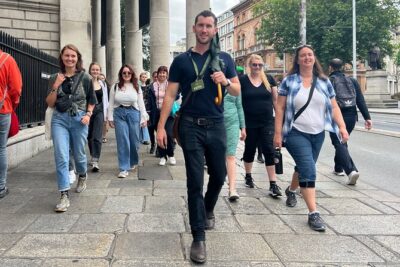
Dublin Highlights and Hidden Gems Guided Walking Tour
Our verdict on it →
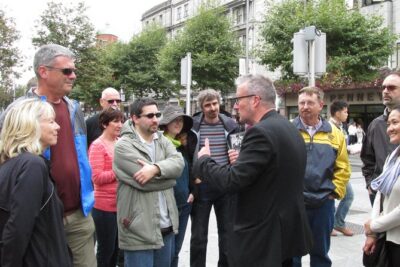
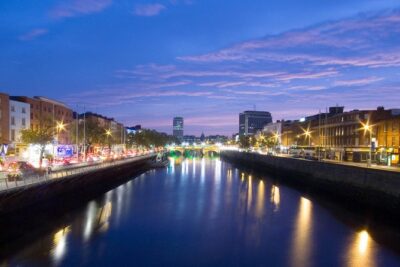
90 Minute Dublin Walking tour and Sightseeing tips
Our verdict on it →

Dublin Traditional Irish 3 Course Meal Walking Tour with Local
Our verdict on it →
Browse the lists this tour appears in