
Reviewed · TRADITIONAL IRISH MUSIC TOURS
Dublin Traditional Irish Music Walking Tour with Live Performance
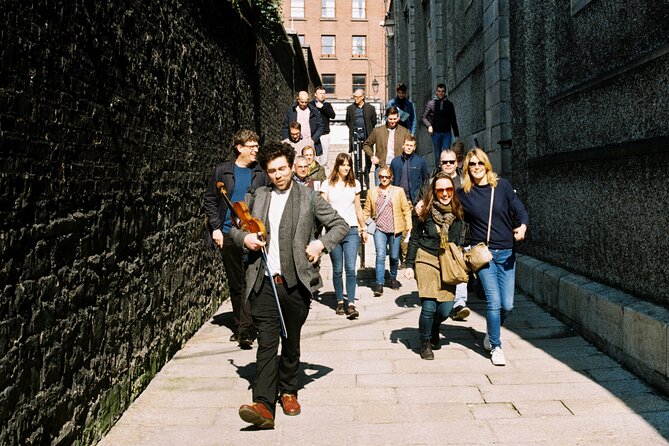
Dublin’s past comes alive here through live Irish music, not a long stream of dates and names. Your guide may be Sean, Ciaran, Dylan, or Shaun, and each stop pairs a Dublin story with a ballad, poem, or tune. I like the link between place and song, especially on Fishamble Street and around Christ Church Cathedral. I also like the small-group feel, with no more than 20 people.
The main drawback is that this tour depends heavily on the guide and the group setup. A late start, street noise, or confusion with another walking tour can spoil the effect. If you prefer a quiet, formal sightseeing tour, the singing, audience participation, and possible dancing may not be your style.
Key things to know before booking
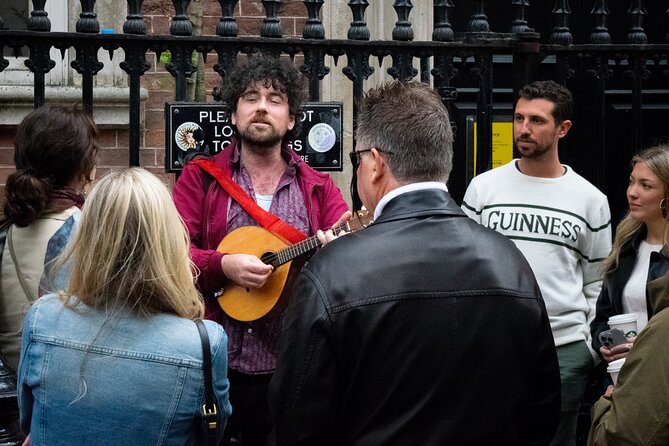
- Songs explain the city: Traditional music connects Dublin’s theatres, churches, politics, folklore, and everyday life.
- The route covers central Dublin: You walk from Temple Bar through the old city to Saint Patrick’s Park.
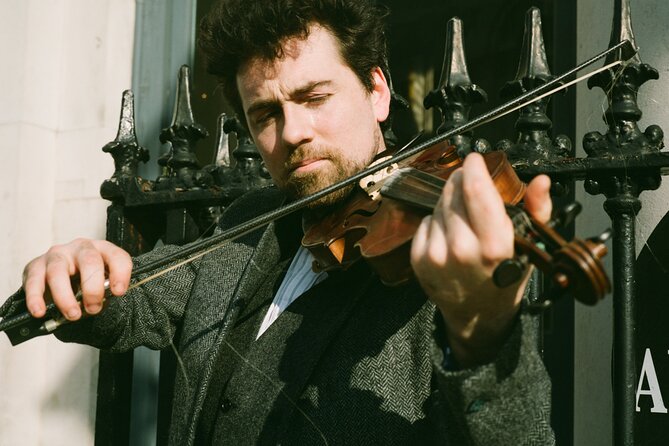
- Expect a performing guide: Sean, Ciaran, Dylan, and Shaun have all led versions of this experience, with guitar, mandolin, singing, poetry, and humor.
- The pace is gentle: The listed stops allow about 10 minutes each, with short walks between them.
- It is good value for music lovers: At $27.81, you get a two-hour guided walk plus a live performance rather than a standard sightseeing talk.
- Meet carefully at 3 Crown Alley: Another walking tour may gather nearby, so confirm you are with the music group before setting off.
Dublin’s story told in songs, not speeches
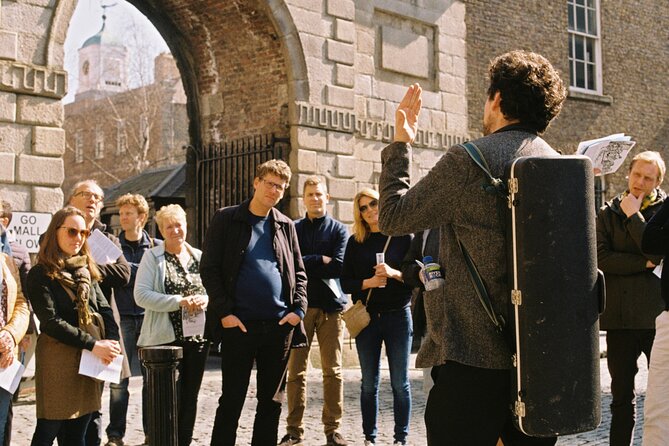
This is not a pub crawl, and it is not a concert where you sit still for two hours. It is a walking tour with regular performances woven into the route. Your guide leads you through old streets and landmarks, then uses a song or poem to explain what happened there or how Dubliners remembered it.
That approach gives the tour its purpose. A song can show the mood of a period in a way a plaque cannot. Irish folk music often carries stories of work, politics, loss, rebellion, theater, and local characters. When the guide explains the meaning of a song before performing it, Dublin’s past feels connected to real people rather than locked behind church doors.
You may hear a varied mix of traditional Irish music, including at least one song in Gaelic. The guides also use poems, folklore, and humor. Audience participation is part of the design, although you are not required to perform. One guide even persuaded a reluctant member of the group to join in by the end, so the atmosphere can become more relaxed as the walk goes on.
The experience is rated 4.9 out of 5 from 253 ratings, with 98 percent recommending it. That is a strong result, but the less positive experiences point to a practical truth: the guide makes the difference. When the meeting goes smoothly and the group can hear the performer, the tour can be memorable. When the start is confused or the street noise is heavy, the same format loses some of its charm.
More Walking Tours in Dublin
- Dublin Highlights and Hidden Gems Guided Walking Tour
★ 5.0 · 6,020 reviews - Dublin: Highlights and Hidden Gems Walking Tour
★ 4.9 · 2,140 reviews - 1916 Rebellion Walking Tour
★ 5.0 · 1,605 reviews
Starting in Temple Bar at 1 p.m.
The meeting point is 3 Crown Alley in Temple Bar, right in central Dublin. The tour starts at 1 p.m., making it easy to fit around a morning visit to Trinity College, a museum, or an early lunch.
Temple Bar is a useful starting place because you can reach it by public transport and it is easy to find in the center. It is also a lively area, which means the meeting point can be noisy and crowded. Arrive with enough time to locate the guide rather than appearing at the last minute.
This matters because at least one group has confused the music tour with another historical walking tour meeting nearby. If you see more than one guide or group, ask directly for the Traditional Irish Music Walking Tour before leaving Crown Alley. That small check could save you from spending two hours waiting for music that never comes.
The group maximum is 20 people. A smaller group of six or nine should make it easier to hear the singing and ask questions. A full group may feel less personal, particularly on narrow streets or beside busy roads. The tour is a group experience, not a private serenade.
Smock Alley Theatre and Dublin’s stage tradition
The first named stop is Smock Alley Theatre 1662, described as Ireland’s oldest theater. You spend roughly 10 minutes here, in the heart of Temple Bar, hearing about Dublin’s performance tradition.
This is a smart opening stop because it introduces the link between music, storytelling, and public life. Your guide is not simply pointing out a historic building. The theater gives the tour a way to discuss how songs and performances carried ideas through Dublin over the decades.
The exact performance here can vary with the guide. Sean, Ciaran, Dylan, and Shaun have each brought their own style, instruments, and song choices. You might hear a ballad, a poem, or a short musical piece that sets the tone for the rest of the walk.
Do not expect a long interior visit. The itinerary allows about 10 minutes, and the emphasis is on the street-level story and live presentation. The tour is better suited to someone who wants atmosphere and context than someone hoping for a detailed theater architecture tour.
Grattan Bridge and the River Liffey
From Temple Bar, the route continues to Grattan Bridge, one of the most picturesque crossings over the River Liffey. Seahorse lanterns decorate the bridge, which links Capel Street with Parliament Street.
This is a good place for photographs, so keep your camera ready. The stop also gives the guide a natural setting for songs about Dublin, its people, and the river that divides and joins the city center.
The bridge is a brief stop, listed at about 10 minutes. You will likely hear a short explanation followed by a song or piece of poetry. The river provides some visual relief after the tighter streets of Temple Bar, though traffic and passing pedestrians can make it harder to hear every word.
I like this part of the route because it shows that the tour is not limited to famous buildings. A bridge, a street crossing, and a view down the Liffey become part of the story. You see how a music-based guide can turn ordinary city spaces into performance settings.
More nights of traditional music in Dublin:
- Traditional Irish Musical Pub Crawl
★ 4.5 · 1,787 reviews - Dublin: Irish Music and Dance Show with Dance Lesson
★ 4.7 · 567 reviews - Dublin: Irish Music Walking Tour with Live Performance
★ 4.8 · 137 reviews - Dublin Irish Musical Pub Tour
★ 4.0 · 4 reviews
Fishamble Street, Vikings, and Handel’s Messiah
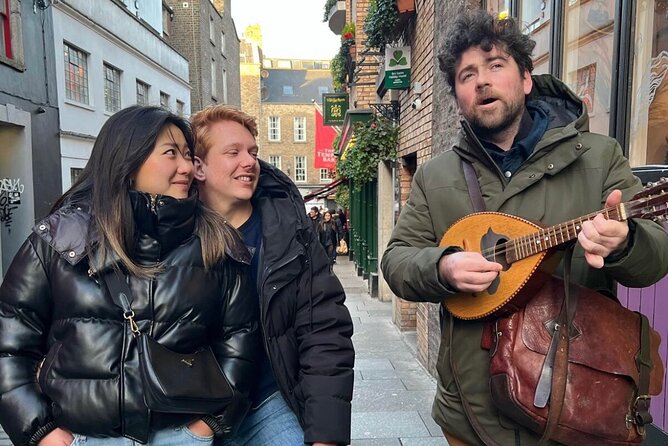
Fishamble Street is often described as one of Dublin’s oldest streets. It was once linked to the largest Viking settlement found outside Scandinavia and later became famous as the site of the first performance of Handel’s Messiah.
That is a lot of history for one short stretch of road. It also gives the guide several musical angles: Viking Dublin, the city’s changing communities, religious music, and the role of performance in public life.
This stop is one of the clearest examples of why the experience works best when the guide explains the song before singing it. You are not just hearing a tune because it sounds Irish. You are hearing music selected to fit a particular place or period.
The tour does not promise entry to a concert hall or a full Handel performance. Think of this as a brief outdoor presentation, with the street itself as the setting. For many people, that is the appeal. The music follows you through Dublin instead of being separated from the city.
Christ Church Cathedral and medieval Dublin
Christ Church Cathedral is the heart of medieval Dublin, and the tour spends about 10 minutes exploring part of the cathedral and its surrounding area. The guide also brings out the darker side of the site through song.
That darker tone adds variety. Dublin’s past is not presented as a string of pretty buildings and cheerful melodies. Songs can touch on hardship, conflict, faith, death, and the less polished parts of the city’s story.
You should be clear about what is included. The route visits Christ Church Cathedral, but the information provided does not promise a full cathedral admission or an extended interior tour. The focus is on the landmark, its surroundings, and the guide’s performance.
This is also a place where sound can be an issue. The tour takes place in public spaces, and street noise may make a soft-spoken guide difficult to hear. Stay close to the performer, especially if you are in a larger group. Ciaran has been praised for combining humor, social history, and music, while Dylan has linked each song closely to the story being told. Those strengths matter most at a busy stop like this.
Dublin Castle and the Ship Street gate
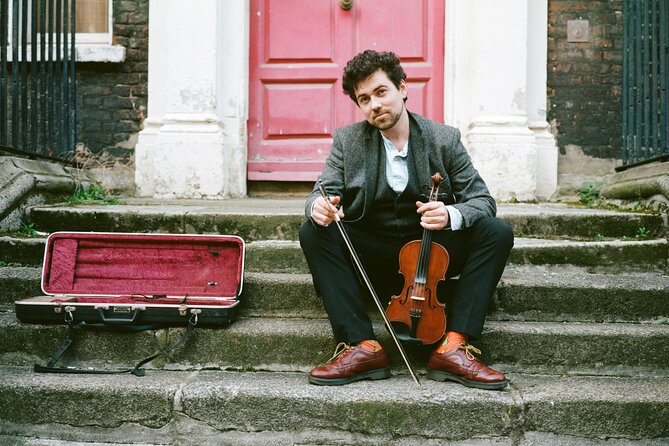
The walk then reaches Dublin Castle, stopping at the Ship Street gate and some of the city’s best-known steps. You will have another short presentation, with about 10 minutes allocated here.
Dublin Castle gives the guide room to discuss power, government, and the relationship between Ireland and Britain. The steps and gate also make a good backdrop for photographs. Keep your camera ready, but do not let the photo stop pull you too far from the group.
This is not a full castle tour. You are visiting one section from the outside, so it works well as part of a walking route but will not replace a dedicated Dublin Castle visit. If the castle is high on your list, plan a separate visit for its interiors and rooms.
The musical treatment helps this stop feel different from a standard castle explanation. Instead of only hearing who used the building, you may hear how public memory, politics, and song shaped Dublin’s view of authority.
Finishing at Saint Patrick’s Park
The tour ends in Saint Patrick’s Park beside Saint Patrick’s Cathedral. The route from Temple Bar to the cathedral takes about two hours in total, with short walks and frequent stops rather than a long, hard march.
Finishing here is practical. You are near one of Dublin’s major landmarks, and the park gives the guide room for a final song, poem, or bit of audience participation. The end point also makes it easy to continue sightseeing in the area.
The tour does not include a dedicated visit inside Saint Patrick’s Cathedral. If you want to explore the cathedral, treat the walking experience as an introduction and return separately with time to spare.
This final stop may be where the group feels most involved. Several guides use humor and encouragement to get people singing or dancing, but participation remains informal. You can listen quietly if that suits you. The format is social, yet it does not require you to become a performer.
What the $27.81 price gives you
At $27.81 per person, this is fairly priced for a two-hour guided walk with live music. A standard walking tour gives you commentary and landmarks. This one adds a working musician, multiple live songs, poetry, cultural background, and a route through several central sites.
The value is strongest if you already enjoy Irish music or want a first introduction to Dublin’s musical culture. You are paying for the guide’s performance skill as well as the walking route. A good singer with a strong sense of timing can make a familiar street feel new.
The price is less compelling if you mainly want detailed architectural information or extended access to the cathedrals and castle. The stops are short, and admission tickets are not listed as included. You may still want separate visits to Christ Church Cathedral, Saint Patrick’s Cathedral, and Dublin Castle.
I would also compare this with what you want from your first day in Dublin. If you need a fast overview of the main center, the route covers many useful landmarks. If you want a quiet, highly structured lecture, choose a more traditional walking tour.
Who will enjoy this Dublin music walk
I would recommend it most strongly to:
- People who want Irish music tied to real places
- First-time visitors seeking a lively introduction to central Dublin
- Couples, friends, and families who enjoy an informal group setting
- Anyone interested in folk songs, theater, poetry, folklore, and social history
- Visitors who like short walks with regular breaks
- People who want guide suggestions for pubs and restaurants after the tour
It can also work for someone who is unsure about audience participation. The singing and dancing are part of the fun, but you can listen rather than join in. The experience may gradually win you over, though that depends on the guide and your comfort level.
I would hesitate to recommend it to anyone with difficulty hearing in street settings. One larger group found it hard to follow the guide over traffic and city noise. Staying near the performer helps, but the tour cannot control the sound of central Dublin.
Most people can take part, and service animals are allowed. The tour is near public transport, which makes the start and finish convenient. You should still expect to walk on city streets for about two hours.
Timing, group size, and practical tips
The experience is often booked about 32 days ahead, so reserve early if your Dublin dates are fixed. The group limit is 20, but smaller groups will feel more intimate and make the music easier to hear.
Here are the details I would keep in mind:
- Arrive early at 3 Crown Alley and confirm the music group.
- Stay close to the guide at busy outdoor stops.
- Bring comfortable shoes for central-city walking.
- Keep your phone or camera ready at Grattan Bridge, Dublin Castle, and the cathedrals.
- Do not plan the tour as a full interior visit to the cathedral or castle.
- Use the end at Saint Patrick’s Park as a starting point for more sightseeing.
You receive confirmation when booking, and free cancellation is available up to 24 hours before the 1 p.m. start. Within 24 hours, the payment is not refunded, so keep an eye on the local cut-off time.
Should you book this Irish music walking tour?
Book it if you want Dublin explained through songs, poems, humor, and folklore rather than through a standard lecture. The strongest guides, including Sean, Ciaran, Dylan, and Shaun, bring both musical skill and a clear sense of place. The combination can make the route feel personal and memorable.
Skip it if you need guaranteed quiet, a detailed interior tour, or a fixed performance by one named musician. The guide may vary, street noise is part of the setting, and the experience depends on everyone meeting the correct group.
For most visitors who enjoy live music, the $27.81 price is a sound buy. You see major central landmarks, learn how music reflects Dublin’s past, and finish near Saint Patrick’s Cathedral. Just arrive early, stay near the guide, and be ready for the possibility that you may end up singing along.
FAQ
Where does the Dublin Traditional Irish Music Walking Tour start?
The tour starts at 3 Crown Alley in Temple Bar, Dublin, at 1 p.m.
Where does the tour finish?
It finishes at Saint Patrick’s Park beside Saint Patrick’s Cathedral, at Saint Patrick’s Close.
How long does the tour last?
The tour lasts approximately two hours.
What landmarks are included?
The route includes Smock Alley Theatre 1662, Grattan Bridge, Fishamble Street, Christ Church Cathedral, Dublin Castle’s Ship Street gate, and Saint Patrick’s Cathedral area.
Is admission to the landmarks included?
The stops are listed as free admission stops, but the experience does not promise a full interior visit to each cathedral or Dublin Castle.
Can I cancel the booking for a refund?
Yes. You can cancel at least 24 hours before the start time for a full refund. Cancellations or changes made within 24 hours are not accepted for a refund.
Just added around Dublin
- Women Of Ireland: Trailblazers & Pioneers★ 5.0 · 4 reviews
- Whiskey Tasting Tour of Dublin★ 5.0 · 117 reviews
- Premium Irish Whiskey Tasting Hosted by Local Dublin Expert★ 5.0 · 77 reviews
- Historical Walking Tour of Dublin★ 5.0 · 50 reviews
- Dublin (Dun Laoghaire) Top-Rated Coastal Walking Tour★ 5.0 · 80 reviews
- Semi-Private (8people max) 2.5 Hr Dublin Walking Tour★ 5.0 · 69 reviews
- Private Ultimate Day in Dublin (Walking Tour)★ 5.0 · 30 reviews
- DayTripper Dublin: A Guided City Walking Tour★ 5.0 · 90 reviews
Traditional Irish Music Tours, compared.
Trad on the Prom Ticket with Irish Music and Dancing
Our verdict on it →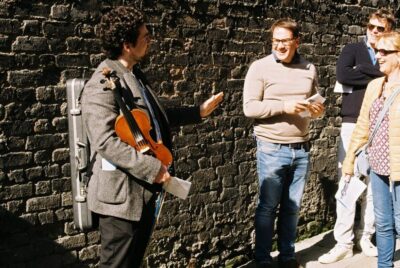
Irish Music Walking Tour with Live Performance
Our verdict on it →
Browse the lists this tour appears in