
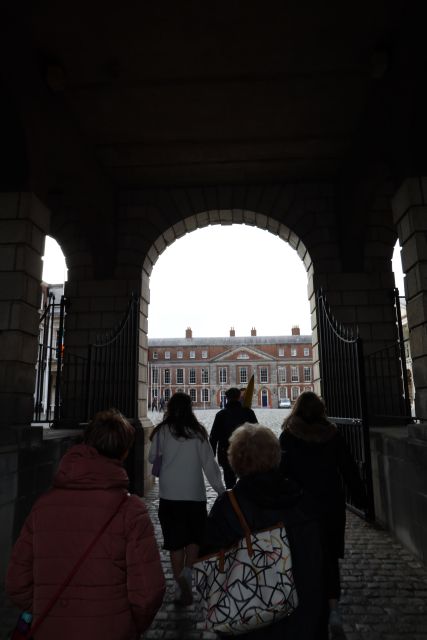
Reviewed · GHOST TOURS
Dublin: Macabre History Walking Tour
Dublin’s darker past is tucked into ordinary streets. This two-hour walking tour connects the old city center, both sides of the river, and the area near the cathedral with tales of public executions, medieval quarantine, grave robbing, and man-eating rats. It is less a ghost walk than a brisk lesson in the city’s grimmer habits.
I like two things here: the route takes you to places you could easily pass without noticing, and the guides, especially Peter and Rob, use clear, lively storytelling rather than a dry list of dates. The main consideration is tone. Despite the title, one part of the walk may feel more curious and historical than truly bloody, so horror fans should keep expectations in check.
Key points to know before you book
- Cuchulainn’s death opens the door to Irish legend: Hear how the mighty warrior met his end, including the striking detail of the raven on his shoulder.
- The route links both sides of the River Liffey: You get a moving tour through old Dublin rather than a single-site talk.
- Grave robbing gets a place in the story: The 19th-century trade beside the city mortuary shows how practical, grim, and profitable death could become.
- The old city walls hide the strangest tales: Expect mummified corpses, a legless serial killer, and rats with a fearsome reputation.
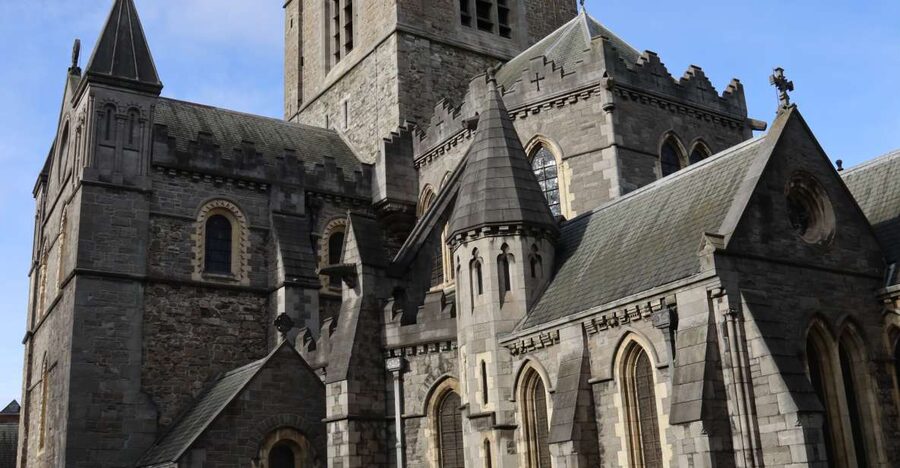
- The final stop brings you near the cathedral: The story concerns Dublin’s best-known brothel keeper and her death at the stake.
- Small groups can feel personal: Past departures have included only three people, allowing plenty of room for questions.
From Cuchulainn to Dublin’s darker streets

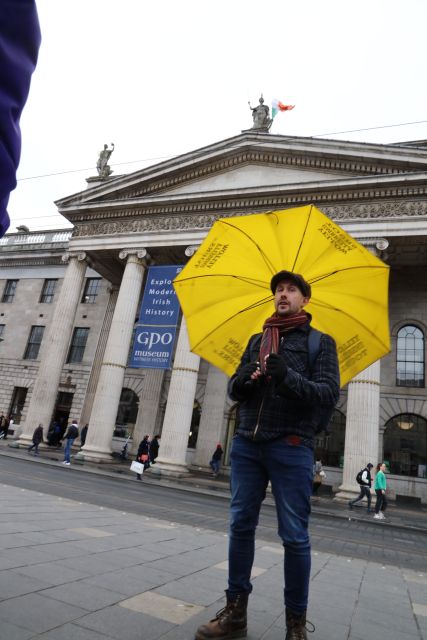
The tour begins beside the Spire, the tall needle in the middle of O’Connell Street. Look for the yellow umbrella. This is a central and easy-to-find meeting point, though one practical warning is worth remembering: there may be more than one yellow umbrella nearby, so check that you have the correct guide before setting off.
The opening story concerns Cuchulainn, the legendary Irish warrior. His death is tied to a memorable image: the raven on his shoulder and his eyes being pecked out. This gives you an early sense of the tour’s style. The stories are macabre, but they also connect Irish legend, local tradition, and the physical places around you.
I like this approach because it avoids treating Dublin as a collection of grand monuments only. You begin in a familiar part of the city, then turn toward lesser-known corners where the past is easier to miss. The guide’s job is to make those ordinary walls and streets meaningful without requiring a museum visit or a long lecture.
Peter is especially strong at this kind of presentation. He uses drama, humor, and clear explanations, and he pauses to answer questions. Rob has also led the walk, bringing an animated style and a light comic touch. The experience can change with the guide, but the central appeal remains the same: a local storyteller leading you through difficult and unusual material.
More History Tours in Dublin
- Dublin Historical Centre Food Tour with 8 Food Tastings & Drinks
★ 5.0 · 1,718 reviews - 2-Hour Historical Walking Tour from Dublin
★ 5.0 · 875 reviews - Historical 2-Hour Guided Walking Tour of Dublin
★ 4.7 · 865 reviews
Crossing the river through old Dublin
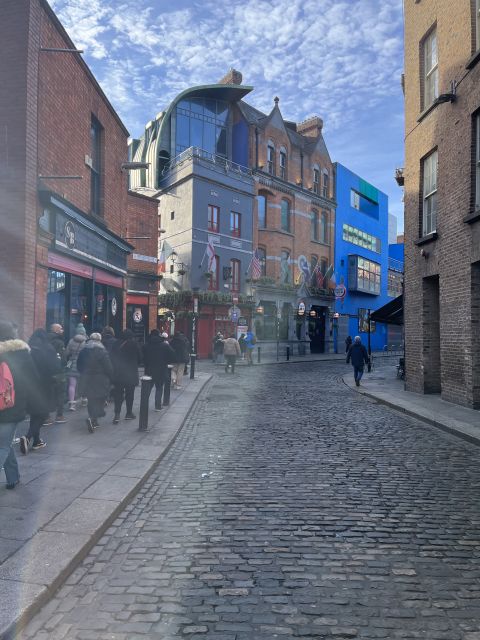
The walk explores both sides of the river, giving the route a useful sense of movement. You are not planted in one square listening to a speech. Instead, the city itself becomes the setting, and each change of street helps separate one story from the next.
That matters in Dublin, where modern shops, traffic, and daily life sit close to traces of the old city. A doorway, wall, church area, or narrow passage may not look important at first. With the right explanation, it becomes part of a story about sickness, punishment, crime, or death.
The route is described as a stroll through the old city center, but you should still wear comfortable shoes. This is a full two-hour walk, and the experience depends on moving between stops rather than simply standing at a single attraction. The pace is helped by the storytelling, which keeps the walk from feeling like a long list of addresses.
You will also want to dress for Dublin’s changeable weather. The tour is outdoors, and the information provided does not describe indoor shelter along the route. A rain jacket is a sensible addition, even if the forecast looks friendly at breakfast.
Medieval quarantines and the business of death
One of the tour’s useful features is its wider look at how Dublin dealt with disease and death. Medieval quarantines form part of the story, placing the city’s grim episodes within the practical problems of crowded urban life.
This is where the walk becomes more than a parade of shocking tales. Quarantine stories help explain how illness affected the city and how communities responded when fear spread faster than facts. You get a glimpse of Dublin as a working city dealing with urgent problems, not just a stage for legends and murders.
The tour also covers the 19th-century business of grave robbing near the city mortuary. This is among the most interesting subjects on the route because it shows the uncomfortable link between medicine, money, and the dead. The story is disturbing, but it also gives you a sharper sense of the pressures and opportunities that existed around burial and medical study.
I appreciate this balance. A tour built only around gore can become repetitive. Stories about quarantine and grave robbing give the walk social context, helping you understand why these events mattered rather than simply remembering them as shocking anecdotes.
Mummified corpses and the old city walls
Close to the old city walls, the tour turns to mummified corpses and other unusual stories. The setting is important here. Dublin’s older areas carry layers of religious, civic, and domestic history, and the guide uses those surroundings to explain how the city lived with its dead.
You should expect vivid material, but not necessarily graphic displays. This is a storytelling walk, not an attraction with preserved bodies or theatrical effects. The impact comes from the guide’s delivery and from realizing that the places around you have been connected with these stories for generations.
The tale of the legless serial killer is one of the more startling subjects on the route. It is exactly the kind of detail that makes you look twice at streets you might otherwise cross without thought. The guide’s performance matters here. Peter is particularly good at acting out parts of the stories, while still making sure the basic history is understandable.
A few people may find the mix of fact and legend uneven. The tour includes Irish mythology, local tales, and historical material, and not every detail carries the same level of certainty. One guide openly mixes tall tales with historical insight, which suits the entertainment value but means you should enjoy the stories as storytelling, not treat every dramatic point as a proven fact.
More Walking Tours in Dublin
- Dublin Highlights and Hidden Gems Guided Walking Tour
★ 5.0 · 6,020 reviews - Dublin: Highlights and Hidden Gems Walking Tour
★ 4.9 · 2,140 reviews - 1916 Rebellion Walking Tour
★ 5.0 · 1,605 reviews - 90 Minute Dublin Walking tour and Sightseeing tips
★ 5.0 · 916 reviews
Public executions, rats, and Dublin’s hard edge
Public executions and man-eating rats bring the tour into its most sensational territory. These subjects show how punishment, sanitation, fear, and rumor shaped older city life. They also explain why the tour is aimed at adults and not children under 18.
The rat story will appeal to anyone who enjoys the more outrageous side of macabre history. It is also a reminder that urban life before modern sanitation could be harsh in ways that are easy to forget while walking through central Dublin today.
Public executions offer a different kind of interest. They reveal how punishment could become public entertainment and civic warning at the same time. The guide can use these stories to show how attitudes toward crime and justice have changed.
Still, this is not a full horror production. One person felt the walk could have been darker and bloodier. I think that is a fair warning. You get grim stories, but also humor, context, and general Dublin history. If you want nonstop shock, a theatrical ghost attraction may suit you better. If you want unusual city history delivered with a smile, this format works well.
The cathedral ending and Dublin’s famous brothel keeper
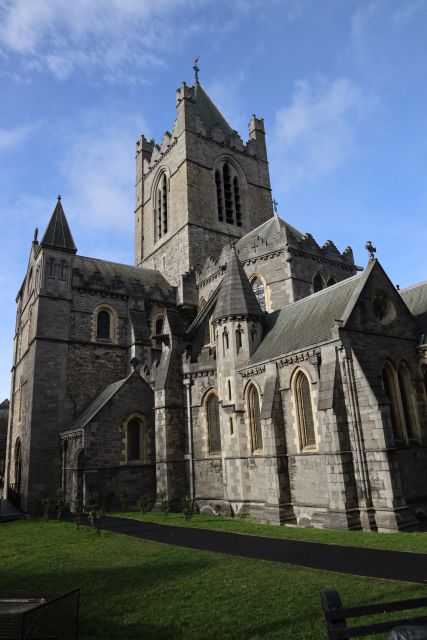
The final part takes place beside the cathedral and concerns Dublin’s most famous brothel keeper. Her story ends with an untimely death by fire at the stake, giving the tour a suitably grim finish.
This closing stop brings together several themes from the walk: crime, public punishment, gender, reputation, and the way a city remembers notorious people. It also places the story beside one of Dublin’s most important religious landmarks, creating a sharp contrast between sacred surroundings and a tale of vice and execution.
I like finishing near the cathedral because it gives the route a clear endpoint and leaves you in a useful part of the city. The walk returns to the original meeting point, so you are not left trying to find a distant end point. From there, you can continue exploring central Dublin on your own.
The exact level of detail will depend on the guide and the group. Peter is happy to answer questions about Irish history and daily life, not just the macabre subjects. That makes it worthwhile to ask about anything that catches your attention along the way.
What the guides add to the experience
The guide is the main reason to book this rather than simply read a list of Dublin’s dark stories online. Peter has been praised for his passion, clear explanations, warmth, and ability to adjust his pace so everyone can follow. He also welcomes questions, including broader questions about Irish culture and history.
Rob offers a similar strength through humor and an easy manner. His delivery has been compared to a comedian’s style, which helps keep the walk relaxed even when the subject turns grim.
Group size can make a noticeable difference. Some departures have been very small, with only three people. In that situation, the tour can feel close to a private walk, and you have more freedom to ask questions. A larger group may feel less personal, but the meeting point and yellow umbrella make the guide easier to identify.
The tour is in English only. You should be comfortable listening to spoken English for two hours, including historical names, legends, and unfamiliar terms. Guides make an effort to speak clearly and slow down when needed, but the stories remain the heart of the experience.
Is $19 a fair price for two hours?
At $19 per person, this is good value if you want an active introduction to Dublin’s less obvious past. You are paying for a guide, a planned route, and two hours of local storytelling, with no extra admission fees listed.
The value is strongest for a first visit. The walk can point out places you might otherwise overlook, giving later sightseeing more meaning. It also works well for solo visitors because the format provides company without requiring a full-day commitment.
You should not book it expecting a museum, a staged performance, or a tour filled with physical exhibits. The main product is the guide’s voice, knowledge, humor, and ability to connect stories to streets. If the guide is engaging, the experience feels like excellent value. If you prefer self-guided sightseeing or want only verified academic history, the blend of legend and local lore may not be your style.
Free cancellation is available up to 24 hours before the start, and you can reserve now and pay later. The tour lasts two hours, but starting times depend on availability, so check the schedule before planning dinner or another timed activity.
Who should book this Dublin walk?
I would choose this tour for adults who enjoy unusual history, local legends, crime stories, and walks that leave the main sightseeing path. It suits couples, friends, solo visitors, and small groups who want something different from the standard Dublin introduction.
It is also a good choice if you have already seen the main central sights and want a new way to read the city. The tour does not replace Dublin’s major museums or cathedral visits, but it can add a darker layer to the same streets.
I would skip it if you are traveling with children under 18, dislike stories about death and execution, or want a tour focused on architecture and art. I would also look elsewhere if you require a highly formal, source-heavy presentation with no legends or theatrical delivery.
The walk is wheelchair accessible, though the information provided does not give details about every surface or stop. If you use a wheelchair, it is sensible to confirm any route concerns when booking.
Should you book the Macabre History Walking Tour?
Book it if you want Dublin’s overlooked stories, a manageable two-hour route, and a guide who can make grim material entertaining without turning the whole experience into cheap shock. Peter and Rob bring the sort of personality that keeps the walk moving, while the route adds places you might not notice alone.
Skip it if you expect relentless horror or graphic detail. This is best understood as an entertaining history walk with macabre themes, not a pure ghost tour. At $19, it offers a strong introduction to Dublin’s darker side, especially when you get a small group and an engaging guide.
FAQ
Where does the Dublin Macabre History Walking Tour start?
It starts beside the Spire, the large needle in the middle of O’Connell Street. Look for the yellow umbrella.
Where does the tour finish?
The walk ends back at the original meeting point beside the Spire.
How long does the tour last?
The tour lasts two hours. Starting times vary, so check availability when booking.
What language is the tour in?
The live tour is conducted in English.
Is the tour suitable for children?
No. The activity is not suitable for children under 18 because it covers death, executions, grave robbing, murder, and other macabre subjects.
Is the walking tour wheelchair accessible?
Yes, the activity is listed as wheelchair accessible.
Can I cancel the booking?
Yes. You can cancel up to 24 hours in advance for a full refund. You can also reserve now and pay later.
More Ghost Walks in Dublin
- Dark Dublin: Torture, Murder & Mystery
★ 5.0 · 2,231 reviews - Dublin Ghost Bus Tour with Professional Actors
★ 4.5 · 949 reviews - Haunted Dublin Walking Tour
★ 5.0 · 550 reviews - From Dublin: Gravedigger Ghost Bus Tour
★ 4.4 · 546 reviews
Just added around Dublin
- Women Of Ireland: Trailblazers & Pioneers★ 5.0 · 4 reviews
- Whiskey Tasting Tour of Dublin★ 5.0 · 117 reviews
- Premium Irish Whiskey Tasting Hosted by Local Dublin Expert★ 5.0 · 77 reviews
- Historical Walking Tour of Dublin★ 5.0 · 50 reviews
- Dublin (Dun Laoghaire) Top-Rated Coastal Walking Tour★ 5.0 · 80 reviews
- Semi-Private (8people max) 2.5 Hr Dublin Walking Tour★ 5.0 · 69 reviews
- Private Ultimate Day in Dublin (Walking Tour)★ 5.0 · 30 reviews
- DayTripper Dublin: A Guided City Walking Tour★ 5.0 · 90 reviews
Ghost Tours, compared.


Dublin Ghost Bus Tour with Professional Actors
Our verdict on it →

Hidden Dublin: Haunted History Walking Tour v2.0 2026
Our verdict on it →
Browse the lists this tour appears in