
Reviewed · NEWGRANGE AND BOYNE VALLEY TOURS
Dublin Full-Day Tour through Boyne Valley
Newgrange is the star here: a passage tomb built around 3200 BC, before Stonehenge and the pyramids of Giza. In one long day, you can pair that prehistoric wonder with ruined abbeys, Saint Patrick’s hill, an ancient seat of Irish kings, and Ireland’s largest Anglo-Norman castle.
I like the private vehicle and hotel pickup, which save you from piecing together rural sites by bus. I also like the range of places: this is not just a castle outing, but a quick tour through Ireland’s prehistoric, Christian, and medieval past.
The main consideration is pace. Six stops in roughly 6 to 8 hours leave limited time for lingering, lunch, or unscheduled detours. Newgrange admission is also not included, so check that cost before you commit.
Key points to know before booking
- Newgrange is the centerpiece: Allow three hours for the site, exhibition, and visit, with admission charged separately.
- Ger Healy provides a private day out: Your group of up to six travels together, with hotel pickup from Dublin.
- The route covers three eras: See a prehistoric passage tomb, medieval monasteries, and Norman Trim Castle in one outing.
- The day is tightly packed: The planned stops add up to nearly eight hours before accounting for driving and lunch.
- Parking and bottled water are included: You still need to budget for lunch and Newgrange admission.
- The tour suits history-minded visitors: Moderate fitness is required, and several stops involve walking outdoors.
From Dublin to the Boyne Valley in one day
This private tour takes you north from Dublin into the Boyne Valley, an area where major Irish sites sit within a relatively compact region. You are not spending the day on one attraction. Instead, you move through layers of time, from a monument built more than 5,000 years ago to a castle shaped by the Anglo-Norman takeover of Ireland.
Ger Healy handles the driving and guiding. Hotel pickup is offered, and private transportation means your party of up to six does not have to match the rhythm of a large coach. That matters here. The sites are spread across County Meath and County Louth, and a private vehicle keeps the route practical.
The scheduled stops take about 7 hours and 40 minutes before you count the drive from Dublin, time for lunch, and any delays. The advertised duration is about 6 to 8 hours, so you should expect a full day with a firm rhythm. If you want long museum visits, extended meals, or spontaneous stops, this may feel rushed.
More Newgrange and Boyne Valley trips:
- Celtic Boyne Valley & Ancient Sites Day Tour From Dublin
★ 4.5 · 865 reviews - Dublin: Boyne Valley with Newgrange and Bru Na Boinne Entry
★ 4.7 · 635 reviews - From Dublin: Celtic Boyne Valley and Ancient Sites Tour
★ 4.5 · 618 reviews
Mellifont Abbey and Ireland’s first Cistercian foundation
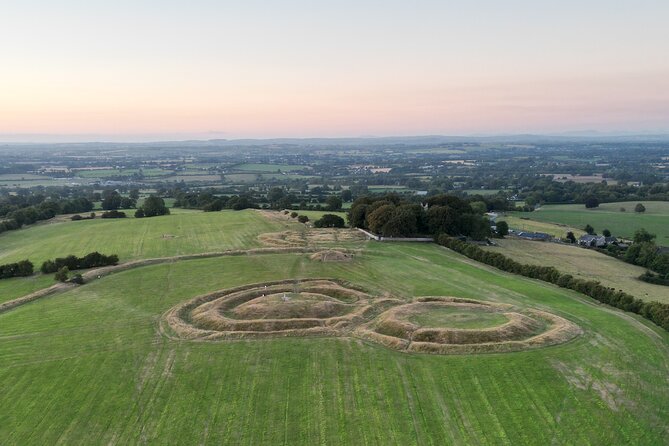
The first stop is Mellifont Abbey, near Drogheda in County Louth. Founded in 1142 by Saint Malachy, Archbishop of Armagh, it was the first Cistercian abbey in Ireland.
You get about 45 minutes here, with no admission fee. That makes Mellifont a useful opening stop. It introduces the religious side of the Boyne Valley without requiring a major ticket purchase or a long indoor visit.
The site’s importance comes from its place in Irish monastic history. Mellifont was not simply another medieval ruin. It was the first Cistercian foundation in Ireland, which gives the remains a clear role in the country’s religious story.
Forty-five minutes is enough for a focused look, but not for a slow exploration. If you enjoy photographing stonework, studying every remnant, or reading all available signs, you may want more time. Still, as part of a day built around several major sites, this short visit makes sense.
Newgrange, the ancient heart of the day
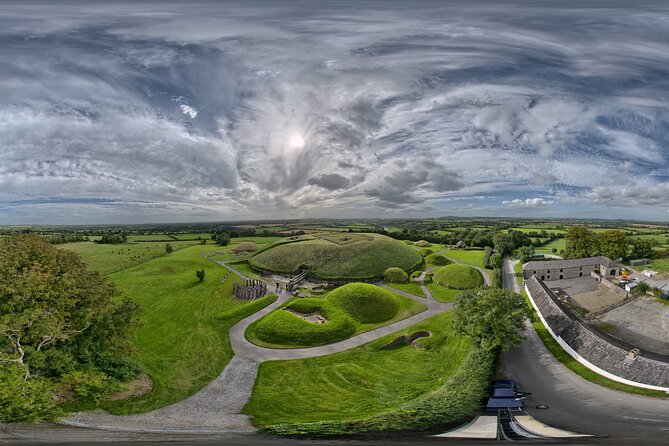
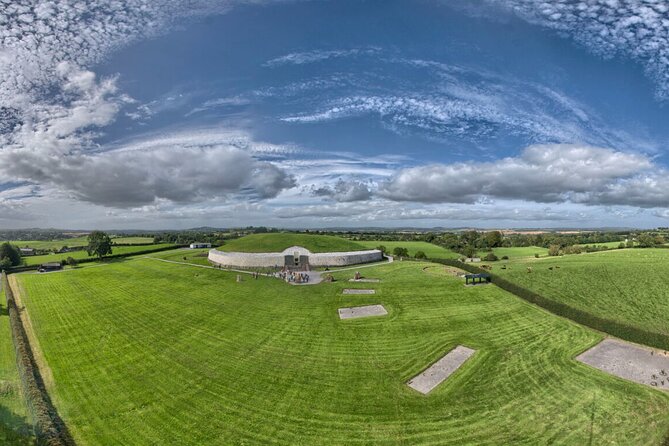
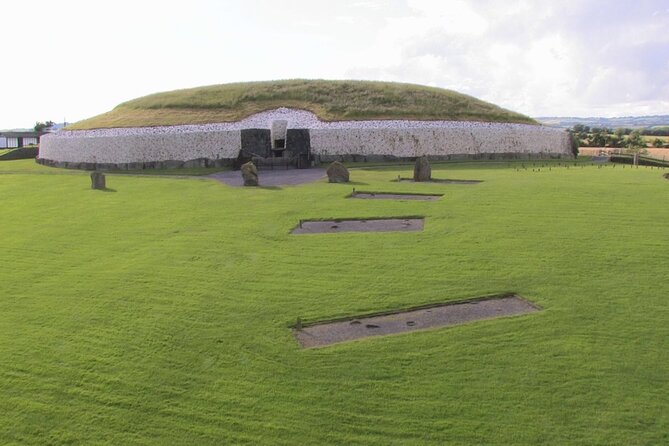
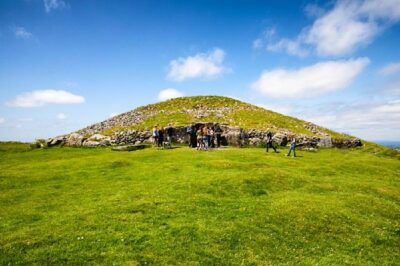
Newgrange receives the longest scheduled visit, three hours, and for good reason. Built around 3200 BC, this passage tomb predates Stonehenge and the Great Pyramids of Giza. It forms part of Brú na Bóinne, a UNESCO World Heritage Site that also includes Knowth and Dowth.
This is the point where the tour shifts from medieval Ireland to a much older world. You are looking at a monument made by a prehistoric society with enough organization and skill to construct a large ceremonial site. Its age alone is striking, but the design makes the visit more meaningful than a simple look at old stones.
Admission is not included. The stated extra charge is €18 per booking for the Newgrange tour and exhibition. Because Newgrange is the longest stop and the main attraction, confirm the current admission details when booking. The tour price covers transportation and parking, not this site entry.
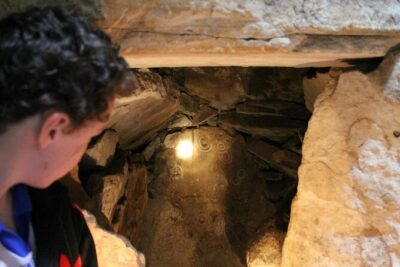
Three hours gives you room for the exhibition and the monument visit, rather than forcing a quick photograph before moving on. The exact access to the inner chamber can depend on availability, but Ger Healy was able to help one party gain access during a previous visit. Do not treat that as a guarantee, but it shows why a local guide can be useful when timing or access questions arise.
Newgrange is also where you need to keep expectations practical. This is a major archaeological site, not a casual roadside stop. The visit takes time, and the schedule may be affected by admission arrangements. If you care most about this monument, ask how the visit will be handled before the day begins.
Hill of Slane and the Saint Patrick story
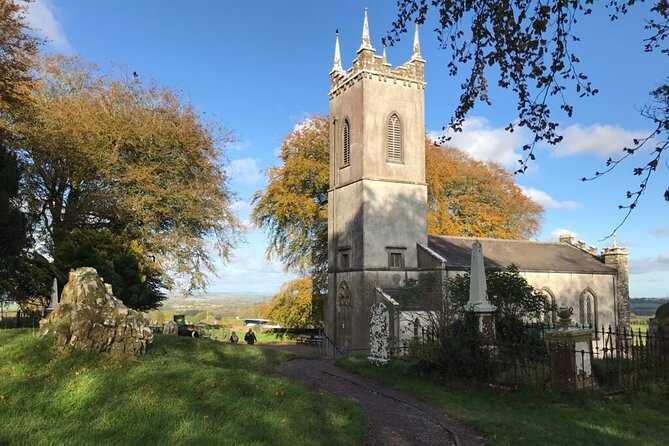
The Hill of Slane gets about 35 minutes, with admission included. The site is linked to Saint Patrick, who is said to have lit the first Paschal fire there in 433 AD as a challenge to the pagan high kings at nearby Tara.
That story gives the hill its appeal. You are not only looking at a high point in County Meath. You are visiting a place tied to the traditional account of Christianity’s arrival and spread in Ireland.
Thirty-five minutes is a short stop, so think of it as a focused visit rather than a long walk. You will have time to take in the site and its historical setting, but the schedule does not leave much room for an extended wander.
I like this stop because it adds a religious and legendary layer between Newgrange and Tara. It also helps connect the sites. The Boyne Valley is not a collection of unrelated ruins. Its monuments and hills are tied together by stories of power, ritual, and belief.
A few more Dublin days to weigh up
- Dublin Full Day Bike Rental
★ 4.5 · 361 reviews - Full-day Award Winning Private Dublin City Highlights Tour
★ 4.5 · 62 reviews - Dublin: Full-Day Howth and Malahide Castle Tour
★ 4.3 · 55 reviews - Full-Day Irelands Ancient Boyne Valley Private Guided Tour
★ 5.0 · 36 reviews
Hill of Tara, the ancient seat of Irish power
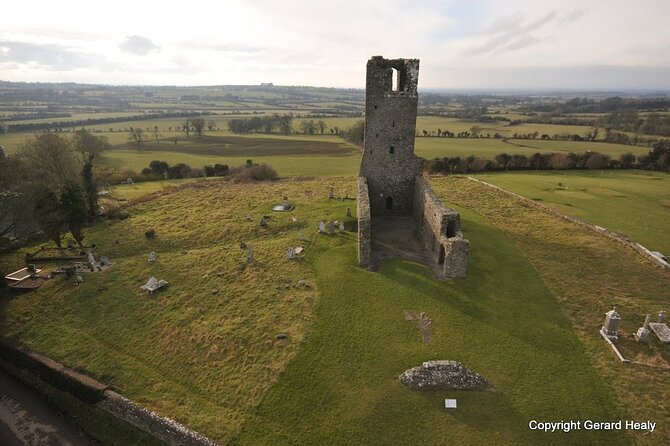
The Hill of Tara follows with about 45 minutes, and admission is included. Tara was the ancient seat of power in Ireland, and it has a place in the country’s modern story as well.
The importance of Tara is less about one intact building and more about what the place represented. This was a center of authority, associated with Ireland’s high kings and the political life of the island. Its open setting helps you understand why the hill carried such weight.
You should approach Tara as an archaeological and historical site rather than expecting a complete palace or castle. Much of its interest lies in the remains, the setting, and the stories connected with the hill. Your guide can help give shape to what you are seeing during the short visit.
Forty-five minutes keeps the day moving, though it will feel brief if you want to inspect every feature. Since admission is included, you do not have to make another ticket decision here. For many people, Tara will be one of the tour’s most thought-provoking stops because it links ancient ceremony with Irish political identity.
Bective Abbey beside the River Boyne
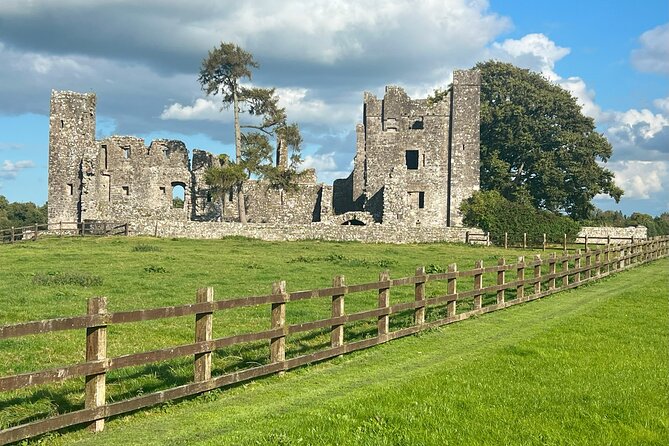
Bective Abbey gets 35 minutes and has no admission fee. Located near the River Boyne in County Meath, it was founded in 1147 by Murchad O’Melaghlin, King of Meath. It was the second Cistercian abbey in Ireland, after Mellifont.
This pairing works well. Mellifont shows the first Cistercian foundation in Ireland, while Bective lets you see the order’s later presence in the same broad region. You get a sense of continuity without paying for a second abbey entrance.
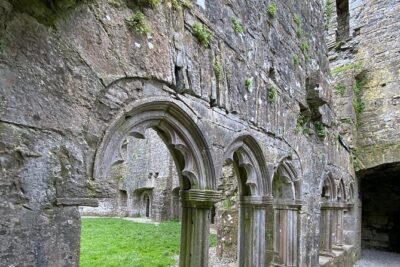
Bective is described as well preserved, but the stop is still short. You will want to use the time for the main remains and the atmosphere rather than trying to turn it into a detailed architectural study. Free admission also makes it a low-pressure stop within an already busy day.
The abbey adds a quieter note after the bigger prehistoric and royal sites. If you like ruins where you can pause and look closely, you may wish this stop had more time. On a private tour, you can at least ask Ger Healy how much flexibility is possible on the day, though the overall route remains time-sensitive.
Trim Castle and the medieval finish
The final major stop is Trim Castle, with two hours scheduled. Admission is not included, so budget for a separate entry fee if you want to go inside.
Trim Castle is the largest Anglo-Norman castle in Ireland. Hugh de Lacy and his son Walter built it over about 30 years in the late 12th century. It became the administrative center of the Lordship of Meath, and its position on the south bank of the River Boyne gave it strategic value.
The castle’s three-story keep has a cruciform shape. Curtain walls, a moat, and defensive towers complete the picture. Modern walkways let you explore the interior and appreciate the scale of the structure rather than viewing it only from outside.
Two hours is a sensible amount of time for Trim. Unlike the shorter abbey and hill stops, the castle has enough physical substance to reward a longer visit. You can take in the walls, towers, keep, and river setting without needing to sprint from one feature to the next.
Trim also carries links to King John and Richard II, and it was used as a filming location for Braveheart. Those details may interest film fans, but the castle’s main value is architectural and historical. You are seeing a serious medieval stronghold, not just a picturesque ruin.
Because admission is extra, clarify whether your planned visit includes the interior or only the grounds. That small question can affect both your budget and how you use the two-hour stop.
What the private format is worth
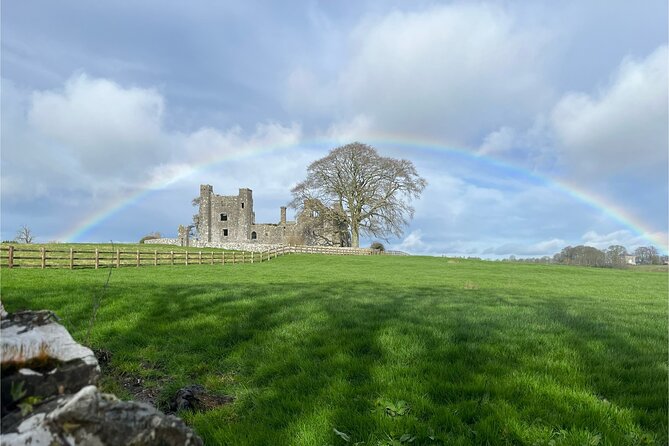
The cost is $1,087.16 per group of up to six. That is a high total for one day, but the right comparison is not a single coach ticket. You are paying for a private vehicle, a private experience, hotel pickup, parking fees, bottled water, and a guide who can shape the day around your group.
For six people, the base cost works out to about $181 per person before lunch and admission fees. For two people, it is much harder to call this a budget outing. The value improves when you fill the vehicle and care about avoiding public transport connections between rural sites.
Private transport is especially useful here because the route includes several places that are not presented as one simple urban walk. You can leave from your Dublin hotel and return there without arranging separate transfers. A private group also means you are not sharing the day with strangers.
The tradeoff is that you pay for convenience and coverage, not a slow, inexpensive day. If you only want Newgrange and Trim Castle, a shorter outing may suit you better. If you want all six stops in one day, this format saves considerable planning time.
Lunch, walking, and the pace of the day
Lunch is not included, and the schedule does not identify a specific lunch stop. Plan for that when you book. With several timed visits and a total duration of 6 to 8 hours, you should ask how lunch fits into the route rather than assuming there will be a long restaurant break.
The tour requires a moderate level of physical fitness. You will be moving around abbey ruins, hills, archaeological grounds, and a large castle complex. Even when a stop lasts only 35 or 45 minutes, you may spend that time walking outdoors.
Wear practical footwear and allow for changing Irish weather, though the supplied details do not promise any particular conditions. Bottled water is included, which is useful on a full day with repeated walks.
The schedule is best for someone who likes variety and does not mind moving on before seeing every corner. It is less suitable if you prefer to settle into one site for half a day.
Who should book this Boyne Valley tour
I would choose this tour if you want a strong overview of the Boyne Valley and prefer private transportation from Dublin. It is especially well suited to small families, couples traveling with friends, or a group of up to six people who can share the cost.
History-focused visitors get the widest range: prehistoric Newgrange, early Christian stories at Slane, ancient kingship at Tara, Cistercian foundations at Mellifont and Bective, and medieval power at Trim Castle.
You should think twice if your main goal is a relaxed meal, a slow archaeological study, or a flexible route. The day is packed, Newgrange and Trim Castle require extra admission payments, and lunch is not part of the price.
Ger Healy’s personal involvement is another reason to consider the tour. A previous outing included help gaining access to the inner chamber at Newgrange, and the guide also kept a guest’s sweatshirt safe for a return visit. Those details suggest a personable service, but access arrangements and extra favors should never be assumed.
Should you book it?
Book this tour if you want to cover the Boyne Valley’s major historical themes in one private day and you are willing to pay for convenience. The strongest reasons are the hotel pickup, private vehicle, parking, local guiding by Ger Healy, and the unusual mix of sites.
Skip it if you want the lowest price or a slow visit focused on one or two places. For the best value, bring enough people to share the $1,087.16 group price, confirm Newgrange and Trim Castle admission costs, and ask how lunch and the Newgrange inner chamber visit will be handled.
Free cancellation is available up to 24 hours before the start time. After that point, the payment is not refunded and changes are not accepted.
FAQ
Where does the tour start?
Pickup is offered from your hotel in Dublin.
How long does the tour last?
The experience lasts approximately 6 to 8 hours.
How many people can join the private tour?
The private tour is for your group only, with up to six people.
Is transportation included?
Yes. Private transportation is included.
Are parking fees included?
Yes. Parking fees are included in the tour price.
Is bottled water provided?
Yes. Bottled water is included.
Is lunch included?
No. Lunch is not included.
Is Newgrange admission included?
No. Newgrange admission is not included. The stated additional charge is €18 per booking for the Newgrange tour and exhibition.
Are Trim Castle admission fees included?
No. Trim Castle admission is not included.
Can I cancel for a full refund?
Yes, if you cancel at least 24 hours before the experience start time. Cancellations made less than 24 hours in advance are not refunded.
Just added around Dublin
- Women Of Ireland: Trailblazers & Pioneers★ 5.0 · 4 reviews
- Whiskey Tasting Tour of Dublin★ 5.0 · 117 reviews
- Premium Irish Whiskey Tasting Hosted by Local Dublin Expert★ 5.0 · 77 reviews
- Historical Walking Tour of Dublin★ 5.0 · 50 reviews
- Dublin (Dun Laoghaire) Top-Rated Coastal Walking Tour★ 5.0 · 80 reviews
- Semi-Private (8people max) 2.5 Hr Dublin Walking Tour★ 5.0 · 69 reviews
- Private Ultimate Day in Dublin (Walking Tour)★ 5.0 · 30 reviews
- DayTripper Dublin: A Guided City Walking Tour★ 5.0 · 90 reviews
Newgrange and Boyne Valley Tours, compared.
Celtic Boyne Valley & Ancient Sites Day Tour From Dublin
Our verdict on it →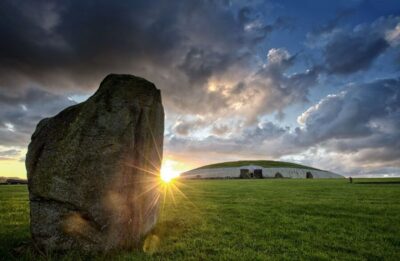
Boyne Valley with Newgrange and Bru Na Boinne Entry
Our verdict on it →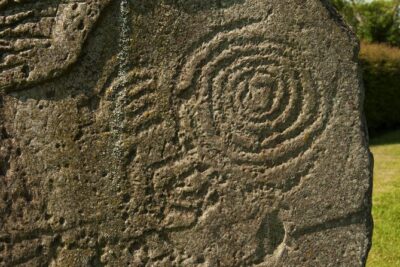
Dublin to Newgrange, Monasterboice Small Group Guided Tours
Our verdict on it →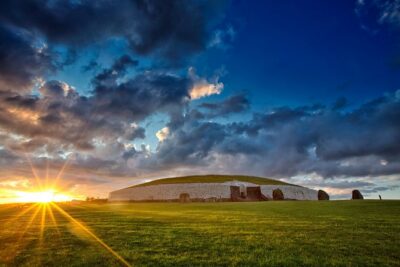
6 hour Half-Day Award Winning Private Tour of the Boyne Valley
Our verdict on it →
Full-Day Irelands Ancient Boyne Valley Private Guided Tour
Our verdict on it →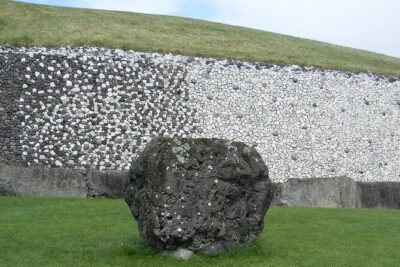
Private Tour from Dublin: Hill of Tara Trim Castle, Celtic sites
Our verdict on it →Browse the lists this tour appears in