
Reviewed · WALKING TOURS
Dublin: Hidden Gem Walking Tour with Local Guide
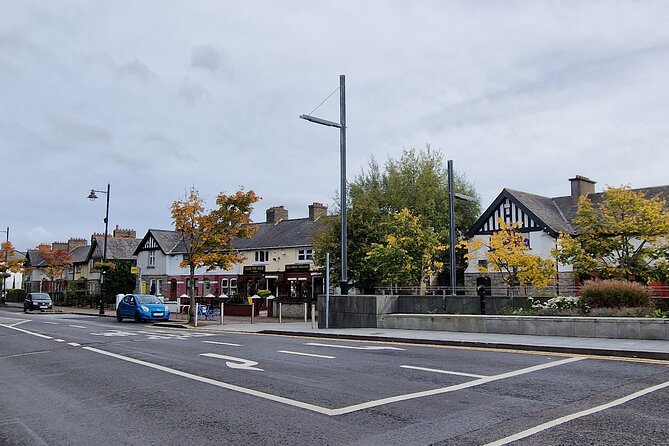
Tallaght is often treated as Dublin’s outer suburb, but this two-hour walk shows you a far older and more surprising place. Starting in Kingswood and ending in Tallaght Village, guide Sophie connects ancient monastic life, Irish literature, war reporting, mythology, aviation, industry, and the Irish language.
I especially like the focus on people with real local connections, from poet Katharine Tynan to pioneering war correspondent William Howard Russell. I also like the clear sense of change, as quiet rural Tallaght becomes one of Ireland’s fastest-growing urban areas in just a few decades.
The main drawback is that much of the tour takes place outdoors beside roads, shops, and modern buildings rather than among grand historic sights. You’ll need good weather, and the walk is best for people who enjoy stories and local context more than formal museum displays.
Key points about the Tallaght walking tour
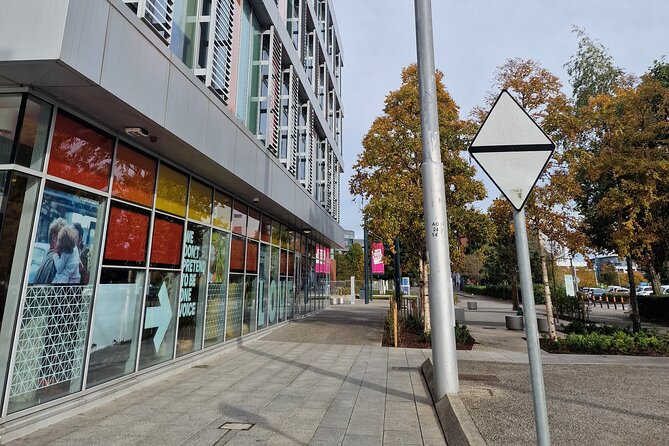
- A local route from Kingswood to Tallaght Village: The walk begins at Kingswood Kilnamanagh and finishes beside a bilingual Irish-English café in the village.
- A small group capped at 12 people: This keeps the experience personal and gives you room to ask Sophie questions.
- Ten stops across two hours: The route covers writers, legends, war reporting, aviation, chocolate, urban growth, religion, politics, and transport.
- Strong literary connections: Katharine Tynan, W.B. Yeats, George William Russell, Alice Furlong, and Charles Dickens all enter the story.
- Views toward the Dublin Mountains: The Oisín legend is linked to the mountains visible during the walk.
- A practical price: At $18.05 per person, the tour offers a lot of local history for a modest cost, provided the subject appeals to you.
Why Tallaght makes an unusual Dublin walk
This is not a tour of the usual central Dublin sights. You will not spend the afternoon moving between Georgian squares, famous pubs, and postcard landmarks. Instead, you’ll see how a place on Dublin’s edge grew from a rural and monastic setting into a major urban centre.
That change is one of the walk’s strongest themes. Tallaght was among the fastest-growing urban areas in Western Europe during the 1980s. The tour places that growth beside the economic troubles of the period, including unemployment and emigration, so you get more than a simple story of expansion.
I find that useful because it gives you a better way to read modern Dublin. The shopping areas, roads, campus, housing, and busy urban spaces are not random. They reflect a short, intense period of national change.
The walk also makes a good choice if you already know central Dublin. It gives you another side of the capital without pretending that every stop is a grand monument. The value comes from the connections Sophie makes between ordinary places and important people.
More Walking Tours in Dublin
- Dublin Highlights and Hidden Gems Guided Walking Tour
★ 5.0 · 6,020 reviews - Dublin: Highlights and Hidden Gems Walking Tour
★ 4.9 · 2,140 reviews - 1916 Rebellion Walking Tour
★ 5.0 · 1,605 reviews
Kingswood and the early story of Tallaght
The tour starts at Kingswood Heights, where Sophie gives you a short introduction to Tallaght and its beginnings in ancient Irish history. This opening lasts only about five minutes, but it sets the tone for the rest of the walk.
You begin with the idea that Tallaght’s story reaches far beyond the modern suburb. The area’s identity is tied to early Irish religious and cultural life, as well as to the people who lived and worked here in later centuries.
This is a quick introduction rather than a long archaeological talk. That suits the tour’s pace. You are soon moving on, with the older past acting as a foundation for the literary, political, and industrial stories that follow.
Katharine Tynan and the literary world of Whitehall
One of the most engaging stops is outside Whitehall, the former home of Katharine Tynan. You spend about 15 minutes learning about her life, writing, and place in the Irish and English literary circles of her day.
Tynan had links with W.B. Yeats and George William Russell, who used the initials AE. Sophie shares material from letters written by Tynan to both men, giving this stop a personal feel. You are not just hearing a list of famous names. You are getting a sense of correspondence, friendship, and the literary network surrounding her home.
Tynan is also an important figure because her work helps widen the usual story of the Irish literary revival. Her contribution is often less visible than that of Yeats, but this stop puts her back into the local setting where her life unfolded.
I like the way this part uses a real residence rather than a distant literary association. The building and its setting help connect the national story to one particular place in Kingswood.
William Howard Russell, war reporting, and Dickens
At Belgard Road, the focus shifts to William Howard Russell, who was born in Jobstown, Tallaght. Russell became one of the first major war correspondents and spent much of his career reporting for The Times.
His working life gives the tour a remarkably wide reach. Sophie covers his reporting on Daniel O’Connell, the Great Famine in Ireland, the Crimean War, and the American Civil War. His friendship with Charles Dickens adds another literary link to the route.
This section is especially useful if you want to understand how news from distant wars reached readers in the nineteenth century. Russell’s connection to Tallaght also challenges the idea that important figures in Irish and international life came only from famous city streets.
The stop lasts about ten minutes. That is enough time for the main story and selected writings or letters, but not enough for a full biography. If Russell interests you, you may want to note his name for later reading.
Same part of the country, a completely different day out:
- Dublin: Guinness Storehouse Entry Ticket
★ 4.6 · 16,863 reviews - Irish Rock ‘N’ Roll Museum Experience Dublin
★ 5.0 · 6,112 reviews - Dublin: Jameson Whiskey Distillery Tour with Tastings
★ 4.7 · 4,859 reviews - Dublin Jameson Distillery Bow St. Tour and Tasting 45 mins
★ 5.0 · 4,690 reviews
Oisín in the Land of Youth beside the Dublin Mountains
The next stop introduces Irish mythology before turning to Oisín in the Land of Youth. Sophie presents the legend in both Irish and English, which makes this a good point to hear the sound and rhythm of the Irish language while following the story through translation.
The connection to the Dublin Mountains gives the tale a strong sense of place. You can see the mountains from this part of the route, so the legend is not presented as a detached classroom story. The view helps explain why local geography matters in Irish storytelling.
This is a short ten-minute stop. It will suit you if you enjoy folklore, oral traditions, and links between stories and places. It is less suitable if you want a detailed study of Irish mythology, since the tour uses the legend as part of a wider local story.
Tallaght Aerodrome, Urney Chocolates, and Jacob’s
At Belgard Retail Park, the walk takes an unexpected turn into aviation and business history. The former Tallaght Aerodrome once occupied land connected with Katharine Tynan’s family. Sophie covers its role during the First World War, the Irish War of Independence, and the Irish Civil War.
A poem by Tynan about this development adds another link between the earlier literary stop and the modern commercial area around you. This is a good example of the tour’s method: a present-day retail setting becomes a prompt for stories about conflict, land, family, and change.
You also hear about the Gallagher family and the creation of Urney Chocolates. The brand operated in Tallaght for decades before closing in 1980, and Sophie explains how its name still carries memories for many people in Ireland.
Jacob’s also enters the story. The company operated in Tallaght for a period, and the tour looks at how businesses such as Urney Chocolates and Jacob’s affected employment and the development of the area.
This 15-minute stop may be one of the most surprising parts of the walk. It gives you local industrial history without turning into a dry business lecture. If you remember Urney Chocolates, the stop may have a nostalgic edge. If you do not, it still shows how factories helped shape Tallaght’s identity.
From rural district to major urban centre
At TU Dublin’s Tallaght Campus, Sophie spends about 15 minutes looking closely at the area’s transformation during the 1970s and 1980s.
Tallaght grew at remarkable speed. The tour explains this growth against a difficult national background of economic problems, high unemployment, and emigration. That context matters. Urban expansion was not just a success story. It also placed pressure on residents and changed the character of the area quickly.
I like this part because it connects buildings and streets to lived experience. You learn how Tallaght became one of Ireland’s largest urban areas, but you also consider what rapid growth meant for the people who already lived there and those who moved in.
The campus provides a useful setting for discussing present-day Tallaght. You can see how education, services, business, and housing fit into a place that was once far more rural. The stop helps the earlier stories make sense, especially the sections on the aerodrome and local industry.
St Maelruain’s Church and the older religious centre
At St Maelruain’s Church of Ireland, the tour returns to the early history of Tallaght. The church sits on the site of a former monastery that held major importance in ancient Ireland.
Sophie explains the role of St Maelruain and the old monastery. She also places Tallaght beside Finglas, whose monastery was known with Tallaght as one of the two eyes of Ireland. The stop lasts about five minutes, so expect a concise account rather than a lengthy church history.
The setting gives the tour a welcome change of pace. After modern roads, retail development, and urban growth, you reach a place that points back to Tallaght’s early religious identity.
Alice Furlong, Irish-language writing, and a recovered local voice
Alice Furlong is buried in the grounds of St Maelruain’s Church, and her story receives about 15 minutes. She was a founding member and vice-president of Inghinidhe na hÉireann, or Daughters of Ireland, and was also a poet, writer, and supporter of the Irish language.
Sophie shares some of Furlong’s poetry in Irish, along with professional English translations. That format lets you appreciate both the original language and the meaning without needing to speak Irish.
Furlong’s connection with Tallaght is central to the stop. Her love of the Irish language was bound up with her affection for the area, so this is not simply a biography attached to a grave. It is a chance to see how language, politics, writing, and local identity overlapped.
This is one of the tour’s strongest stops for anyone interested in Ireland’s cultural revival. It also leads naturally into the final section, where you learn a few basic Irish phrases yourself.
The Fenian Rising in Tallaght Village
In Tallaght Village, a plaque commemorates the Fenian Rising of 1867. Sophie explains the event and Tallaght’s part in it, with writings by Charles Dickens providing an outside view of the period.
The stop lasts about ten minutes. It gives you another example of how the tour works with modest physical evidence. A plaque may be easy to pass without a second glance, but the story attached to it gives the village a sharper historical focus.
This section is best for readers who want political history alongside literature and local personalities. It also shows that Tallaght’s importance was not limited to culture or industry. The area had a place in the conflicts that shaped modern Ireland.
Cottages, the steam tram, and a few words of Irish
The tour ends in Tallaght Village with cottages designed by architect Thomas Joseph Byrne. Sophie also talks briefly about the Dublin and Blessington Steam Tramway, which ran through the area before closing in 1932.
The tramway story helps explain how Tallaght connected with Dublin and surrounding areas before the modern transport network took shape. The cottages add a visible architectural detail to the final part of the route.
To finish, Sophie teaches you some basic Irish and talks about the language. You can then use what you have learned at a bilingual Irish-English café beside the end point in Tallaght Village.
That ending feels practical rather than staged. You finish with a small skill you can use immediately, plus a clear place to continue the experience on your own.
Price, group size, and what the walk demands
At $18.05 per person, this is a strong value if you want local history and a personal guide. The price is modest for two hours of one-to-one storytelling, especially with the group limited to 12 people.
The small maximum matters here. The route covers many subjects, from poetry to aviation, and questions can add a lot to the experience. A large crowd would make it harder to hear, ask about family connections, or pause over a particular story.
The tour is offered in English and uses a mobile ticket. It is near public transportation, begins at Kingswood Kilnamanagh, and ends in Tallaght Village. Service animals are allowed, and the activity states that most people can participate.
You should plan for outdoor conditions. The experience requires good weather, and poor weather can lead to a different date or a full refund. Free cancellation is available up to 24 hours before the start time, while later cancellations and changes are not accepted.
Who should book this Dublin experience?
I would choose this tour if you enjoy local stories over famous sights, want to see another side of Dublin, or have an interest in Irish literature, language, politics, folklore, or social change.
It is also a smart choice for Dublin residents and repeat visitors. Several of the key places are easy to overlook, and the walk shows how much meaning can sit behind an ordinary road, retail park, churchyard, or village plaque.
You may want a different tour if you have limited time in Dublin and need the city centre’s major sights, or if you prefer indoor museums and formal historic buildings. The route is story-led, and some stops are brief. You should be comfortable spending two hours outside and moving through modern urban areas.
Should you book the Tallaght walk?
Book it if you want a thoughtful, low-cost way to understand Tallaght beyond its reputation as a suburb. Sophie’s route brings together Katharine Tynan, William Howard Russell, Alice Furlong, Oisín, Urney Chocolates, Tallaght Aerodrome, and the rapid growth of modern Ireland.
The best reason to go is the range of connections. You begin with ancient Tallaght, pass through literary and political Ireland, see how industry changed the area, and finish with the Irish language in the village centre.
At $18.05, the risk is small. Just bring suitable clothing, keep your expectations focused on storytelling rather than grand monuments, and allow the two-hour route to change the way you see Dublin’s outer districts.
FAQ
Where does the tour start?
The tour starts at Kingswood Kilnamanagh, Dublin, County Dublin, Ireland.
Where does the tour finish?
It finishes in Tallaght Village on R819, in the heart of the village and beside a bilingual Irish-English café.
How long does the tour last?
The walking tour lasts approximately two hours.
What language is the tour offered in?
The tour is offered in English. Irish is also introduced during the final part of the walk, and some Irish-language poetry is presented with English translations.
How much does the tour cost?
The listed price is $18.05 per person.
How many people can join the tour?
The tour has a maximum of 12 participants.
Who leads the tour?
The local guide is Sophie.
What places and subjects are covered?
The route covers Kingswood, Whitehall, Belgard Road, Belgard Retail Park, TU Dublin’s Tallaght Campus, St Maelruain’s Church, and Tallaght Village. Topics include local history, Irish literature, mythology, war reporting, aviation, chocolate manufacturing, urban growth, the Fenian Rising, architecture, transport, and the Irish language.
Is the tour suitable for most people?
The tour information states that most people can participate. Service animals are allowed, and the route is near public transportation.
Can I cancel for a refund?
You can cancel at least 24 hours before the start time for a full refund. Cancellations or changes made less than 24 hours before the start time are not accepted. If poor weather causes the tour to be canceled, you will be offered another date or a full refund.
Just added around Dublin
- Women Of Ireland: Trailblazers & Pioneers★ 5.0 · 4 reviews
- Whiskey Tasting Tour of Dublin★ 5.0 · 117 reviews
- Premium Irish Whiskey Tasting Hosted by Local Dublin Expert★ 5.0 · 77 reviews
- Historical Walking Tour of Dublin★ 5.0 · 50 reviews
- Dublin (Dun Laoghaire) Top-Rated Coastal Walking Tour★ 5.0 · 80 reviews
- Semi-Private (8people max) 2.5 Hr Dublin Walking Tour★ 5.0 · 69 reviews
- Private Ultimate Day in Dublin (Walking Tour)★ 5.0 · 30 reviews
- DayTripper Dublin: A Guided City Walking Tour★ 5.0 · 90 reviews
Walking Tours, compared.
Dublin Highlights and Hidden Gems Guided Walking Tour
Our verdict on it →

90 Minute Dublin Walking tour and Sightseeing tips
Our verdict on it →

Dublin Traditional Irish 3 Course Meal Walking Tour with Local
Our verdict on it →
Browse the lists this tour appears in