

Reviewed · WALKING TOURS
Dublin Walking Tour: Top 10 highlights
Dublin’s best introduction may be on foot, where the city’s monuments, bridges, churches, and pub-lined streets unfold in one compact route. This two-hour walk links the Spire, GPO, O’Connell Street, and the River Liffey before turning south toward Temple Bar, the cathedrals, Dublin Castle, and Trinity College.
I like the tour’s efficient route and the guide’s focus on stories, dates, and the meaning behind each building. I also like that guides such as Matthew have been praised for answering questions, keeping a good sense of humor, and giving the group time to look around. The main thing to consider is that you do not go inside the buildings, so this is an orientation tour rather than a substitute for the Book of Kells, cathedral, castle, or GPO Museum visits.
Key points at a glance
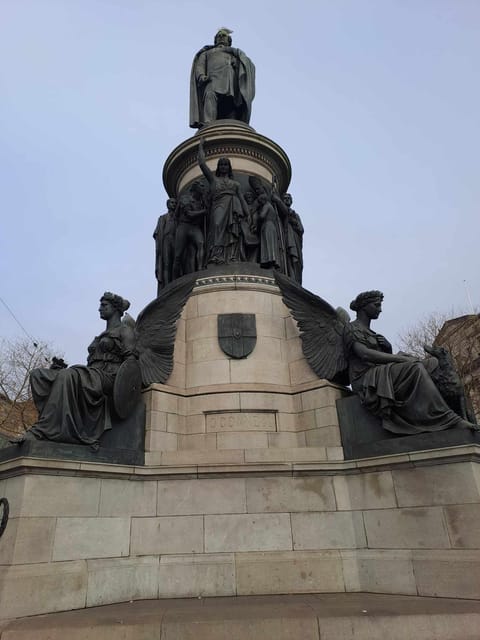
- A two-hour route through central Dublin: You cover many major sights without spending a full day on your feet.
- Starts at the Spire: The meeting point is at the foot of the Spire on the GPO side.
- Strong historical focus: Expect explanations about medieval Dublin, the 1916 Easter Rising, Irish culture, Guinness heritage, and the city’s landmarks.
- Outside-only visits: The tour explains the buildings from the street but does not include interior admission.
- French-speaking live guide: The tour is offered with a live guide in French.
- Flexible booking: You can cancel up to 24 hours before the tour for a full refund and reserve now while paying later.
Why this route works for a first look at Dublin
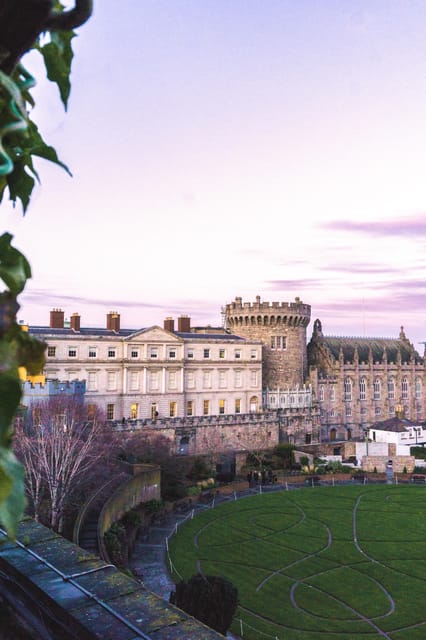
Dublin’s center is compact, but its story is not. In just a short walk, you move from the broad ceremonial sweep of O’Connell Street to the narrow lanes of Temple Bar, then on to medieval churches, a castle complex, and the academic world of Trinity College.
That variety gives the tour its main value. You are not simply ticking off one monument after another. You are seeing how different parts of Dublin fit together: political memory around the GPO, daily city life beside the Liffey, old religious centers near Christchurch and St Patrick’s, and the long connection between Trinity College and Irish culture.
The guide provides the thread connecting these places. Expect explanations about major buildings and the people, events, and traditions tied to them. The strongest feedback centers on clear facts, dates, humor, and the willingness to answer questions. That makes the tour useful if you want more than quick photographs and street names.
The pace is also sensible for a first morning or afternoon in town. Two hours is long enough to get your bearings, but short enough to leave room for a museum, pub, cathedral visit, or meal afterward.
More Walking Tours in Dublin
- Dublin Highlights and Hidden Gems Guided Walking Tour
★ 5.0 · 6,020 reviews - Dublin: Highlights and Hidden Gems Walking Tour
★ 4.9 · 2,140 reviews - 1916 Rebellion Walking Tour
★ 5.0 · 1,605 reviews
Meeting the guide at the Spire
The tour begins at the foot of the Spire, on the GPO side. The Spire is hard to miss: a tall, narrow landmark rising from O’Connell Street and serving as a practical meeting marker in the middle of the city.
Starting here places you in the heart of Dublin’s north side. You are close to the GPO, O’Connell Street, the Liffey, and O’Connell Bridge, so the opening section quickly introduces the city’s public spaces and national story.
Wear comfortable shoes. Even though the route is only two hours, you will be walking and stopping on city streets throughout. Dublin weather can change quickly, so weather-appropriate clothing is a sensible choice.
The tour is wheelchair accessible. If you have particular mobility concerns, the route details should still be checked when booking, since historic streets and crowded public areas can vary from one day to the next.
The Spire, GPO, and O’Connell Street
The first section covers some of Dublin’s most recognizable public landmarks. The Spire is more than a meeting point. It gives the tour a clear visual start and puts you on O’Connell Street, one of the city’s best-known avenues.
From there, the GPO provides the major historical focus. The guide explains the building and its place in Irish national history from outside. You will not enter the GPO Museum, so anyone wanting the full museum experience should plan a separate visit.
Still, the exterior briefing matters. The GPO is not just another grand building. It is tied to the political story of modern Ireland, and standing outside lets you connect the structure with the street around it. The guide also covers the museum as part of the city’s wider story, giving you useful context before deciding if you want to return inside.
O’Connell Street adds another layer. Its broad layout and public monuments make it a natural place to discuss Dublin’s civic identity and its major figures. The guide’s job here is to turn a large avenue into a readable part of the city rather than a road you simply cross on the way to Temple Bar.
If you enjoy dates and historical detail, this section should suit you. A Belgian guide on the tour has been praised for presenting both historical and modern Dublin through facts and dates. That sort of precise commentary can make a short city walk feel much more substantial.
Crossing the Liffey by Ha’penny Bridge
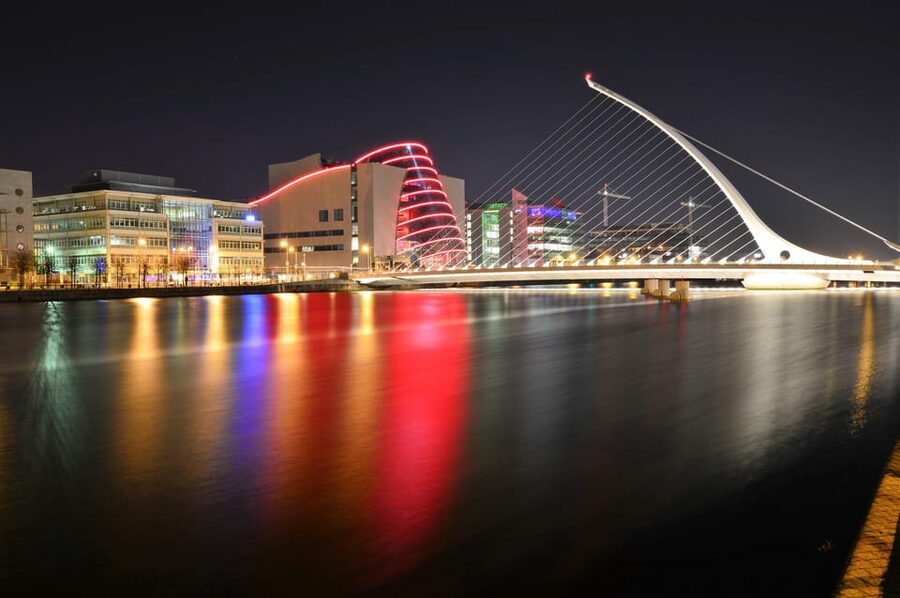
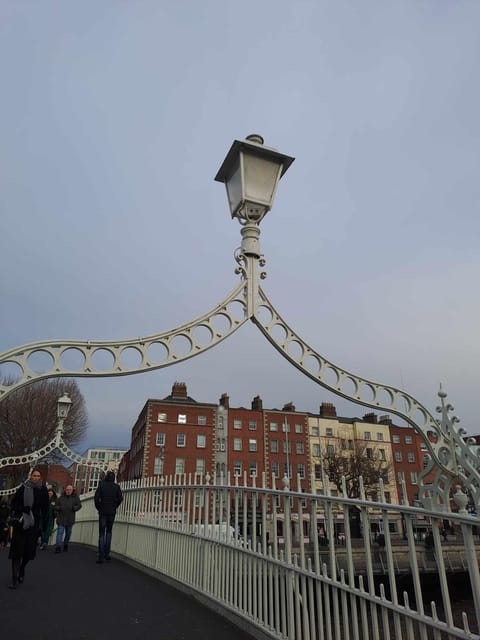
The route then heads toward the Liffey and its bridges, including the famous Ha’penny Bridge. This is one of the most pleasant transitions on the walk because the river gives you a different view of central Dublin.
The bridge is small, photogenic, and easy to understand as part of the city’s daily structure. It links the north and south sides, and the guide uses the river and its crossings to explain how Dublin is arranged.
You will also hear about O’Connell Bridge and other bridges along the Liffey. These stops are valuable because they help you build a mental map of the center. After the tour, you will know where the north side ends, where the south side begins, and how Temple Bar relates to the river.
The bridge can be busy, so do not expect a long, quiet pause in the middle. This is a public crossing, not a private viewpoint. The guide’s explanation is the main attraction, with the river and streets providing the setting.
Same part of the country, a completely different day out:
- Dublin: Guinness Storehouse Entry Ticket
★ 4.6 · 16,863 reviews - Irish Rock ‘N’ Roll Museum Experience Dublin
★ 5.0 · 6,112 reviews - Dublin: Jameson Whiskey Distillery Tour with Tastings
★ 4.7 · 4,859 reviews - Dublin Jameson Distillery Bow St. Tour and Tasting 45 mins
★ 5.0 · 4,690 reviews
Temple Bar and Dublin’s social character
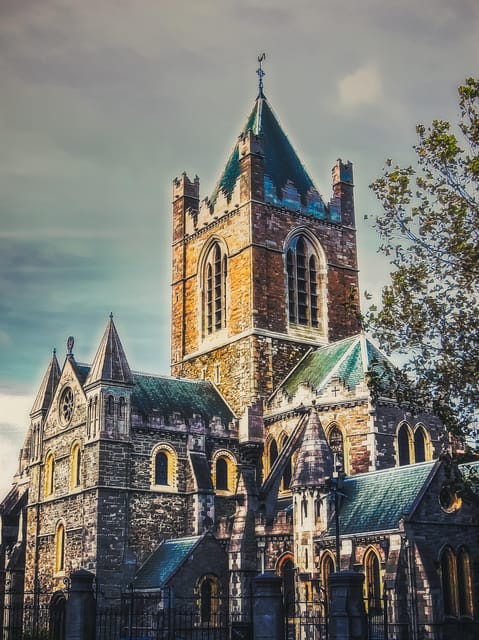
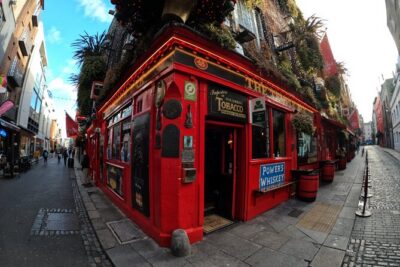
Temple Bar is one of Dublin’s most famous districts, and it is also one of the easiest places to misunderstand. Many visitors see pubs, painted signs, cobbled streets, and crowds. A good guide adds context about how the district fits into Dublin’s cultural life.
This portion of the walk gives you a chance to see the area without committing to a meal or evening out. You can observe the streets, hear the background, and decide how much time you want to spend here later.
The route does not promise entry to pubs or cultural venues. Instead, it offers an outdoor explanation of the district and its place in the city. That keeps the tour moving, but it also means you should not book it expecting a food tasting, pub crawl, or live entertainment.
I like this stop because it balances the formal landmarks earlier in the route. After the GPO and O’Connell Street, Temple Bar shows a more social side of Dublin. The guide also connects the area with Irish spirit and culture, giving you a better sense of why it draws so much attention.
Christ Church and medieval Dublin
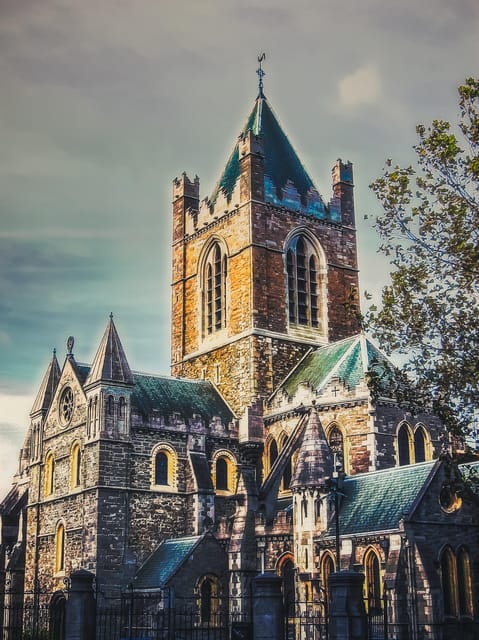
Christ Church Cathedral brings the route into older Dublin. The guide explains the cathedral from outside and places it within the story of medieval Dublin.
This is one of the stops where the outside-only format is most noticeable. The cathedral interior is a major attraction in its own right, but admission is not part of this walking tour. If you want to see the inside, treat the tour as your introduction and return later with a separate ticket.
The value here comes from location and explanation. You are not just looking at a church facade. You are hearing how this part of the city connects to Dublin’s early development and its religious and political past.
The walking route also helps you compare Christ Church with St Patrick’s Cathedral later on. Seeing both from the outside gives you a useful sense of their place in Dublin’s center, even though you will need separate visits for the interiors.
Dublin Castle and the city’s changing power
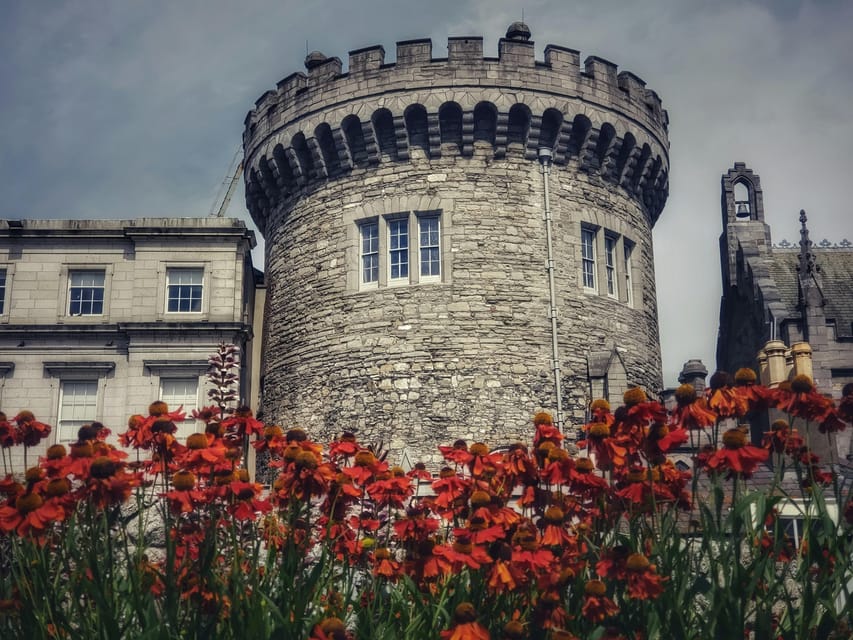
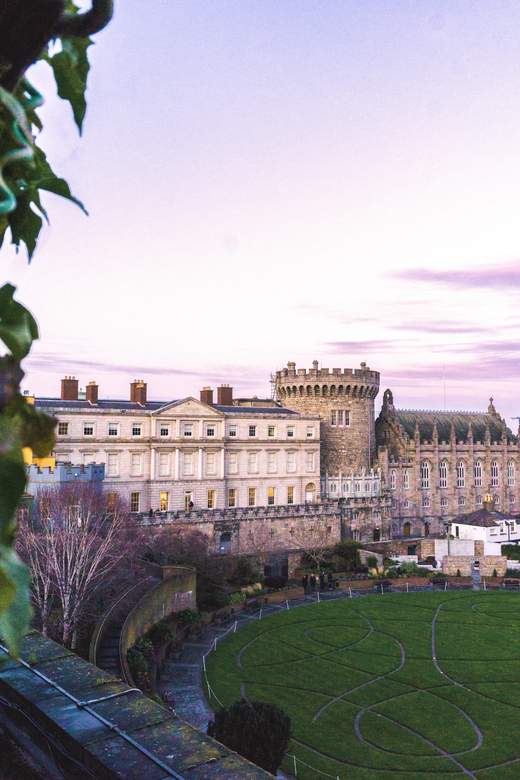
Dublin Castle is another key stop, with the guide explaining the castle and the medieval city around it. The stop adds political weight to the route after the religious focus of Christ Church.
The castle area works well for a guided explanation because its significance is not obvious from a quick glance. A short talk can help you understand why the site matters and how it fits into Dublin’s past.
Again, the tour stays outside. That is a clear limitation if Dublin Castle is high on your must-see list. You will learn where it is and why it matters, but you will not receive an interior visit or a full castle tour.
For a first orientation, I think this is a fair trade. You can decide afterward if you want to return, rather than spending your limited sightseeing time searching for the entrance or trying to understand the site without context.
St Patrick’s Cathedral and Guinness heritage

The route also includes St Patrick’s Cathedral and information about Guinness heritage. These subjects broaden the tour beyond a simple list of buildings.
St Patrick’s Cathedral receives the same outside treatment as Christ Church and Dublin Castle. The guide explains the cathedral and its role in Dublin, while you take in the exterior and surrounding streets. If you want to go inside, plan that separately.
The Guinness material adds a cultural and commercial thread. Dublin is often introduced through its churches, political monuments, and literary connections, but the city’s global identity is also tied to brewing and Guinness. Including this subject helps connect the historic center with a tradition that still shapes how Dublin is understood abroad.
The available details do not promise a visit to the Guinness Storehouse or a tasting. Think of this as background information during the city walk, not a brewery tour.
Trinity College and the end of the walk
Trinity College is the final major landmark on the route. It is also listed as the finish point, while the meeting details state that the activity ends back at the meeting point. The practical takeaway is that you should confirm the exact end arrangement when checking availability, since Trinity College is identified as the last stop.
The college gives the tour a fitting finish. After political landmarks, churches, medieval Dublin, and Temple Bar, you reach one of the city’s best-known academic and cultural institutions.
The tour explains Trinity from outside. Entry to the campus attractions and the Book of Kells is not included, so plan another visit if those are priorities. This can actually help you use your time well: the guide gives you the setting and context, then you can decide if you want to spend more time inside afterward.
Finishing near Trinity is convenient for continuing your day in central Dublin. You can also use the route as a planning tool, marking which places deserve a second visit and which you are content to have seen from the street.
What the guide adds to the experience
The guide is the reason to choose this tour instead of following a free map. The stated focus is on information, history, and explanation, and the strongest praise has centered on guides who can handle questions, supply dates and facts, and keep the mood light.
Matthew is specifically named as a guide who took time with questions and brought a good sense of humor. Another guide is described as Belgian and particularly strong on historical and modern Dublin. The tour is listed with a French-speaking live guide, so confirm the language and guide details for your chosen departure.
That mix of detail and conversation suits people who want to understand what they are seeing. You can ask about a building, a street, or a historical event instead of waiting until you get back to the hotel to search for answers.
The tour is less suitable if you prefer to wander alone, move at your own pace, or spend long periods inside museums and churches. It is a guided overview, not a slow architectural study.
Is $54 a fair price?
At $54 per person, the cost is reasonable if you value a live explanation and want to cover Dublin’s main central sights in two hours. You are paying for the guide’s route, commentary, historical context, and the convenience of seeing many important places in one organized walk.
The price is less attractive if you mainly want admission to attractions. No interior visits are included, and there is no stated museum ticket, cathedral admission, brewery visit, food, or drink. You would need to budget separately for those experiences.
I see the best value for a first day in Dublin. Use the walk to learn the city’s layout, then spend the rest of your stay choosing the interiors and museums that interest you most.
The reserve-now, pay-later option helps if your schedule is still shifting. You can also cancel up to 24 hours ahead for a full refund, which gives you useful flexibility when planning around Irish weather.
Who should book this Dublin walk?
I would recommend it to first-time visitors, short-stay visitors, and anyone who wants a clear introduction before exploring alone. It also suits history-minded visitors who appreciate dates, explanations, and a guide who welcomes questions.
The French-language option makes it especially useful for French-speaking visitors. The walking format works well for people who want to see the city at street level rather than from a bus.
Families and mixed-age groups may appreciate the two-hour length, though everyone should be prepared to walk and stand outdoors. The wheelchair-accessible format is another practical advantage.
I would be more cautious if your main goal is to visit the interiors of Trinity College, the cathedrals, Dublin Castle, or the GPO Museum. This tour points you toward those places but does not take you inside.
My verdict on the Dublin Highlight Hike
Book this tour if you want a fast, guided introduction to Dublin’s central landmarks and care about the stories behind them. The route covers an impressive amount in two hours, and the guide’s facts, dates, humor, and answers to questions are the strongest reasons to choose it.
Skip it if you prefer independent wandering or need a ticketed attraction tour. For everyone else, it is a practical first step: learn the shape of Dublin, note the places you want to revisit, and then spend the rest of your trip going deeper.
FAQ
How long is the Dublin walking tour?
The tour lasts two hours. Starting times vary, so check availability when booking.
Where does the tour start?
It starts at the foot of the Spire, on the GPO side.
Where does the tour finish?
Trinity College is listed as the final stop, while the meeting details state that the activity ends back at the meeting point. Confirm the exact end arrangement when checking your selected departure.
Is the tour offered in French?
Yes. The activity includes a live French-speaking guide.
Do I enter the GPO Museum, cathedrals, Dublin Castle, or Trinity College?
No. The guide provides information from outside the buildings, but interior visits are not included.
Is the walking tour wheelchair accessible?
Yes, the activity is listed as wheelchair accessible.
What should I bring?
Bring comfortable shoes and clothing suited to the weather.
Can I cancel the booking?
Yes. You can cancel up to 24 hours in advance for a full refund. You can also reserve now and pay later.
Just added around Dublin
- Women Of Ireland: Trailblazers & Pioneers★ 5.0 · 4 reviews
- Premium Irish Whiskey Tasting Hosted by Local Dublin Expert★ 5.0 · 77 reviews
- Whiskey Tasting Tour of Dublin★ 5.0 · 117 reviews
- Historical Walking Tour of Dublin★ 5.0 · 50 reviews
- Dublin (Dun Laoghaire) Top-Rated Coastal Walking Tour★ 5.0 · 80 reviews
- Semi-Private (8people max) 2.5 Hr Dublin Walking Tour★ 5.0 · 69 reviews
- Private Ultimate Day in Dublin (Walking Tour)★ 5.0 · 30 reviews
- DayTripper Dublin: A Guided City Walking Tour★ 5.0 · 90 reviews
Walking Tours, compared.
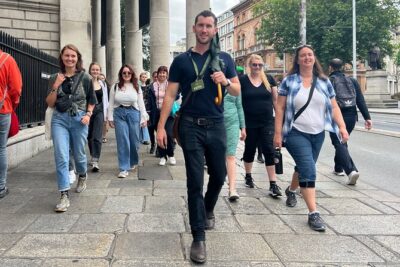
Dublin Highlights and Hidden Gems Guided Walking Tour
Our verdict on it →
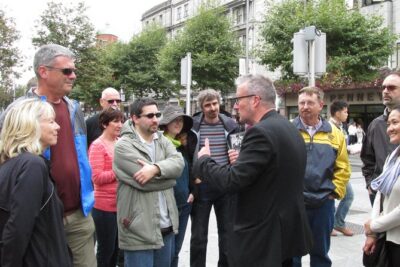

90 Minute Dublin Walking tour and Sightseeing tips
Our verdict on it →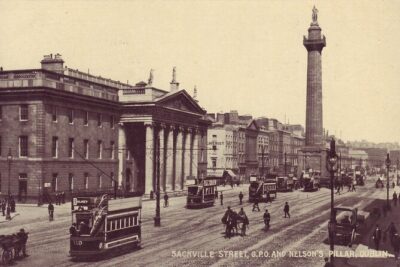

Dublin Traditional Irish 3 Course Meal Walking Tour with Local
Our verdict on it →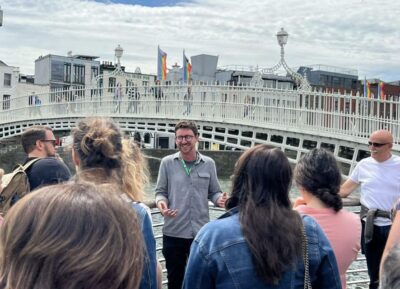
Browse the lists this tour appears in