
Reviewed · WALKING TOURS
2 Hour Walking Tour of Dublin’s City Centre
Dublin’s story comes alive on this compact walk through its medieval core, linking cathedrals, castles, old political buildings, Trinity College, and the city’s famous pub quarter. I like the way the tour uses old photographs, questions, and quizzes rather than relying on a long lecture. Guides such as Alin and Alan give the walk a personal feel, with food and pub tips along the way.
I also like the small group limit of 10 people. That makes it easier to hear, ask questions, and pause for pictures. The main tradeoff is simple: two hours gives you a strong introduction, not full visits inside every landmark. Admission fees are not included, so you’ll need extra time and money if you want to explore the cathedrals or castle interiors.
Key points to know before you book
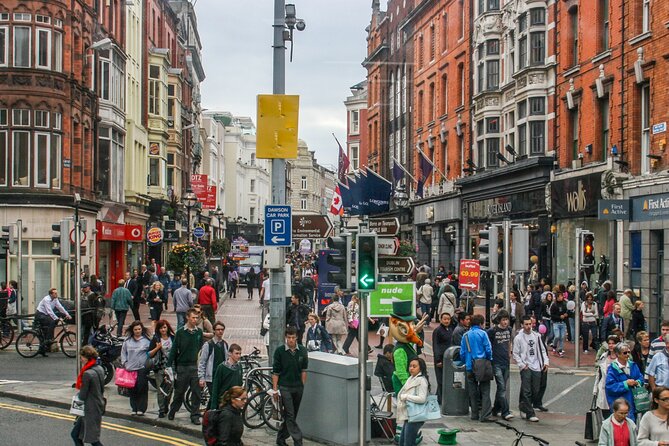
- Eight central sights in two hours: The route covers Dublin’s main historic center without sending you across town.
- Small groups capped at 10: The format suits questions, conversation, and a more personal guide.
- Guides who use more than a script: Alin and Alan are praised for stories, old photos, games, and local suggestions.
- Mostly an outside orientation: You see many important buildings, then can return to the ones you want to enter.
- Morning or afternoon departures: You can fit the walk around museums, meals, or another Dublin activity.
- A good first outing: The route finishes at St. Stephen’s Green, near Grafton Street and a Luas stop.
Dublin is easy to enjoy, but its story is not always easy to piece together. A cathedral may sit a few streets from a castle, a Viking foundation may be hidden beneath later stonework, and a grand Georgian building may be tied to a political decision that changed Ireland forever.
This walk helps connect those pieces. For $28.96 per person, you get about two hours with an English-speaking guide and a route through the city center. The value is not in gaining entry to every sight. It is in getting a clear map of Dublin’s past, learning which places deserve a return visit, and avoiding the usual first-day confusion over what to see next.
The experience has earned a 4.9 rating from 63 reviews, with 98 percent of customers recommending it. That record points to a tour that succeeds mainly through its guides. The strongest praise goes to the clear storytelling, friendly manner, local food advice, and ability to keep children and adults involved.
Starting at the Gaiety Theatre
The meeting point is the Gaiety Theatre on King Street South, Dublin 2. That gives you a straightforward start in the center, near the shopping and cultural streets around Grafton Street.
The first stop lasts about 15 minutes. You should expect an introduction to Dublin and its landmarks rather than a theater visit. The value here is practical: your guide sets the scene before the group moves into the older parts of the city.
A central meeting place matters in Dublin. You do not need to spend your first morning hunting for a distant pickup point, and the tour begins within easy reach of other central sights. Confirmation arrives when you book, and the activity is offered in English.
More Walking Tours in Dublin
- Dublin Highlights and Hidden Gems Guided Walking Tour
★ 5.0 · 6,020 reviews - Dublin: Highlights and Hidden Gems Walking Tour
★ 4.9 · 2,140 reviews - 1916 Rebellion Walking Tour
★ 5.0 · 1,605 reviews
St. Patrick’s Cathedral and Dublin’s layered past
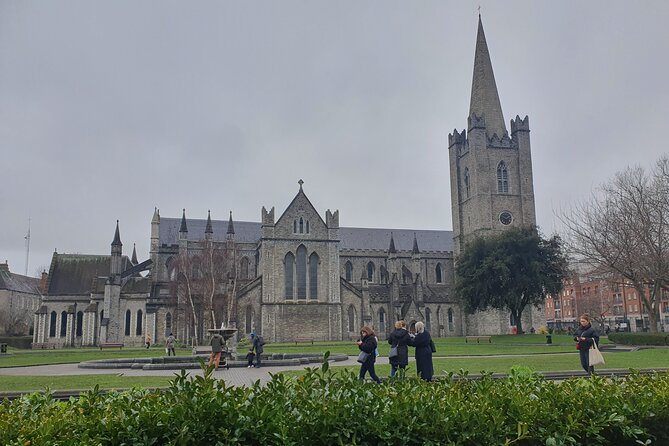
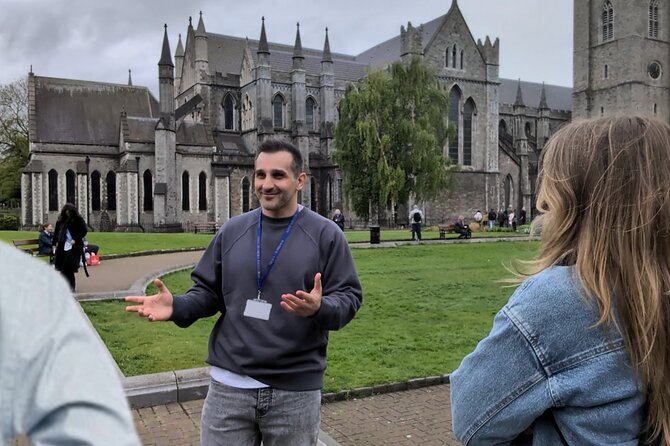
St. Patrick’s Cathedral is one of the most meaningful stops on the route. The site is linked with St. Patrick, but its story also includes an Anglo-Norman building phase, years of decline, and rescue by the Guinness family.
That mix gives your guide plenty to explain in a short time. You are not just looking at a church facade. You are hearing how a religious site changed as Dublin’s rulers, wealth, and institutions changed around it.
The stop is listed at 15 minutes, and admission is not included. If you want to go inside, treat this walk as your introduction, then return later with enough time for the interior. That approach works well for a first visit because you can hear the context before deciding which building deserves your entry fee.
Dublin Castle, from power base to curious stories
Dublin Castle began as an Anglo-Norman stronghold, starting with a simple tower before growing into a larger complex. Its uses shifted over time. It served as a seat of power and a prison, and its story even includes a daring jewel heist.
That range is exactly what makes a short guide-led stop useful. A bare view of the castle can leave you wondering what you are looking at. A good explanation turns the complex into a place of government, confinement, ceremony, and intrigue.
Again, admission is not included. The 15-minute stop is best understood as an orientation. You can decide later if you want to pay to see more. This is one of the tour’s strengths for people with limited time, since you get the essentials without committing a large block of your day to one site.
Christ Church Cathedral and medieval Dublin
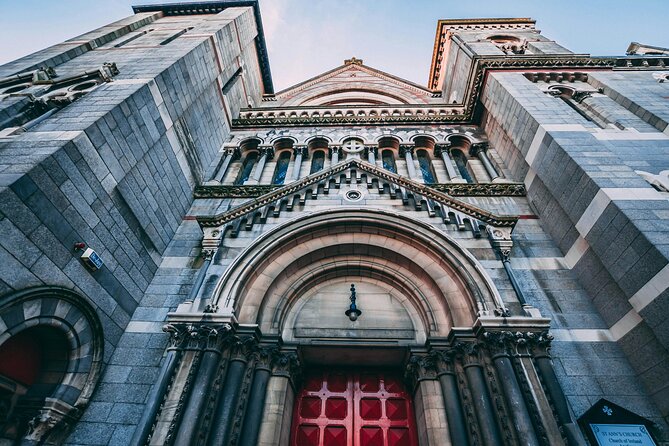
Christ Church Cathedral reaches back to 1030, when Vikings founded it. Later rulers changed its form, including Anglo-Norman additions with Gothic details. A 19th-century restoration funded by whiskey money adds another unexpected turn to the story.
This stop helps explain why Dublin’s oldest buildings can look like a mix of periods. The city was not built once and left alone. Its major churches were altered, repaired, and reshaped as power moved between different groups.
The tour gives you about 15 minutes here, with admission not included. That is enough for an informed look and a few photographs, but not enough for a careful interior visit. You should plan accordingly if Christ Church is high on your list.
Same part of the country, a completely different day out:
- Dublin: Guinness Storehouse Entry Ticket
★ 4.6 · 16,863 reviews - Irish Rock ‘N’ Roll Museum Experience Dublin
★ 5.0 · 6,112 reviews - Dublin: Jameson Whiskey Distillery Tour with Tastings
★ 4.7 · 4,859 reviews - Dublin Jameson Distillery Bow St. Tour and Tasting 45 mins
★ 5.0 · 4,690 reviews
Temple Bar beyond the pub signs
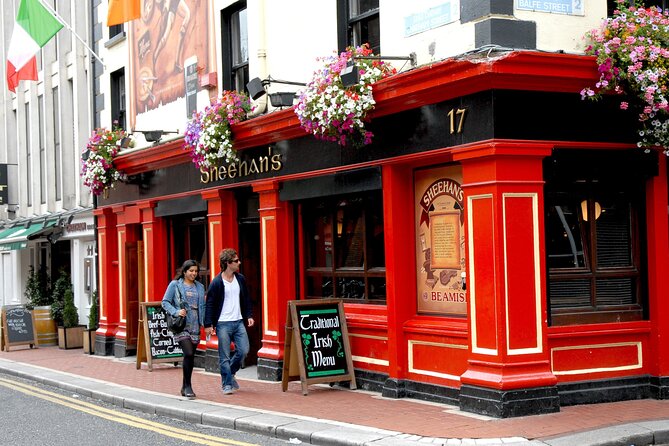
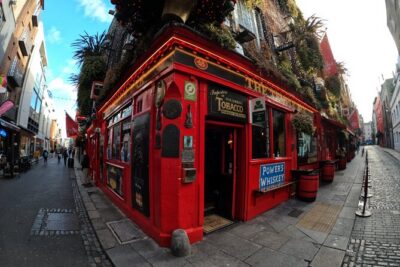
Temple Bar is now one of Dublin’s best-known visitor districts, but the neighborhood was not always a nightlife center. Its earlier story involved a maze-like layout and a rough reputation. Today, its pubs, galleries, and evening activity draw large crowds.
The guide can help you see past the most obvious version of Temple Bar. You will learn how a district changes its identity, and why the current pub-lined streets are only one chapter of the area’s story.
This is a free stop, but it is still worth having context. Without it, Temple Bar can feel like a collection of colorful pubs. With a short explanation, it becomes part of the larger story of Dublin’s changing city center.
Do not expect a quiet stroll here at every hour. The tour data does not promise a calm atmosphere, and the district is known for nightlife. Still, the stop works well as a quick look before you choose if you want to return for a meal or drink.
Trinity College and the Book of Kells
Trinity College is one of Dublin’s best-known places of learning. Its past was turbulent, yet the campus is now famous for its setting and the Book of Kells.
The route includes Trinity College as a free stop, but this is not the same as buying entry to the Book of Kells exhibition. The walk lets you understand why Trinity matters and gives you a chance to see the campus before deciding if you want a separate visit.
This is a good example of how the tour saves you time. You get the basic orientation, learn about the college’s place in Dublin, and can return later for a longer look. If the Book of Kells is a priority, set aside extra time and check the separate admission arrangements before your visit.
The Bank of Ireland and the Old Parliament House
The former Parliament House, now associated with the Bank of Ireland, offers a short lesson in Irish politics and architecture. The building witnessed major political change, including the Act of Union.
It also connects Dublin to grand buildings elsewhere. Your guide may explain how its design influenced later architecture, giving you a useful way to read the city beyond the famous tourist stops.
This is a free exterior stop and lasts around 15 minutes. It may be less instantly recognizable than Trinity or Temple Bar, but it gives the tour political weight. Dublin is not only cathedrals and pubs. Its streets also tell the story of government, power, and national change.
Finishing at St. Stephen’s Green
The walk ends at Fusiliers Arch, the grand entrance to St. Stephen’s Green on Grafton Street. The park began as an exclusive green space for Dublin’s elite. The Guinness family later helped make it available to the public.
That ending is useful because it leaves you in one of the city’s most convenient central areas. You can enter the park, continue toward Grafton Street, stop for food, or catch the Luas nearby. The official end point is listed as 3 St. Stephen’s Green, Dublin, D02 X025.
The park also gives the tour a satisfying final note. You have moved from medieval religious sites and political buildings toward a public space used by everyone. It is a small but clear example of how Dublin’s institutions changed over time.
Why the guides make the biggest difference
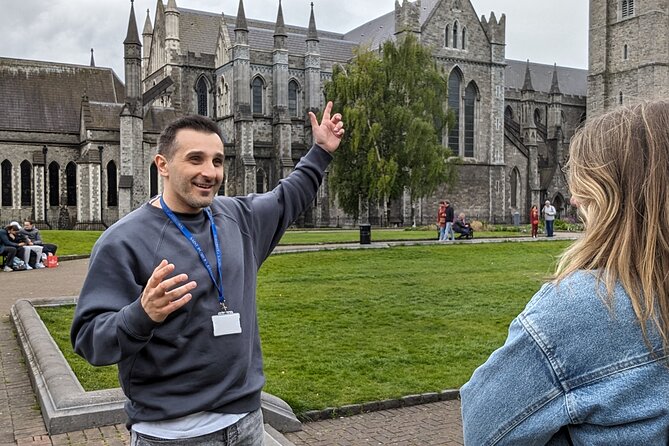
The strongest feature here is the guide, not a special vehicle, audio system, or ticket shortcut. Alin is repeatedly praised for being friendly, engaging, and well informed about Dublin’s past. Alan is also singled out for clear explanations and a binder of old photographs that helps connect modern streets with earlier versions of the city.
That visual material can be especially useful. Dublin has changed a great deal, and old images help you understand what no longer exists. Instead of simply hearing that a street or building looked different, you can compare the past with what is in front of you.
The guides also use interaction. Questions, quizzes, and games have worked well for families with children aged 11, 13, and 15, as well as groups spanning several generations. You are not required to memorize a list of dates, and the format can keep a short walking tour from feeling like a school lesson.
Local advice is another plus. Guides have offered suggestions for restaurants and pubs away from the most obvious tourist spots. That does not replace a full food tour, but it can help you make better choices after the walk.
Guide names and styles may vary by departure. Leonor is also mentioned positively, so you should not book expecting one specific person unless the provider confirms that detail. What does appear consistent is the focus on history, questions, and a friendly presentation.
What the two-hour format really gives you
Two hours is enough to cover a lot of ground, but only if you accept the limits. Most stops are brief, roughly 15 minutes each, and walking time connects them. You will see the outside of several major buildings and hear why they matter.
That makes the tour ideal for your first day in Dublin. You can quickly learn the shape of the central area, then return to the sites that interest you most. It is also useful if you have only a short stay and want a sensible overview instead of choosing sights at random.
The pace may feel brisk if you want long photo stops or detailed architecture. The tour is not designed for slow museum visits. You should wear comfortable shoes and expect a moderate level of physical activity. Service animals are allowed, and the route is near public transportation.
Morning and afternoon start times give you some control. A morning walk can help you plan the rest of your day, while an afternoon start works well if you arrive late or prefer a slower morning.
Is $28.96 good value?
At $28.96, the price is reasonable if you want interpretation and a useful route rather than admission tickets. The cost covers the guide and the introduction to Dublin’s history and culture. It does not cover entry fees, taxes, or extended visits inside the landmarks.
The value is strongest for first-time visitors. Instead of spending two hours looking at impressive buildings without knowing their role, you get a working explanation of the city center. The small group limit also matters. With no more than 10 people, you have a better chance of hearing the guide and asking about places that catch your eye.
The tour is booked an average of 33 days ahead, so you should not assume that a last-minute place will always be available. Some people have managed to book close to the date, but planning ahead is the safer choice, especially if your Dublin schedule is fixed.
Who should book this walk?
I would choose this tour for a first morning or afternoon in Dublin, especially if you like history in short, lively portions. It suits couples, families, solo visitors, and mixed-age groups who want a shared introduction.
Families may appreciate the quizzes and games. Older visitors should note the moderate fitness requirement and the fact that this is a walking activity, not a seated sightseeing tour. People with only one day in Dublin can use the route to decide which interiors deserve their limited time.
I would look elsewhere if you want a cathedral-focused tour, a full Dublin Castle visit, or a dedicated Book of Kells experience. This walk points you toward those places, but it does not replace them.
The free cancellation policy is helpful if your plans remain uncertain. You can cancel for a full refund up to 24 hours before the start time. Changes or cancellations within 24 hours are not accepted for a refund, and the cut-off follows Dublin’s local time.
Should you book it?
Book this walk if you want a well-paced introduction to central Dublin, a small group, and a guide who brings the past to life with stories, pictures, and questions. It is especially useful at the start of your stay because the route ends near Grafton Street, St. Stephen’s Green, and the Luas.
Skip it if you already know Dublin’s center well or want substantial time inside each attraction. For most first-time visitors, though, $28.96 buys a clear sense of place and a much better plan for the rest of the city.
FAQ
How long is the Dublin city center walking tour?
The tour lasts approximately two hours.
Where does the tour begin?
It begins at the Gaiety Theatre on King Street South, Dublin 2, Ireland.
Where does the tour finish?
The tour ends at Fusiliers Arch in St. Stephen’s Green, listed as 3 St. Stephen’s Green, Dublin, D02 X025. The arch is beside the Luas tram stop and near Grafton Street.
What sights are included on the route?
The route includes the Gaiety Theatre, St. Patrick’s Cathedral, Dublin Castle, Christ Church Cathedral, Temple Bar, Trinity College Dublin, the Bank of Ireland, and St. Stephen’s Green.
Are admission fees included?
No. Admission fees and taxes are not included. The tour provides an introduction to the sights, and some stops are viewed from outside.
How many people can join the tour?
The maximum group size is 10 people. Some departures may be smaller, and some have operated as private tours when only a few people booked.
Can I cancel for a full refund?
Yes. You can cancel at least 24 hours before the start time for a full refund. Cancellations or changes made less than 24 hours before the experience are not accepted for a refund.
More 2-Hour Experiences in Dublin
- 2-Hour Historical Walking Tour from Dublin
★ 5.0 · 875 reviews - Historical 2-Hour Guided Walking Tour of Dublin
★ 4.7 · 865 reviews - Dublin: 2-Hour Premium Whiskey and Food Tasting Tour
★ 4.7 · 54 reviews - Dublin: 2 Hour City Center Guided Walking Tour
★ 4.9 · 12 reviews
Just added around Dublin
- Women Of Ireland: Trailblazers & Pioneers★ 5.0 · 4 reviews
- Whiskey Tasting Tour of Dublin★ 5.0 · 117 reviews
- Premium Irish Whiskey Tasting Hosted by Local Dublin Expert★ 5.0 · 77 reviews
- Historical Walking Tour of Dublin★ 5.0 · 50 reviews
- Dublin (Dun Laoghaire) Top-Rated Coastal Walking Tour★ 5.0 · 80 reviews
- Semi-Private (8people max) 2.5 Hr Dublin Walking Tour★ 5.0 · 69 reviews
- Private Ultimate Day in Dublin (Walking Tour)★ 5.0 · 30 reviews
- DayTripper Dublin: A Guided City Walking Tour★ 5.0 · 90 reviews
Walking Tours, compared.

Dublin Highlights and Hidden Gems Guided Walking Tour
Our verdict on it →

90 Minute Dublin Walking tour and Sightseeing tips
Our verdict on it →

Dublin Traditional Irish 3 Course Meal Walking Tour with Local
Our verdict on it →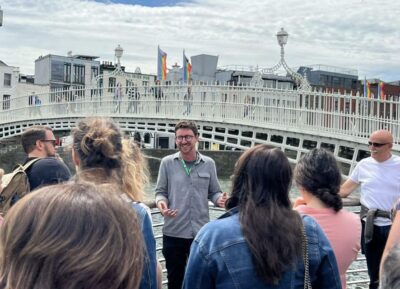
Browse the lists this tour appears in