
Reviewed · WALKING TOURS
Dublin: Bucket List Sights Walking Tour
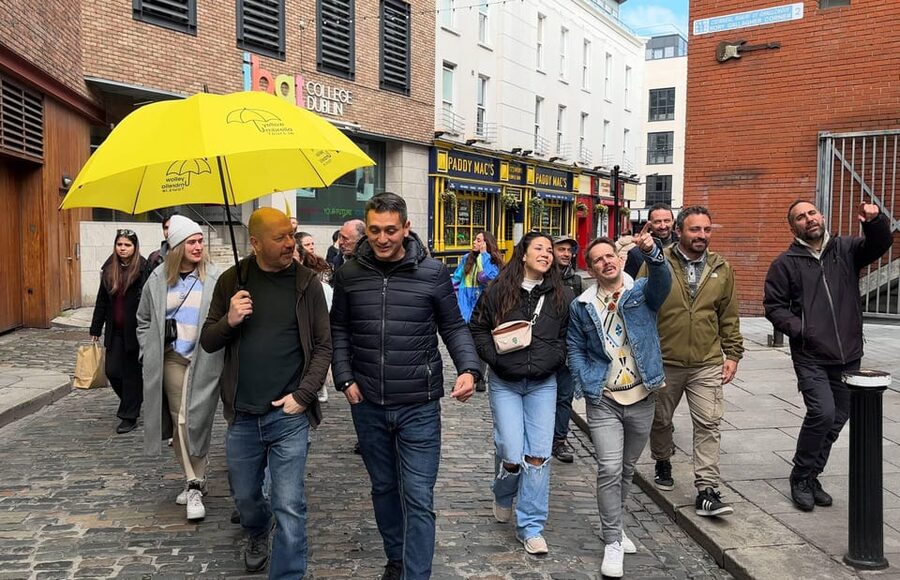
Dublin’s story is packed into a compact walk: Viking boats at Christchurch, British rule at Dublin Castle, Georgian grandeur at College Green, and modern tech influence around the Liffey. This two-hour route gives you a useful first map of the old center without asking you to spend a whole day indoors.
I like the way the tour links famous sights to real people, from Jonathan Swift and Sir Benjamin Lee Guinness to Michael Collins. I also like the human touch offered by guide Peter, who answers questions, adjusts his English to your level, and gives tips for the rest of your stay.
The main consideration is pace. You see many major sights from the outside, but the tour does not include entry to the cathedrals, Dublin Castle, the Chester Beatty Library, or the Book of Kells exhibition. You will need separate time and tickets if you want to go inside.
Key points to know before you book
- Viking beginnings: Christchurch Cathedral and the Dubh Linn area connect today’s city with its earliest settlers.
- A strong two-hour route: The walk covers Dublin Castle, Temple Bar, the Liffey, College Green, Molly Malone, and Trinity College.
- Peter’s flexible guiding: He can adapt the tour to your level of English and answer questions as you walk.
- History with local characters: Jonathan Swift, Henry Roe, Benjamin Guinness, Michael Collins, and Molly Malone all appear along the way.
- A useful first-day activity: The route gives you bearings in central Dublin before you return to places that interest you most.
- Practical value: At $19 per person, the tour is a low-cost way to see the city center with context rather than simply passing landmarks.
Starting beside Christchurch Cathedral
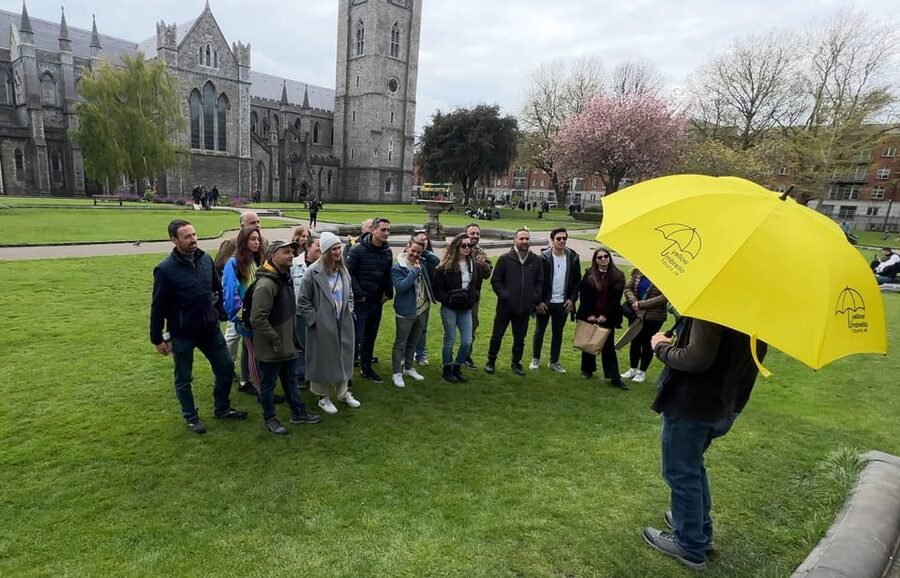
Meet your guide across from Christchurch Cathedral, outside the Bull and Castle. Look for the yellow umbrella. This is an easy place to find in the old center, but give yourself a few minutes to get there, especially if you are coming from outside the historic core.
Christchurch is a fitting starting point because Dublin’s story begins here long before the modern city. The cathedral was first built in wood by Vikings about a thousand years ago, then rebuilt in stone by the Normans. The building you see today owes much to a major 19th-century rebuilding, funded in part by whiskey money from Henry Roe.
That mix of Viking, Norman, and Victorian influence sets the tone for the whole walk. You are not getting one clean version of Dublin’s past. You are seeing layers of settlement, conquest, religion, trade, and political change placed close together.
The guide discusses the cathedral from the outside. That makes this stop useful for orientation, but keep your expectations clear: the guided walk itself is not an interior cathedral visit.
More Walking Tours in Dublin
- Dublin Highlights and Hidden Gems Guided Walking Tour
★ 5.0 · 6,020 reviews - Dublin: Highlights and Hidden Gems Walking Tour
★ 4.9 · 2,140 reviews - 1916 Rebellion Walking Tour
★ 5.0 · 1,605 reviews
St. Patrick’s Cathedral and Dublin’s literary side
From Christchurch, the route continues to St. Patrick’s Cathedral, named for Ireland’s patron saint. The cathedral is closely tied to Jonathan Swift, author of Gulliver’s Travels and a former dean who is buried here.
The building also shows how private money shaped Dublin. Sir Benjamin Lee Guinness helped fund its restoration in the 1860s, bringing new life to a major religious site. That detail gives you more to notice than the usual dates and architectural labels. You begin to see Dublin as a city shaped by clerics, writers, merchants, brewers, and politicians.
The story about St. Patrick banishing snakes is part of the familiar Irish tradition, and the stop offers a quick way to connect national identity with a real place. Again, you view the cathedral as part of the walk rather than joining an included interior tour.
I find this section especially useful if you are interested in literature. Swift is not treated as a distant name in a guidebook. His burial place helps connect Dublin’s streets with the writers who gave the city much of its cultural character.
The Dubh Linn Gardens and Viking moorings
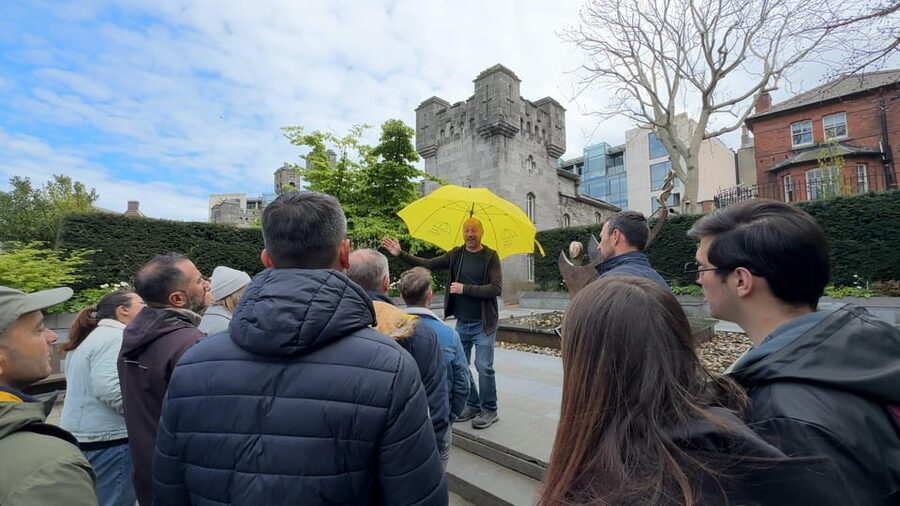
The walk then reaches the Dubh Linn Garden beside Dublin Castle. This area is linked to the Viking name for the city and to the place where Viking longboats were said to have moored when they arrived about 1,200 years ago.
The Chester Beatty Library is also here. It is described as an outstanding nearby attraction, but admission is not part of the walking tour. You may want to mark it for another visit if you prefer manuscripts, art, and collections to outdoor sightseeing.
This short section gives the route a welcome change of pace. You move from large cathedral buildings to an open garden and a location where the city’s name and early development can be explained. It is a good example of the tour’s method: use a modern street or garden as a doorway into an older chapter of Dublin.
Dublin Castle, from British rule to Irish independence
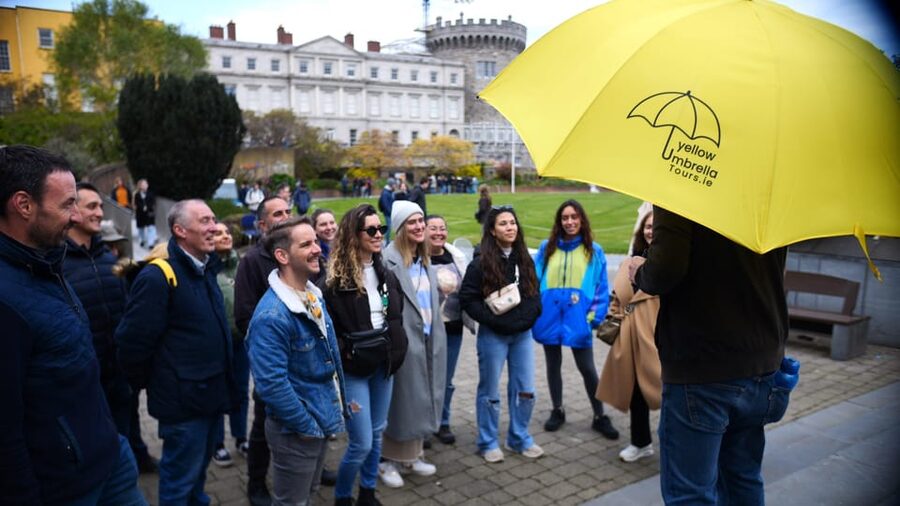
Dublin Castle is one of the most important political stops. Its lower and upper courtyards show a mix of medieval and Georgian architecture, and the site served as the center of British government in Ireland for about 700 years.
That long period is hard to grasp from a quick photo stop, so the guide’s explanation matters here. The castle was handed to Michael Collins and the Irish Free State in 1922, after Irish independence. A simple courtyard therefore becomes a place where the country’s political past turns toward the modern state.
The route lets you see both the physical setting and the change in power attached to it. You should not expect a full castle tour, detailed room-by-room interpretation, or included admission. If Dublin Castle is high on your list, use this walk to decide if you want to return for a longer visit.
For a first introduction, though, the stop earns its place. It explains why the old center feels so politically important, not just old.
Same part of the country, a completely different day out:
- Dublin: Guinness Storehouse Entry Ticket
★ 4.6 · 16,863 reviews - Irish Rock ‘N’ Roll Museum Experience Dublin
★ 5.0 · 6,112 reviews - Dublin: Jameson Whiskey Distillery Tour with Tastings
★ 4.7 · 4,859 reviews - Dublin Jameson Distillery Bow St. Tour and Tasting 45 mins
★ 5.0 · 4,690 reviews
Temple Bar beyond the pub signs
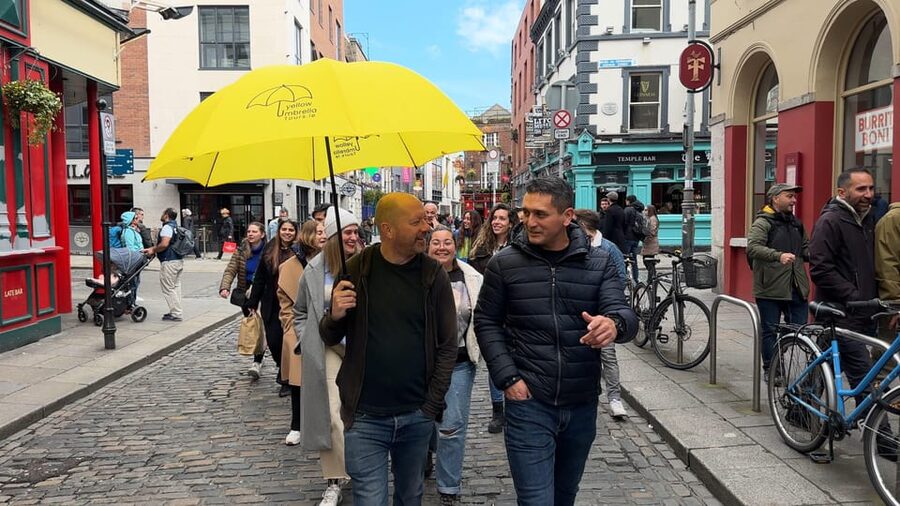
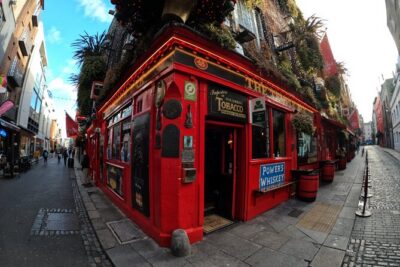
Temple Bar is often the most recognizable part of central Dublin, with pubs, live music, and nightlife packed into a small district. The walking tour also places it in a longer timeline, linking the area to one of the older parts of the city and to the Tudor conquest in the 16th century.
That historical context is useful because Temple Bar can easily become a quick photo, a pub stop, or a crowded evening outing. The tour gives you a reason to look beyond the signs and music. You see how an old district became one of Dublin’s main social centers.
There is a tradeoff. Temple Bar can be noisy and crowded, especially when nightlife is active. A two-hour history walk cannot give you much time to linger in a pub or listen to live music. Think of this as an introduction to the district, not a dedicated food, drink, or music tour.
Crossing the Liffey and reading the city from the north side
The route crosses the River Liffey to the north side, where the guide looks back across Dublin’s development. The view ties together the Celtic settlement of roughly 2,100 years ago, the medieval city, and the modern influence of the Silicon Docks.
This broad time span is one of the better features of the walk. You are not only moving from one famous building to another. You are being shown how the city changed from an early settlement into a capital shaped by Vikings, Christians, Normans, English rule, Irish independence, and 21st-century American business influence.
The tour does not promise a special observation deck or a long scenic pause, so do not book it mainly for panoramic photography. The value is the explanation attached to the view. You get a simple mental map of Dublin’s growth and a sense of how the old center relates to newer parts of the city.
The Ha’Penny Bridge and Merchant’s Arch
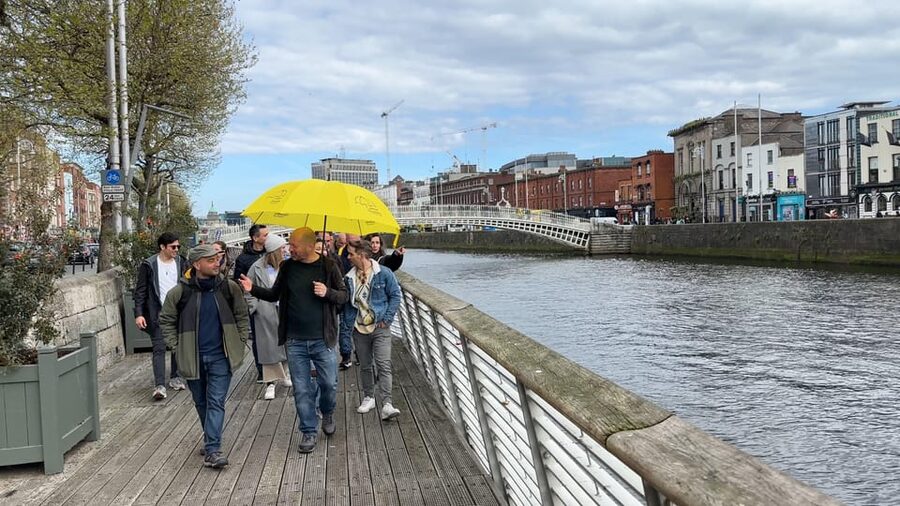
The route returns across the iconic Ha’Penny Bridge and passes through Merchant’s Arch toward Crown Alley. These are lively central landmarks, but they also help link the two sides of the river and the old commercial districts.
The Ha’Penny Bridge is a natural pause in the route. It gives you a familiar Dublin image while keeping the walk moving. Merchant’s Arch leads the group back toward the Temple Bar area, so this section feels like a loop rather than a straight march through disconnected sights.
Near Crown Alley, the guide considers the Central Plaza, a large Brutalist building by Sam Stephenson. This is a good detail for anyone who likes modern architecture or wants to see more than postcard Dublin. Its heavy, concrete form contrasts sharply with the cathedral stonework, Georgian façades, and old pub streets seen earlier.
That contrast is part of the tour’s appeal. Dublin is not presented as a preserved museum town. Old and new architecture sit close together, sometimes gracefully and sometimes awkwardly.
College Green and the old center of power

The walk continues to College Green, one of Dublin’s best settings for Georgian and neoclassical architecture. Banks and former parliamentary buildings show the area’s past as a center of government and finance.
The guide explains that Dublin once regarded itself as the second city of the British Empire. That detail helps you read the grand façades with more care. They are not simply attractive buildings. They reflect ambition, wealth, administration, and a period when Dublin’s political and financial importance was tied to the empire.
This is one of the strongest sections for architecture. You get more than a list of building names, because the setting explains why the buildings look so formal and imposing. If you enjoy urban design, bring your attention up from street level and look at the façades as the group moves through College Green.
The route keeps moving, though. You should not expect a specialist architectural lecture or time to enter every building. It is an accessible overview rather than a focused study.
Molly Malone and Trinity College
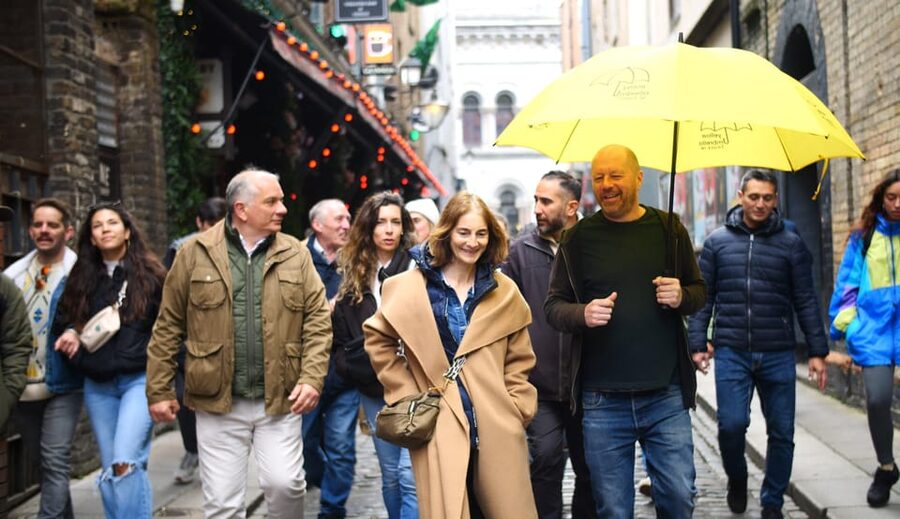
Near St. Andrew’s Church, the group says hello to Molly Malone, one of Dublin’s best-known characters. Her statue offers a lighter moment after the heavier subjects of conquest, government, and independence.
Molly Malone is also a useful reminder that city identity is built from songs, legends, public figures, and local symbols, not only from official monuments. The stop is brief, but it adds a touch of Dublin folklore to a route otherwise weighted toward institutions and architecture.
The tour finishes outside the front gate of Trinity College. This is a strong ending because Trinity is home to the famous Book of Kells exhibition, one of Dublin’s major cultural attractions. The exhibition is not included in the walk, but the final location makes it easy for you to continue on your own if you want a closer look.
Ending at Trinity also gives you a clear choice. You can go inside, explore College Green, return to Temple Bar, or use the route you have just learned to plan the rest of your day. The tour returns to its original meeting point after finishing, so you are not left at an unfamiliar edge of the city.
What the guide adds to the route
The quality of a short city walk depends heavily on the person leading it. Peter has been especially good at making the history conversational. He asks about you, answers additional questions, and offers ideas for what to do and where to go during the rest of your stay.
He also adjusts his English to your level. That matters on a tour with many names, dates, and political changes. If you are not fully comfortable with English, a guide who can slow down and explain clearly can make the difference between following the story and simply watching the group move.
The tour is conducted in English, and Peter is the named guide associated with the experience. Another local guide may lead the departure, so do not book it expecting a guarantee that Peter will personally conduct every tour.
Is $19 good value for two hours?
At $19 per person, this is a modest price for a guided introduction to central Dublin. You are paying for the route, the historical explanation, and the chance to ask questions rather than for attraction admission.
The value is strongest if this is your first time in Dublin, if you have only a short stay, or if you want help deciding which buildings deserve a longer visit. A guide can connect the sights faster than you might while reading signs on your own.
The value is weaker if you already know the old center well or mainly want to spend two hours inside Christchurch, St. Patrick’s, Dublin Castle, or Trinity College. Entry fees are not included, and the walk only has time to present each place from the outside or nearby.
The tour is wheelchair accessible, lasts two hours, and ends back at the meeting point. You can cancel up to 24 hours before the start for a full refund, and you can reserve now and pay later. Those terms make it easier to fit into a changing Dublin schedule.
Who should book this Dublin walk?
I would choose this tour for a first morning or first afternoon in Dublin. It covers enough ground to give you bearings, but it does not take up an entire day. Families, solo visitors, couples, and anyone interested in a readable overview of the city’s past should find the format useful.
It is also a good match if you like asking questions. Peter’s ability to adapt his English and offer further suggestions adds value beyond the fixed route.
I would choose something else if your main goal is detailed interior access, a food-and-drink experience, or a specialist architecture tour. The route introduces many places, but you will need separate visits for the cathedral interiors, castle rooms, Chester Beatty Library, and Book of Kells exhibition.
Should you book the Bucket List Sights Walking Tour?
Book it if you want a well-priced orientation to Dublin’s old center, with history tied to the streets and buildings around you. The route covers the major names, but it also includes less obvious details such as Viking moorings, Brutalist Central Plaza, Georgian government buildings, and the transition from British rule to Irish independence.
Skip it if you prefer to move slowly through a single attraction or if you already know central Dublin. For most first-time visitors, though, two hours and $19 is a sensible way to get your bearings, ask questions, and choose what deserves your time next.
FAQ
How long is the Dublin Bucket List Sights Walking Tour?
The tour lasts two hours. Starting times vary, so check availability when booking.
Where does the tour start?
Meet your guide across the road from Christchurch Cathedral, outside the Bull and Castle. Look for the yellow umbrella.
Where does the tour finish?
The activity ends back at the meeting point after the walking route.
What language is the tour conducted in?
The live guided tour is conducted in English.
Is the tour wheelchair accessible?
Yes, the activity is listed as wheelchair accessible.
Does the tour include entry to the Book of Kells exhibition?
No. The tour finishes outside the front gate of Trinity College, home of the Book of Kells exhibition, but admission to the exhibition is not included.
Does the tour include entry to Dublin’s cathedrals or Dublin Castle?
No included admission is specified. The route visits Christchurch Cathedral, St. Patrick’s Cathedral, and Dublin Castle as sightseeing stops.
How much does the tour cost?
The listed price is $19 per person.
Can I cancel the booking?
Yes. You can cancel up to 24 hours in advance for a full refund. You can also reserve now and pay later.
Just added around Dublin
- Women Of Ireland: Trailblazers & Pioneers★ 5.0 · 4 reviews
- Whiskey Tasting Tour of Dublin★ 5.0 · 117 reviews
- Premium Irish Whiskey Tasting Hosted by Local Dublin Expert★ 5.0 · 77 reviews
- Historical Walking Tour of Dublin★ 5.0 · 50 reviews
- Dublin (Dun Laoghaire) Top-Rated Coastal Walking Tour★ 5.0 · 80 reviews
- Semi-Private (8people max) 2.5 Hr Dublin Walking Tour★ 5.0 · 69 reviews
- Private Ultimate Day in Dublin (Walking Tour)★ 5.0 · 30 reviews
- DayTripper Dublin: A Guided City Walking Tour★ 5.0 · 90 reviews
Walking Tours, compared.
Dublin Highlights and Hidden Gems Guided Walking Tour
Our verdict on it →

90 Minute Dublin Walking tour and Sightseeing tips
Our verdict on it →

Dublin Traditional Irish 3 Course Meal Walking Tour with Local
Our verdict on it →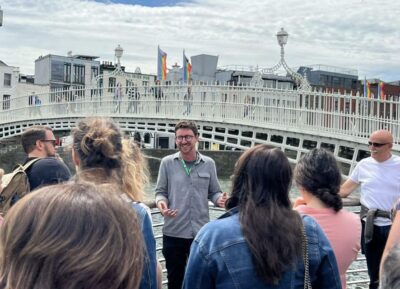
Browse the lists this tour appears in