
Reviewed · WALKING TOURS
Dublin Private Walking Tour | 3 hour Highlights & Hidden Gems
Dublin’s story unfolds quickly on foot, from the old seat of British rule at Dublin Castle to the lanes of Temple Bar and the solemn Famine Memorial. This private tour packs 14 central stops into about three hours, with guide David Ryan adding songs, folklore, political history, and practical advice along the way.
I like the private format, since David can adjust the pace and ending point for your plans. I also like the mix of famous sights and quieter corners, including Dubh Linn Gardens, Powerscourt Townhouse, and Dame Lane. The main drawback is pace: 14 stops in three hours means most places get an outside look rather than a long visit inside.
Key points at a glance

- David Ryan’s personal style: Expect history, humor, Irish songs, photographs, and a well-prepared guide who enjoys bringing Dublin’s past to life.
- Fourteen central stops: The route links Dublin Castle, Trinity College, Temple Bar, St Stephen’s Green, the Ha’penny Bridge, and several less obvious sites.
- A useful first-day orientation: You receive advice on transport, cafés, restaurants, pubs, and traditional music venues.
- A genuinely private experience: Only your group takes part, so the tour can be adjusted around your interests and schedule.
- Mostly outdoor sightseeing: Paid attractions and interior visits are not included, and entry to the old Parliament building depends on opening times.
- Strong value for history fans: At $144.03 per person, the price makes the most sense for a small group that wants focused attention and a personal introduction to Dublin.
Dublin’s story in one walk
This is not a simple checklist of postcard sights. It is a brisk walk through the forces that shaped Dublin: medieval government, British rule, Irish nationalism, the Easter Rising, the Great Famine, literature, music, and modern city life.
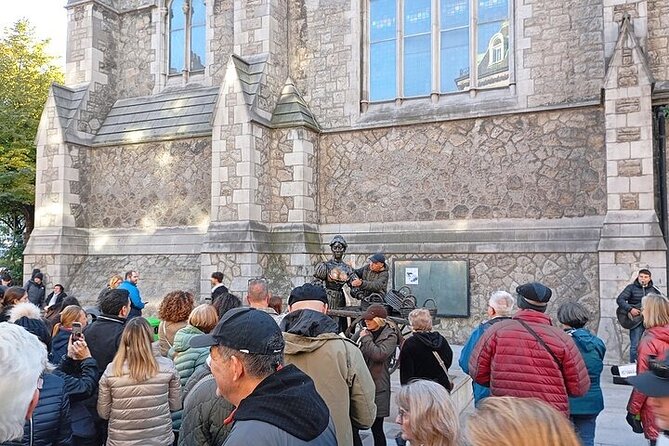
You begin at the Molly Malone statue on Suffolk Street, a convenient central meeting point near several major sights. From there, the route moves through the old city center, crosses the River Liffey, returns south, and finishes at College Green unless you choose another endpoint.
That route matters. You spend little time getting from one attraction to another, so the three-hour schedule is packed with actual sightseeing. Still, you should wear comfortable shoes. Fourteen stops is a lot, and several are short orientation visits rather than full tours.
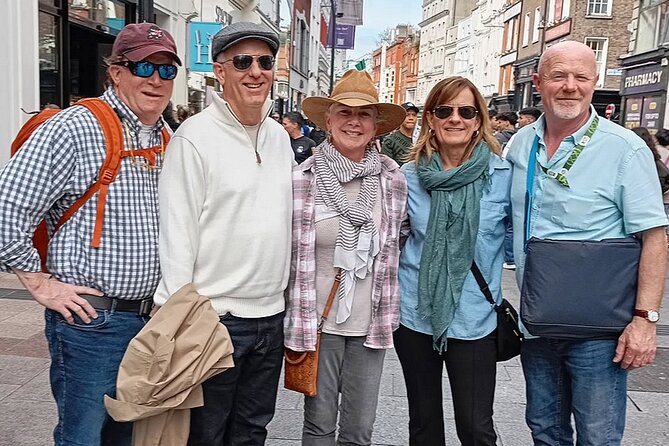
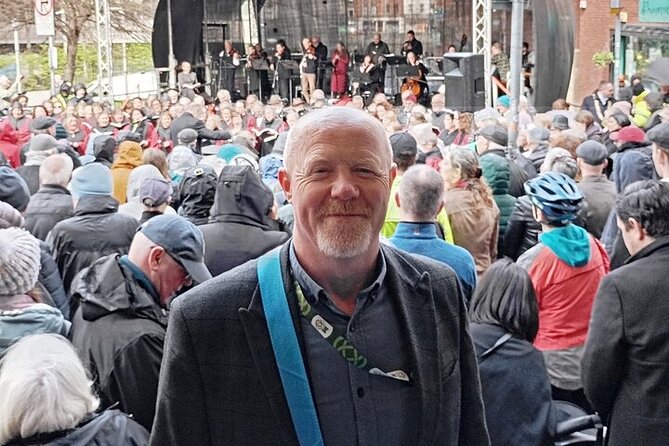
David Ryan is the guide named for this experience. The available feedback describes him as warm, energetic, and especially strong on Irish history, politics, art, literature, folklore, and music. He has also been known to bring photographs and other visual material, and to sing during the walk. That makes this a better choice for people who enjoy a guide’s personality, not just a stream of dates and facts.
More Walking Tours in Dublin
- Dublin Highlights and Hidden Gems Guided Walking Tour
★ 5.0 · 6,020 reviews - Dublin: Highlights and Hidden Gems Walking Tour
★ 4.9 · 2,140 reviews - 1916 Rebellion Walking Tour
★ 5.0 · 1,605 reviews
Dublin Castle and the medieval city
The first major stop is Dublin Castle, where the original stonework dates to 1204. For centuries, the castle served as a center of British rule and administration in Ireland.
The visit is external, so you should not expect a full castle interior tour or access to every room. The 20-minute stop is best understood as a historical introduction. David can explain why this site mattered politically and how Dublin developed around it.
That outside focus also keeps the walk moving. If you want to explore the castle rooms in detail, you will need a separate ticket and extra time. For a first look at Dublin, though, the castle gives useful context before the route turns toward the city’s public squares, colleges, and streets.
Molly Malone, Trinity College, and College Green
The Molly Malone statue is both a meeting point and a quick introduction to Dublin’s musical side. The figure comes from the city’s unofficial anthem and has become one of Dublin’s most photographed statues.
You spend about 10 minutes here. The stop is short, but it helps connect Dublin’s public identity with song, legend, and local humor. Do not expect a long museum-style explanation. This is a launch point for the walk and a lively early snapshot of the city.
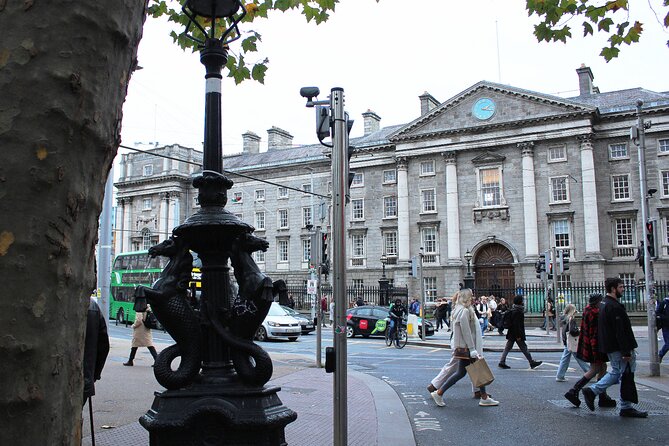
Trinity College follows, with about 15 minutes walking through the grounds. Founded in 1592 by Queen Elizabeth I, it is Ireland’s oldest university and one of the city’s most important architectural sites.
Again, this is an external visit. The route gives you a look at the campus atmosphere and buildings, but admission to the Book of Kells or other ticketed areas is not included. If that is a priority, plan a separate visit. The private format helps here because you can ask David how Trinity fits into Dublin’s religious, political, and academic story instead of simply taking a photograph and moving on.
College Green receives its own stop later in the route. This broad three-sided plaza brings together Trinity College, the former Parliament House, and major Georgian and Victorian buildings. The Bank of Ireland building occupies the old Parliament House, making the square a useful place to discuss Ireland’s political relationship with Britain.
Temple Bar and the Ha’penny Bridge

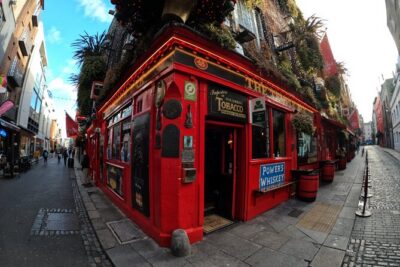
Temple Bar gets plenty of attention, but the area is more than one famous pub. It covers about 28 acres and includes lanes, restaurants, public houses, cultural sites, and traditional music venues.
The 20-minute visit focuses on the area’s streets and stories. You will see why Temple Bar attracts so much attention, while also getting a reminder that the district has more to offer than its best-known drinking spot. The guide can point out side streets and narrow passages that are easy to miss when you are simply looking for the main pub.
Temple Bar can be loud and crowded at busy times. That is worth keeping in mind if you prefer quiet sightseeing. The private format helps because your group does not need to wait for a large tour to regroup, but the district itself remains a busy part of central Dublin.
The Ha’penny Bridge provides one of the route’s simplest pleasures. This old wrought-iron footbridge crosses the Liffey and links the north and south sides of the city. You get about 10 minutes for views along the river and an explanation of the bridge’s long place in Dublin life.
It is a brief stop, but a good one for photographs and orientation. The bridge also helps you understand Dublin as a city divided and connected by the river. Expect some pedestrian traffic, particularly at popular times.
Same part of the country, a completely different day out:
- Dublin: Guinness Storehouse Entry Ticket
★ 4.6 · 16,863 reviews - Irish Rock ‘N’ Roll Museum Experience Dublin
★ 5.0 · 6,112 reviews - Dublin: Jameson Whiskey Distillery Tour with Tastings
★ 4.7 · 4,859 reviews - Dublin Jameson Distillery Bow St. Tour and Tasting 45 mins
★ 5.0 · 4,690 reviews
Powerscourt Townhouse and St Stephen’s Green
Powerscourt Townhouse is one of the more easily missed stops on a standard Dublin walk. Built in the 18th century as the city home of Richard Wingfield, the second Viscount Powerscourt, and his wife, Lady Elizabeth, it once hosted social events for Dublin’s wealthy class.
Today it functions as a center in the city, but its earlier role gives the building a different kind of interest. You get about 10 minutes here, enough for an introduction and a look at the setting. It is not a full guided tour of every interior room, so treat it as a short architectural and social-history stop.
St Stephen’s Green offers a change of pace. The 22-acre park includes gardens, flower beds, lakes, winding paths, sculptures, monuments, wildlife, and unusual plants. The walk gives you about 15 minutes to see the park and learn how it reflects Dublin’s civic and national story.
That time is enough to enjoy the setting, but not enough to wander the whole park at leisure. If you like green spaces, you may want to return on your own. I especially like having this stop in the middle of a city walk, since it breaks up the stone streets and gives you a quiet place to get your bearings.
Dubh Linn Gardens and the castle’s quieter side
Dubh Linn Gardens is another short stop, lasting about 10 minutes. It sits near Dublin Castle and is easy to overlook if you are hurrying between the city’s major attractions.
The garden includes distinctive brickwork and Celtic patterns, with its own connection to Dublin’s past. The name also recalls the Irish phrase associated with the city, often linked to the dark pool that gave Dublin its name.
This is exactly the sort of stop that benefits from a private guide. Without some explanation, the garden may seem like a pleasant patch of green near the castle. With context, its design and location become part of the larger story of medieval Dublin and the city’s name.
The Famine Memorial and Wolfe Tone

Edward Delaney’s Famine Memorial is one of the most serious points on the route. The sculptures show emaciated figures and honor more than one million people who died during the Great Irish Famine of 1845. The famine also caused widespread displacement and helped shape the large Irish communities that formed around the world.
The stop lasts about 10 minutes, but its subject deserves attention. This is not a cheerful photo stop. It gives you a chance to consider the human cost of famine, poverty, and political failure before continuing into the city center.
Theobald Wolfe Tone’s statue turns the discussion toward Irish nationalism. Tone played a major role in the 1798 rebellion and is often called the father of Irish nationalism. His monument offers a starting point for understanding the long struggle for greater Irish self-rule.
These two stops show one of the tour’s strengths. Dublin’s past is not presented only as old buildings and amusing legends. You also confront grief, political conflict, and the arguments that shaped modern Ireland.
The old Parliament House and Irish music
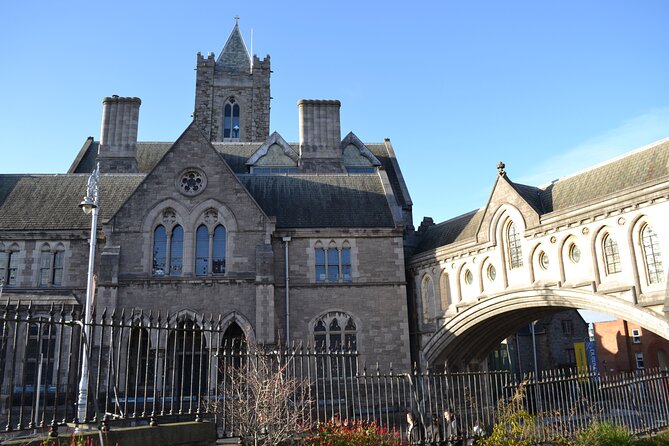
Parliament House, now the Bank of Ireland, was built in the early 18th century and once contained Ireland’s original House of Lords. The tour may include entry into the House of Lords, but this depends on the building’s opening hours.
That qualification matters. You should not assume an interior visit is guaranteed. When entry is available, it adds a useful layer to the outside view, letting you see a room that has survived for more than 250 years. When it is not, the exterior still gives College Green a clear political focus.
The Dublin Music Wall of Fame celebrates Irish singers and bands whose work reached audiences in Ireland and far beyond. The visit lasts about 15 minutes and adds a lighter cultural note after the more difficult subjects of famine and rebellion.
This stop should appeal to anyone interested in Irish music. It also fits David’s reported style, since music and singing are part of how he connects cultural history with the streets around you. I would not expect a concert or a long museum visit, but you can expect stories about Ireland’s musical identity.
Dame Lane and the 1916 Rising
Dame Lane brings the tour into the story of the Easter Rising. Here, you learn about the 1916 Proclamation of the Irish Republic, issued on April 24, 1916.
The document declared an independent republic and referred to equal citizenship and respect for people’s rights. Seeing a copy of the original proclamation gives the political history a physical focus. Instead of hearing only a list of dates, you can consider the words that helped shape the founding story of modern Ireland.
The 10-minute stop is short, so this is an introduction rather than a full lesson on the Rising. If you have a strong interest in Irish politics, ask questions and use the stop to decide which museums or historic buildings you want to visit later.
What the private format adds
The tour costs $144.03 per person, and its value depends heavily on group size. For one or two people, that is a serious price for three hours. For a small family or group sharing the cost, the private structure becomes easier to justify.
You are paying for more than transport between sights. The price includes a licensed guide, a private itinerary, historical interpretation, city orientation, and a digital PDF with recommendations for cafés, restaurants, pubs, and Irish traditional music venues.
The ability to change the ending point is useful. The usual finish is College Green, but the tour can be adjusted to suit plans, including an ending near Christ Church Cathedral if you are heading toward the Guinness Storehouse. The available information does not promise every change, so discuss your schedule when booking.
Pickup can be arranged from listed hotels, a city-center accommodation, or the Molly Malone statue. The meeting point is near public transport, and confirmation is provided when you book.
You also receive free cancellation if you cancel at least 24 hours before the start time. Cancellations or changes inside that window are not refunded or accepted. Service animals are allowed, most people can participate, and the tour is not recommended for babies or children younger than five.
Who should book this Dublin walk?
I would choose this tour for a first visit, especially if you want a fast but thoughtful introduction before exploring Dublin on your own. It suits history fans, couples, families with older children, and small groups who prefer conversation over a fixed large-group script.
It is also a good fit if you want help planning the rest of your stay. The food, pub, café, and music suggestions can save time, while transport advice helps you make sense of the city after the walk.
You may want another option if you prefer long interior visits, a slow photography walk, or a tour focused on one subject. The schedule is tight, most admission fees are not included, and several stops last only 10 or 15 minutes.
Should you book it?
Book this private Dublin tour if you value David Ryan’s personal approach, want history linked to real streets, and can share the cost with a small group. His energy, humor, songs, visual material, and broad command of Irish culture appear to be central to the experience.
The best strategy is to take it early in your stay. Use the walk to learn the city layout, mark places for a second visit, and ask for practical recommendations. If you need a slow, ticketed tour of Dublin Castle, Trinity’s Book of Kells, or Parliament House, add those separately. This walk works best as your personal introduction to Dublin, not as a substitute for every major interior attraction.
FAQ
How long is the Dublin private walking tour?
The tour lasts approximately three hours.
Where does the tour begin?
It usually begins at the Molly Malone Statue on Suffolk Street in Dublin 2. Pickup can also be arranged from listed hotels or city-center accommodation.
Where does the tour end?
The usual endpoint is College Green. The endpoint can be adjusted to suit your itinerary, including a possible finish near Christ Church Cathedral.
Is the tour private?
Yes. Only your group participates in the activity.
Are admission fees included?
The listed stops are generally outside visits with no admission fee. Paid attractions and ticketed entrances are not included. Entry to the old House of Lords depends on opening times.
Is the tour suitable for young children?
The tour is not recommended for babies or children under five years old. Most other people can participate, and service animals are allowed.
More 3-Hour Experiences in Dublin
- All Dublin 3 hours italian walking tour
★ 4.8 · 16 reviews - From Galway: Guided tour of Connemara with 3 hour stop at Connemara National Pk.
★ 5.0 · 561 reviews - From Galway: Guided tour of Connemara with 3 hour stop in Kylemore Abbey
★ 5.0 · 175 reviews - Cobh: 3-Hour Cultural Tour Plus
★ 4.9 · 31 reviews
Just added around Dublin
- Women Of Ireland: Trailblazers & Pioneers★ 5.0 · 4 reviews
- Whiskey Tasting Tour of Dublin★ 5.0 · 117 reviews
- Premium Irish Whiskey Tasting Hosted by Local Dublin Expert★ 5.0 · 77 reviews
- Historical Walking Tour of Dublin★ 5.0 · 50 reviews
- Dublin (Dun Laoghaire) Top-Rated Coastal Walking Tour★ 5.0 · 80 reviews
- Semi-Private (8people max) 2.5 Hr Dublin Walking Tour★ 5.0 · 69 reviews
- Private Ultimate Day in Dublin (Walking Tour)★ 5.0 · 30 reviews
- DayTripper Dublin: A Guided City Walking Tour★ 5.0 · 90 reviews
Walking Tours, compared.
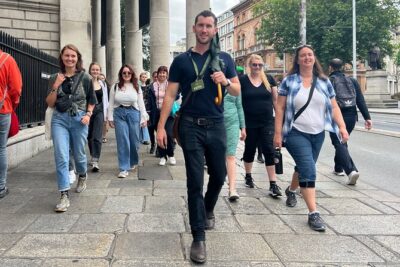
Dublin Highlights and Hidden Gems Guided Walking Tour
Our verdict on it →
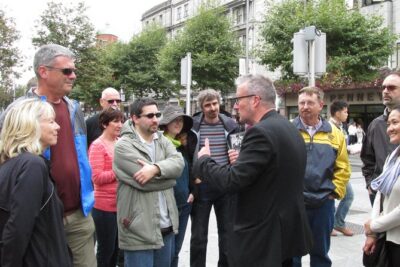

90 Minute Dublin Walking tour and Sightseeing tips
Our verdict on it →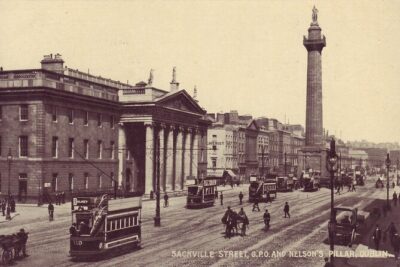

Dublin Traditional Irish 3 Course Meal Walking Tour with Local
Our verdict on it →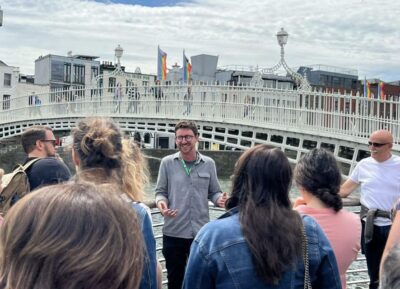
Browse the lists this tour appears in