
Reviewed · WALKING TOURS
Dublin: Sightseeing Walking Tour in German
Dublin reveals itself best on foot, and this tour links its major sights with odd little stories you could easily miss alone. In 2.5 hours, you move from the medieval quarter around Dublin Castle and Christ Church Cathedral to Temple Bar, across the Liffey, and up O’Connell Street before finishing near Trinity College.
I like the small-group format, which should make it easier to hear the guide and ask questions. I also like the mix of famous places and unusual details, from a former Lisbon tram now used as a café to a post box tied to Ireland’s move toward independence.
The main consideration is pace. You cover a large part of central Dublin in one walk, so you will spend much of the time on your feet and may not have time to enter every major building. Visits are external during the tour, though you can return to some sites afterward.
Key Points at a Glance
- German-language storytelling: A live professional guide leads the walk in German, making the history easier to follow if German is your preferred language.
- A two-sided view of Dublin: The route crosses the River Liffey and covers both the south and north sides of the city center.
- More than the headline sights: Along with Dublin Castle, the GPO, and Trinity College, you’ll look for a former cinema, a church that is no longer a church, and a café inside an old tram.
- A strong 1916 Rising connection: The General Post Office and O’Connell Street provide a clear introduction to one of Ireland’s key modern historical events.
- Easy central meeting point: The walk begins at the Tree of Gold statue on Dame Street, at the corner of Fownes Street Upper.
- Good booking flexibility: The tour costs $34 per person, lasts 2.5 hours, and allows free cancellation up to 24 hours before departure.
Starting at the Tree of Gold on Dame Street
The meeting point is the Tree of Gold statue, also called Crann an Óir, on Central Plaza at Dame Street and Fownes Street Upper. This puts you in the heart of central Dublin, close to the lanes and streets that lead into the old Viking and medieval quarter.
Starting here makes sense. You are not spending the opening minutes getting out to a distant neighborhood. Instead, the tour begins amid the city’s main historic streets and quickly moves toward Dublin Castle, City Hall, and Christ Church Cathedral.
I recommend arriving with comfortable shoes and a little time to find the statue. The route covers a lot of ground, and the value of the tour depends partly on your willingness to keep moving. This is an urban walk, not a stop-and-rest sightseeing circuit.
The tour is wheelchair accessible, which is useful for anyone who needs a more accommodating way to see the center. Still, Dublin’s historic streets and busy public areas can vary in surface and crowd levels, so you may want to confirm any specific mobility needs when booking.
More Walking Tours in Dublin
- Dublin Highlights and Hidden Gems Guided Walking Tour
★ 5.0 · 6,020 reviews - Dublin: Highlights and Hidden Gems Walking Tour
★ 4.9 · 2,140 reviews - 1916 Rebellion Walking Tour
★ 5.0 · 1,605 reviews
Dublin Castle and the Medieval Quarter
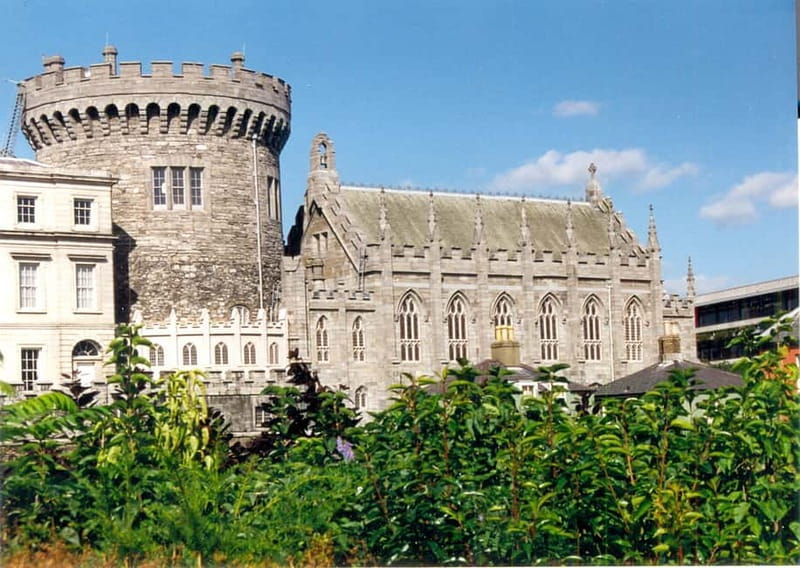
The first part of the walk explores the former Viking and medieval quarter. Dublin Castle is the major anchor here, with City Hall and its surroundings adding a second layer of civic history.
You will see the castle grounds and gardens from outside. That distinction matters: admission inside is not part of the walking tour. Your guide can explain why the castle mattered to Dublin, while you make a note of whether you want to return later for an indoor visit.
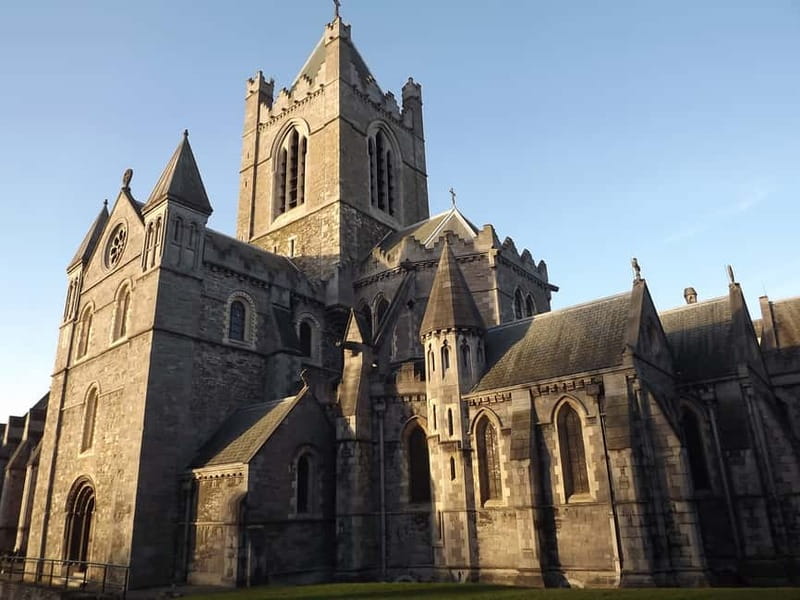
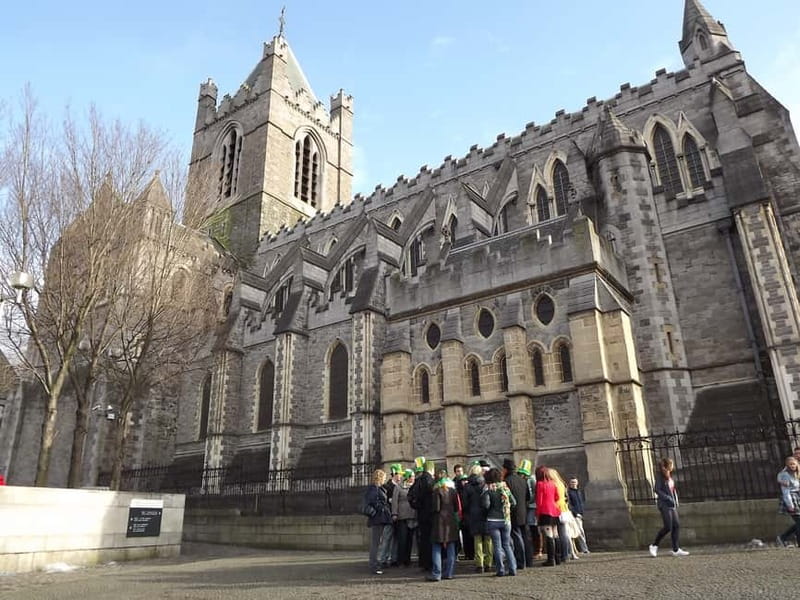
Christ Church Cathedral follows as another key landmark. Its location helps you understand how closely religious, royal, and civic power once sat together in the old center. You see the cathedral externally during the tour, so the stop works best as an introduction rather than a full cathedral visit.
I like this opening because it gives you a quick sense of Dublin’s age without turning the walk into a list of dates. The guide also brings in the human stories connected with these places, which can make a short exterior stop more memorable than a dry explanation of architecture.
Fishamble Street, Smock Alley, and Temple Bar
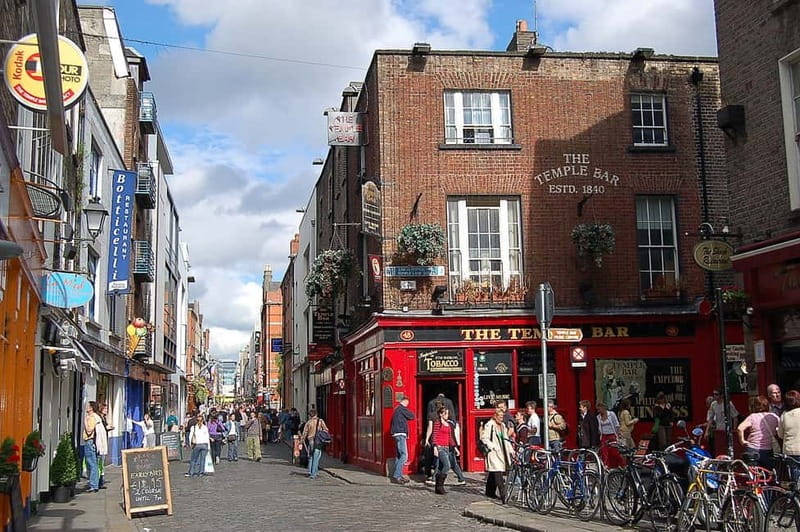
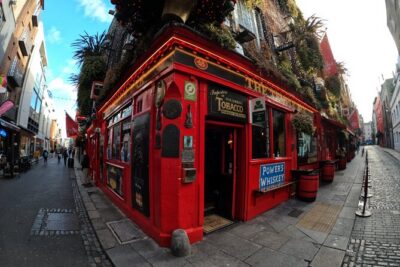
From the old quarter, the route continues along Fishamble Street and Smock Alley before reaching Meeting House Square in Temple Bar. This is one of the most familiar parts of Dublin, but the walk aims to show more than the area’s best-known streets.
Temple Bar can be lively and crowded, so you should expect a change of pace here. The square and surrounding lanes offer a look at Dublin’s cultural center, but you may also find the area less peaceful than the castle grounds or the quieter corners earlier in the route.
The guide’s smaller stories are especially useful in this section. The tour points out Dublin’s first full-time cinema, now defunct, and a church that is no longer functioning as a church. These details give you something to look for beyond pubs and souvenir shops.
One unusual stop involves a representation of a famous Leonardo da Vinci painting. Another involves a former Lisbon tram now serving as a café. I appreciate details like these because they turn an ordinary walk between major sights into a search for things you would probably pass without noticing.
Crossing the Liffey and Finding the Italian Quarter
The Millennium Bridge carries the route across the River Liffey. This is one of the walk’s useful transitions, since you leave the south side and head into the north side of central Dublin.
The bridge is also one of the tour’s playful moments. You may get to feel its slight bounce as you cross. It is a small detail, but it gives the group a break from formal history and lets you experience the city as a place people use every day.
On the north side, the walk passes through the Italian Quarter. The route continues to St Mary’s Church, now used as a well-known café and bar. The building’s changed purpose makes it a good example of how Dublin’s old structures have been reused rather than simply preserved as museum pieces.
This section is a good reason to choose a walking tour instead of a hop-on, hop-off bus. A bus can show you the main streets, but it cannot easily point out a repurposed church or explain the small urban details along the way.
Same part of the country, a completely different day out:
- Dublin: Guinness Storehouse Entry Ticket
★ 4.6 · 16,863 reviews - Irish Rock ‘N’ Roll Museum Experience Dublin
★ 5.0 · 6,112 reviews - Dublin: Jameson Whiskey Distillery Tour with Tastings
★ 4.7 · 4,859 reviews - Dublin Jameson Distillery Bow St. Tour and Tasting 45 mins
★ 5.0 · 4,690 reviews
Henry Street, Moore Street, and O’Connell Street
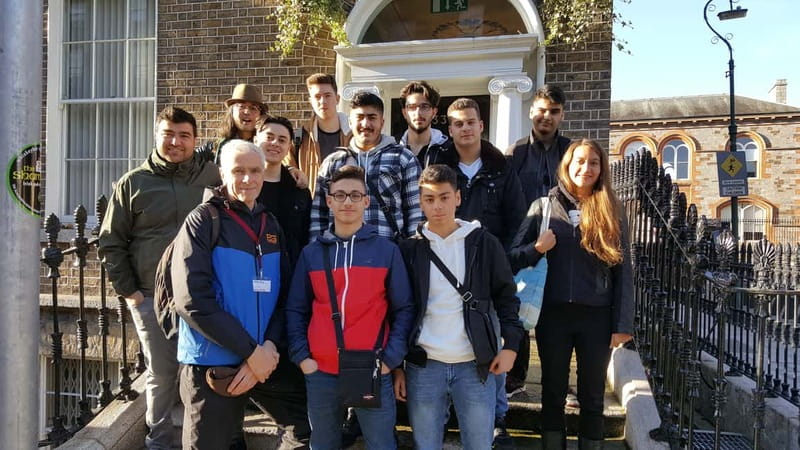
The route then moves toward Henry and Moore Streets before reaching O’Connell Street, one of Dublin’s main historic thoroughfares. Here the scale changes. Narrow lanes give way to a broad avenue marked by monuments and major public buildings.
O’Connell Street is where the tour connects the city’s older story with Ireland’s struggle for independence. The General Post Office is the key stop. It served as the headquarters of the rebels during the 1916 Rising, and the fighting caused major destruction to the building, the street, and nearby areas.
You see the building from outside, but the exterior alone carries a lot of meaning. It is not just a grand post office. It is tied to a decisive event in Irish history, and the guide can place that event in the setting where it happened.
The O’Connell Monument adds another layer. The stop helps you read the street as a public space shaped by political memory, not simply as a shopping or transport corridor.
You will also hear about an Irish post box connected with the transition to independence. That kind of small object can tell a large story. It lets you see political change in an everyday piece of street furniture rather than only in statues and official buildings.
Finishing Near Trinity College and the Book of Kells
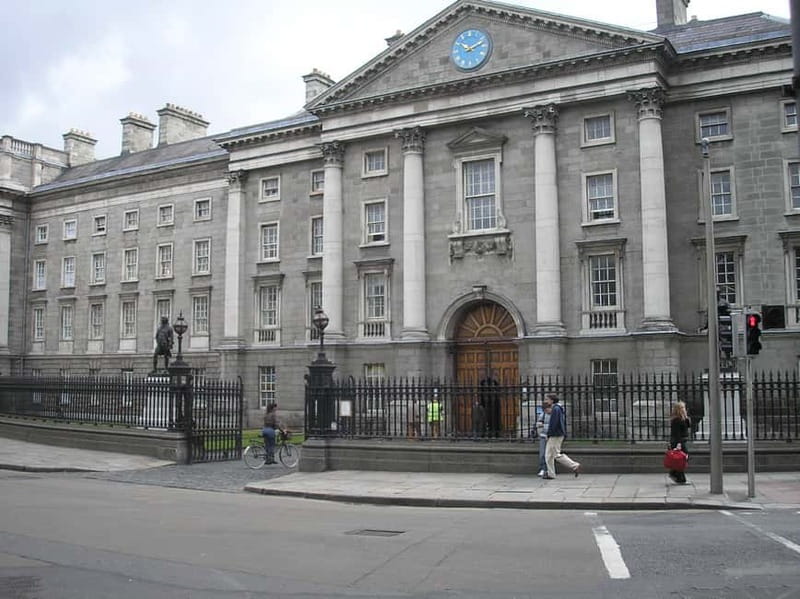
The walk finishes around Trinity College, with the famed Book of Kells as the final major reference point. The college and its library are among Dublin’s most popular sights, so ending here gives you a clear option for a follow-up visit.
The tour itself does not include entry to Trinity College or the Book of Kells. You will see the exterior and receive an introduction, then you can decide if you want to visit separately. If the manuscript is high on your list, check opening information and admission details before arriving in Dublin.
The route also mentions the former Parliament House, now the Bank of Ireland. This is a useful closing stop because it brings together architecture, government, and the changing use of historic buildings.
One final unusual detail concerns a stark-naked representation of a famous 18th-century composer. The sight is deliberately unexpected and gives the end of the walk a lighter note after the more serious material on the 1916 Rising.
The provided meeting details say the activity ends back at the meeting point, while the route description says the walk finishes outside Trinity College. Since those locations are not the same, confirm the exact end point when you book or meet the guide.
Why the German Guide Matters
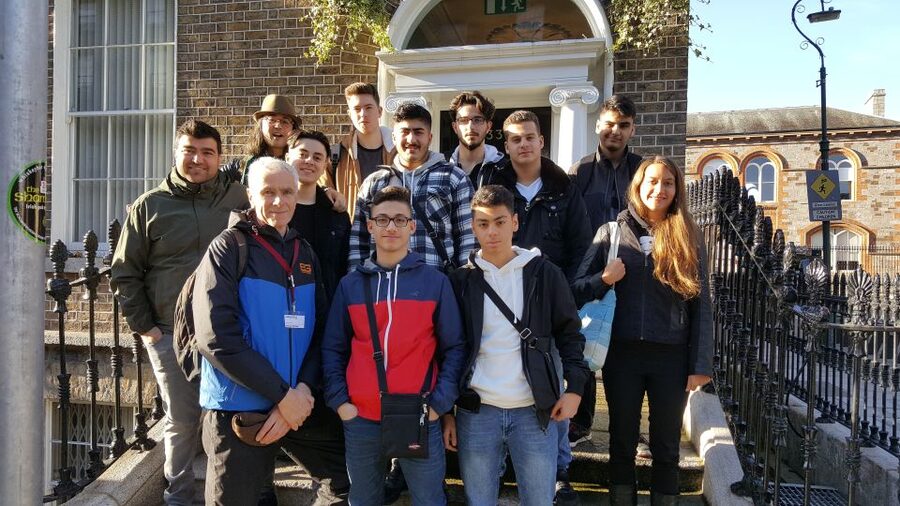
This is not simply a standard Dublin walk translated into a few signs. A live German-speaking guide can shape the explanation around the group and make it easier to ask questions as the route unfolds.
That matters most at places such as the General Post Office and Dublin Castle, where a few words of context make the buildings far more meaningful. If you understand the stories without constantly translating in your head, you can pay more attention to the city around you.
The tour provider is Pat Liddy’s Walking Tours of Dublin. The guides are described as professional and friendly, and extra guides may be added when needed. No individual guide’s name is provided, so you should not book expecting a particular person.
A German tour can also be a better choice for mixed-language groups. Instead of one person translating everything for companions, the guide can keep the walk moving in German from start to finish.
What $34 Buys You
At $34 per person, the tour sits in a reasonable range for a 2.5-hour guided walk in a major European capital. You are paying for a professional guide, a long central route, and access to stories that are difficult to assemble from a map alone.
The value is strongest if this is your first visit to Dublin or your first day in the city. The route connects the medieval quarter, Temple Bar, both sides of the Liffey, O’Connell Street, and Trinity College. Afterward, you have a useful mental map for returning to the places you want to explore inside.
The price is less attractive if you mainly want interior visits. City Hall, Dublin Castle, Christ Church Cathedral, the General Post Office, and Trinity College are visited externally. You will need to pay separately for any attraction admission you choose after the tour.
Gratuities are not included. The booking also offers reserve-now, pay-later flexibility, and free cancellation up to 24 hours before the start time. Those terms are useful if your Dublin plans are still shifting.
Who Will Get the Most From This Walk?
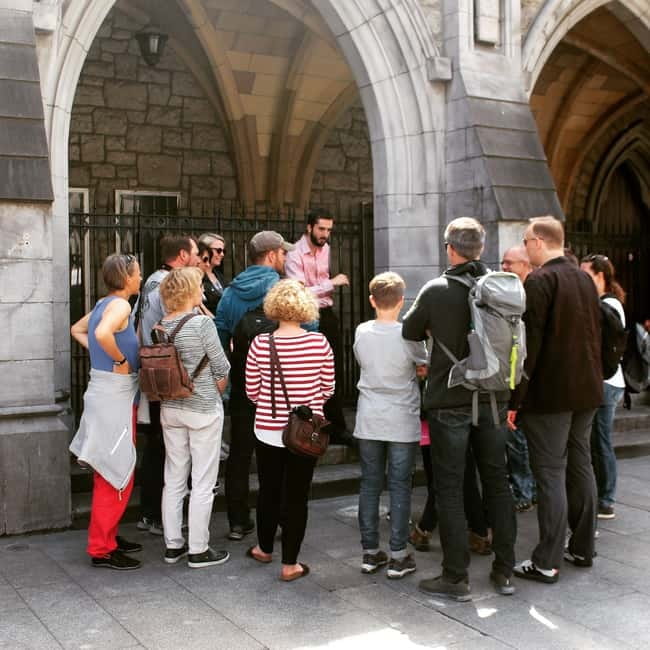
I would choose this tour if you want a broad introduction without spending half a day inside one attraction. It suits first-time visitors, German-speaking travelers, and anyone who prefers stories and street views to a formal museum visit.
It also works well for people who like small surprises. The former cinema, repurposed church, tram café, unusual artwork, wobbly bridge, and independence-era post box give the walk a personality beyond its major landmarks.
You should think twice if you dislike walking at a steady pace or want plenty of time for photographs. The route covers a substantial section of central Dublin in 2.5 hours, and external visits mean you will not pause for a full tour inside each building.
Families and older visitors may appreciate the central route and wheelchair access, but the walk still requires time outdoors and regular movement. Ask about the exact route and stopping points if you have particular mobility concerns.
A Few Practical Tips Before You Go
Wear shoes suited to city streets. You will cross several districts, and the tour’s main strength is the amount of ground it covers.
Keep your camera ready for the small details, not only the big landmarks. The post box, old tram, former church, and unusual composer representation are the kinds of sights that can disappear if you only watch for castles and cathedrals.
Plan your follow-up visits before or after the walk. Since all stops are external during the tour, you may want to return to Dublin Castle, Christ Church Cathedral, or Trinity College when you have more time.
If you want the Book of Kells, treat the walking tour as an introduction and arrange the college visit separately. The tour ends near that area, making it a convenient point to continue exploring, subject to the exact end point confirmed on the day.
Should You Book It?
Book this tour if you want a German-language overview of central Dublin with both major landmarks and curious street-level details. The small group, friendly professional guide, accessible format, and strong route make $34 reasonable for a first look at the city.
Skip it if you want extensive time inside Dublin’s attractions or a slow photographic stroll. For most visitors who want to get their bearings, understand the city’s political and medieval story, and leave with a list of places to revisit, this is a useful and entertaining start.
FAQ
How long does the Dublin walking tour last?
The tour lasts 2.5 hours. Starting times vary, so check availability when booking.
What language is the tour conducted in?
The live tour guide speaks German. German is the listed tour language.
Where does the tour begin?
The tour begins at the Tree of Gold statue, also called Crann an Óir, at Central Plaza on Dame Street in Dublin 2, near the corner of Dame Street and Fownes Street Upper.
Which landmarks are included on the route?
The route includes City Hall, Dublin Castle grounds and gardens, Christ Church Cathedral, Fishamble Street, Smock Alley, Meeting House Square, Temple Bar, the Millennium Bridge, the River Liffey, the Italian Quarter, St Mary’s Church, Henry and Moore Streets, O’Connell Street, the General Post Office, the O’Connell Monument, the former Parliament House, and Trinity College.
Can I go inside the attractions during the tour?
No. All visits are external during the walking tour. Opportunities are available to visit some sites afterward.
Does the tour include the Book of Kells?
The walk finishes outside Trinity College near its famed Book of Kells. Admission to the Book of Kells is not included.
Is the tour wheelchair accessible?
Yes, the activity is listed as wheelchair accessible.
Can I cancel for a full refund?
Yes. You can cancel up to 24 hours in advance for a full refund. The booking also offers a reserve-now, pay-later option.
Just added around Dublin
- Women Of Ireland: Trailblazers & Pioneers★ 5.0 · 4 reviews
- Whiskey Tasting Tour of Dublin★ 5.0 · 117 reviews
- Premium Irish Whiskey Tasting Hosted by Local Dublin Expert★ 5.0 · 77 reviews
- Historical Walking Tour of Dublin★ 5.0 · 50 reviews
- Dublin (Dun Laoghaire) Top-Rated Coastal Walking Tour★ 5.0 · 80 reviews
- Semi-Private (8people max) 2.5 Hr Dublin Walking Tour★ 5.0 · 69 reviews
- Private Ultimate Day in Dublin (Walking Tour)★ 5.0 · 30 reviews
- DayTripper Dublin: A Guided City Walking Tour★ 5.0 · 90 reviews
Walking Tours, compared.
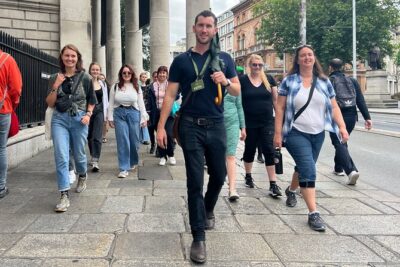
Dublin Highlights and Hidden Gems Guided Walking Tour
Our verdict on it →
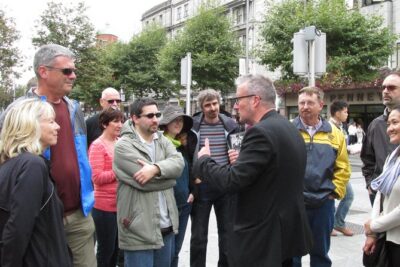

90 Minute Dublin Walking tour and Sightseeing tips
Our verdict on it →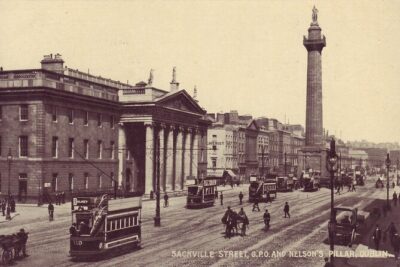

Dublin Traditional Irish 3 Course Meal Walking Tour with Local
Our verdict on it →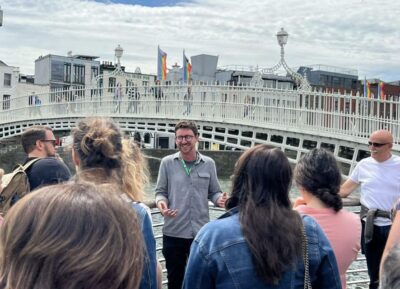
Browse the lists this tour appears in