
Reviewed · WALKING TOURS
Small Group-Dublin Walking Tours
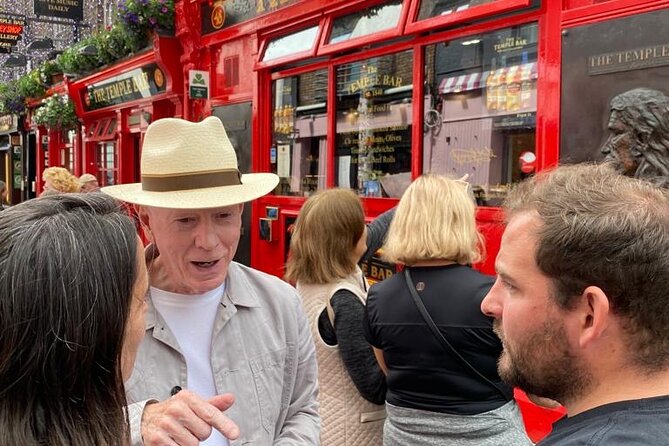
Dublin’s past comes alive through stories, music, and short skits on this two-hour walk with guide Damian McGrath. You move from Viking Dublin and Dublin Castle to the Easter Rising, Trinity College, Bram Stoker, and the city’s shopping streets, with plenty of useful orientation along the way.
I like the small cap of eight people, which gives the walk a personal feel and leaves room for questions. I also like the easy start behind Dublin Castle and the finish at Powerscourt Townhouse, close to shops, cafés, and several sights you may want to revisit.
The main consideration is pace. You cover a lot of ground in about two hours, often on cobbled streets, and the tour focuses on views and explanations from outside rather than paid interior visits.
Key points to know before you book
- Damian McGrath leads a lively, personal walk: Expect history, music, humor, and occasional skits rather than a dry lecture.
- The group is capped at eight: This makes it easier to ask questions and adjust the discussion to your interests.
- You see central Dublin’s major landmarks: The route links Dublin Castle, Christ Church Cathedral, Temple Bar, Trinity College, St. Stephen’s Green, and more.
- The route is useful on your first day: You finish with a clearer sense of where Dublin’s main districts and streets fit together.
- Most stops are outside: The advertised stops have no admission charge, but this is primarily a walking and storytelling tour.
- Wear supportive shoes: Cobblestones, bridges, pavements, and two hours on foot call for comfort over style.
Why this short Dublin walk works so well
This is not a museum tour with a long stop at one building. It is a brisk sweep through central Dublin, designed to help you understand how the city fits together. You begin at Dublin Castle and end at Powerscourt Townhouse Centre, passing major landmarks and several lesser-known details along the way.
I see the route as an introduction rather than a complete study of Dublin. In two hours, you cannot properly visit every site, but you can learn which places deserve more of your time. That makes this a smart choice near the start of a stay, especially if you want to return later to Trinity College, the National Museum, Temple Bar, or St. Stephen’s Green.
Damian McGrath’s style is a major part of the experience. He uses music to match the places and the people being discussed, and he adds short performances that keep the group involved. The result should suit you if you enjoy history delivered with personality rather than a long stream of dates.
More Walking Tours in Dublin
- Dublin Highlights and Hidden Gems Guided Walking Tour
★ 5.0 · 6,020 reviews - Dublin: Highlights and Hidden Gems Walking Tour
★ 4.9 · 2,140 reviews - 1916 Rebellion Walking Tour
★ 5.0 · 1,605 reviews
Starting behind Dublin Castle at Chester Beatty
The meeting point is the Chester Beatty Library in Dubh Linn Garden, behind Dublin Castle. This is a practical place to begin because the address is easy to locate, and the garden gives the group a little breathing room before the walk starts.
You first get an outline of the route and hear about the beginnings of Dublin. The name Dublin is linked to the Irish Dubh Linn, or black pool, a reference to the water landscape around the early settlement. That opening gives the rest of the walk a useful frame: Dublin grew from water, trade, settlement, and changing power.
The Chester Beatty itself is not entered as part of the tour. If you have extra time, you can treat it as a separate stop during your visit, but the walk uses its location as a starting point.
Dublin Castle and the city’s early foundations
A short walk around Dublin Castle follows. You explore the grounds and hear how the area changed from its early setting into a center of government and power.
The stop lasts about ten minutes, so do not expect a full castle visit. Instead, you get the setting and the story, then move on. This works well for a first orientation, though anyone hoping to tour the castle interiors will need to arrange that separately.
Christ Church Cathedral and Handel’s Dublin
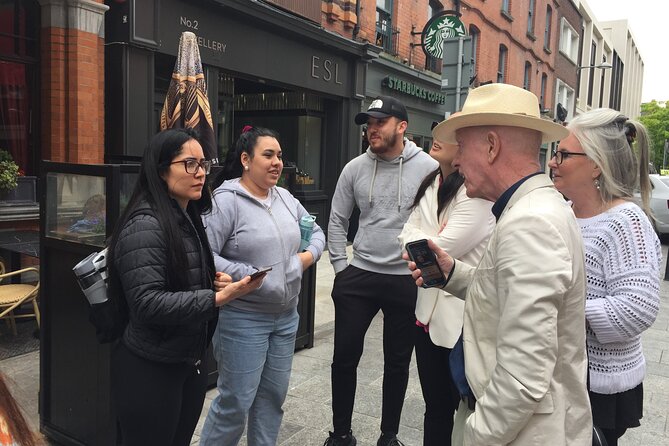
The route passes Christ Church Cathedral, one of the city’s most important religious buildings. Here, Damian discusses the history of the Catholic Church in Ireland and connects the cathedral area to the city’s Viking beginnings.
You also get a view of the venue where Handel’s Messiah was first performed. That detail helps broaden the picture of Dublin. The city is not presented only through political rebellion or pub culture. Music, faith, trade, and public life all have a place in the story.
Again, this is an exterior viewing stop rather than an admission-based cathedral tour. If you want to see the cathedral’s interior, crypt, or displays, plan a separate visit.
Same part of the country, a completely different day out:
- Dublin: Guinness Storehouse Entry Ticket
★ 4.6 · 16,863 reviews - Irish Rock ‘N’ Roll Museum Experience Dublin
★ 5.0 · 6,112 reviews - Dublin: Jameson Whiskey Distillery Tour with Tastings
★ 4.7 · 4,859 reviews - Dublin Jameson Distillery Bow St. Tour and Tasting 45 mins
★ 5.0 · 4,690 reviews
Temple Bar, Ha’penny Bridge, and the River Liffey
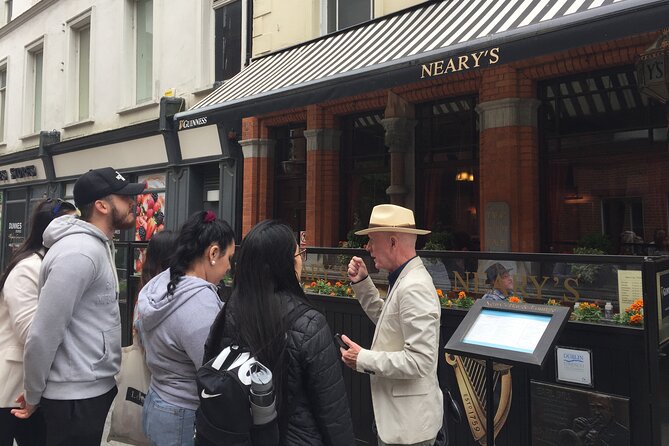
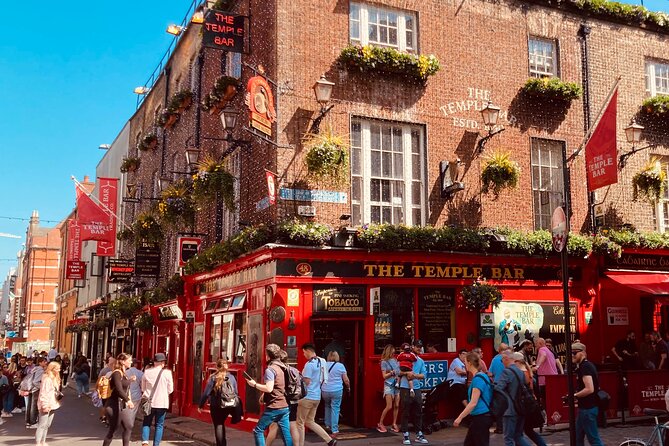
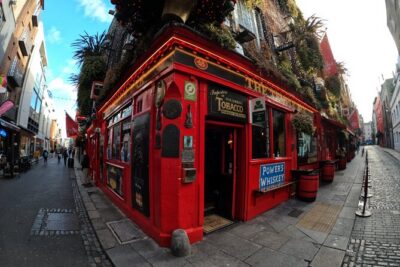
Temple Bar brings a sharp change of mood. This is Dublin’s best-known nightlife quarter, with pubs, live music, restaurants, and a heavy concentration of visitors. The tour gives you a look at the district and explains its role in modern Dublin, but it does not treat Temple Bar as the whole city.
That distinction matters. Temple Bar is fun to see, but it can also be crowded and more expensive than other parts of town. A guide helps place it in context instead of letting it define your idea of Dublin.
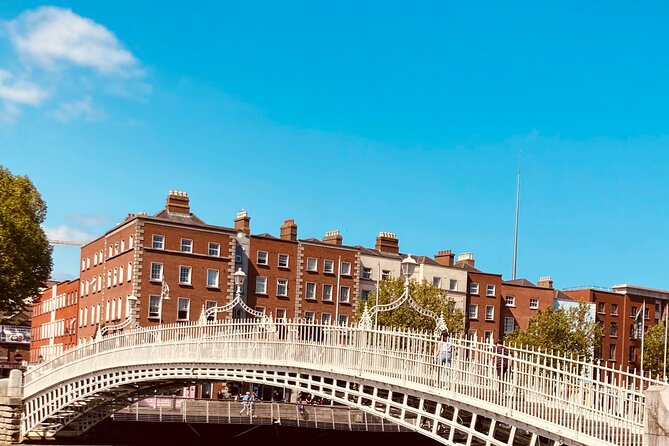
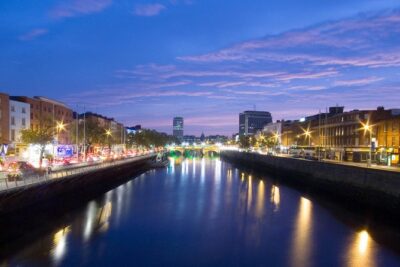
You then cross the Ha’penny Bridge, one of the city’s most recognizable crossings. The route uses the bridge to discuss trade, movement, and the way the River Liffey shaped the center. It is also one of the more scenic moments of the walk, though the bridge can feel tight when busy.
This section is about fifteen minutes, giving you enough time to take in the setting without turning the walk into a photo stop at every corner.
O’Connell Bridge and the memory of 1916
At O’Connell Bridge, the discussion shifts toward the 1916 Easter Rising. You see the statue of Daniel O’Connell, the Irish parliamentarian after whom the bridge is named, and hear more about the River Liffey and the famous Liffey Swim.
This is one of the route’s useful transitions. You move from the medieval and commercial center toward the political heart of modern Irish history. The bridge also gives you a simple way to understand Dublin’s layout, with the river dividing north and south while connecting the city’s main streets.
The stop is short, so expect a clear introduction rather than a detailed account of the Easter Rising. If that subject interests you, note the locations and return later at your own pace.
Trinity College and Parliament House
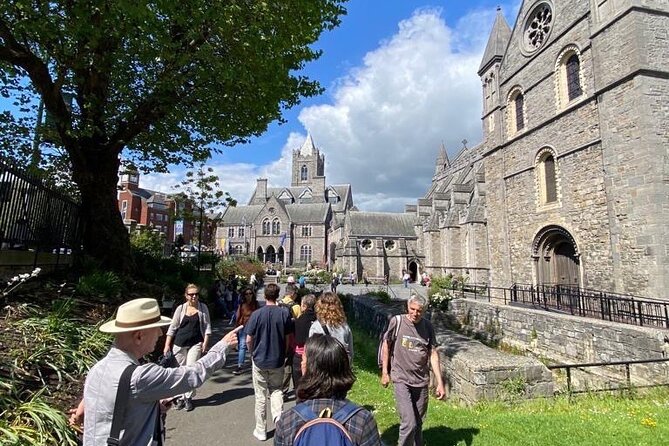
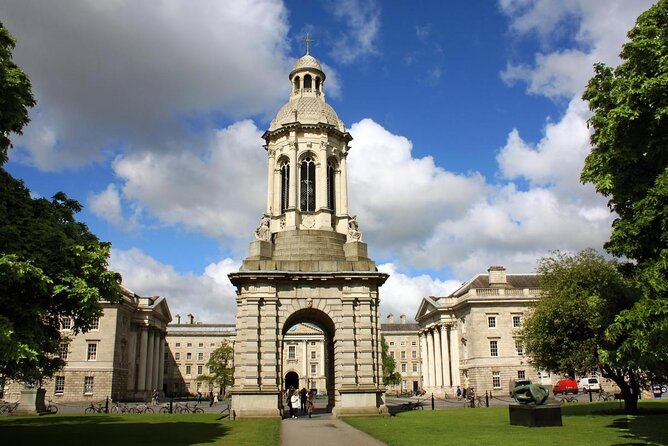
Trinity College is one of the route’s strongest stops. You pause to view the university and enter the courtyard for a few minutes, taking in the original architecture. Damian also connects Trinity to well-known historical figures who studied there.
The tour does not include a long visit to the Old Library or the Book of Kells. That is a drawback if those are your main reasons for coming to Trinity, but it is also useful if you want to get your bearings before deciding how much time to spend inside.
Across the area, you catch sight of Parliament House, also called the House of Lords, along Dame Street. The combination of university, government, and older architecture makes this part of the route especially good for understanding Dublin’s civic center.
Families can do well here because the information is broken into short sections. An 11-year-old or 13-year-old may not want a long formal lecture, but music, questions, and stories can make the setting easier to follow.
St. Anne’s Church, Bram Stoker, and Grafton Street
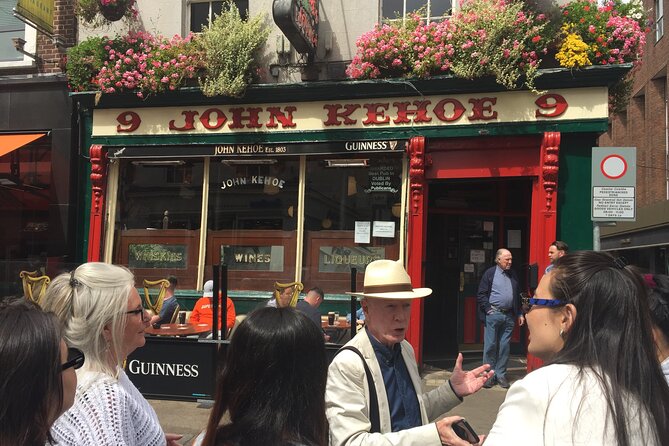
Outside St. Anne’s Church on Dawson Street, the tour turns to Bram Stoker, author of Dracula. You hear about his wedding at the church before moving toward Bewley’s Café on Grafton Street.
This is a good example of the tour’s approach. Instead of focusing only on the most famous buildings, it uses a personal connection to make the street memorable. You also get a look at Bewley’s ornate café, one of the city center’s familiar meeting places.
Grafton Street is Dublin’s main high-end shopping district, and it brings plenty of street activity into the walk. You may want to return here after the tour for shopping, café time, or the nearby pedestrian streets.
Leinster House and the National Museum area
The walk continues along Kildare Street, where Bram Stoker’s original home and Leinster House are discussed. Leinster House is Ireland’s parliament building, and Damian explains its connection to the White House in Washington, DC.
You also pass the National Museum of Archaeology. This is another stop that works best as an introduction. The route gives you the location and a reason to return, but it does not include time for a museum visit.
I like this part because it adds political and literary detail to the walk without sending you far from the center. By now, you have seen how Dublin’s story is tied to government, writers, religion, education, trade, and public spaces.
St. Stephen’s Green and Dublin’s Georgian face
St. Stephen’s Green provides a quieter stretch after the city streets. The route also includes Grafton Street, the Royal College of Surgeons, and glimpses of Georgian architecture.
The park is useful for orientation and atmosphere. You get a sense of how central Dublin combines busy shopping streets with formal squares, old façades, and open green space. The stop lasts about fifteen minutes, so it is a look around rather than a long break.
If your legs are tiring, this is one of the places where you may wish the tour paused longer. Still, the short format keeps the route moving and lets you see more of the center.
Finishing at Powerscourt Townhouse
The final stop is Powerscourt Townhouse Centre on South William Street, between South William Street and Clarendon Street. The building is an architectural highlight with boutique shops, cafés, restaurants, and an impressive atrium.
Ending here is practical. You are near Grafton Street, St. Stephen’s Green, and several places suitable for lunch or a break. You can also continue exploring without having to retrace the entire route.
The finish gives the tour a pleasant sense of purpose. You begin with Dublin’s early origins and castle district, then end among shops, food, and everyday city life.
Pace, group size, and comfort
The tour lasts about two hours and accepts no more than eight people. That small number matters because Damian can respond to questions and shape parts of the discussion around the group. A small group also makes it easier to hear on busy streets.
The pace is generally quick but manageable. One person with a hip problem found the guide considerate, and another family described the pace as comfortable. Still, you should expect almost continuous walking, with cobbles and uneven sections.
Wear comfortable shoes. Bring a rain layer if the forecast looks uncertain, since the experience is outdoors and no indoor admission is built into the route. Service animals are allowed, and the tour is near public transportation.
What the $60.47 price means
At $60.47 per person, this is not the cheapest way to see Dublin’s center. You are paying for a private-feeling small group, a planned route, and a guide who adds music and performance to the history.
The value is strongest if you are new to Dublin and want a fast, human introduction. It is also useful if you have only a short stop in the city, or if you want help deciding which places deserve a longer visit.
The value is weaker if you prefer to walk alone with an audio guide, or if you mainly want interior access to Dublin Castle, Christ Church Cathedral, Trinity’s library, or the National Museum. Those visits are not included.
The tour is often booked well ahead, with an average booking lead time of about 66 days. That suggests you should reserve early for a particular date, especially if you want the small-group format.
Who should book this Dublin walk?
Book it if you want a friendly introduction, enjoy history told with humor, and prefer a small group to a large guided procession. It suits first-time visitors, families with older children, couples, and anyone arriving in Dublin with only a day or two to get oriented.
I would also consider it after an unexpected layover, since the two-hour length gives you a useful overview without taking up an entire day. Damian’s flexibility and personal style are especially helpful if you have particular interests or need to keep to a tight schedule.
Skip it if your priority is entering every major landmark. This is a city walk with storytelling, not a series of full site visits. You should also choose another activity if two hours on foot sounds tiring.
The booking includes free cancellation up to 24 hours before the start time. Changes or cancellations inside that window are not accepted for a refund.
FAQ
Where does the Dublin walking tour start?
It starts at the Chester Beatty Library in Dubh Linn Garden behind Dublin Castle, at Castle Street, Dublin 2.
Where does the tour finish?
It ends at Powerscourt Townhouse Centre on South William Street, between South William Street and Clarendon Street.
How long does the tour last?
The tour lasts approximately two hours.
How much does the tour cost?
The listed price is $60.47 per person.
How many people can join the tour?
The group has a maximum of eight travelers.
Is the tour offered in English?
Yes. The tour is offered in English.
Does the price include admission to the attractions?
The listed stops have no admission charge as part of the walking route. The experience mainly views buildings and sites from outside, with a brief chance to enter the Trinity College courtyard. Separate interior admissions are not included.
Should I wear special clothing or shoes?
Wear comfortable shoes because the route includes cobblestone streets and substantial walking.
Can I cancel for a full refund?
Yes. You can cancel at least 24 hours before the local start time for a full refund. Cancellations or changes made less than 24 hours before the start time are not accepted for a refund.
Just added around Dublin
- Women Of Ireland: Trailblazers & Pioneers★ 5.0 · 4 reviews
- Whiskey Tasting Tour of Dublin★ 5.0 · 117 reviews
- Premium Irish Whiskey Tasting Hosted by Local Dublin Expert★ 5.0 · 77 reviews
- Historical Walking Tour of Dublin★ 5.0 · 50 reviews
- Dublin (Dun Laoghaire) Top-Rated Coastal Walking Tour★ 5.0 · 80 reviews
- Semi-Private (8people max) 2.5 Hr Dublin Walking Tour★ 5.0 · 69 reviews
- Private Ultimate Day in Dublin (Walking Tour)★ 5.0 · 30 reviews
- DayTripper Dublin: A Guided City Walking Tour★ 5.0 · 90 reviews
Walking Tours, compared.
Dublin Highlights and Hidden Gems Guided Walking Tour
Our verdict on it →
90 Minute Dublin Walking tour and Sightseeing tips
Our verdict on it →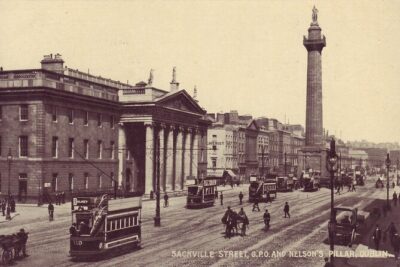

Dublin Traditional Irish 3 Course Meal Walking Tour with Local
Our verdict on it →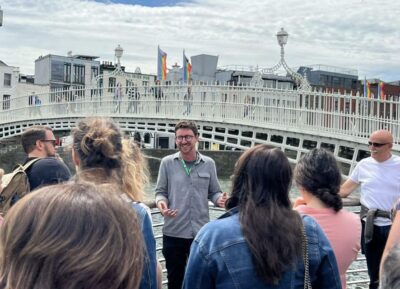
Browse the lists this tour appears in