
Reviewed · WALKING TOURS
Guided Walking Tour in stunning county Waterford Ireland
Kilmacthomas is the kind of Irish town that rewards a slower look. On this five-kilometre guided walk, Stíofán links the old workhouse, railway line, mills, village characters, wildlife, and Waterford Greenway into one thoughtful morning. The stories reach from prehistoric settlement to local industry, with plenty of room to stop and listen.
I like two things right away: the tour gives serious attention to the workhouse and paupers’ graves, and it makes time for three quiet mindfulness stops beside nature. The main drawback is that the paupers’ gravesite can only be viewed through a gateway because it is on private land. Still, the $21 price is fair for a small-group walk lasting two to three hours.
Key points to know before you book
- A local storyteller leads the walk: Stíofán brings personal knowledge of Kilmacthomas and adjusts the pace and conversation to the group.
- The route is mostly flat: Expect about 5 km over two to three hours, with time for frequent stops.
- The old workhouse is a major focus: You see the poorhouse buildings, isolation house, mortuary, and the path toward the paupers’ graves.
- Railway heritage shapes the town: The route includes the station, signal house, curved viaduct, and views toward Flahavan’s Mill.
- Nature is part of the tour: Three pauses focus on flora, birds, water, wildlife, and simply taking a breath.
- The group is kept small: A maximum of 15 people makes it easier to hear the guide and ask questions.
Why Kilmacthomas makes a fine walking-tour base
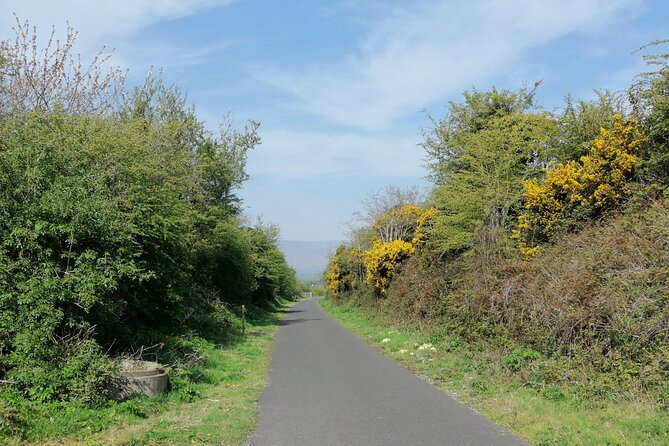
Kilmacthomas sits along the Waterford Greenway, but this experience is not just a stroll on a former railway path. It is a loop through the town and countryside, using the Greenway as one part of a larger story.
That mix matters. You get open views, old buildings, a river walk, and a village main street, but you also get context. The railway is not just something to photograph. It explains how people and goods once moved. The mills are not just old industrial sites. They point to the work that supported local families.
Stíofán’s role is central. The tour depends less on grand monuments than on the guide’s ability to connect small details. A local character, an old building, a patch of vegetation, or a bend in the road can become part of the story.
The pace is gentle. The full walk takes around two to three hours, and the route is described as flat. You should still be ready to walk about 5 km, but this is not a strenuous hike. The pauses and short talks break up the distance.
More Walking Tours in Waterford:
- Waterford Treasures: Epic Walking Tour
★ 4.5 · 152 reviews - Waterford Treasures: Walking Tour of the Viking Triangle
★ 4.7 · 43 reviews - Dublin Highlights and Hidden Gems Guided Walking Tour
★ 5.0 · 6,020 reviews
Beginning at the Kilmacthomas Workhouse
The walk starts at the Greenway car park beside the workhouse at 10:00 am. This is a useful starting point because the workhouse gives the morning its moral and historical weight.
The Kilmacthomas Workhouse opened in 1851, during a period when local poor people had few places to turn. You walk around the poorhouse buildings, isolation house, and mortuary before following the path toward the paupers’ graveyard.
The visit is outdoors, and the buildings are viewed as part of the grounds. Do not expect a polished museum experience with a long sequence of indoor exhibits. The power comes from the setting and from the explanation of how the workhouse functioned.
For me, this is one of the strongest parts of the walk. It places everyday hardship beside the pleasant countryside you see today. Ireland’s rural scenery can look peaceful, but places like the workhouse show how difficult life could be for people with no money, poor health, or no family support.
The guide also helps you read the site as more than a collection of old structures. The isolation house and mortuary point to the practical systems used to manage illness and death. That makes the stop more useful than a quick photograph from the road.
The paupers’ gravesite and its limits
From the workhouse, the group continues toward the paupers’ gravesite. You view the mass grave from a gateway because the ground is privately owned and access is not available.
This restriction is important to understand before booking. You will not walk into the gravesite itself. Instead, a flip card helps explain what lies beyond the gate and why the place matters.
Some people may find this stop brief, but its emotional effect does not depend on a long visit. The gateway creates a clear boundary between public access and private land, while the story keeps the site from disappearing into the background.
The five-minute stop also shows one of the tour’s trade-offs. The experience offers many points of interest, but some are seen from outside rather than explored in depth. If you want a formal cemetery visit or a museum display, this will feel limited. If you value respectful interpretation and local context, it remains a worthwhile pause.
New Bridge and the town’s prehistoric past
At New Bridge, the story reaches much further back. Archaeological work has dated activity in the Kilmacthomas area to around 4000 BC, earlier than the pyramids of Egypt.
A flip card explains the discoveries made in the area. The stop is short, but it changes your sense of the town. Kilmacthomas is not only a place shaped by the workhouse, railway, and mills. People were using this area thousands of years ago.
This is a good example of how Stíofán builds the walk through layers of time. The route does not rely on one famous sight. Instead, it places prehistoric evidence, famine-era buildings, industrial sites, and modern recreation on the same path.
You may want to pause here and let the date sink in. Four thousand BC can feel abstract, so having it tied to a bridge and a familiar local place makes it easier to grasp.
A few more Waterford days to weigh up
- House of Waterford Crystal Guided Factory Tour
★ 4.5 · 2,303 reviews - Skip the Line: Hook Lighthouse Entrance Ticket and Guided Tour
★ 5.0 · 470 reviews - Waterford: House of Waterford Factory Tour
★ 4.8 · 256 reviews - Waterford Treasures: Medieval Museum Admission Ticket
★ 4.5 · 132 reviews
Three mindfulness stops along the Greenway and river
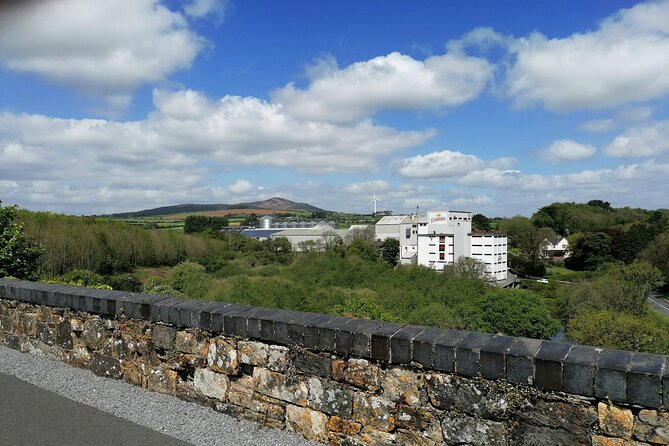
The tour includes three short mindfulness sections. These are not separate wellness classes. They are quiet pauses where you stop, breathe, and pay attention to what is around you.
The first comes near the route toward the village railway station. A flip card introduces local flora and fauna, while the Greenway offers a chance to notice the sounds and textures of the countryside.
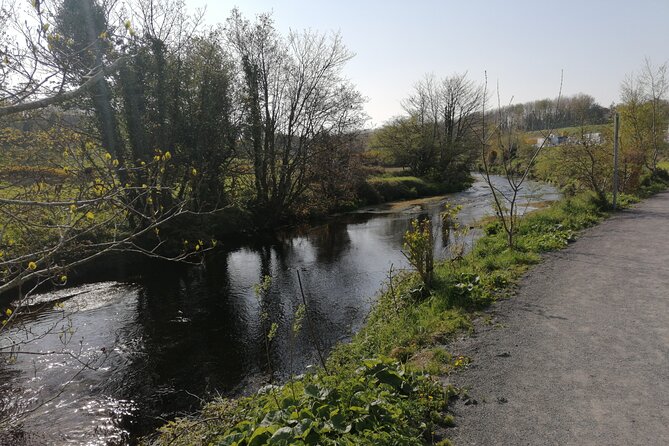
The second pause is beside the River Mahon. Here you might hear ducks, flowing water, bird song, and the sound of fish moving in the river. The guide also points out wildlife and plant life along the bank.
The third comes on a country lane leading back toward the Greenway. You look over open pastures and listen for birds while learning about the plants and animals found along the lane.
I like this feature because it stops the walk from becoming a nonstop lecture. You are given time to look around rather than simply move from one fact to the next. It also suits people who enjoy photography, bird sounds, and quiet scenery as much as local history.
The practical point is that the pauses are short, ranging from about five to fifteen minutes. They add calm without turning the tour into a long meditation session. If you prefer a fast march with little stopping, you may find the rhythm slow. Most people will appreciate the change of pace.
Railway station, signal house, and a town shaped by trains
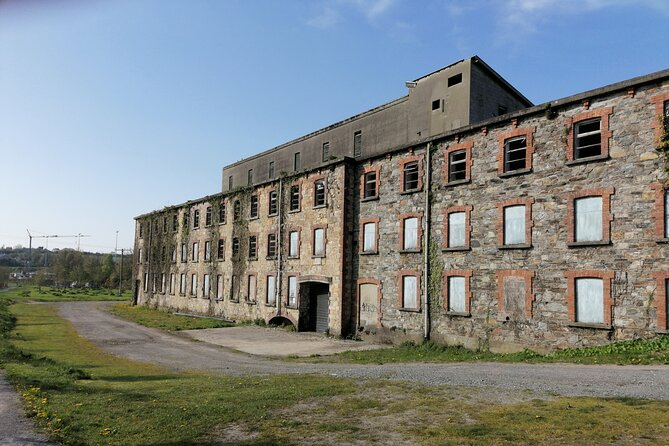
The old Kilmacthomas Railway Station and Signal House are viewed from outside. These buildings once played a key role in local transport and trade, and the guide explains how the railway supported the town’s economy.
This is one of the places where local explanation adds real value. Railway remains can be easy to pass without understanding their purpose. With the station and signal house placed in the story, you can picture a time when the line connected local work and commerce to a wider network.
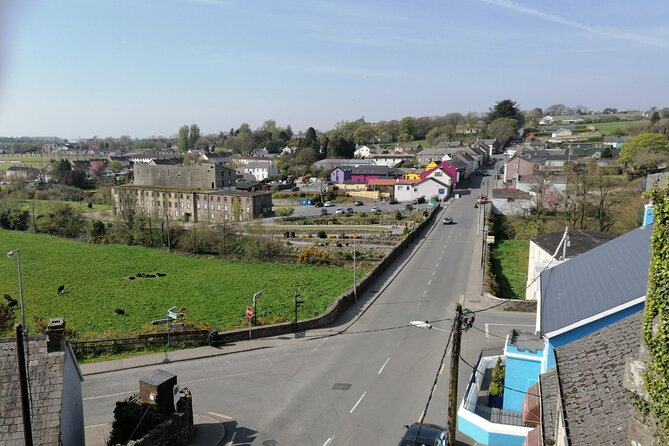
The route then heads through the village. You see the main street and hear about characters linked with Kilmacthomas, including people described through flip cards that show what they looked like and explain their place in local events.
This part is likely to appeal to anyone who enjoys human stories more than dates alone. Stíofán includes famous and infamous local figures, stories of stardom, and tales from past and present. The tone is personal and lively, with room for questions.
The village section also gives you a short break from the Greenway. You get a sense of Kilmacthomas as a living town rather than simply a stop on a cycling route.
Flahavan’s Mill from the curved viaduct
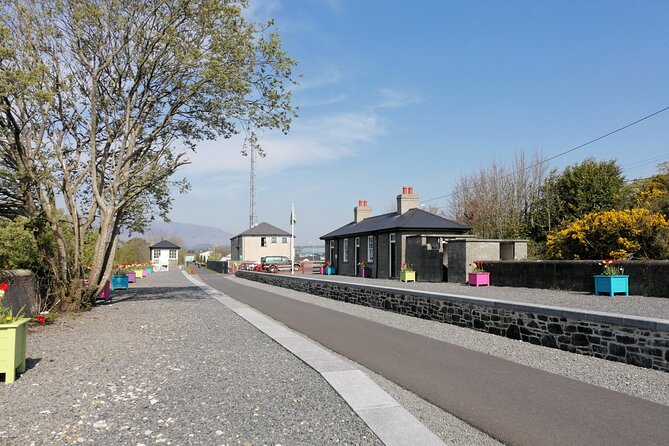
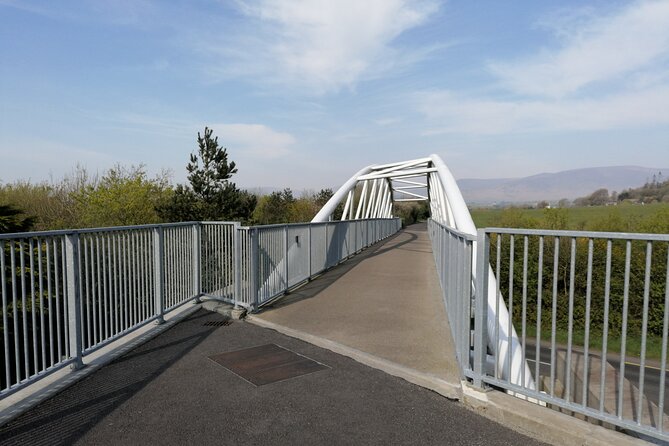
From the top of the curved viaduct bridge, you look toward Flahavan’s Mill. The company has produced oatmeal products since the 18th century, making it one of the clearest links between local industry and modern life.
The view is brief, but the setting is memorable. The viaduct itself is an impressive piece of engineering, and the elevated position gives you a useful view of the mill site.
The curved shape makes this bridge especially good for photographs. You also see the bridge from other angles at its base, where the footings give you a better sense of its scale.
The guide connects the structure to historic moments that took place around the public park. Again, the value lies in the link between physical remains and human use. You are not just looking at stone and brick. You are hearing how the space fit into the town’s working life.
The woollen mill and Kilmacthomas industry
The Woollen Mill is another stop tied to employment. It once supported local workers during the 18th and 19th centuries, and the guide explains its place in the town’s development.
Taken together, the railway, Flahavan’s Mill, and Woollen Mill show why Kilmacthomas grew where it did. Transport, food production, and textile work created a local economy long before the Greenway turned the railway route into a recreational path.
You view these places as part of the walk rather than entering a working museum. That means the experience is strongest for people who like to imagine how a town operated and changed over time.
Returning along the Greenway to the Coachhouse
After the River Mahon and country-lane pauses, the group returns along the Waterford Greenway toward the Coachhouse. This final stretch gives you time to ask questions about anything covered during the morning.
The Coachhouse is connected with the workhouse grounds and local characters. You also hear a story about coffee and how its use began in the 16th century.
That may sound like an unexpected ending, but it fits the tour’s style. The morning moves between local history, architecture, wildlife, geology, personal stories, and wider connections. The Coachhouse provides one last setting for a story before you return to the starting point.
The walk ends back at the original meeting point. Food and drinks are not included, but Kilmacthomas has several places to eat and drink after the tour. That makes the 10:00 am start practical: you can finish around midday or shortly after and continue your day in the village.
Is $21 good value?
At $21, this is good value if you want more than an unscripted walk along the Greenway. The price covers a two to three hour guided experience, a small maximum group of 15, and a wide spread of subjects.
The strongest value comes from the personal storytelling. You are not paying for admission to a major attraction, since the stops are free and many are outdoors. You are paying for the connections between them and for someone to point out what you might otherwise miss.
The price is less compelling if you only want a quick scenic walk or a self-guided Greenway outing. You could see parts of the route without a guide. The difference is the local interpretation, the workhouse stories, the characters, and the pauses that encourage you to notice the place.
The tour has free cancellation up to 24 hours before departure. Changes or cancellations inside 24 hours are not refunded, and poor weather may lead to a different date or a full refund. Since the experience depends on outdoor walking, check the forecast and wear suitable shoes and rain protection.
Service animals are allowed, and the tour is described as suitable for most people. It is near public transportation, but the exact transport options are not specified. The route is flat, though you should be comfortable walking about 5 km.
Who should book this Kilmacthomas walk?
I would choose this tour if you enjoy small towns, local characters, railway remains, social history, and easy countryside walking. It also suits people who want a human guide rather than an audio app or a list of dates.
Families with older children may find the mix of stories and open-air stops engaging. Couples and small groups can enjoy the relaxed pace, while anyone visiting the Waterford Greenway can use the tour to understand the area before cycling or walking farther.
The tour may not suit you if you need indoor attractions, guaranteed access to every historic site, or a short walk with no pauses. The paupers’ gravesite is seen only from the gateway, and several buildings are viewed from outside.
For most people, the best reason to book is Stíofán’s storytelling. The local knowledge is paired with a clear affection for Kilmacthomas, but the walk does not ignore hard subjects. It gives the town both its beauty and its difficult past.
Should you book it?
Yes, if you want a gentle, well-paced introduction to Kilmacthomas that combines the Waterford Greenway with local history. At $21, the experience offers strong value for a morning of walking, stories, wildlife, railway heritage, and quiet pauses.
Choose another activity if your main goal is a long Greenway hike or an indoor museum visit. Otherwise, this is a smart way to give Kilmacthomas a proper look instead of treating it as a passing point on the route.
FAQ
Where does the Kilmacthomas walking tour start?
The tour starts at the StepsBackThruTime walking tours Greenway car park at the Workhouse, Carrignanonshagh, Kilmacthomas, County Waterford, Ireland.
What time does the tour begin?
The scheduled start time is 10:00 am.
How long does the walking tour last?
The tour lasts approximately two to three hours.
How far do you walk?
The walk is described as a leisurely route of about 5 km around Kilmacthomas and its section of the Waterford Greenway.
Is the route difficult?
The route is described as flat walking, and most people can participate. You should still be prepared for several hours outdoors on foot.
What is included in the price?
The price includes the local tour guide, Stíofán, who leads the walking and storytelling experience.
Are food and drinks included?
No. Snacks and drinks are not included, but you can buy food and beverages at dining venues around Kilmacthomas after the tour.
What happens if the weather is poor?
The experience requires good weather. If it is canceled because of poor weather, you will be offered another date or a full refund.
Just added around Waterford
- Waterford: Mount Congreve Gardens Entry Ticket★ 5.0 · 7 reviews
- Waterford: The Irish Wake Museum Guided Tour★ 4.8 · 6 reviews
- Lismore Castle VR Experience★ 5.0 · 15 reviews
- Full day Private Tour from Waterford★ 4.5 · 14 reviews
- Courtown Woodland Guided Tour★ 5.0 · 23 reviews
- Waterford Treasures: Bishop’s Palace★ 4.5 · 53 reviews
- Waterford Treasures: Epic Walking Tour★ 4.5 · 152 reviews
- Irish Wake Museum Tour Rituals of Death and Celebration of Life★ 5.0 · 115 reviews
Walking Tours, compared.

Dublin Highlights and Hidden Gems Guided Walking Tour
Our verdict on it →

90 Minute Dublin Walking tour and Sightseeing tips
Our verdict on it →

Dublin Traditional Irish 3 Course Meal Walking Tour with Local
Our verdict on it →

Browse the lists this tour appears in